From manual transplantation to machine transplantation in Tam Bong
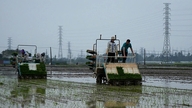
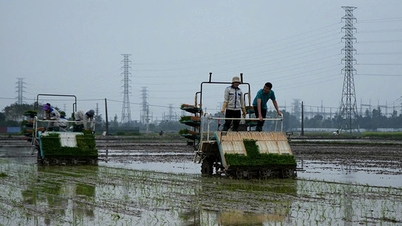
On the morning of June 6th, the sound of rice transplanters echoed across the fields of Tam Bong village, Tam Quang commune, as the planting season approached. This marks the first time local people have adopted the tray seedling and machine transplanting model for the summer-autumn rice crop, replacing the manual transplanting method that had been used for many years.
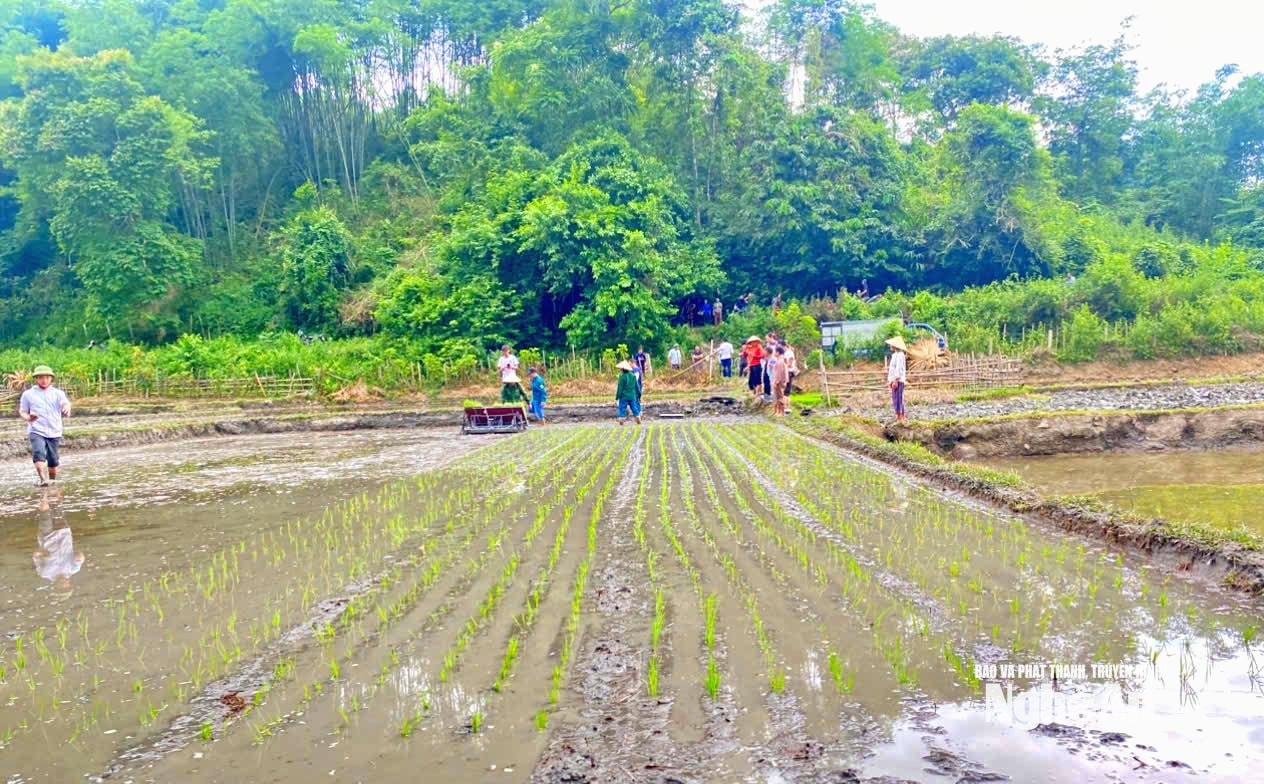
From early morning, technical staff were present in the fields to guide the people on how to operate the machines. Many households in the village, along with local leaders and officials from other villages, also came to observe and learn about the new method. As one of the households participating in the model, Ms. Lu Thi Sen could not hide her excitement when directly operating the rice transplanter in her family's field.
When the seedling trays are loaded onto the machine, rows of young rice plants are quickly transplanted into the field at even, straight intervals. "Farmers see a significant reduction in labor, while production progresses faster. This is truly something new for us," Ms. Sen shared.
The difference in the new production method is clearly evident in the fields. Previously, planting each plot of rice required 3-5 laborers manually for almost a full day, but now the time has been significantly shortened thanks to machinery.
.jpg)
According to Ms. Nguyen Thi Hoai, a specialist from the Economic Department of the Tam Quang Commune People's Committee, in the 2026 summer-autumn crop season, Tam Bong village had 1.5 hectares belonging to 11 households participating in the tray seedling - machine transplanting model. To implement this, the commune established two seedling groups in Tam Bong and Quang Thinh villages, and also created opportunities for other villages to visit and learn from their experience.

Gradually introduce mechanization into production.
The implementation of the machine-based rice transplanting model in Tam Bong is the result of the coordinated efforts of the local government, specialized agencies, and the people.
From the very beginning of the season, the Party Committee and People's Committee of Tam Quang commune identified the introduction of mechanization into rice production as one of the solutions to improve production efficiency, reduce labor, and gradually change the farming practices of the people.
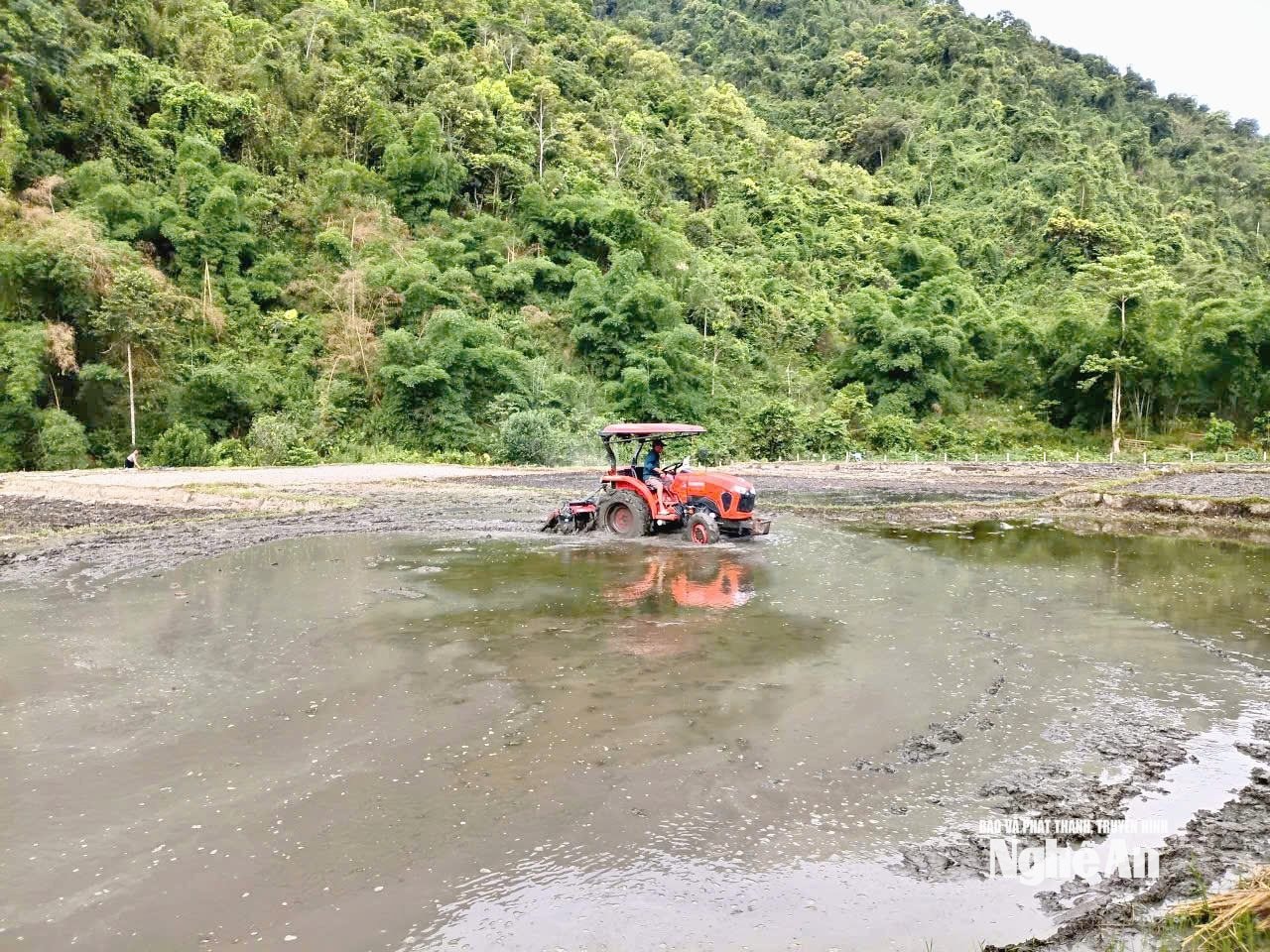
However, getting people to participate confidently was not easy. Many households were initially hesitant because they were accustomed to traditional planting methods and worried that preparing seedlings in trays and using transplanting machines would be complicated and unsuitable for local conditions. Faced with this reality, commune officials, village management boards, and technical staff went directly to the fields to guide and explain the benefits of the model, helping people gradually adopt the new production method.
The government also has many practical support policies to encourage people to participate. Household groups implementing the model receive support in the form of tillage machines, transplanters, seedling machines, and support covering up to 80% of seed costs. People mainly focus on land preparation, seedling care, and carrying out production stages according to the guidance of technical staff.
Besides reducing labor, the tray seedling - machine transplanting model also facilitates pest and disease management. Centralized seedling sowing allows specialists to monitor pest and disease outbreaks from the early stages, guide farmers in coordinated treatment, and limit the risk of dangerous diseases affecting rice plants.
.jpg)



Ms. Kha Thi Hien, Vice Chairman of the People's Committee of Tam Quang commune, said: "Introducing mechanization into production is a necessary direction for the locality in the current period. Through this model, the commune hopes to gradually help people access science and technology, change production practices, reduce labor costs, and improve farming efficiency. If the model yields good results, the locality will continue to promote and encourage its replication in subsequent seasons."
In the rice fields of Tam Bong, straight rows of seedlings are gradually replacing the familiar manual method. Although the 1.5-hectare model is not large, it is the beginning of the process of bringing mechanization to the rice fields in this border region; gradually opening up new production directions, contributing to increased labor productivity, reducing hardship for farmers, and creating a foundation for science and technology to continue taking root in the highland fields of Nghe An .
Source: https://baonghean.vn/dua-may-cay-len-ban-bien-gioi-nghe-an-10339823.html































![[Photo] Thousands of people participate in a run to show their support for the campaign "Sharing a common determination to build drug-free communes, wards, and special zones".](https://vphoto.vietnam.vn/thumb/1200x675/vietnam/resource/IMAGE/2026/06/27/1782554475933_0673e2a3df7b5e25076a-8283-jpg.webp)