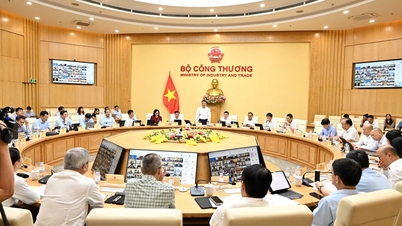
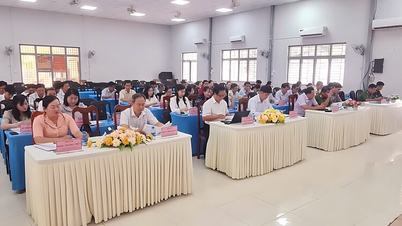
This opinion was expressed by Mr. Nguyen Duy Quang, Director of the Department of Agriculture and Environment of Khanh Hoa province, at the conference "Review of the work of the first 6 months and Implementation of tasks for the last 6 months of 2026 of the agriculture and environment sector" on the afternoon of July 2nd.
A key shift in the province's perspective on the marine economy is the view that the sea is an asset requiring data-driven management, standards, and inter-sectoral monitoring mechanisms. For a locality with a long coastal economic zone stretching from Van Phong, Nha Trang , Cam Ranh, Ninh Chu, Vinh Hy to Ca Na and the Truong Sa special zone, this requirement becomes even more urgent as multiple sectors utilize a limited space.
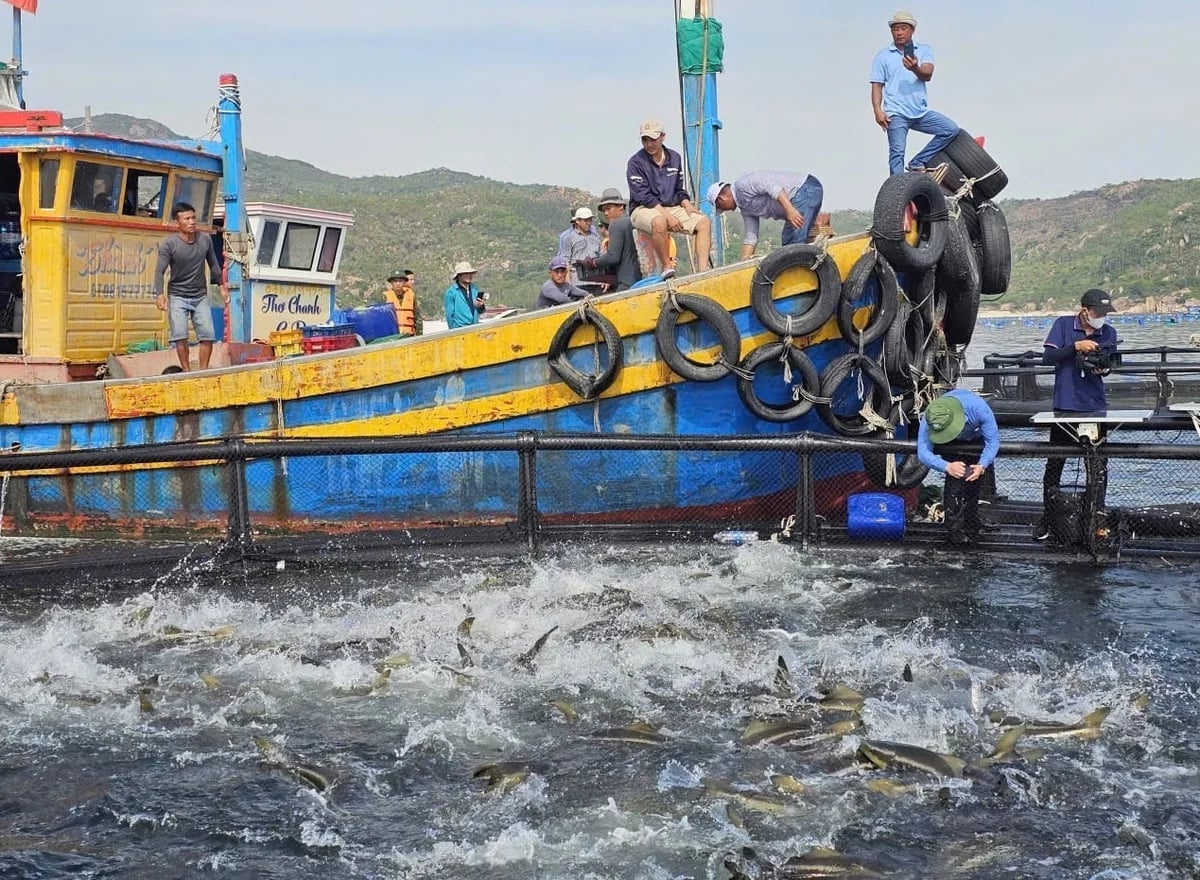
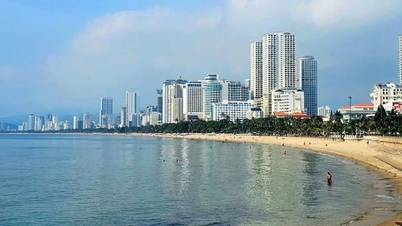
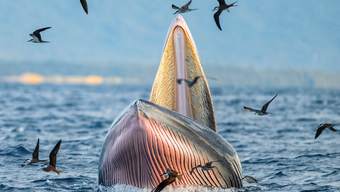
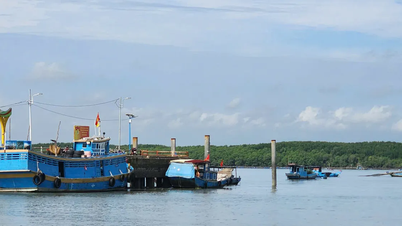
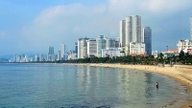
Khanh Hoa has a vast sea area, offering ample potential for developing its marine economy . Photo: Kim So.
Aquaculture cannot develop spontaneously.
The major bottleneck today is the overlapping of maritime space. A single sea area can be under pressure from aquaculture, tourism, maritime traffic, storm shelter, conservation, and national defense. When maritime spatial databases are not synchronized, licensing, monitoring, environmental management, or the delineation of responsibilities are easily fragmented.
According to Mr. Quang, with the two-tiered local government model, the pressure is even greater because commune-level officials lack visual mapping tools and sufficiently strong coordination mechanisms.


In fact, the marine economy is the backbone of Khanh Hoa province. By 2025, seafood production is expected to reach over 280,000 tons, with seafood export revenue of 870 million USD, accounting for 37.8% of the province's total export revenue. Shrimp seed production alone is projected to reach nearly 50 billion units, supplying approximately 25-30% of the national market share. However, as the scale of operations grows, the requirements for traceability, control of IUU (Illegal, Unreported, and Unregulated) fishing, monitoring of fishing vessel movements, and verification of catch volume at ports become increasingly crucial for survival.
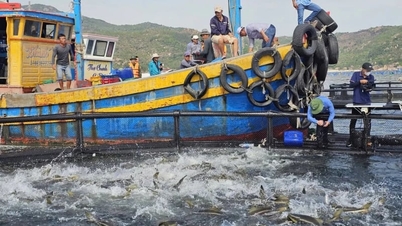
"Khanh Hoa's focus on high-tech aquaculture is a breakthrough direction," Director Quang said. After the Prime Minister approved the pilot project, the province approved 24 sea areas from the shore to 6 nautical miles, totaling 4,759 hectares. Aquaculture production is expected to increase from 10,000 tons in 2020 to over 20,000 tons in 2025. Some farming areas have switched to HDPE cages, automatic feeding, and environmental monitoring; six cooperatives are applying modern technology in open sea areas such as Dam Bay and Hon Noi.
However, aquaculture can only become a green industry if it is placed within a disciplined spatial framework. The province has determined that marine areas must be allocated according to a scientific roadmap, with mandatory regulations on cage materials resistant to storms and strong winds, stocking density, waste collection, and environmental monitoring. The "core" enterprise will link with cooperatives, production groups, and households to form a closed value chain, ensuring both output and reducing environmental risks.
This approach also aims to address the long-standing weaknesses of the aquaculture raw material area. Farm codes, production logs, seed quality, feed, and aquatic veterinary drugs have not been digitized or standardized uniformly. For key products such as lobster, marine fish, mollusks, and seaweed, Khanh Hoa plans to establish farming area codes and electronic traceability. At that point, each exported product will not only need to demonstrate production volume but also prove the farming area, process, and environmental responsibility.
Preserve natural capital for long-term growth.
While Khánh Hòa province is developing its marine economy strongly, it does not place conservation in opposition to development. Coral reefs, seagrass beds, mangrove forests, the Nha Trang Bay Marine Protected Area, Nui Chua National Park, and Dam Nai Lagoon are considered "natural assets" serving ecotourism, fisheries, scientific research, and community livelihoods.
Current pressures come from ocean plastic waste, domestic wastewater from inland areas, and waste from tourism and coastal urban areas. Therefore, the province has set the task of controlling sources of pollution, investing in centralized wastewater treatment in coastal urban areas, tourist zones, and fishing ports; while simultaneously restoring coral reefs, seagrass beds, mangrove forests, and establishing artificial reefs.
If a shared data system on coastal and marine areas is implemented, Khanh Hoa will have the tools to answer specific questions before each project. For example, how many fish cages can be raised in the allocated sea area, how many tourists can it accommodate, how much pollution it can handle, and whether it will affect shipping lanes, marine protected areas, or the livelihoods of fishermen.



That is also what people and businesses need from a blue economy strategy, where the right to exploit resources comes with responsibility and growth is accompanied by environmental limits.
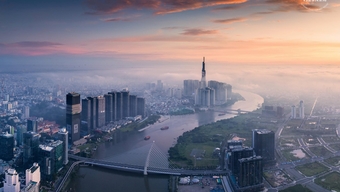
Following the administrative reorganization, Khanh Hoa province has approximately 8,706 km2 of land, 65 commune-level administrative units, and a vast maritime area. The revised provincial planning until 2030, with a vision to 2050, outlines a development model of "sea - urban - industrial - service - conservation - national defense and security" within a unified whole.
Source: https://nongnghiepmoitruong.vn/dua-tung-long-be-tau-ca-vao-ban-do-so-d819588.html