The Middle East and North Africa (MENA) region holds significant potential for Halal products. The MENA market for Halal consumer and beauty products alone is projected to reach $5.9 trillion by 2025.
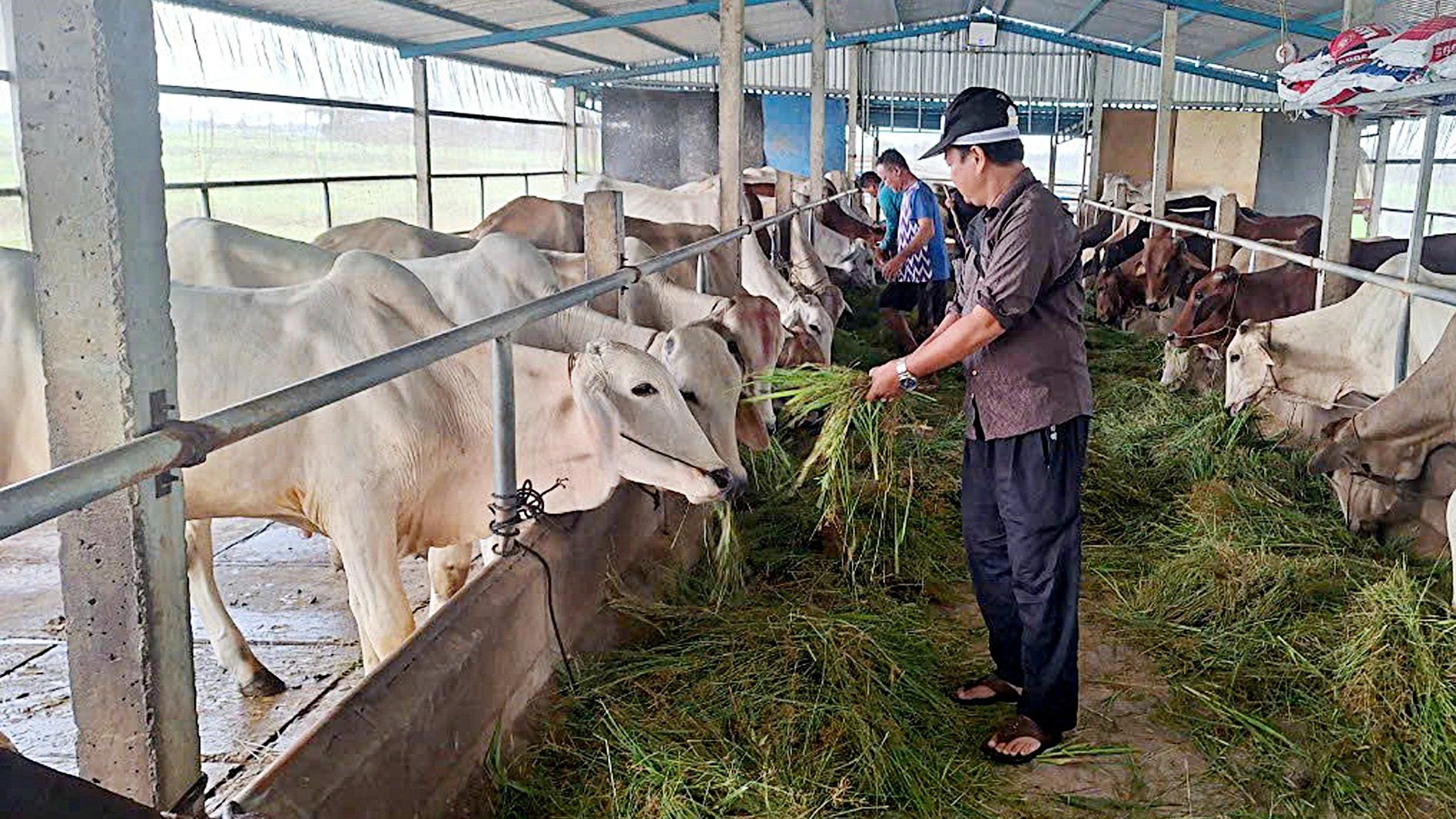
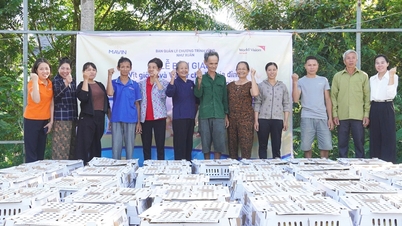
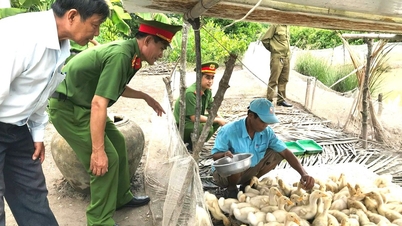
A Halal-standard livestock farming model at a Muslim household - Photo: PC
The projected population of MENA (Mekong Delta) will reach 600 million by 2030, coupled with the younger generation's trend towards consuming processed foods and cosmetics, creating significant opportunities for Vietnam to leverage its agricultural base and export natural products.
We have to overcome complex regulations.
Resolution No. 57-NQ/TW of the Politburo creates a great opportunity for businesses involved in the production, cultivation, packaging, and transportation of Halal products to quickly join the supply chain for the global Muslim community.
Participating in the Halal market (where Muslims are permitted to adhere to certain practices) in the Middle East requires Vietnam to pay attention to several aspects of its Religious Law.
Firstly, religious law, a set of rules based on faith interpreted by the Muslim community from the Quran, is known as Shariah law (or the law of Allah).
However, if no solution is found in Shariah law, Muslims can use another book, the Sunnah.
This is the origin of the "grey areas" in the regulations of each community and locality within the same church. From this, "mazhabs" are created. Because these mazhabs interpret the verses of the Quran differently, many countries implement different laws and rules.

For example, it is important that Halal cosmetics are processed according to Islamic rules and that Halal integrity is maintained throughout the entire supply chain.
Determining whether a product is Halal is challenging, as a large number of ingredients can come from animal or plant sources, and some ingredients may be derived from animal by-products.
All plant-based products are Halal, but if they are contaminated with ingredients or processing aids containing intoxicating or addictive substances, they will be declared haram (which is not permitted).
To capitalize on the legal opportunities in trade with Middle Eastern countries, Vietnam needs to pay attention to an important characteristic: penetrating the Halal market in general with approximately 2 billion consumers (the Halal market in the Middle East has about 315 million people), and considering the importance of Islam in trade standards. In particular, the Halal standards of Middle Eastern countries differ from those of Malaysia and Indonesia.
Opportunities arising from blockchain applications
To verify and ensure that materials or processes are not contaminated with non-Halal standards, many businesses and certification organizations have "empowered" blockchain technology (a database system that allows the storage and transmission of linked blocks of information through encryption).
This technology helps securely store information about the Halal certification process, providing clear and immutable records, ensuring compliance with Halal standards at every stage of the supply chain.
If blockchain technology is applied effectively, Vietnamese products could increase consumer confidence in detecting fraud or labeling errors, and identify Halal products when shopping in foreign markets.
Even though tourists come from countries with different Halal regulations, the host country has the opportunity to sell products based on transparency regarding Halal standards.
In 2024, with the "Vietnam - UAE (United Arab Emirates) Comprehensive Economic Partnership Agreement," the UAE became Vietnam's first comprehensive partner in the Middle East.



Opportunities for agricultural products, processed foods, and other goods to penetrate deeper into the markets of the Middle East and North Africa are widening.
If successful in penetrating the Halal market, Vietnam's agricultural exports and other key products could increase by 50% or more across various product groups. Vietnamese businesses possess the capacity to do so, given their successful entry into demanding markets such as the US, EU, and Japan.
If there is genuine interest and investment in the Halal market, achieving double-digit growth in many sectors is not difficult, contributing to double-digit growth in Vietnam during this period of national development.
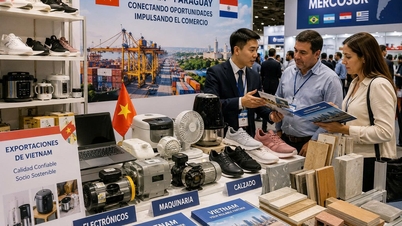
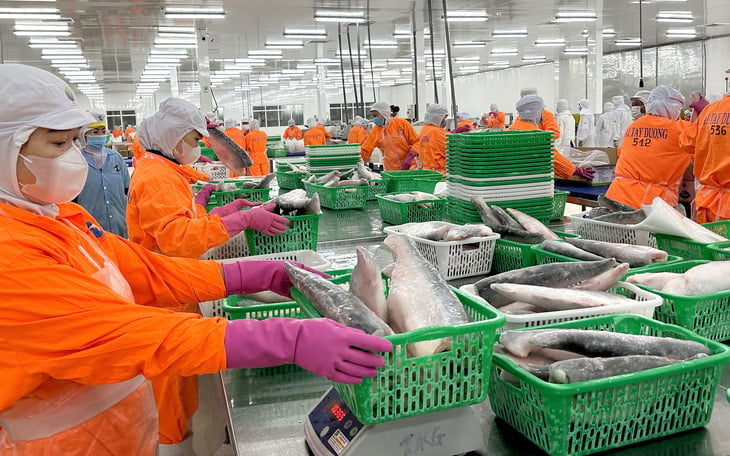 Vietnamese businesses are exploring the Halal market.
Source: https://tuoitre.vn/dung-blockchain-ho-tro-tham-nhap-thi-truong-halal-202502170003033.htm