Illustration: Canva
According to Bach Mai Hospital, many parents believe that orthodontic treatment is only necessary when children have lost all their baby teeth. However, according to doctors, early examination and intervention can help guide jaw bone development, reduce the risk of malocclusion, and limit complex interventions later on.
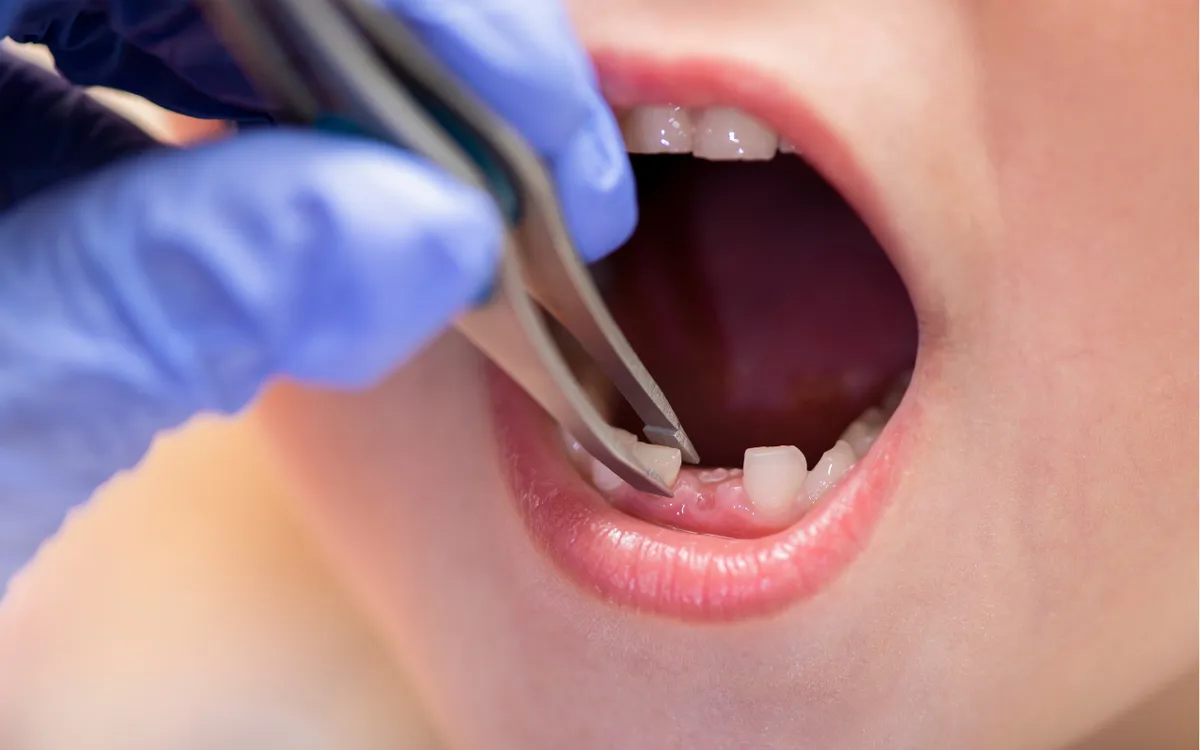
Early orthodontic treatment is primarily performed on children aged 6-10, when both primary and permanent teeth coexist. The goal is not to straighten teeth immediately, but to create space for permanent teeth to erupt in the correct position and support balanced jaw bone development.



Parents should take their children for a check-up if they show signs such as crowded teeth, overbite, underbite, premature or late loss of baby teeth, uneven development of the upper and lower jaws, difficulty chewing or speaking, or habits like thumb sucking, tongue thrusting, or prolonged mouth breathing.
According to experts, timely intervention helps create space for permanent teeth, reduces the risk of front teeth fracture in children with overbite, improves chewing and speech function, and can shorten the orthodontic treatment time later in life, even avoiding tooth extraction or jaw surgery.
Orthodontic associations worldwide recommend that children have their first orthodontic examination around the age of 7. After the examination, the doctor will decide on follow-up care or treatment depending on the individual case.
To protect children's oral health, parents need to guide their children to brush their teeth twice a day with appropriate fluoride toothpaste, limit sweets and sugary drinks, eliminate bad habits that affect teeth, and maintain regular dental check-ups as recommended by the dentist.



Source: https://vtv.vn/dung-cho-thay-het-rang-moi-chinh-nha-100260630143052007.htm




![[Image] National conference summarizing one year of operation of the overall organizational model of the political system, the three-tiered government model.](https://vphoto.vietnam.vn/thumb/1200x675/vietnam/resource/IMAGE/2026/07/01/1782882811691_ndo_br_1-jpg.webp)