Twelve years ago, on a winter day in the Year of the Horse, I left the Dong Duong Buddhist Monastery (Binh Dinh Bac commune, Thang Binh district, former Quang Nam province; now Dong Duong commune) as the weak twilight faded over the fields.
The young reporter's notebook was filled with fascinating stories, both historical and legendary, about the mysterious waterway connecting the Well Tower to the Square Pond, the searches for the Hời gold hoard, the statue of Bodhisattva Laksmindra Lokesvara losing its sacred objects, and the stone stele considered the "birth certificate" of the Đồng Dương Buddhist monastery, which was shattered after the vicissitudes of history.
Back then, I thought I would return soon. That new archaeological excavations, new discoveries beneath what was once considered the largest Buddhist center in Southeast Asia, would draw me back again.
But the promise made to Dong Duong lasted for a full twelve years. Twelve years passed, enough time for a village to change its appearance, but for the Dong Duong Buddhist monastery, many secrets continued to lie dormant beneath the rice paddies and acacia plantations... And amidst that tranquil space, the brick wall of the Sang Tower still stands there, alone through the years.
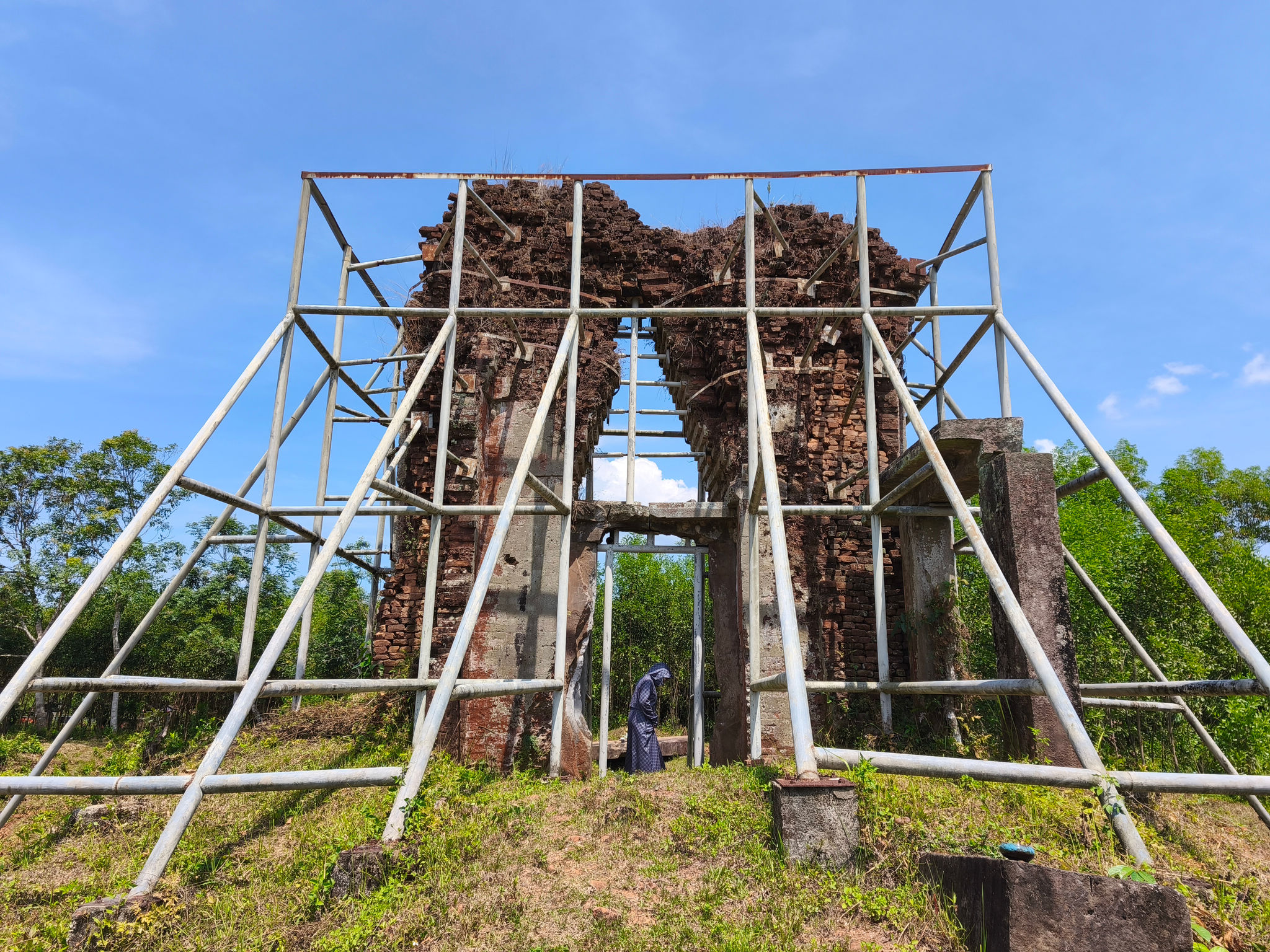
During my first visit to Dong Duong, I came across the steel frames embracing the body of the Sang Tower. This was because, back in 2013, architect To Chi Vinh and his colleagues had proposed an emergency reinforcement solution to save the remaining part of the tower.
Those steel frames, which the designer called "supporting hands"—steel hands with wooden supports gently pressed against the tower's body, cradling each brick—were still there silently this time. The only difference was that, after another year of the Horse, even those "supporting hands" from years past seemed worn out in my perception.
The Bright Tower still stands there in the middle of the Dong Duong field, as it has for over a thousand years, witnessing the glorious days of the Buddhist monastery before its decline due to war and turmoil. The destructive power of time may have added moss to the bricks, but perhaps what most troubles those who love Cham culture is that after a full decade of being recognized as a special national monument (December 22, 2016), the tower still relies on "supporting hands" to survive. And just like Dong Duong itself, it is silently waiting for the day it will be awakened.
If the Sáng Tower is a brick and stone witness to over a thousand years of history, then the elderly people of Đồng Dương are the witnesses in memory.


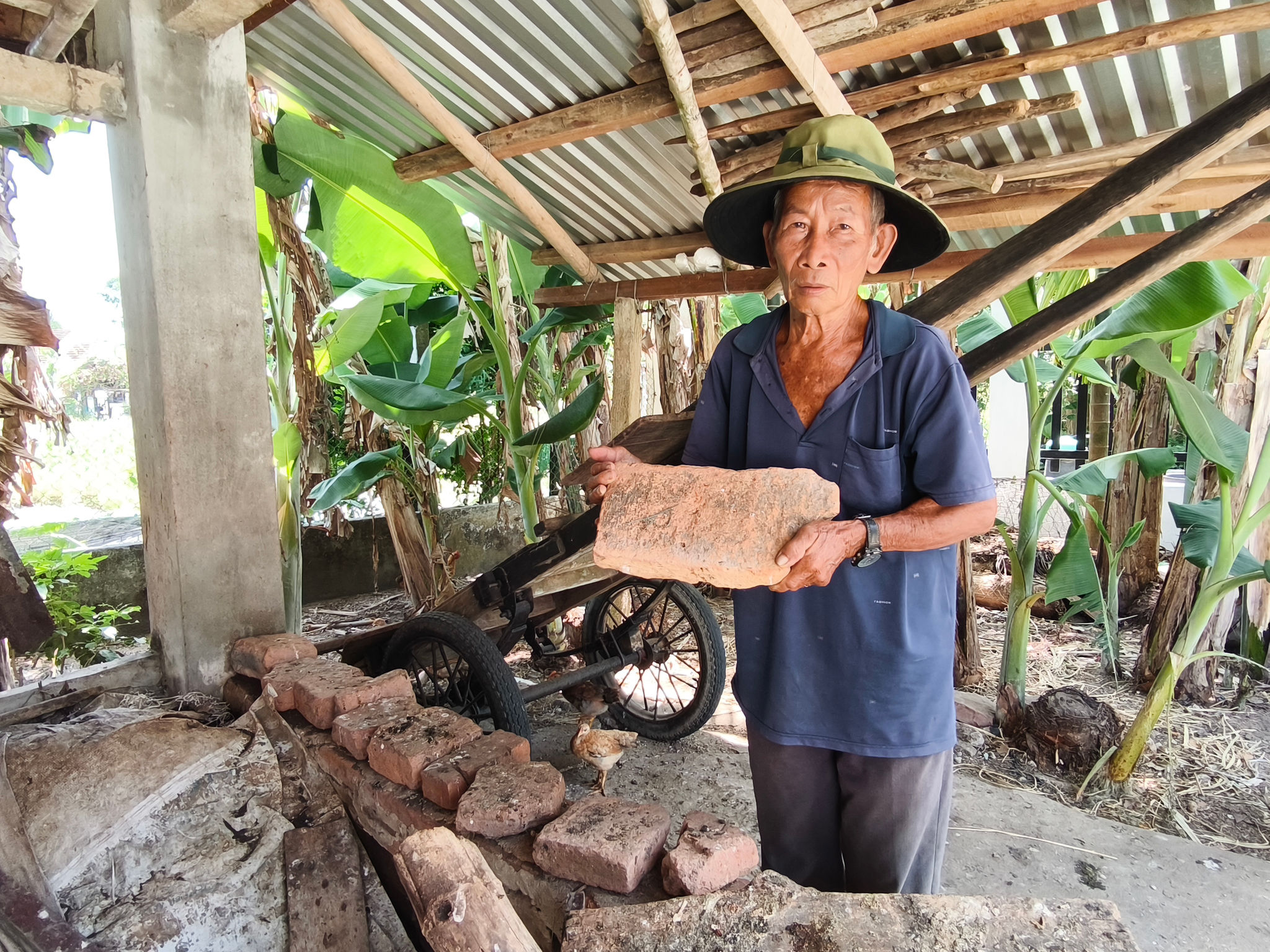
Twelve years ago, while wandering through vast forests, I sought out Mr. Tra Dieu and Mr. Tra Tan Hue (both around 80 years old at the time) to listen to stories passed down through generations. According to their accounts, Dong Duong was not just a collection of bricks lying silently beneath the earth, but a land steeped in legends. Returning this time, I no longer met the storytellers from years ago. Their graying hair had quietly faded away with the passage of time…
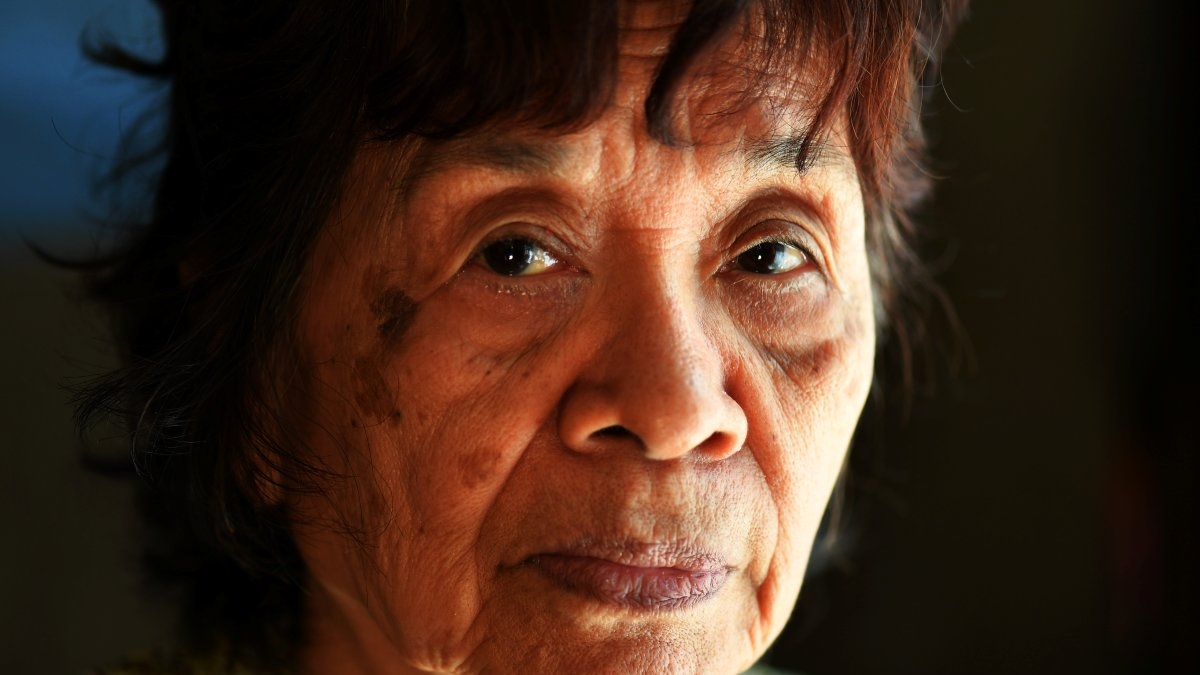
The person sitting in front of me today is Mr. Tran Tan Nho, who has also turned 80. Through his stories, Dong Duong comes to life vividly, with its vanished tower foundations, the statues that once lay in the fields, and the generations-old tales of the villagers.
Listening to the old man's stories, I realized that for a tower that has stood for over a thousand years, 12 years is just a blink of an eye, but for a human life, a full cycle of the zodiac is a long time, during which the storytellers gradually pass away. 12 years ago, the Bright Tower was lifted by steel "supporting hands" to hold onto what remained. 12 years later, the Bright Tower still stands there, "watching" generations of Dong Duong people being born, growing up, and growing old.
But bricks and stones can last a hundred years, while human life cannot. The storytellers of yesteryear are also passing away one by one. At this point, Mr. Nho fell silent for a moment. What troubled him wasn't the unrevealed secrets, but whether, in the remainder of his life, he would live to see the day Dong Duong truly transformed. "I'm old now, I don't know how much longer I have to live. In the past, I saw many traces, and heard the elders tell stories of Dong Duong. Now they're all gone, and I'm almost 80 years old. I just hope that before I close my eyes, I can see people do something for the tower, for Dong Duong, because I'm afraid I won't have time..." Mr. Nho's voice choked with emotion.
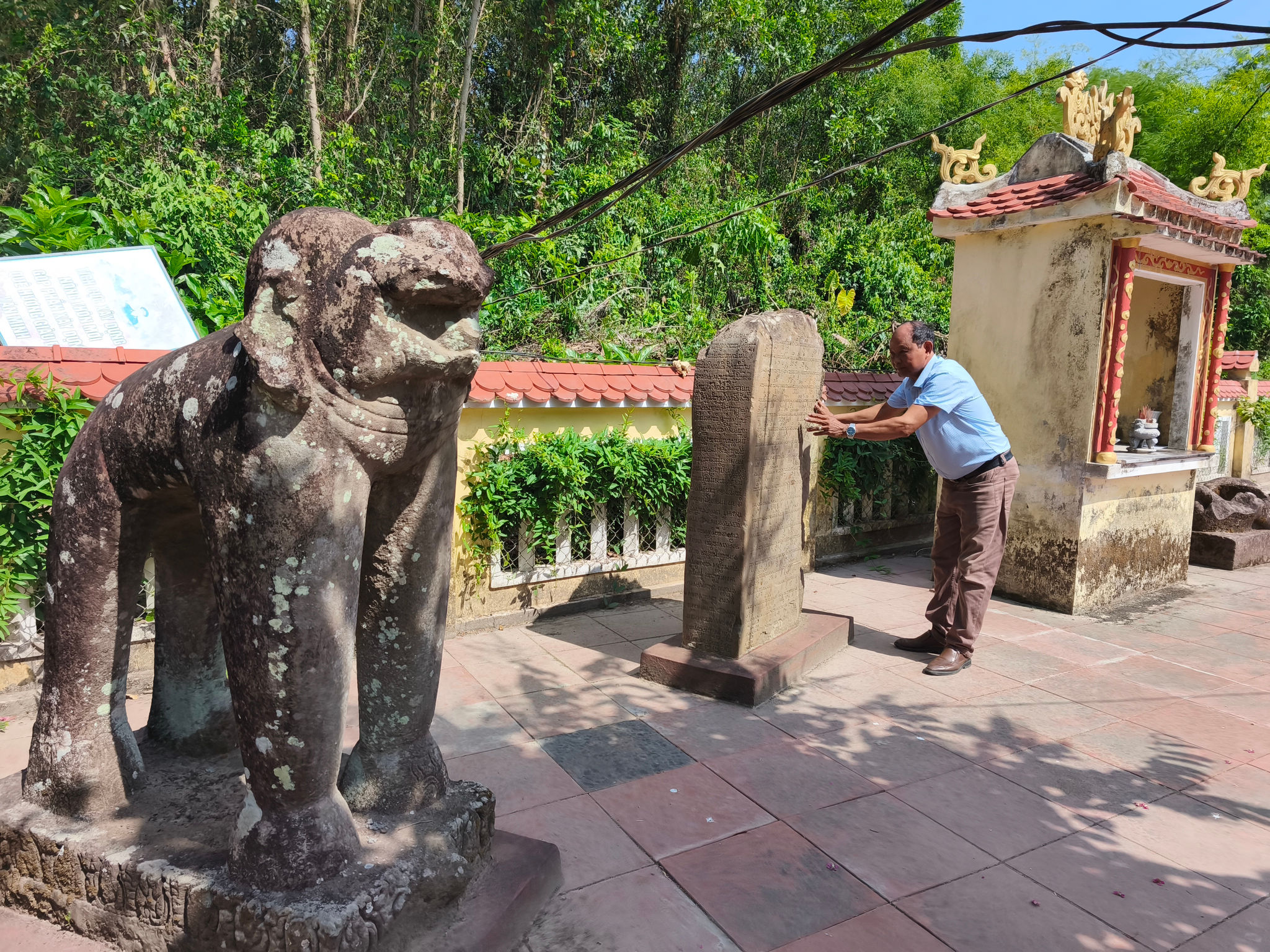
Having been involved with Dong Duong since her early days working in cultural affairs in the former Thang Binh district, for about 10 years, Ms. Nhu Lai has gradually become accustomed to the situation where she might meet the village elders one month to hear stories about the Buddhist monastery, but when she tries to find them again the following month, they are no longer there.
She vividly remembers her field trips around the historical site, following the rice paddies… to transcribe the small stories told by the elders. Sometimes it was a detail about a large tree growing in the heart of the site, sometimes it was an explanation of the simple names associated with the countryside, such as the Well Tower, the Dark Tower… Although not a continuous narrative, for Như Lai, this was the only way for her to “touch” Đồng Dương with the most vivid and authentic emotions.
“Every time I return and see a familiar face gone, an indescribable feeling wells up inside me, a lingering sadness… It’s like I didn’t have time to ask them anything more before they left, leaving a void that’s hard to fill. I often think that one day I will also grow old like these people are now. At that time, I wonder how many stories I’ll remember from my fieldwork and notes here. I’m just worried that by then, the name of the Buddhist monastery will still be there, the pagoda will still stand, but the people who remember and tell stories about it will be gone,” Ms. Lai sighed.
Perhaps the greatest fragility of a heritage lies not only in the bricks being eroded by time, but also in the limited time available to the people who have dedicated their lives to preserving its memory.
I've often wondered how many secrets of a once glorious Buddhist capital still lie beneath the grasslands of Dong Duong. But after all these years, perhaps a more urgent question needs an answer: what will we do to prevent what remains of Dong Duong from being lost?
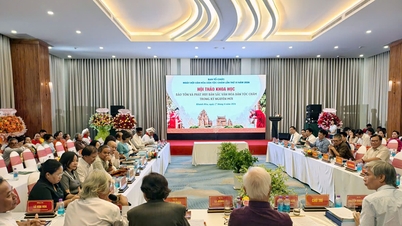
At the national conference on research, preservation, and promotion of the cultural heritage of Dong Duong Buddhist Monastery, held in mid-May, scientists once again affirmed the special value of this complex of relics.



Dong Duong was a major Mahayana Buddhist center of Champa in the late 9th and early 10th centuries, a place where profound influences from India and regional Buddhist currents converged. However, along with this pride comes a painful reality: much of the Dong Duong Buddhist monastery is now a ruin.
Dr. Dang Xuan Thanh, Vice President of the Vietnam Academy of Social Sciences, said that although he is not an archaeologist or cultural researcher, he was truly haunted by the sight of the Sang Tower being "supported by crutches" or the stele considered the "birth certificate" of the Dong Duong Buddhist monastery shattered into many pieces. These injuries, according to Dr. Thanh, place on the shoulders of today's generation the responsibility to find ways to revive the heritage. But in that revival journey, there is no room for hasty reconstruction.
Ms. Truong Thi Hong Hanh, Director of the Department of Culture, Sports and Tourism of Da Nang City, emphasized that restoring the Dong Duong Buddhist Monastery to its original state is almost impossible. The path forward is to continue archaeological research, complete the scientific database, apply digital technology and 3D technology to reconstruct the site's space, expand research to related areas, and transform Dong Duong from a static ruin into a living heritage connected to the community, gradually moving towards the aspiration of becoming a World Cultural Heritage site.
Before leaving the Buddhist monastery at midday, I stepped into the small remaining space inside the Sáng Tower. The midday sun shone through the gaps, casting interwoven shadows of the steel frame supporting the tower onto the brick floor. In that moment, I suddenly understood why Dr. Đặng Xuân Thanh called the Sáng Tower "crutches." That steel frame not only supports an architectural structure but also a part of Đồng Dương's memory, marked by loss and forgetfulness. After a decade of waiting, the Đồng Dương National Special Monument needs more than just "iron hands" or "steel crutches"—it needs the hands of science, responsibility, and love for a thousand-year-old heritage…
Source: https://baodanang.vn/duoi-bong-thap-chong-nang-3342149.html