

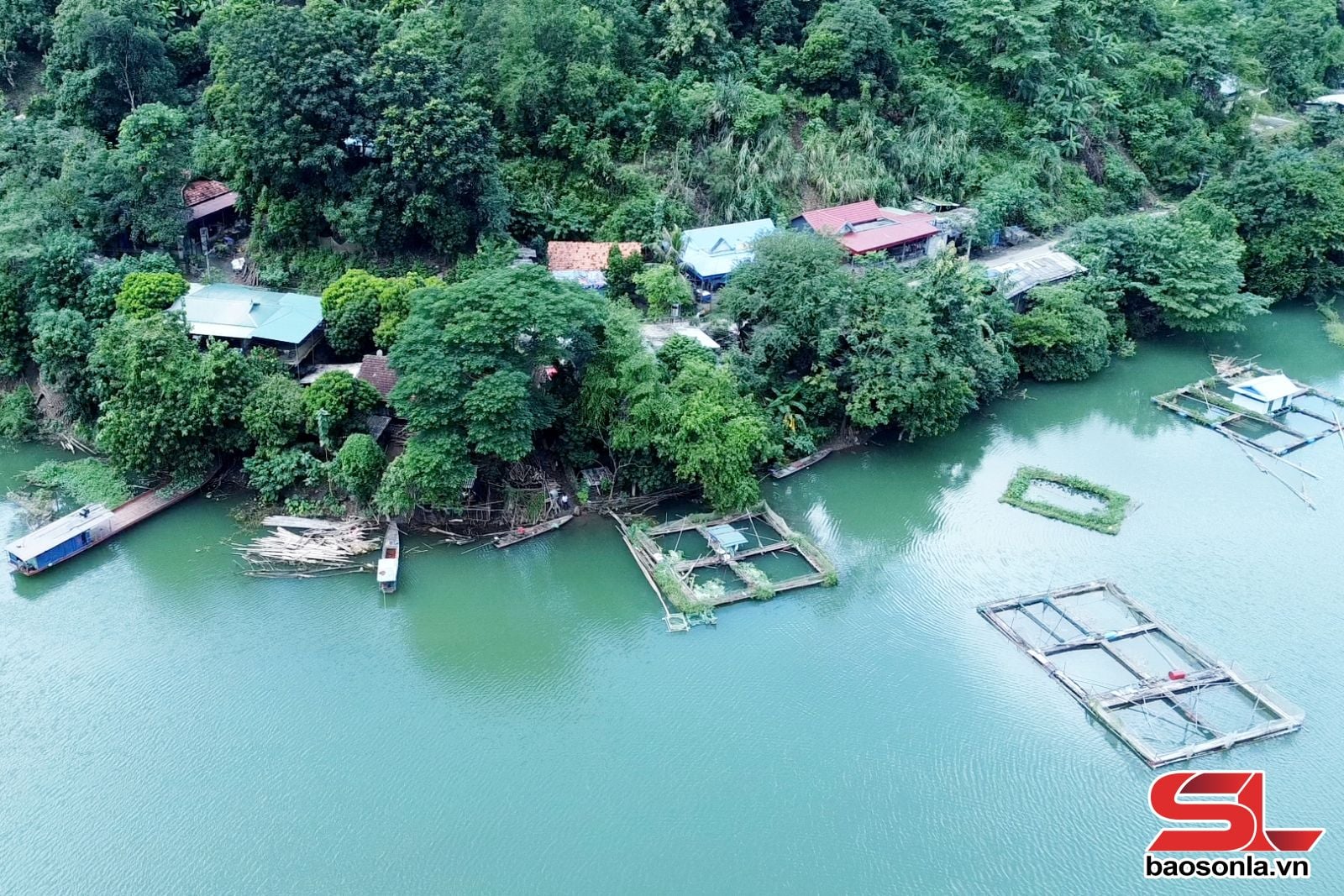
From the center of Doan Ket commune, after traversing winding slopes, we arrived at Na Quen village. On the vast lake, rows of floating fish cages dot the water's surface. Mr. Ban Van Cu, one of the pioneering households in the village's fish cage farming movement, shared: "My family started fish cage farming in 2016. Initially, the cages were made of bamboo and reeds, and the main feed was cassava, corn, and grass. Seeing the effectiveness of fish farming, I boldly invested in sturdy iron cages, and at the same time, learned and applied scientific and technical methods to production. Currently, my family has 30 iron-framed fish cages, each 5x6 meters in size with a volume of 90 cubic meters, raising various types of fish such as catfish, carp, and tilapia. Thanks to clean water and proper care, the fish grow well, are less prone to disease, and have delicious meat. Each year, my family sells nearly 5 tons of fish, earning a profit of over 200 million VND."
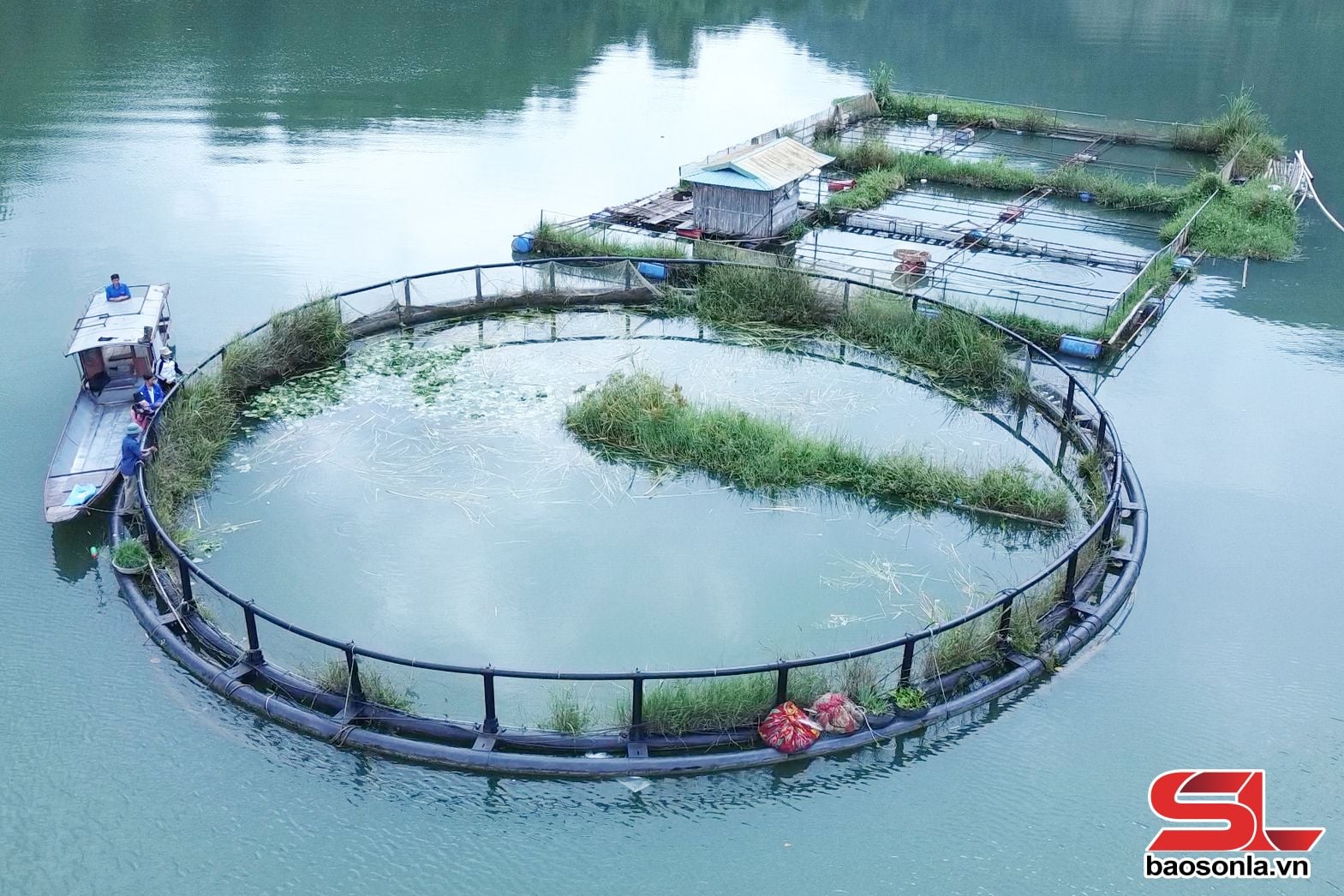
Mr. Ha Thanh Hai, Party Secretary and Head of Na Quen village, shared: The village has 93 households, of which 26 households raise nearly 100 fish cages. Previously, fish cage farming by the people was mainly spontaneous and small-scale, resulting in low efficiency. Thanks to guidance from specialized agencies, from selecting cage locations, choosing fish fry, caring for the fish, stocking at the right density, to support in borrowing capital to build cages, the average yield reaches about 150 kg per cage per year, with a selling price of 80,000 to 120,000 VND/kg.
To achieve the goal of making cage fish farming a key sector in economic development, Doan Ket commune has planned the development of aquaculture in the Hoa Binh hydroelectric reservoir area. Simultaneously, it has promoted and encouraged people to develop cage fish farming in a sustainable manner; promoted the application of science and technology, production according to VietGAP standards, and linked it with processing to enhance product value. To date, the entire commune has 126 fish cages concentrated in the villages of Na Quen, Dong Giang, and Ben Trai, with an annual production of nearly 20 tons of commercial fish. Commonly farmed fish species include tilapia, grass carp, red tilapia, common carp, catfish, and snakehead fish.
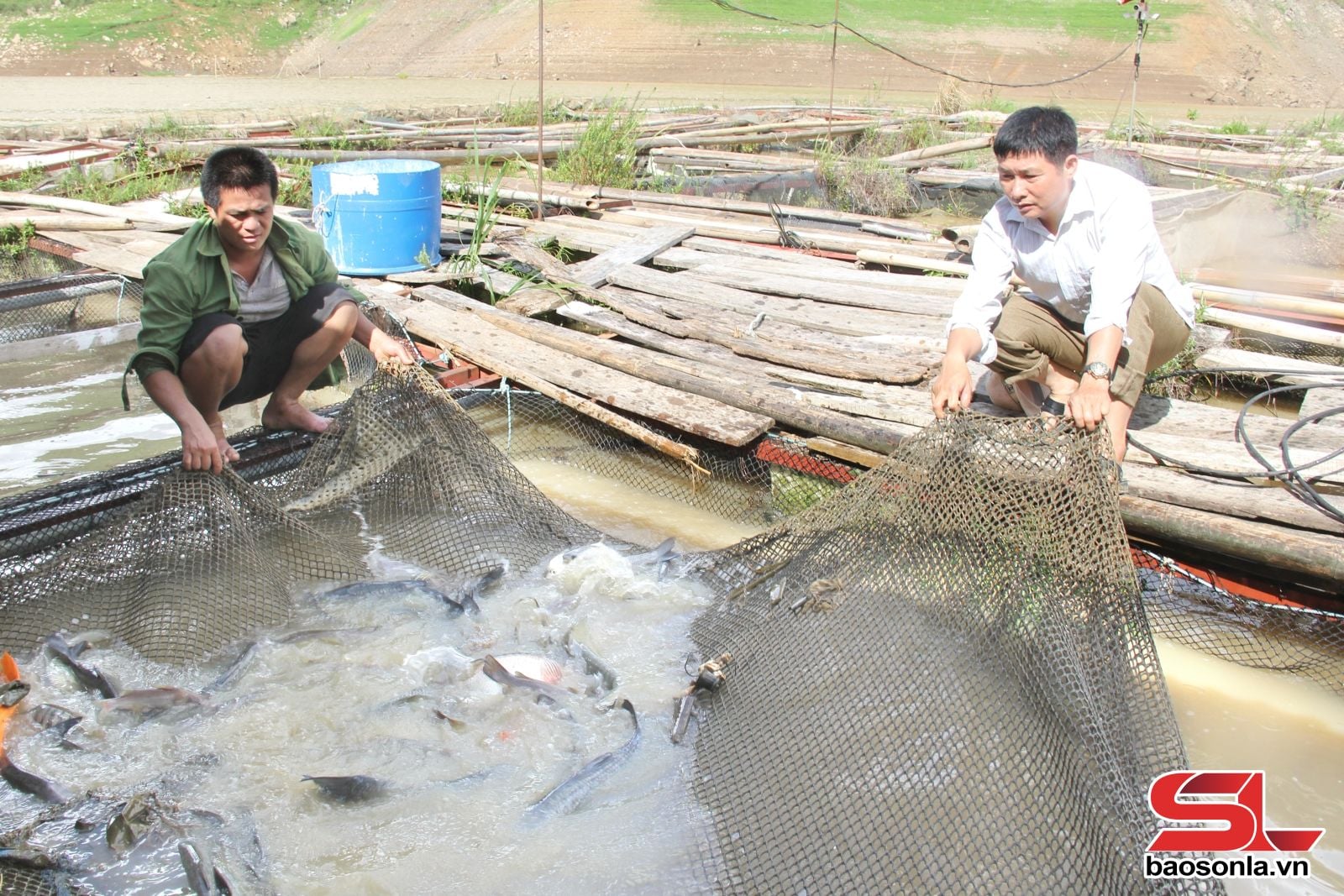
Mr. Hoang Van Xuyen, Vice Chairman of the Commune People's Committee, said: The commune has coordinated with relevant agencies to regularly train and transfer techniques on aquaculture farming, care, and disease prevention, and provide production support to the people. At the same time, it actively promotes and encourages people to maintain the quality of their fish stocks, proactively prevent and control diseases during the rainy season and floods; it also supports people in restoring production after the impact of floods, and directs commune officials to coordinate with villages to review the amount of fish that need to be sold so that the commune can develop a plan for consumption.
With its abundant water resources, coupled with the support of the government and the bold investment of farmers, cage fish farming in Doan Ket commune has been yielding significant economic benefits, aiming for sustainable aquaculture development and contributing to the local development.
Source: https://baosonla.vn/kinh-te/duy-tri-va-phat-trien-nghe-nuoi-ca-long-BFbiq2nvg.html















































Comment (0)