


Price list for some popular electric vehicle (EV) models, October 2023. Source: MakeUseOf
Accordingly, the global battery industry needs to invest at least $514 billion in the supply chain to meet projected demand by 2030, and $920 billion by 2035. Of the total investment by 2030, $220 billion (43%) will be allocated to critical raw materials, $201 billion (39%) to battery manufacturing – both at new plants and those with expanded capacity, and $93 billion to battery materials, including anodes, cathode, electrolytes, etc.
Benchmark Minerals warns that without investment in midstream processes, the upcoming gigafactories producing electric vehicle batteries "will not be able to operate at full capacity." This would require an increase in lithium production to 2.8 million tons, up from 1 million tons in 2023, and would necessitate an investment of $51 billion.
In the not-too-distant future between now and 2030, "the question is whether all of these plants can be built on time given the enormous demand," said Dean, an analyst at Bloomberg Intelligence.
Furthermore, Dean said, lithium prices are still subject to frequent fluctuations, "and we don't know if there will be enough lithium supply to meet the demand that we anticipate coming in 2024 or 2025, when all automakers have the important goal of selling more electric vehicles globally."
To address this issue, Dean suggests greater vertical integration within the industry. The Bloomberg Intelligence expert stated, "Some automakers are trending toward becoming more vertically integrated, so we could see more and more electric vehicle components being manufactured in-house."
With uncertainties in the supply chains of key metals, some automakers – which aim to sell more electric vehicles – are considering expanding their businesses into mining in the hope of securing a long-term supply of raw materials.
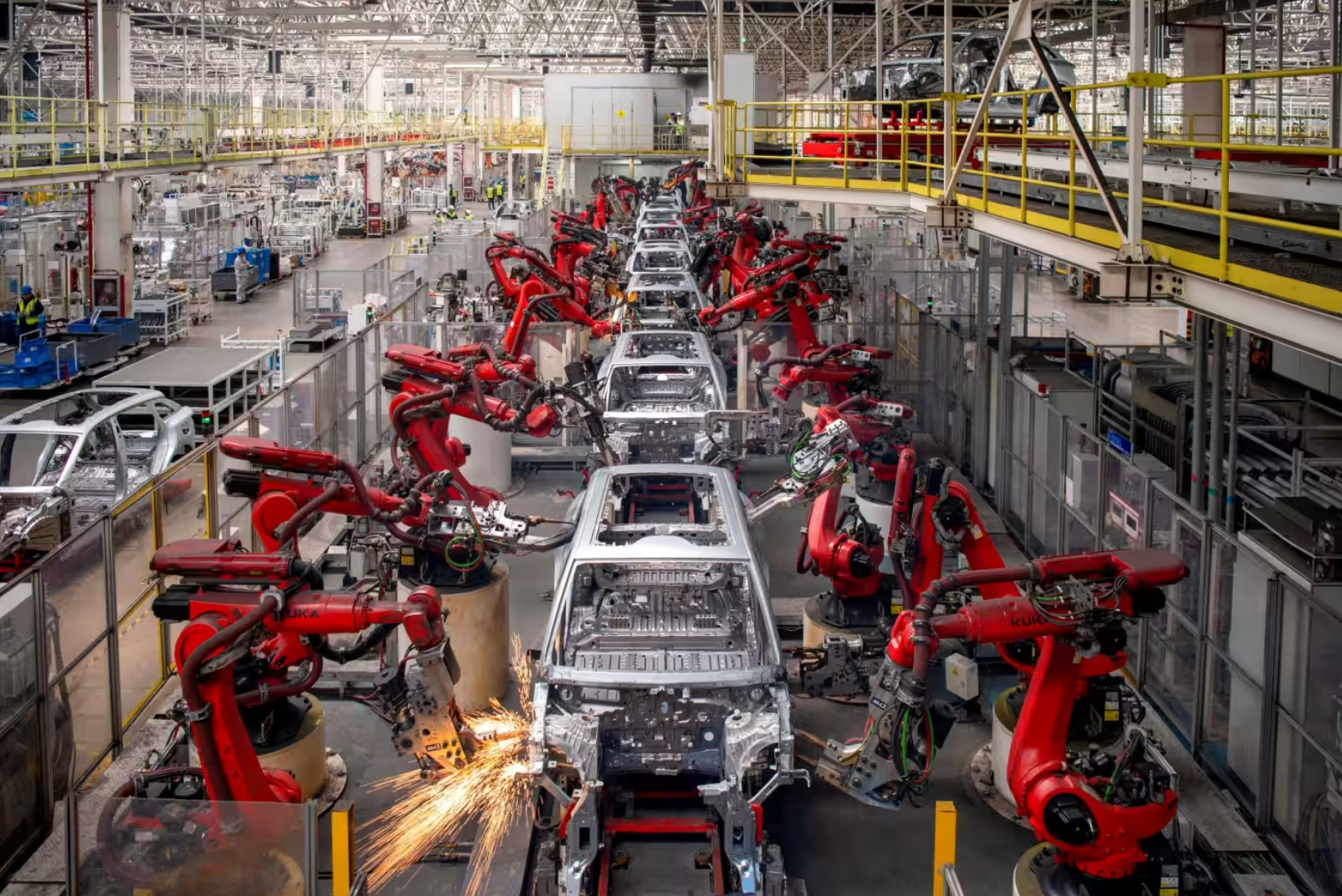
Electric vehicles are assembled on a production line at Leapmotor's factory in Jinhua, Zhejiang, China, on April 26, 2023. Photo: China Daily
Early last year, General Motors (GM) announced that it had formed a joint venture with the mining company Lithium Americas. With a $650 million investment, GM became the mining company's largest customer and shareholder, thereby gaining exclusive access to lithium from a mining site in Nevada, USA, called Thacker Pass.
American Battery Technology has received a grant from the U.S. Department of Energy (DoE) to help them build a lithium refining plant and battery recycling facility, also in Nevada. This grant is part of the DoE's program to create a domestic battery supply chain.

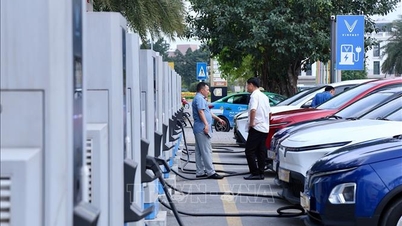
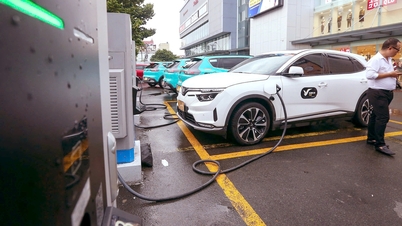
Charging station for BMW iX electric vehicles. Photo: Getty Images
Ford – through a joint venture with South Korean battery company SK Innovation – will receive a $9.2 billion loan from the DoE, the largest loan in the history of the DoE's Loan Program Office, to develop battery plants in Tennessee and Kentucky.
Stellantis has entered into separate joint ventures with Samsung SDI and LG Energy Solution to build battery factories in the US and Canada, respectively. Other companies such as Tesla, BMW, Volkswagen (VW), Hyundai, and Honda are also making similar investments in building battery production capacity.
Over the next few years, more partnerships will form – not just commercial partnerships, but strategic partnerships as well, and be implemented along the electric vehicle battery supply chain.

An electric pickup truck equipped with a battery from Samsung SDI. (Photo: Korea Economic Daily)
The future of the electric vehicle industry lies in vertical collaboration, “from mine to wheel.” This means that initial efforts in long-term planning and relationship building will become increasingly important.
But now the story of electric vehicle batteries isn't just about lithium. The world is also moving toward cheaper and more abundant sources of fuel, such as sodium (a component of table salt) and sulfur.
US and European startups are racing to develop new types of batteries using these two materials by overcoming problems such as sodium batteries being unable to store enough energy to power a vehicle, while sulfur battery cells tend to corrode quickly and do not last long.
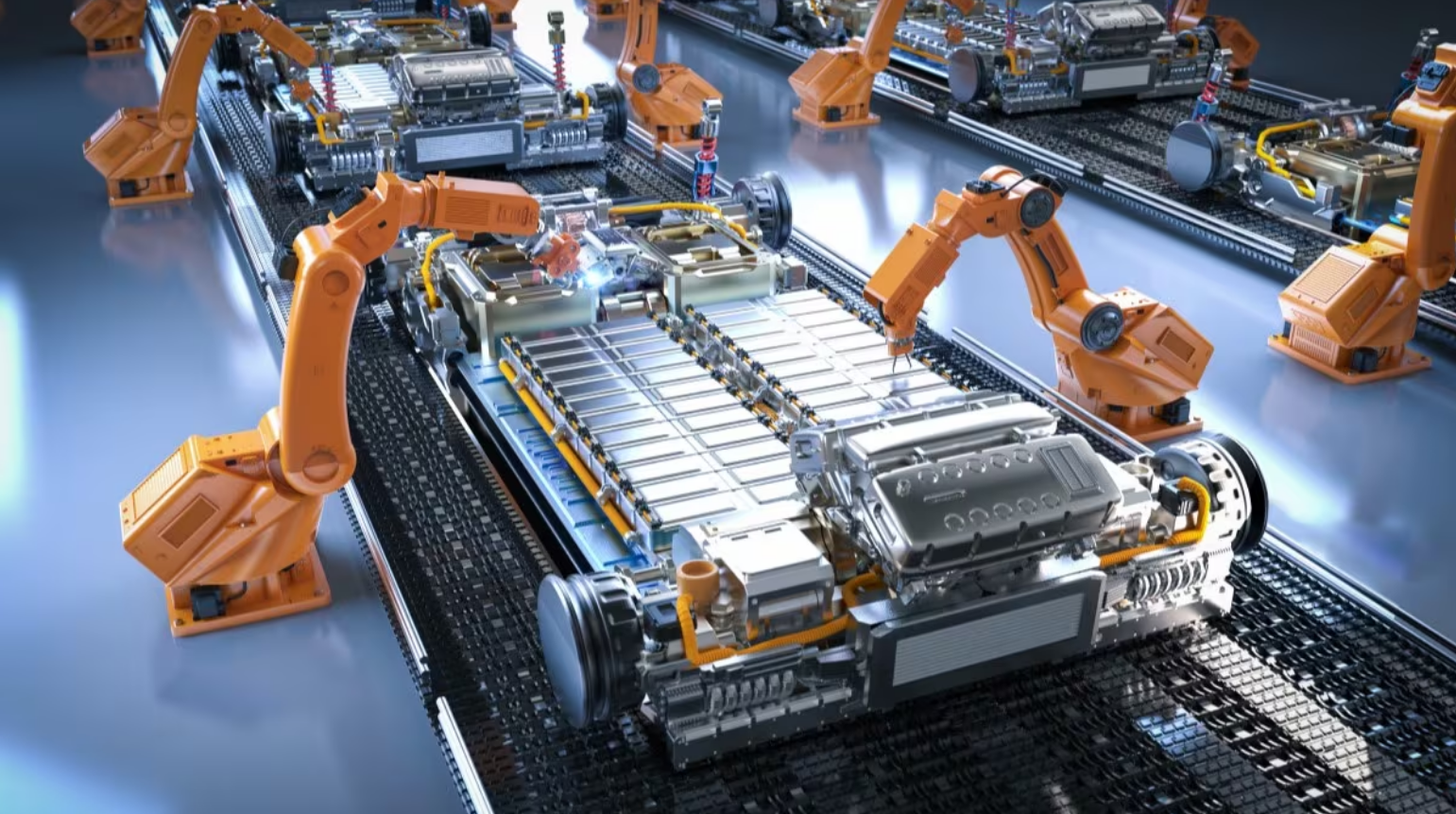
Accordingly, future electric vehicles – appearing after 2025 – could switch to using Sodium-ion (SIB) or Lithium-sulfur (Li-S) battery cells, which are up to two-thirds cheaper than current Lithium-ion (Li-Ion) batteries, if their technical limitations are overcome.
The average price of electric cars fell by nearly 20% in a single year in 2023. (Photo: Kelley Blue Book)
Asian battery giants are also researching new chemistries. China's CATL began mass production of first-generation sodium-ion batteries last October. The first factory has a capacity of approximately 40 GWh per year.
China currently has 16 out of 20 planned or under-construction sodium battery manufacturing plants globally, according to Benchmark Minerals. CATL's sodium-ion batteries, after being upgraded to increase energy density, will be used by Chery – China's ninth-largest automaker and leading car exporter.
With lithium-sulfur batteries, South Korea's LG Energy Solution aims to begin producing this new type of sulfur-based battery for electric vehicles by 2025.
Source


![[Photo] “Red Journey” 2026: Vietnamese Youth Continue Building the Bridge of Friendship Between Vietnam and China](https://vphoto.vietnam.vn/thumb/1200x675/vietnam/resource/IMAGE/2026/04/20/1776629730866_4055880775670638308-9618-4200-jpg.webp)














































































Comment (0)