


Urgent need
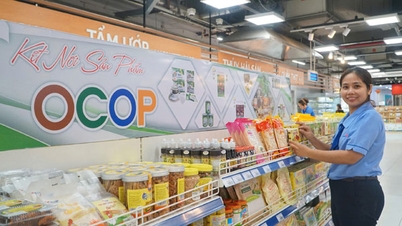
After expanding its development area from July 1, 2025, Da Nang city has more favorable conditions to form a larger and more diverse system of local products, ranging from processing industries, handicrafts, tourism products and gifts to agricultural products, medicinal herbs, traditional craft villages, and innovative products. By the end of 2025, Da Nang will have 552 valid OCOP products, with a diverse range of products.
According to experts, Da Nang's products do not lack identity; what is missing is a common mechanism for the market to recognize which products are trustworthy, meet standards, and are capable of representing the city.
In the context of widespread counterfeit, imitation, and substandard goods, and a lack of transparency in product information, consumers, distributors, and partners are increasingly demanding clearer information about the place of production, quality standards, traceability, and verification mechanisms.
For businesses/cooperatives in the city, this is not only a compliance requirement but also a barrier to market entry: the product may be good, but it lacks a sufficiently reliable guarantee tool for buyers to quickly identify, quickly check, and confidently choose.
Given these practical requirements, according to Ms. Le Thi Kim Phuong, Director of the Department of Industry and Trade of Da Nang city, the project "Building and developing brands for typical products of Da Nang city, Trust in Vietnamese goods - Made in Da Nang" is very urgent.
This initiative not only promotes local products but also aims to restructure market confidence in Da Nang's flagship products in a way that is genuine, modern, and sustainable.
Simultaneously, it lays the foundation for establishing a "public-private partnership" mechanism for national development, mobilizing social resources, encouraging businesses, industry associations, and consumers to participate, forming a modern, transparent, and sustainable ecosystem of Vietnamese goods, contributing to the realization of the goal of building Da Nang into a modern, smart, and reputable commercial and service center in the region and domestically.
Integrating policies and sharing digital data
According to experts and government agencies, one of the issues that needs to be prominently included in the plan is the mechanism for integration, eliminating overlapping procedures, and promoting data and technology connectivity.

Deputy Director of the Department of Science and Technology, Le Thi Thuc, proposed the need to establish a clear inter-agency coordination mechanism in post-inspection. Granting trademark usage rights must be accompanied by strict revocation regulations. If businesses violate commitments, especially those related to food safety and hygiene, there should be a process to immediately revoke trademark usage rights to protect overall reputation.
Another issue to note is that support policies are scattered across many departments and agencies, so the project needs to develop solutions to integrate, review, and connect these policies into a synchronized support ecosystem. When businesses achieve the "Made in Da Nang" certification, they will have easier access to this information to reap the most practical benefits.
Sharing the view on minimizing the burden of administrative procedures, Associate Professor Dr. Vu Thi Phuong Anh, Principal of Quang Nam College, suggested that the project should have a process for inheriting the results of the assessment.
Specifically, instead of requiring businesses to resubmit applications from scratch, the proposal should suggest an automatic recognition mechanism or only additional criteria for products that have already achieved OCOP 4-star or higher, or for distinctive commercial products previously recognized by the city. This solution helps avoid creating "sub-licenses," saving time and resources for both businesses and management agencies.
From a technological perspective, although the project has mentioned digital infrastructure and "digital passports" via QR codes, Associate Professor Dr. Phuong Anh suggested that it is necessary to delve deeper into technical security solutions, applying anti-copying technology and system access control. The most important of these is the data interoperability solution.
The "Made in Da Nang" brand in the digital environment must be connected and synchronized with major e-commerce platforms such as Shopee, Lazada, and TikTok.
The city also needs to design a reasonable service fee collection roadmap for the post-pilot phases, including: fees for maintaining the authentication system, fees for using digital data, and technology investment cooperation with the private sector. This will ensure the system has a legitimate source of revenue to sustainably operate and continuously update with new technologies.
Adding to the discussion on technology, Ms. Le Huynh Phuong Thuc, founder and CEO of Talent Connect Plus JSC, suggested that the drafting committee should not create a new digital platform, but instead work closely with the IT sector to directly integrate the "digital passport" into the city's existing digital transformation program. This would optimize costs and accelerate the product's digitization process.
Looking at the broader macroeconomic picture of Da Nang in the period 2026-2030, Ms. Phuong Thuc believes that the city is shaping new economic models such as an International Financial Center and a Free Trade Zone. Therefore, the strategic content of the project needs to be elevated.
Furthermore, while Da Nang's tourism positioning is geared towards the high-quality segment, the products included in the certification program still seem to be mass-produced. Therefore, the project needs to be more selective and upgrade the criteria to position "Made in Da Nang" products in a way that aligns with the supply chain of 5-star resorts and hotels, as well as international tourists.
Source: https://baodanang.vn/hoan-thien-de-an-made-in-da-nang-3333311.html



![[Photo] “Red Journey” 2026: Vietnamese Youth Continue Building the Bridge of Friendship Between Vietnam and China](https://vphoto.vietnam.vn/thumb/1200x675/vietnam/resource/IMAGE/2026/04/20/1776629730866_4055880775670638308-9618-4200-jpg.webp)

























































































Comment (0)