

 |
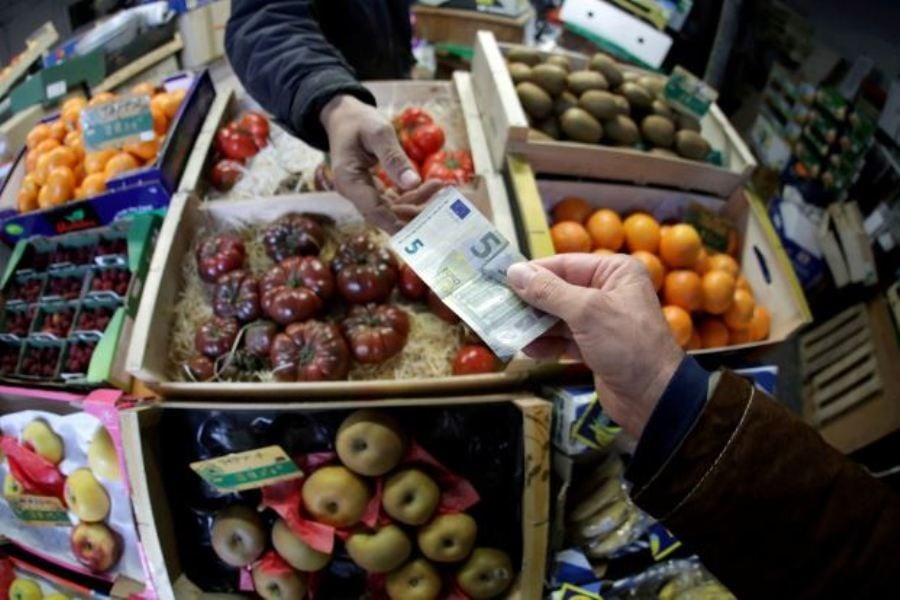
| The Eurozone economy has fallen into a technical recession. (Source: Reuters) |
Eurostat has revised its economic forecast for the Eurozone from modest growth of 0.1% in the fourth quarter of 2022 and 0.2% in the first quarter of 2023 to a contraction of 0.1% for each of those periods.
Two consecutive quarters of declining Gross Domestic Product (GDP) are defined as a technical recession.
The Eurozone's GDP decline is being dragged down by Ireland's economic growth. Ireland's GDP fell by 4.6% in the first quarter of this year. In addition, Lithuania's economy... It also fell by 2.1%, while the Dutch economy contracted by 0.7%.
Germany, Europe's largest economy, contracted by 0.3% in the first quarter of 2023 and also entered a recession.
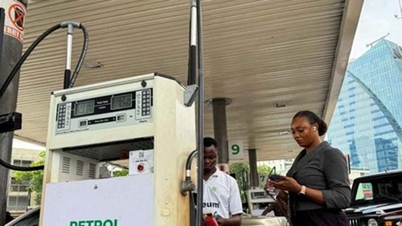
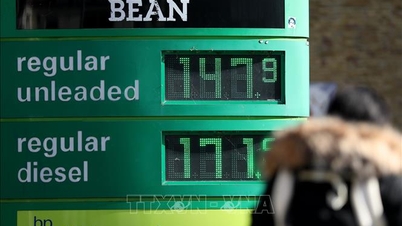
Eurozone economies have experienced a challenging year as rising energy prices led to escalating inflation.
The European Central Bank (ECB) has implemented interest rate hikes totaling 3.75 percentage points since July 2022 to curb inflation.
The new data also raises doubts surrounding the optimistic economic forecasts for the region for the whole of 2023. In mid-May 2023, the European Commission (EC) projected economic growth for the whole of 2023 at 1.1% across the 20 Eurozone member states.
Charlotte de Montpellier, an economist at ING Bank, forecasts that the region's economy will grow by only 0.5% in 2023.
Source




![[Photo] General Secretary and President To Lam presides over the meeting to approve the draft report on the results of the second inspection by the Politburo of the Standing Committee of the Hanoi City Party Committee.](https://vphoto.vietnam.vn/thumb/1200x675/vietnam/resource/IMAGE/2026/05/26/1779789811432_a2-bnd-4430-9620-jpg.webp)





































































































Comment (0)