World Cup ticket prices caused the biggest crisis during President Gianni Infantino's tenure after reports emerged that a seat could cost as much as $8,680 .
FIFA subsequently had to find a way to appease the wave of protests from fan clubs by releasing a very limited number of tickets priced at $60 (1.5 million VND) for national federations to distribute to their most loyal fans.
Furthermore, costs increased even more when FIFA implemented a dynamic pricing model, causing the highest ticket price for the final to skyrocket to $10,990 (nearly 290 million VND).
This led to a formal complaint being filed with the European Commission, and the attorneys general of New York and New Jersey also launched investigations alleging FIFA "artificially inflated prices" and "misled fans."
The empty seats "speak volumes".
Following the opening match of the 2026 World Cup between Mexico and South Africa at the Azteca Stadium, the phenomenon of sparsely populated stands was observed at the match between South Korea and the Czech Republic in Guadalajara.
Before kick-off, organizers expected the stadium to be packed with spectators as all tickets had been sold long ago. However, television footage showed many rows of seats in some areas remained empty.
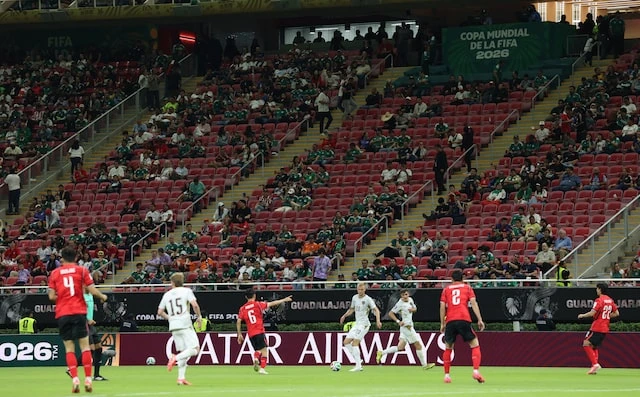 |
The match between Mexico and South Korea had many empty seats. Photo: Reuters. |
According to Mexican media, the empty seats were most noticeable in the two lower stands of the stadium. Throughout the first half of the match between South Korea and the Czech Republic, many rows of seats remained completely empty, even though this was considered one of the most highly anticipated matches.
One of the reasons cited was the black market for tickets. Just hours before the match, numerous ticket touts appeared around the Guadalajara stadium area, offering tickets for between $4,000 and $5,800 . However, buyers received no guarantee of the authenticity of these tickets.
From FIFA's perspective, the world football governing body stated that the empty seats were in the area reserved for spectators who chose to watch the match standing instead of seated.
However, this explanation failed to convince the public, as the areas in question were virtually deserted for most of the match.
The ridiculously high ticket prices, around $400 for a "decent" seat right before kick-off—many times higher than comparable group stage matches in previous World Cups—were immediately attributed to the sparse attendance in Guadalajara.


However, disregarding FIFA's vague definition of "large attendance," the organization seems willing to accept a few low-paying matches to stay true to its pricing strategy.
Empty seats at group stage matches are a familiar sight at the World Cup and have long been part of FIFA's "supply and demand" game. In fact, since the US hosted the tournament in 1994, subsequent World Cups have faced problems with ticket prices and attendance, especially in the group stage.
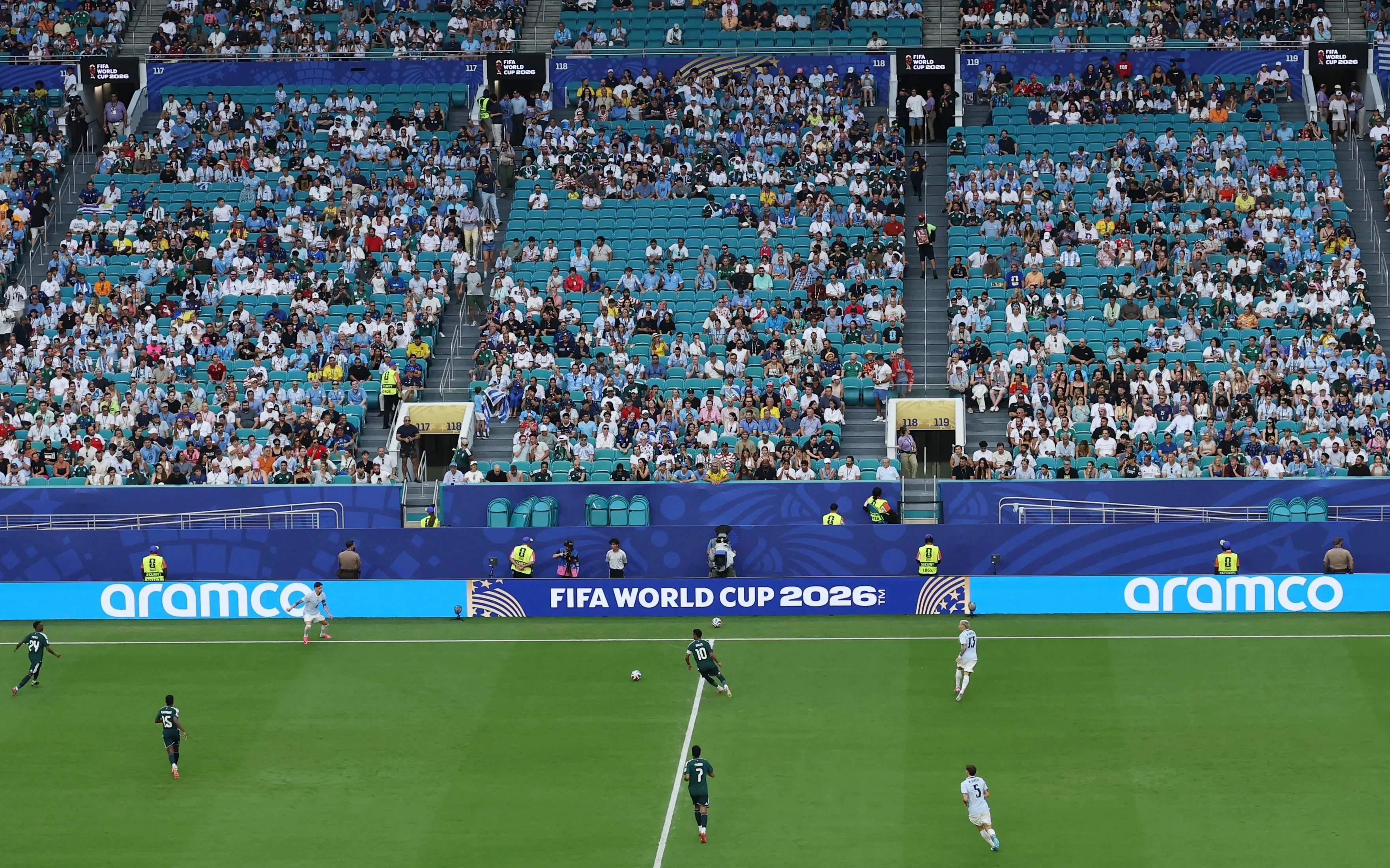 |
Empty stands at the World Cup are nothing new. Photo: Reuters. |
Even the most well-attended World Cup of all time has its gaps. The 1994 Nigeria vs. Bulgaria game filled less than 70% of the Cotton Bowl, leading the Los Angeles Times to wonder if the $25 price tag for the cheapest tickets was too high.
However, high ticket prices aren't always the culprit. At the 2010 World Cup in South Africa, around 120,000 tickets were distributed free of charge to local residents.
This move, coupled with a flurry of $15 tickets released at the last minute, was still not enough to save the Cameroon vs. Japan or New Zealand vs. Slovakia matches from having half the stadiums empty.
The supply control game
In 2023, FIFA announced its revenue target for the 2023/26 cycle, openly expressing its ambition to earn over $3 billion from ticket sales and VIP customer services at the 2026 World Cup, six times more than expected for the 2022 World Cup.
At that time, the world football governing body stated that the ticketing strategy and revenue targets for the 2026 World Cup were "in line with the scale of the commercial market and the opportunities offered by increasing the number of teams and matches."
In other words, FIFA planned to make a fortune from ticket sales when it had the opportunity to adopt the American business model.
Compared to traditional football ticket sales methods, the dynamic pricing model gives the governing body complete control over ticket supply and the prices offered.
However, unlike a purely dynamic pricing model, which has no supply limit and operates entirely by algorithms, at the 2026 World Cup, FIFA will decide for itself when to release tickets and at what price.
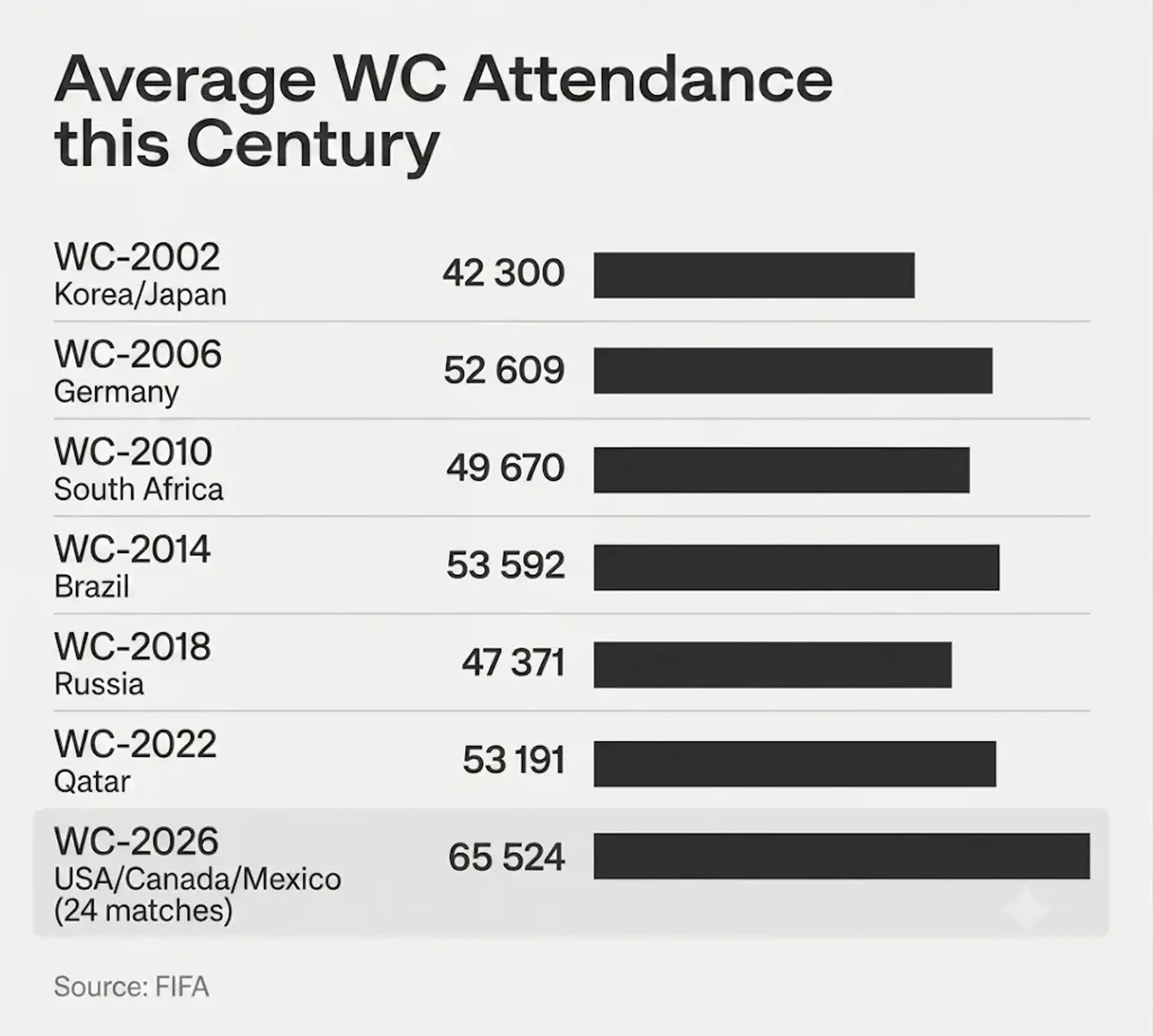 |
Despite concerns about high ticket prices, FIFA's supply management policy proved effective, and this was still a World Cup that attracted record attendance. Photo: FIFA. |


This means that ticket prices can remain exorbitantly high even close to kick-off time, dashing fans' hopes of buying cheaper tickets.
This strategy is causing outrage among most football fans, including the global media. However, for a highly sought-after event like the World Cup, such aggressive pricing is a business-wise sound strategy.
FIFA aims to generate approximately $9 billion from the 2026 World Cup, with around $4 billion from television rights, $1.8 billion from sponsorships, and the remainder from matchday revenue.
According to the latest report from SportBusiness , FIFA will easily surpass this target, having already pocketed approximately $4.3 billion from television rights, an increase of nearly 50% compared to the 2022 World Cup.
It would be no surprise if this organization raked in far more than the $3 billion mark in ticket sales. In Qatar, FIFA expected to earn $500 million but ultimately raked in nearly $900 million .
Source: https://znews.vn/fifa-khong-lo-muoi-mat-post1666152.html