The "health" of the economy is declining.
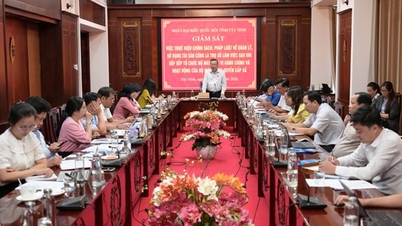
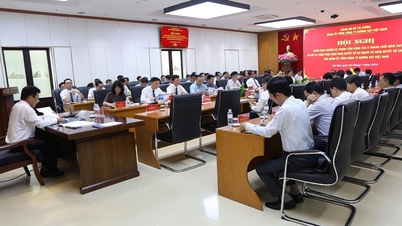
The bleak economic picture and the extreme difficulties faced by businesses and people were the general consensus among many National Assembly deputies during group discussions on socio-economic issues, the state budget for 2022, the first few months of 2023, and other topics on the morning of May 25th.
Representative Le Thanh Van (from Ca Mau province), Standing Member of the Finance and Budget Committee, stated that in the first few months of the year, the number of newly registered businesses decreased, while the number of unemployed workers increased. As of May 21st, the Dong Nai Employment Service Center had received 22,000 unemployment claims. "Some small traders at Ben Thanh Market (Ho Chi Minh City) said there was a period of two weeks where they couldn't sell a single item. This shows that demand has decreased due to difficulties; people have to 'tighten their belts,' salaries are gone, businesses are in debt, and they lack the funds for living expenses," Mr. Van noted.
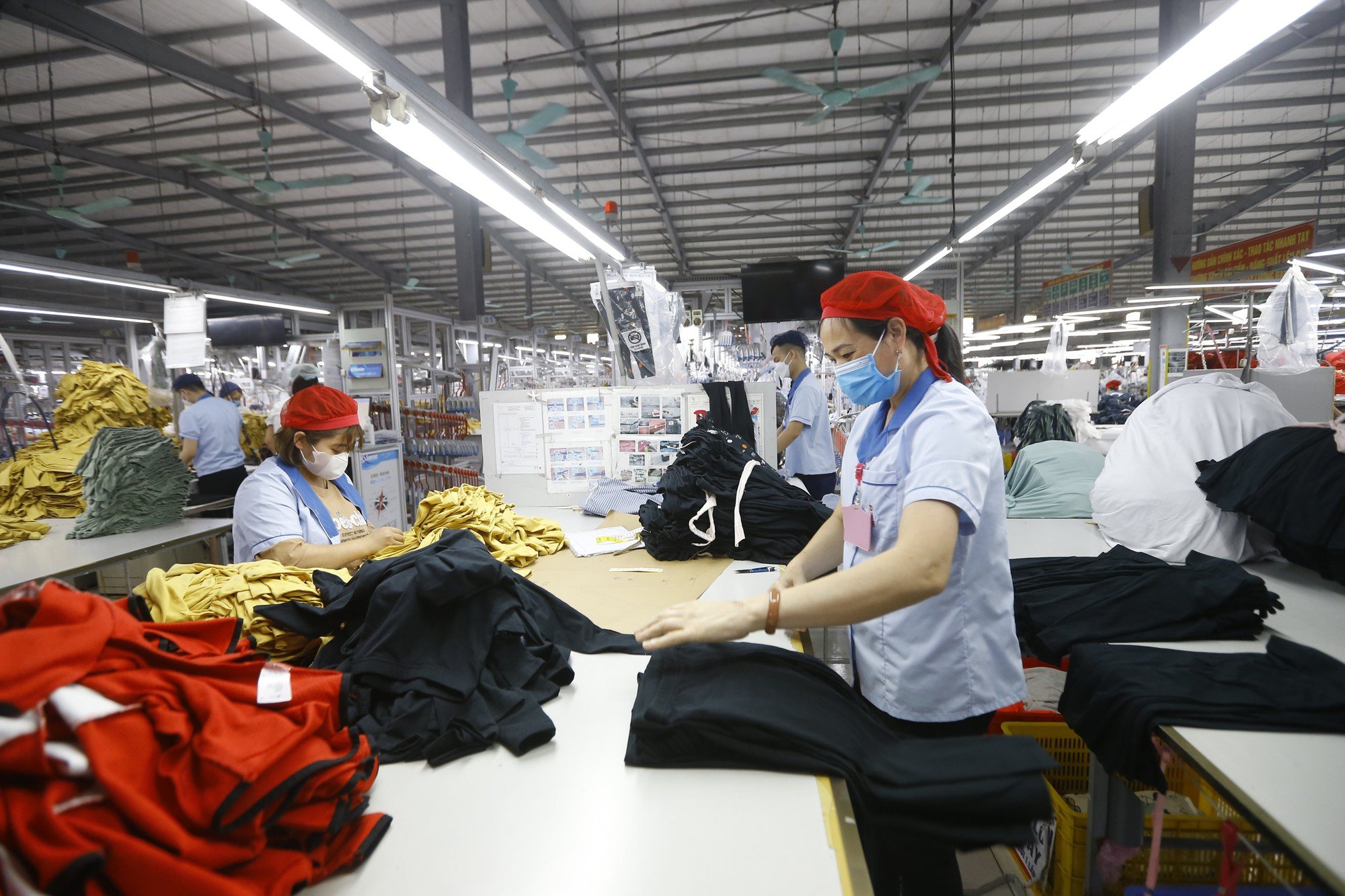
We need to remove bottlenecks to support businesses that are facing difficulties.
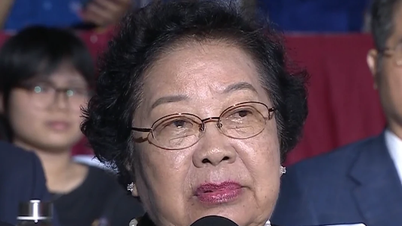
Representative Tô Thị Bích Châu, Chairwoman of the Vietnam Fatherland Front Committee of Ho Chi Minh City, cited the fact that in the last months of 2022 and the beginning of 2023, the number of businesses going bankrupt, dissolving, or closing down increased dramatically. "If we observe the central areas of District 1, which were previously always bustling with commerce, we will see that nearly 30% have closed down. This is a very worrying issue," Ms. Châu said. According to the Ho Chi Minh City representative, many solutions have been implemented to provide support, but these policies lack a solid foundation because the main issue is the declining internal "health" of the economy.
Representative Nguyen Chu Hoi (from Hai Phong delegation) observed that the actual "health" of the economy is weak and lacks a solid foundation, so even a single Covid-19 outbreak would cause the economy to falter, leading to shortages of cash for spending, not to mention other issues. He analyzed that we are only focused on GDP growth, while this is not the only indicator for assessing the "health" of the economy.
"We keep compiling statistics, then experiencing sudden joy and sudden sadness. When things go well, we applaud; when things go poorly, we sit and try to explain. This means we're not proactive about anything," Mr. Hoi said, adding that we need to clearly understand the foundations we're standing on—strong or weak, rigid or flexible—in order to stand more firmly.
Many "blood clots"
Many delegates argued that the inherent "health" of the economy is declining due to the existence of numerous "bottlenecks." Delegate Ha Si Dong (Quang Tri delegation) cited the fact that the surplus of state funds deposited in the banking system has been quite high since 2019 and has increased significantly since 2022, exceeding 1 trillion VND by mid-May this year.
"This is a pressing issue. A poor country, always lacking capital for development investment, faces the paradox of having money readily available but unable to spend it. This is also the 'blood clot' that obstructs the flow of money in the economy," Mr. Dong said, adding that this situation has actually been identified for quite some time, with the causes becoming more numerous each year, but the core of the problem has yet to be thoroughly resolved.
Representative Nguyen Minh Duc, Vice Chairman of the National Assembly's Committee on National Defense and Security.
While trillions of dong are sitting in banks, National Assembly Deputy Nguyen Hai Nam (from Thua Thien-Hue province), a permanent member of the National Assembly's Economic Committee, stated that businesses face significant difficulties in accessing capital. Not only are interest rates high, but according to Mr. Nam, some banks also charge unofficial fees or suggest additional services such as insurance, making it difficult for businesses. "The bank agrees to lend, but then suggests buying additional insurance. If the business doesn't buy it, the next day when they go to borrow capital, they avoid them, saying they're busy in a meeting," Mr. Nam explained.
Many delegates believe that the most important cause of the aforementioned bleak situation, besides the impact of the Covid-19 pandemic and the global situation, is the quality of institutions and officials. Mr. Le Thanh Van also argued that the short lifespan of laws reflects a short-sighted legislative vision and strategic thinking, leading to opportunistic practices that oppress citizens and cause hardship for businesses. He also pointed out several shortcomings. "This chairman supports a project in one term, but in the next term, another chairman revokes it. Meanwhile, businesses have invested hundreds of billions of dong in the project and paid bank interest, so they are ruined," Mr. Van said.
Obstacles, overlaps, and a lack of overall vision and strategy in legal regulations also lead to bottlenecks and delays in implementation.



Citing regulations on corporate bonds, National Assembly Deputy Nguyen Hai Nam stated that in 2020, Government Decree 153 opened up too much scope, with many corporate bonds not being properly assessed, leading to capital losses for individuals, including the poor. In 2022, after several incidents, the Government issued Decree 65 to tighten regulations on this activity. In 2023, the Government had to issue Decree 08 to amend the decree and "resolve difficulties" for this market. "If only we had adopted a relatively balanced and comprehensive approach when drafting the decrees, the corporate bond market wouldn't have faced the difficulties it has in the past few years," Deputy Nam said.
Local authorities are seeking opinions from too many different departments.
During the group discussion, Minister of Planning and Investment Nguyen Chi Dung assessed that the biggest challenges currently facing businesses are cash flow, market, orders, and the ability to absorb capital. However, the head of the Ministry of Planning and Investment particularly emphasized the significant current difficulty: administrative procedural bottlenecks. Many businesses are complaining and expressing concern about the very slow implementation of procedures in many localities, especially in the context of officials avoiding responsibility and shirking their duties, thus slowing down the progress of work.
"If we don't quickly resolve this issue, business operations will be hampered, and businesses will face difficulties. And when businesses struggle, it will affect the economy," Mr. Dung said, adding: "Local authorities lack close coordination, and they seek opinions from too many sectors, many of which are unnecessary. This needs to be rectified immediately in order to support businesses."
Regarding this issue, National Assembly Deputy Nguyen Huu Toan, Vice Chairman of the National Assembly's Finance and Budget Committee, believes that the most important solution currently is to strengthen the trust of civil servants and businesses. "Currently, there's a situation where everything requires submitting written requests for opinions, meaning that if they don't want to do something, they just keep asking repeatedly. Doing so wastes opportunities and time for society," Mr. Toan stated.
National Assembly Deputy Nguyen Minh Duc, Vice Chairman of the National Defense and Security Committee, cited the example of the stalled export of recycled products from waste, despite government guidelines. According to Mr. Duc, customs authorities stated that while the government and the Ministry of Natural Resources and Environment had issued guidelines, they lacked a specific list, preventing customs from allowing exports. "One enterprise in Hung Yen province, employing 3,000 workers, is currently stuck with over 100,000 recycled products that cannot be exported, significantly impacting the company's operations and the livelihoods of its employees," Mr. Duc explained.
Meanwhile, National Assembly Deputy Hoang Quoc Khanh, Deputy Head of the Lai Chau National Assembly Delegation, cited the example of sand mining for infrastructure projects, which involves multiple laws and requires bidding, leading to delays. "If bidding is mandatory, it can take more than a year to complete, by which time the project is already finished. We have sent a document to the Ministry of Natural Resources and Environment, but they have replied that they are still studying the matter," Mr. Khanh stated.
Representative Nguyen Chu Hoi argued that the current delays in planning are causing bottlenecks and confusion for localities, leading to a situation where "no one dares to act, they just sit and complain." According to him, if management were properly decentralized, allowing local leaders to make decisive decisions, the situation could be reversed, creating competition among regions and localities. "Currently, we are just helpless, just waiting. Everyone understands that if even one person doesn't understand, the whole country will fail. This is an extremely difficult problem for localities if we cannot solve it," Mr. Hoi emphasized.
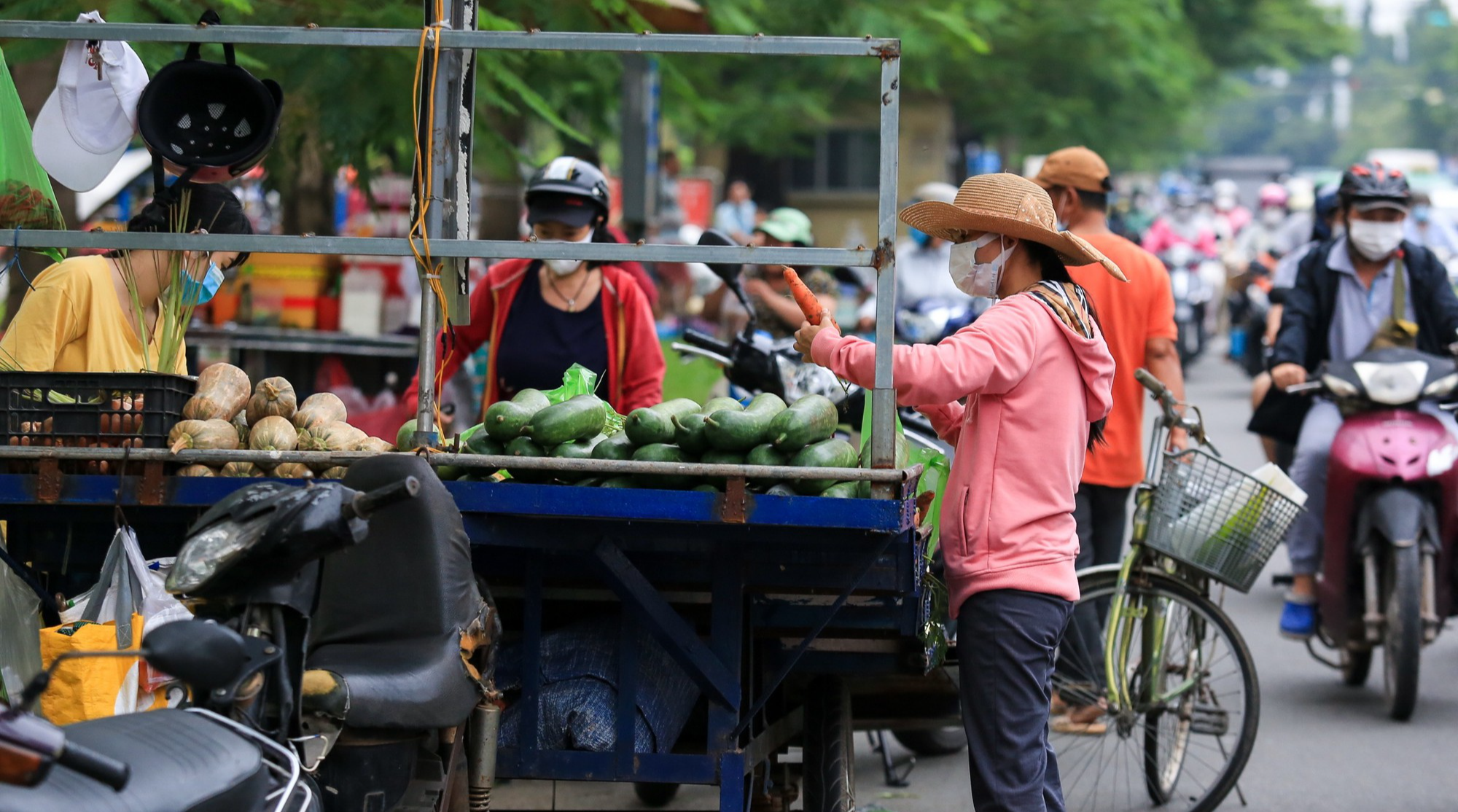
Many businesses are facing difficulties, affecting the lives of workers. In the photo: Workers in Tan Binh Industrial Park (Ho Chi Minh City) buying vegetables.
The key still lies with the officials.
However, according to many delegates, the root cause still lies with the officials, especially the tendency of officials and civil servants to avoid, shirk, and fear responsibility in recent times.
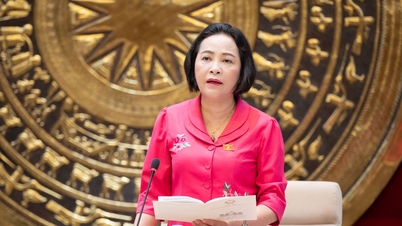
Minister of Home Affairs Pham Thi Thanh Tra (Yen Bai delegation) acknowledged that currently, a significant number of officials and civil servants are working half-heartedly, shirking their responsibilities, avoiding accountability, and fearing mistakes in the performance of their duties. According to Ms. Tra, these are signs of decline, hindering development and eroding public trust in the team of officials and civil servants within the state administrative system.
We can't just wait and see.
Representative Nguyen Chu Hoi (from Hai Phong delegation) also reflected on the situation where businesses are also in a "wait-and-see" mode. "In the economy, the wait-and-see attitude of those who control the country's resources will cause us to lose opportunity costs. And losing opportunity costs in economics is an invaluable loss," Mr. Hoi emphasized, adding that this is happening and "without a solution, it is very dangerous."
Emphasizing the need for a very clear stance and stating that these manifestations "cannot be excused" in the context of the country's current difficulties, Ms. Tra said that the Prime Minister has paid close attention to this issue and the Government has issued many directives on strengthening discipline and order in the state administrative system; promoting the study and emulation of Ho Chi Minh's style and ethics…



However, MP Nguyen Minh Duc argued that a more decisive approach is needed to address this situation. "The Prime Minister has given strong directives, but the ministries and agencies haven't been decisive enough. The National Assembly needs to demand that all ministries and agencies take action. All those responsible must ponder, think, and calculate to find fundamental solutions. We cannot allow fear of making mistakes, fear of responsibility, or institutional obstacles to hinder development," according to Mr. Duc.
Representative Le Thanh Van proposed that the National Assembly exercise supreme oversight over the performance of duties and powers by the heads of departments within the system. "The Prime Minister is proactive and 'fighting on all fronts,' but ministers, heads of departments, and even local Party committees are not working in sync. Rectification is necessary," Mr. Van suggested.
Improving the investment environment is fundamentally important.
According to a 2022 survey by the Vietnam Chamber of Commerce and Industry (VCCI), Deputy Chairman of the Economic Committee Nguyen Dinh Viet stated that 71.7% of businesses agreed with the assessment that "harassment when dealing with business procedures is common," a significant increase compared to 57.4% in 2021. "Currently, businesses and people are facing many difficulties, and attracting FDI is showing signs of decline, posing a huge challenge. Improving the investment and business environment is fundamentally very important and meaningful," the Deputy Chairman of the Economic Committee emphasized.
Removing obstacles for businesses and unleashing domestic capacity were also issues raised by many delegates. Delegate Le Thanh Van (from Ca Mau province) argued that corporations, state-owned companies, and startups should be considered national enterprises and need to be "nurtured." Expressing his view that economic and civil relations should not be criminalized, Mr. Van stated that cases under the direction of the Central Steering Committee on Anti-Corruption and Negative Phenomena should be expedited and strictly handled to build trust among investors and businesses. "If it drags on, every business will be worried and apprehensive, fearing they might commit similar violations, so they won't dare to do anything," Mr. Van stated.
Minister of Home Affairs Pham Thi Thanh Tra also stated that the Government is implementing many solutions. Specifically, it is building and perfecting institutions because there are overlapping, contradictory, and unsuitable aspects that do not meet practical requirements, such as in the fields of investment, finance and budget, and public investment. Ms. Tra also said that it is necessary to promote decentralization and delegation of power, abandoning the habit of seeking opinions and approvals before agencies, organizations, and local governments exercise their legally prescribed powers.
Ms. Tra also informed that the Ministry of Interior is advising the Government to issue a decree on encouraging and protecting dynamic, creative officials who dare to think, dare to act, and dare to take responsibility for the common good, but this content is hampered by many legal regulations. Therefore, the Ministry of Interior is reporting to the National Assembly and the Standing Committee of the National Assembly to soon have a pilot resolution on encouraging and protecting officials who dare to think and act. After that, the Prime Minister will issue the decree.
However, according to Ms. Tra, the most important thing is the role and responsibility of the leader in daring to think, daring to act, daring to take responsibility, and resolutely dealing with officials who show signs of avoidance or shirking responsibility.
Source link