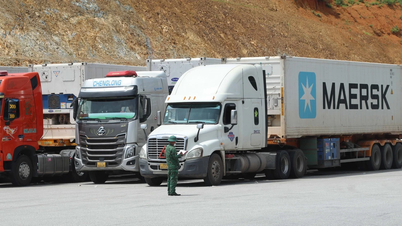
On June 24, global crude oil prices fell by more than $3 per barrel, reaching their lowest level since before the conflict in Iran erupted. The main reason was that the market was relieved of supply concerns as a number of stranded oil tankers began safely leaving the Strait of Hormuz.
At the close of trading, North Sea Brent crude fell $3.34 (4.3%) to $73.74 per barrel. During the session, Brent crude briefly touched a low of $73.12 per barrel, its lowest level since February 27th, the day before the US and Israel launched their attack on Iran. US West Texas Intermediate (WTI) crude also fell $2.87 (3.9%) to $70.34 per barrel. This was the first time since March 2nd that WTI crude had slipped below the $70 per barrel mark.


Speaking at an energy forum in New York, U.S. Energy Secretary Chris Wright said that crude oil flow through the Strait of Hormuz has now recovered to near pre-conflict levels. In the past 24 hours alone, approximately 20 million barrels of crude oil have left this vital waterway under military escort.
Mr. Wright explained that the delay in restoring maritime traffic was primarily due to the need to clear Iranian mines. The official also affirmed that the U.S. would ensure the continued flow of oil even without a formal agreement with Iran, and assessed that Iran no longer has the capacity to blockade the strait in the future.
Despite signs of improvement in global supply, US inventories remain tight due to strong refining demand coupled with earlier releases from emergency reserves. The US Energy Information Administration (EIA) reported that total US crude oil inventories, including the Strategic Petroleum Reserve (SPR) and commercial reserves, fell by 15.1 million barrels to 743.3 million barrels in the week ending June 19th, the lowest level since 1984.



Source: https://vtv.vn/gia-dau-cham-day-nhieu-thang-10026062510404925.htm