

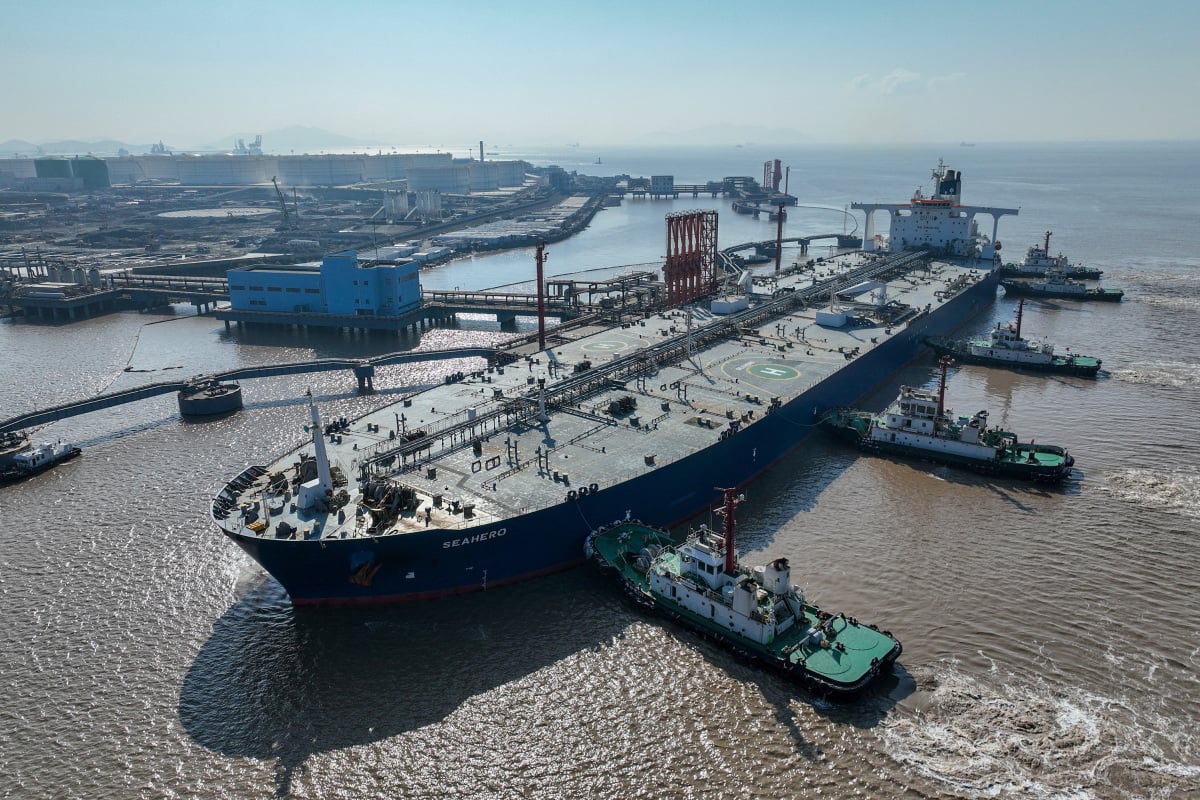
Oil prices accelerated on positive signals regarding demand, amid declining supply due to Ukraine's attack on Russian oil facilities.
On the morning of April 2nd, Brent crude oil rose 0.4% per barrel to $87.8. WTI crude oil also reached a new price of $84 per barrel. This is the highest price since the end of October 2023.
Earlier, both Brent and WTI prices rose 1% at the close of trading on April 1st. This was due to investors anticipating a recovery in the US and Chinese economies , which would boost oil demand. For example, in the US, the manufacturing index in March increased for the first time in 1.5 years.
Last week, the U.S. Commerce Department released data showing that the Personal Consumption Expenditures (PCE) index – the Federal Reserve's preferred measure of inflation – slowed in February. Energy and housing costs fell significantly. Most analysts believe that the slowdown in PCE will help maintain the likelihood of a Fed interest rate cut in June. This would boost the economy and increase oil demand.
In China, manufacturing output also rebounded in March. The country is currently the world's largest importer of crude oil. "Oil demand from China is the only major factor, aside from geopolitical volatility, that could push fuel prices to new highs. Recovering oil consumption and increased summer gasoline use could push prices up to $100 a barrel," predicted Bob Yawger, Director of Energy Derivatives at Mizuho.
Similarly, oil demand in Europe surged more than expected, reaching 100,000 barrels a day in February, according to Goldman Sachs data. This contradicts analysts' forecasts that oil consumption in the region would fall by 200,000 barrels per day this year.
While demand is rising, oil supply is tightening due to production cuts by the Organization of Petroleum Exporting Countries and its allies (OPEC+). According to Reuters, Saudi Arabia – the world's leading oil exporter – may raise the official selling price of its Arab Light crude oil in May.
Russian oil companies will reduce production, rather than cutting exports, in the second quarter. This is to comply with the OPEC+ production cut commitment. The Ukrainian drone attacks on Russian oil refineries also reduced Moscow's refining capacity.
Ha Thu (according to Reuters)
Source link























![[Video] Sunset at Lap An Lagoon – Where the sun sets over the fishing nets](https://vphoto.vietnam.vn/thumb/340x192/vietnam/resource/IMAGE/2026/05/31/1780192137701_beach-landscape-sea-water-nature-grass-745871-pxhere-com.jpeg)






![[Photo] The General Secretary, President and his wife lay flowers at the Ho Chi Minh Monument in Manila.](https://vphoto.vietnam.vn/thumb/1200x675/vietnam/resource/IMAGE/2026/05/31/1780219759477_anh-man-hinh-2026-05-31-luc-16-29-07.png)












































































Comment (0)