

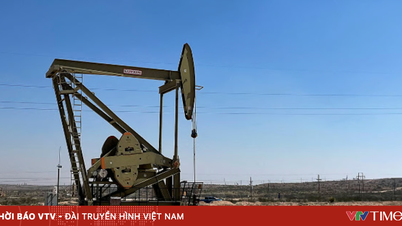
Crude oil prices surged again in Asian trading on the morning of April 20, after falling more than 9% at the end of last week, as both the US and Iran accused each other of violating the ceasefire agreement, leading to the closure of the Strait of Hormuz once again.
Brent crude oil prices rose $6.11, or 6.76%, to $96.49 per barrel, while West Texas Intermediate (WTI) crude oil prices increased $6.53, or 7.79%, to $90.38 per barrel.
On April 19, US President Donald Trump announced that the military had seized an Iranian-flagged cargo ship in the Gulf of Oman after it failed to heed warnings to stop. Meanwhile, Iranian officials refuted Trump's announcement of a second round of talks in Islamabad, saying there was "no clear prospect" for negotiations under current conditions.
The Iranian Revolutionary Guard Corps navy said it would close the Strait of Hormuz again and restrict shipping until the US lifts its blockade of Iranian ports. The force warned it would “destroy” any ships attempting to pass through the strait.
Saul Kavonic, head of research at financial services firm MST Marquee, argues that the oil market continues to be volatile, driven by constantly changing statements on social media from the US and Iran, rather than by the realities on the ground, which continues to hinder the rapid resumption of seaborne oil shipments via Hormuz.
On April 17, both types of oil experienced their biggest daily declines since April 8, after Iran announced it was reopening the Strait of Hormuz to commercial shipping for the remainder of the ceasefire.
Data from the ship tracking service Kpler shows that more than 20 tankers carrying oil, liquefied petroleum gas, metals, and fertilizers passed through the Strait of Hormuz on April 18, the highest number since March 1.
Source: https://vtv.vn/gia-dau-tho-tang-manh-tro-lai-100260420090930498.htm







































































































Comment (0)