

Encephalitis is a dangerous disease that occurs sporadically throughout the year; however, the number of people contracting it often increases during the summer months. Worryingly, not only children but also adults are at risk because the disease can be transmitted through the respiratory tract, and its initial clinical symptoms are easily confused with other illnesses, making treatment quite difficult.
Even after vaccination, you can still get the disease.
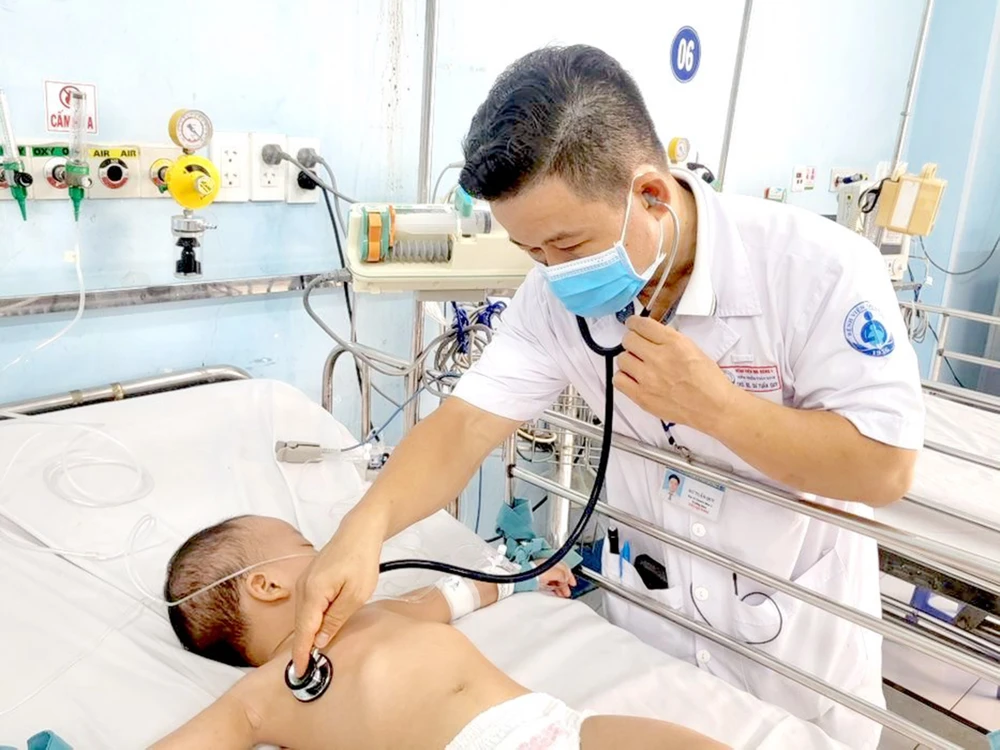
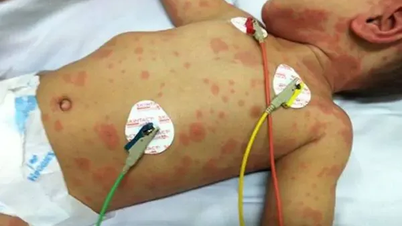
Hanoi has just recorded its first case of Japanese encephalitis in 2024. The patient is a 12-year-old boy from Phuc Tho district, who was admitted to the hospital with a high fever, headache, stiff neck, and unsteady gait. At the National Children's Hospital, cerebrospinal fluid tests were positive for the Japanese encephalitis virus. Epidemiological investigation revealed that the child had received four doses of the Japanese encephalitis vaccine, the last dose in June 2019.
Dr. Dao Huu Nam, Head of the Intensive Care Unit (Center for Tropical Diseases, National Children's Hospital), said that normally, after receiving three doses of the Japanese encephalitis vaccine in the first two years of life, children need booster shots every 3-5 years until they reach 16 years old. However, the booster vaccination rate is very low due to many families being negligent or forgetting. “Most children with Japanese encephalitis are admitted to the hospital in a very serious condition, with continuous high fever, convulsions, and coma. If detected and treated late, it can cause irreversible brain damage, leading to sequelae such as mental disorders, paralysis, speech disorders, seizures, epilepsy, etc.,” Dr. Dao Huu Nam warned.
Meanwhile, since the beginning of June, the Department of Tropical Diseases ( Phu Tho Provincial Obstetrics and Pediatrics Hospital) has received dozens of pediatric patients with meningitis. The number of cases has increased fivefold compared to the same period in 2023. One of the reasons for this situation is believed to be the hot and humid weather, with erratic changes, which is favorable for viruses and bacteria to thrive and attack, especially young children.
At the same time, Children's Hospital 1 in Ho Chi Minh City is treating a 9-year-old child (from Dong Thap province) with Japanese encephalitis. The child is still on a ventilator and has no history of vaccination against the disease. In addition, Children's Hospital 1 in Ho Chi Minh City is also monitoring 4 cases of encephalitis of unknown cause. According to Dr. Du Tuan Quy, Head of the Infectious Diseases and Neurology Department (Children's Hospital 1), mosquitoes are currently multiplying in rural areas because the harvest season has passed. Japanese encephalitis is transmitted by Culex mosquitoes (rice field mosquitoes), therefore the risk of contracting the disease is quite high for those who have not been vaccinated or have not taken measures to prevent mosquito bites.
Risk of severe long-term complications
Recently, Na Lau village (My Phuong commune, Ba Be district, Bac Kan province) recorded an outbreak of meningococcal meningitis in one family, resulting in two women (a grandmother and granddaughter) and two other people being hospitalized. The Ba Be District Health Center conducted an epidemiological investigation and determined that more than 350 people in the area had contact with the infected individuals. The risk of the outbreak spreading is very high if strict prevention and control measures are not implemented.
According to Dr. Do Thien Hai, Deputy Director of the Center for Tropical Diseases (National Children's Hospital), encephalitis and Japanese encephalitis are diseases with high mortality rates and sequelae in young children. The disease can occur at any age, but is most common in children aged 2-8 years; the incubation period is 4-14 days, averaging one week. In children, the initial symptoms are usually pronounced, such as abdominal pain and vomiting. Within the first 1-2 days, patients experience neck stiffness, increased muscle tone, and motor disturbances; confusion or loss of consciousness may also occur.
“Although encephalitis and Japanese encephalitis are very dangerous diseases, they are curable if detected early and treated promptly. As soon as children have symptoms such as fever, headache, fatigue, vomiting, stiff neck, tinnitus, photophobia, etc., parents should immediately suspect encephalitis and take them to the hospital for timely examination,” emphasized Dr. Do Thien Hai.
According to Dr. Nguyen Minh Tien, Deputy Director of the City Children's Hospital, there are many causes of encephalitis, such as viruses, bacteria, fungi, and parasites. In addition, patients with measles, chickenpox, etc., can also develop encephalitis as a complication. Japanese encephalitis is a common disease and can be prevented with a vaccine. Even if vaccinated, the condition will be milder and less likely to cause serious complications. Ideally, after receiving all three doses of the Japanese encephalitis vaccine, a booster shot should be given every 3-5 years.
To prevent encephalitis, people need to practice good personal hygiene such as: washing hands frequently with soap; rinsing the mouth and throat with common antiseptic solutions; eating a nutritious diet; exercising to improve physical health; maintaining good hygiene and ventilation in homes and workplaces; and proactively getting vaccinated. If any suspected symptoms appear, seek medical attention or immediately notify the nearest health authority.
According to health experts, meningococcal meningitis can be fatal within 24 hours and requires emergency medical attention. 50% of patients die if left undetected and untreated, or even with aggressive treatment, the mortality rate can still reach 15%.
MINH KHANG - GIAO LINH
Source: https://www.sggp.org.vn/gia-tang-benh-viem-nao-post745096.html

































































































Comment (0)