To seize this opportunity, it is necessary to synchronize solutions ranging from standardizing raw materials and applying international standards to developing a sustainable production-consumption ecosystem, thereby bringing purely Vietnamese green and organic products to the market and enhancing their competitiveness.

The eco-friendly, green products of Hanoi Green Cooperative are becoming increasingly accessible to consumers.
Vietnamese agricultural products are transforming in a green direction.
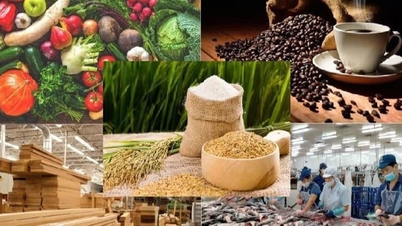
In recent years, the market has witnessed a clear shift from raw agricultural production to deep processing, especially among "purely Vietnamese" businesses. Many units have proactively applied technology and built safe production processes to increase value and meet the trend of sustainable consumption.
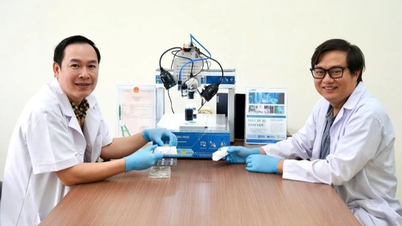
One exemplary model is INVEST Turmeric Joint Stock Company, which takes a different approach by fermenting fresh turmeric in earthenware jars for six months. According to Mr. Nguyen Trong Hung, the company's director, this method creates beneficial bacteria and natural enzymes, helping the body absorb curcumin more effectively. Notably, the entire process does not use heat, does not emit CO₂, thus preserving the valuable active ingredients from Chi Tan red turmeric ( Hung Yen ) while minimizing environmental impact.
This approach demonstrates a combination of local knowledge and modern technology. From familiar ingredients, the business has created high value-added products that serve the health and beauty needs, especially among young customers.
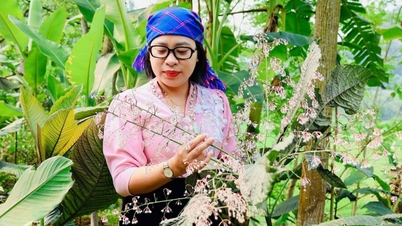
Meanwhile, the Hanoi Green Cooperative has chosen to cultivate Dien pomelos – a specialty deeply rooted in Hanoi's cultural identity – using high-tech methods to maximize the value of every fruit, from flowers and young to ripe. Given the reality of declining economic value over time, with many old orchards even being cut down, the shift to deep processing has opened up a new direction.
Currently, the cooperative has developed more than 10 product lines ranging from skincare and haircare cosmetics to food products, meeting international standards such as Halal and FDA, thereby expanding export opportunities. According to Ms. Ba Thi Nguyet Thu, Chairwoman of the Board of Directors of Hanoi Green Cooperative, green, high-quality products are no longer a trend but have become a market standard, as consumers increasingly prioritize safe, transparently sourced, and environmentally friendly products.
In the organic cosmetics segment, ONA Global Natural and Organic Products Joint Stock Company, with its "Cỏ Cây Hoa Lá" brand, is utilizing local ingredients such as ginger, lemongrass, turmeric, and green tea according to international organic standards. The products have received international certifications and have been exported to many markets such as Japan, the United States, and Thailand.
Businesses have focused on clearly sourced raw materials, environmentally friendly production processes, and a long-term orientation towards green consumption trends. This is a crucial foundation for Vietnamese agricultural products to break free from the "raw, cheap" image, gradually building an image of high-quality products associated with sustainable consumption, and fully capable of competing with imported goods.
Removing bottlenecks for green products
According to experts, the strategy for developing green products in Vietnam is gradually taking shape towards sustainability, revolving around three main pillars: deep processing, international standardization, and building a green ecosystem. However, to realize these pillars, the market still faces many obstacles that need to be overcome.
First and foremost, increasing the technological content in deep processing remains a key factor. Businesses are shifting strongly from exporting raw materials to developing refined products such as essential oils, functional foods, or cosmetics from medicinal herbs. Fermentation and extraction technologies not only extend shelf life but also increase economic value, while contributing to solving the problem of market access for agricultural products.
Simultaneously, standardizing quality according to international standards is a mandatory requirement. However, according to Ms. Ba Thi Nguyet Thu, the biggest challenge currently is not production but standardization and bringing products to market. Many businesses are limited in terms of finance, standard knowledge, and lack a connected trade ecosystem, making it difficult for products to scale up. “For green products to go far, they must be accompanied by standards, trust, and a market. When these three elements are well connected, Vietnamese products can absolutely compete on a global scale,” said Ms. Ba Thi Nguyet Thu.
From a market perspective, economist Le Quoc Phuong believes the biggest barrier is cost. Green products typically have higher costs due to stringent process and material requirements, while consumers remain price-sensitive. Nevertheless, the growth potential for green products remains significant as consumers become increasingly concerned about health and the environment. In the long term, as incomes rise and technology helps reduce costs, access to green products will improve significantly.
Another important direction is to shift from price competition to competition based on added value. Businesses need to develop high-quality products with transparent origins and that are safe for health, instead of focusing on the low-price segment.
To strengthen market confidence, transparency of information, the application of reputable certifications, and the disclosure of sustainable development strategies are key factors. Simultaneously, enhanced communication about green consumption is needed to change consumer behavior.
From a policy perspective, the role of the State is decisive in promoting the market. Solutions such as tax incentives for businesses investing in clean technology, support for certification costs, development of green investment funds, or promotion of green public procurement will create important impetus.
"Improving the technical standards system, strictly controlling eco-labels, and limiting the 'greening in name only' phenomenon will help build a transparent and sustainable competitive environment," emphasized expert Le Quoc Phuong.
Source: https://hanoimoi.vn/tiep-suc-cho-nong-san-xanh-745658.html


![[Photo] General Secretary and President To Lam presides over a meeting with the Central Organizing Committee.](https://vphoto.vietnam.vn/thumb/1200x675/vietnam/resource/IMAGE/2026/06/03/1780482764658_a1-bnd-4741-3342-jpg.webp)
![[Photo] First session of the 14th Congress of the Vietnam Trade Union](https://vphoto.vietnam.vn/thumb/1200x675/vietnam/resource/IMAGE/2026/06/03/1780465947883_ndo_br_img-3852-jpg.webp)


![[Photo] Secretary of the National Assembly Party Committee, Chairman of the National Assembly presides over the meeting of the Standing Committee and Executive Committee of the National Assembly Party Committee.](https://vphoto.vietnam.vn/thumb/1200x675/vietnam/resource/IMAGE/2026/06/03/1780480353201_ndo_br_bnd-2585-jpg.webp)
















































![[Video] Sunset at Lap An Lagoon – Where the sun sets over the fishing nets](https://vphoto.vietnam.vn/thumb/1200x675/vietnam/resource/IMAGE/2026/05/31/1780192137701_beach-landscape-sea-water-nature-grass-745871-pxhere-com.jpeg)

































Comment (0)