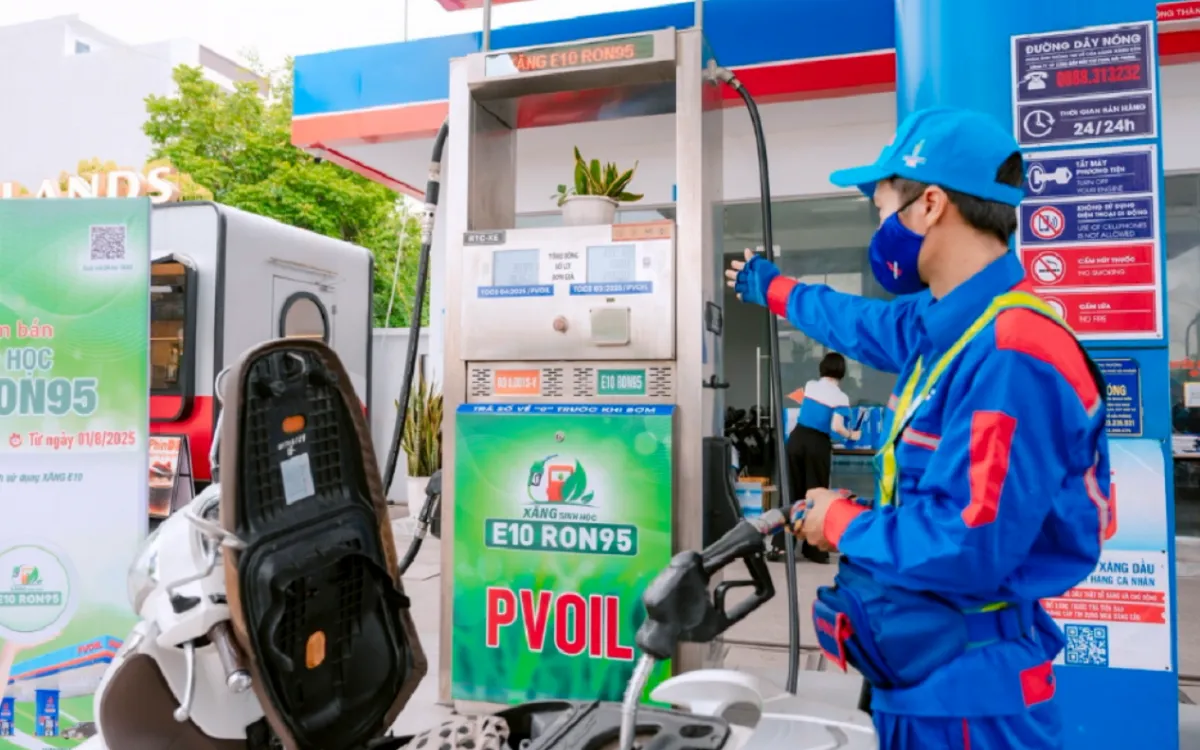
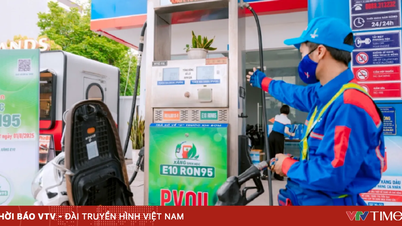
On the afternoon of June 1st, the Government's Electronic Information Portal organized a seminar titled "Is using E10 gasoline a cause for concern?".
According to information presented at the seminar, Mr. Do Van Tuan, Chairman of the Vietnam Biofuel Association, stated that approximately 65 countries and territories worldwide , representing about 97% of the world's population, use biofuels.
Mr. Tuan cited the example of the US, where E10 gasoline accounts for 98% of fuel used, with only about 2% being conventional gasoline. In Europe, the use of E10 gasoline is very common. In Asia, countries like China, India, the Philippines, and Thailand all use E10 gasoline. Australia also uses E10 gasoline. Japan is cautious but has a roadmap to use E10 gasoline by 2027.
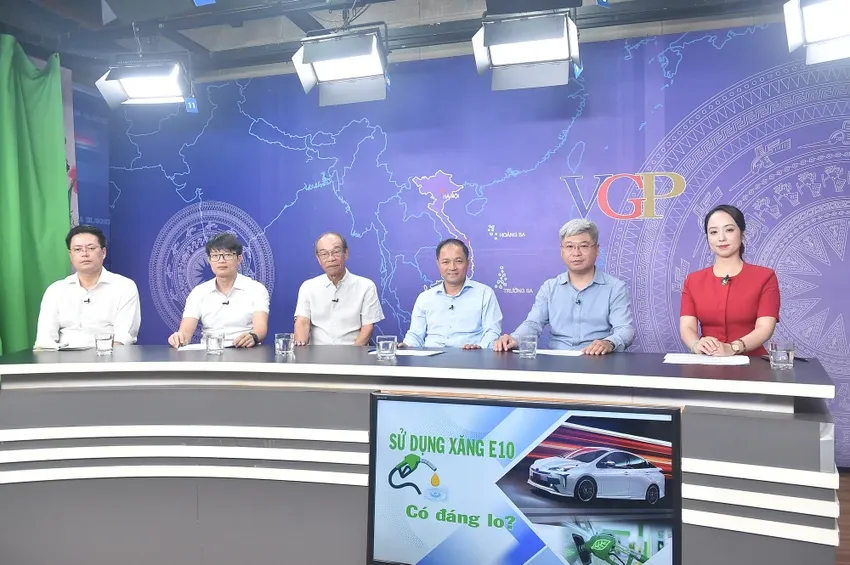
Scene from the seminar. Photo: VGP
"Therefore, in most regions and countries around the world, E10 has become the standard gasoline," Mr. Tuan shared.
The Chairman of the Vietnam Biofuel Association believes that, given the global use of E10 gasoline, we haven't lost sight of the lessons learned from the trial. Furthermore, petroleum products have very high international standards, and these standards are fundamentally the same in Vietnam and abroad; any differences lie only in certain additives.
"Therefore, we don't waste time on the transition process, nor do we waste time reassessing the effectiveness of E10 gasoline in the overall picture of usage and economics ," Mr. Tuan said.
Answering the question about why only E10 gasoline was used from June 1st to 6th, instead of using it alongside conventional gasoline, Mr. Dao Duy Anh, Deputy Director of the Department of Innovation, Green Transformation and Industrial Promotion (Ministry of Industry and Trade), said:
To implement the biofuel roadmap according to Circular 50/2025, the Ministry of Industry and Trade has conducted thorough research and careful consideration based on assessments and surveys of all conditions, from the objectives of the biofuel program and supply sources to infrastructure for storage, blending, transportation, and distribution to consumers.
Based on all the information gathered, the Ministry of Industry and Trade assesses that the time is ripe to implement a very correct policy, which has been concretized by resolutions of the Politburo, decisions of the Prime Minister, and the determination of ministries and sectors.
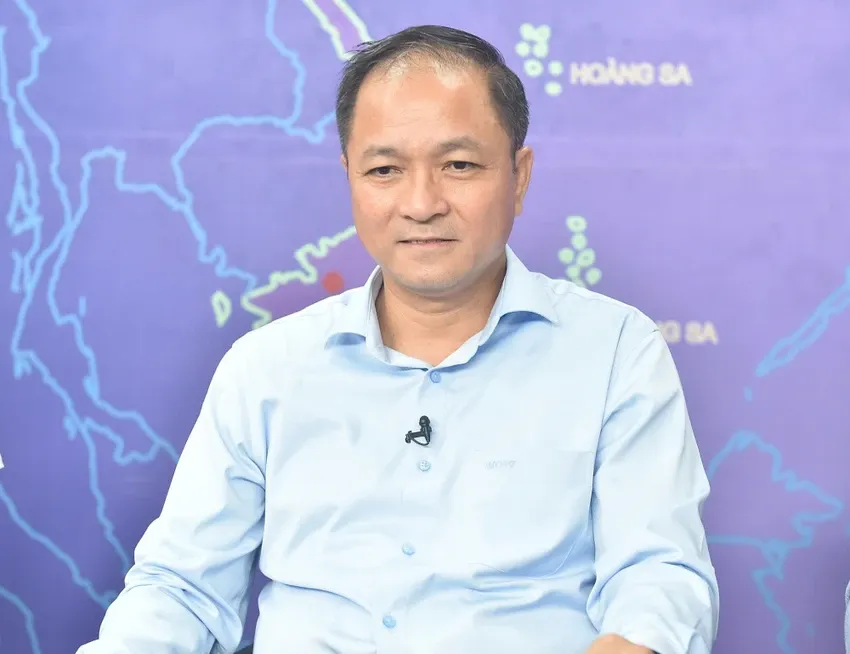
Mr. Dao Duy Anh, Deputy Director of the Department of Innovation, Green Transformation and Industrial Promotion (Ministry of Industry and Trade). Photo: VGP
"Once we have surveyed, assessed, and gathered sufficient information, there is no reason to continue retaining and circulating fossil fuels. If we continue to use fossil fuels, how can we talk about reducing our dependence on fossil fuels and achieving national energy security? That is why the Ministry of Industry and Trade, as well as the Government, are determined to make a thorough transition to achieve these goals," Mr. Duy Anh stated.
Regarding the pricing of E10 bioethanol fuel, Mr. Duy Anh stated that bioethanol fuel, like any other fuel product or commodity in general on the market, is priced based on the cost of raw materials, production costs, logistics costs, sales costs, and the profit margin of the manufacturer and distributor, as well as various taxes.
The price of E10 gasoline must also be based on all factors such as the price of input materials like base gasoline, ethanol biofuel, etc.
"We live in an open world, where all raw material prices follow global price levels. Therefore, if global prices rise, our input costs also rise, and if they fall, our costs also decrease. Adding all production costs, sales costs, profit, and taxes, we arrive at the price of biofuel," Mr. Duy Anh explained.
Source: https://money.vtv.vn/dai-dien-bo-cong-thuong-neu-ly-do-chi-kinh-doanh-xang-e10-109260602112445813.htm



![[Photo] First session of the 14th Congress of the Vietnam Trade Union](https://vphoto.vietnam.vn/thumb/1200x675/vietnam/resource/IMAGE/2026/06/03/1780465947883_ndo_br_img-3852-jpg.webp)
![[Photo] Secretary of the National Assembly Party Committee, Chairman of the National Assembly presides over the meeting of the Standing Committee and Executive Committee of the National Assembly Party Committee.](https://vphoto.vietnam.vn/thumb/1200x675/vietnam/resource/IMAGE/2026/06/03/1780480353201_ndo_br_bnd-2585-jpg.webp)

![[Photo] General Secretary and President To Lam presides over a meeting with the Central Organizing Committee.](https://vphoto.vietnam.vn/thumb/1200x675/vietnam/resource/IMAGE/2026/06/03/1780482764658_a1-bnd-4741-3342-jpg.webp)



































![[Video] Sunset at Lap An Lagoon – Where the sun sets over the fishing nets](https://vphoto.vietnam.vn/thumb/1200x675/vietnam/resource/IMAGE/2026/05/31/1780192137701_beach-landscape-sea-water-nature-grass-745871-pxhere-com.jpeg)
























Comment (0)