Using forest leaves, fragrant glutinous rice, and golden ash water carefully selected through generations of experience, the Tay Khao people in Dong Cuong persistently preserve the traditional craft of making banh nang (a type of Vietnamese rice cake). Each cake is not only a simple dish associated with daily life and festive occasions, but also embodies cultural values passed down through many generations.
Báo Lào Cai•03/06/2026
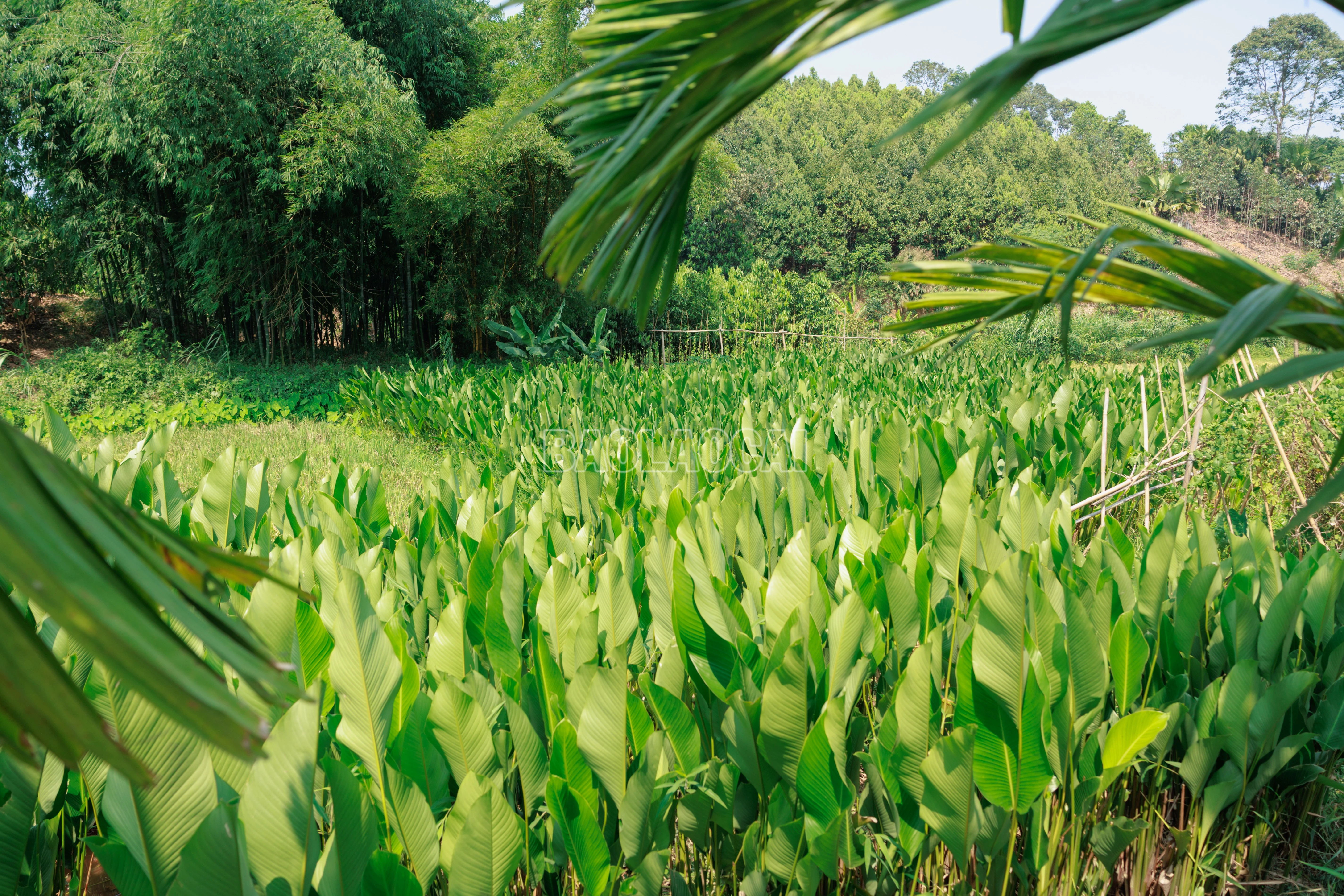
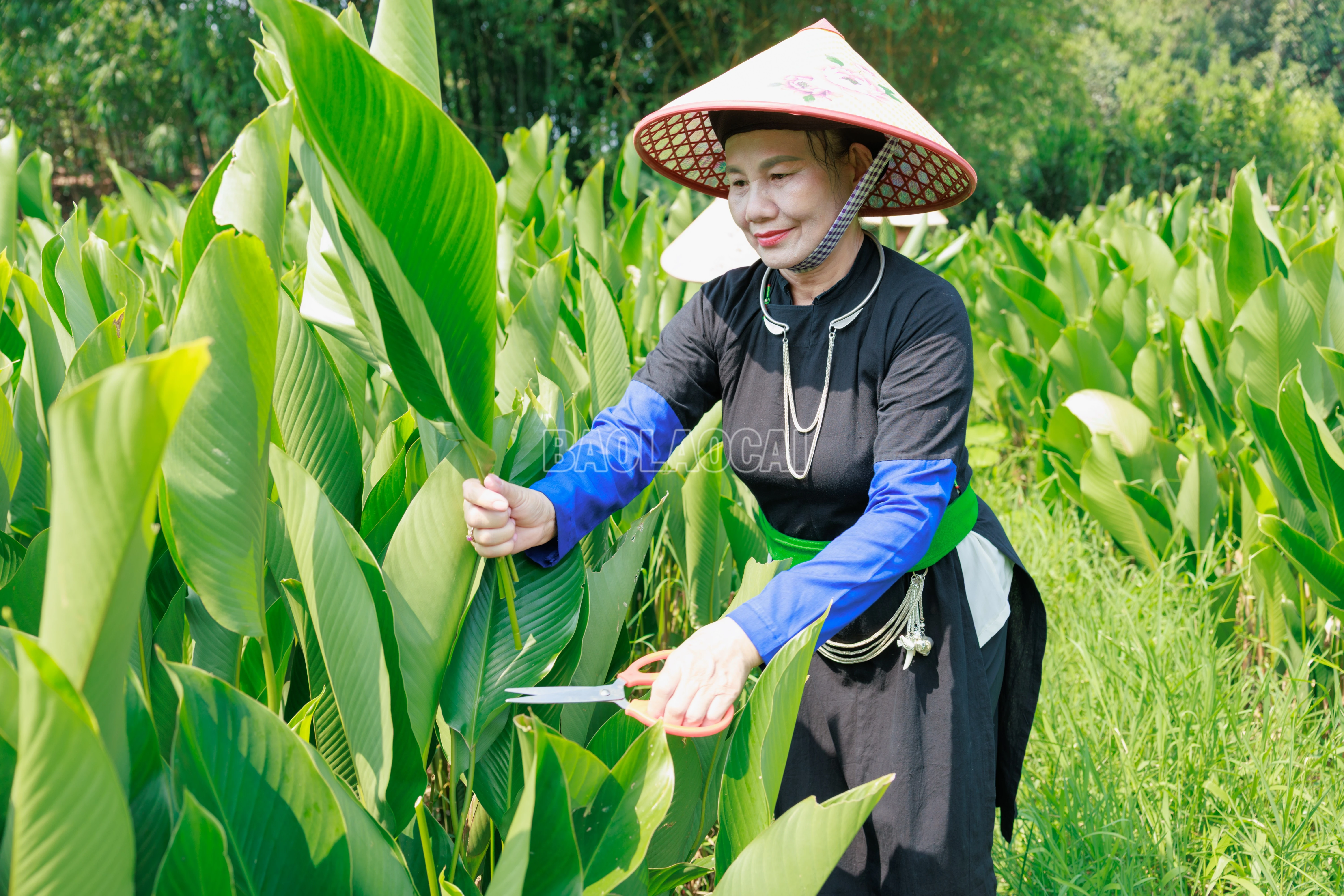
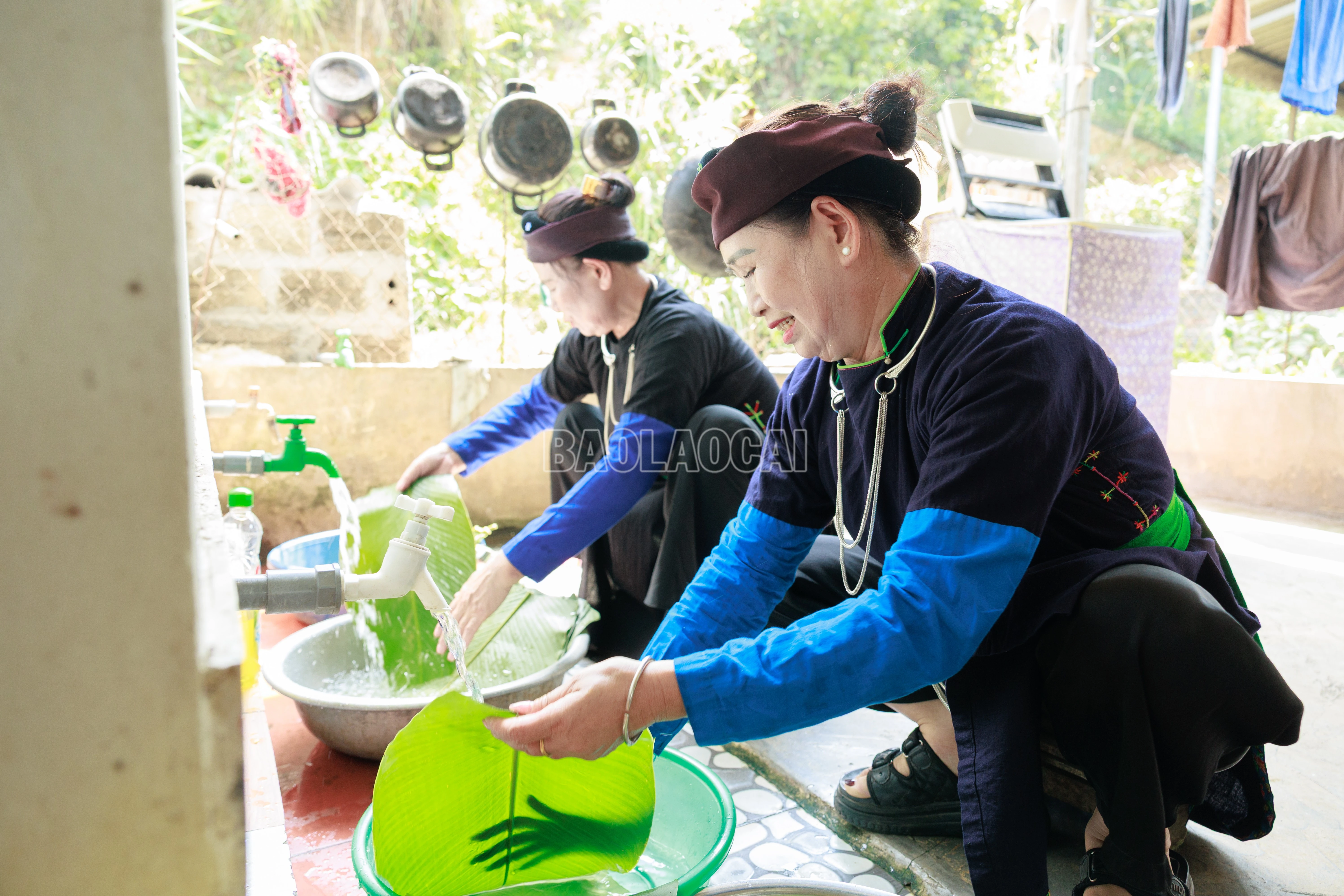
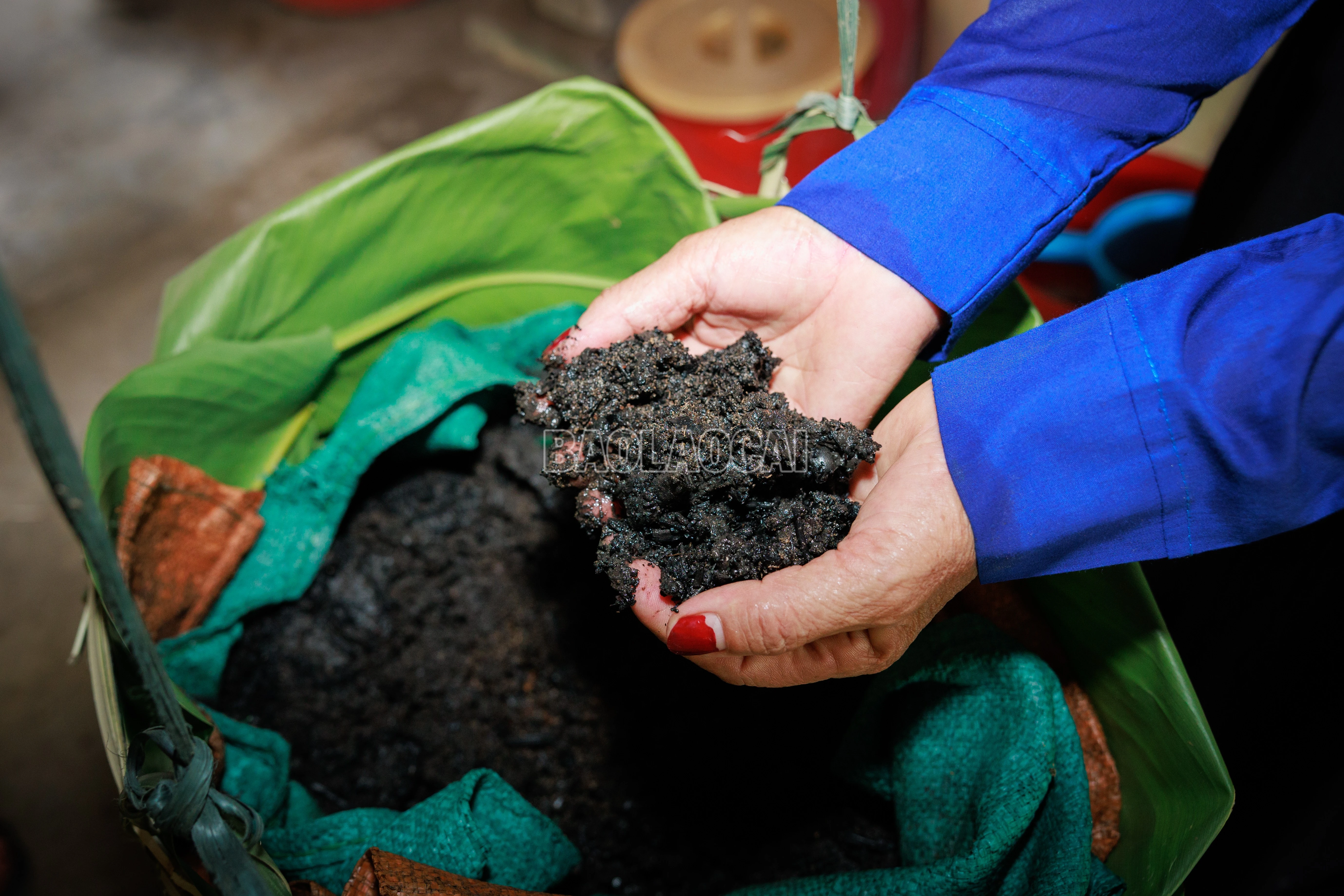
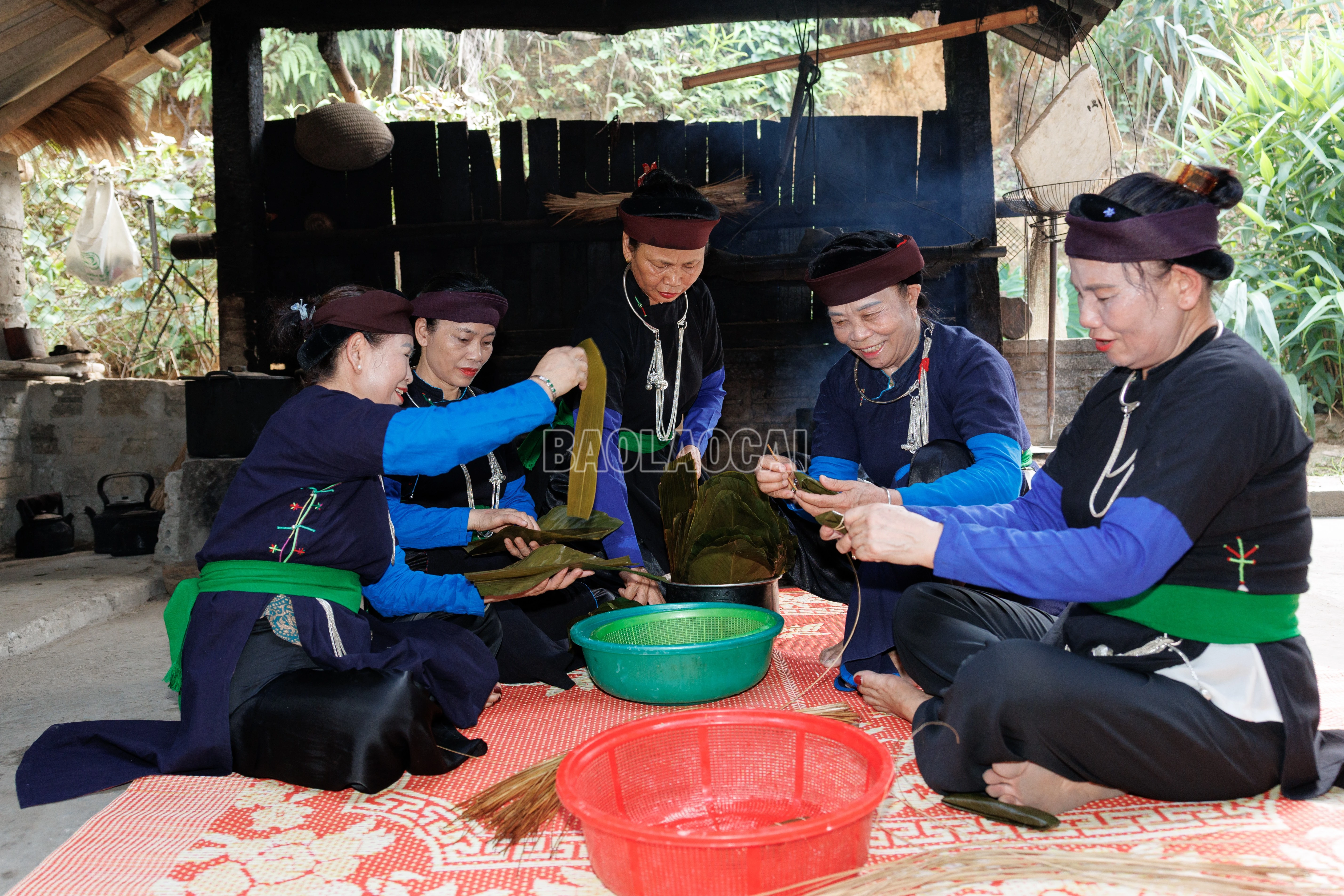
The lush green fields of dong and chít leaves at the foot of the hills in Dong Cuong are one of the main ingredients for making the traditional banh nang (rice cake) of the Tay Khao people. From the palm leaves that are cared for year-round, the locals select the oldest, widest, and most vibrant green leaves to create the beautiful, chewy crust of the pastry. After harvesting, the leaves of the dong and chít plants are trimmed at the ends, washed thoroughly several times, and then boiled in a pot. After being boiled for 30 minutes to 1 hour over medium heat, the leaves are removed and left to drain before being used to wrap the cakes. The boiling process makes the leaves soft, pliable, and easier to shape when wrapping. Throughout this process, the baker must adjust the heat and monitor the boiling point of the water to ensure the leaves cook evenly without becoming mushy, retaining their beautiful green color and necessary durability. After preparing the leaves for wrapping the cakes, the Tay Khao people begin the process of preparing the lye water. The ash, made from sesame plants and dried bananas, is a special ingredient in the Tay Khao's traditional cake-making craft. According to folk wisdom passed down through generations, the quality of the lye water largely determines the color, clarity, and flavor of the finished cake.
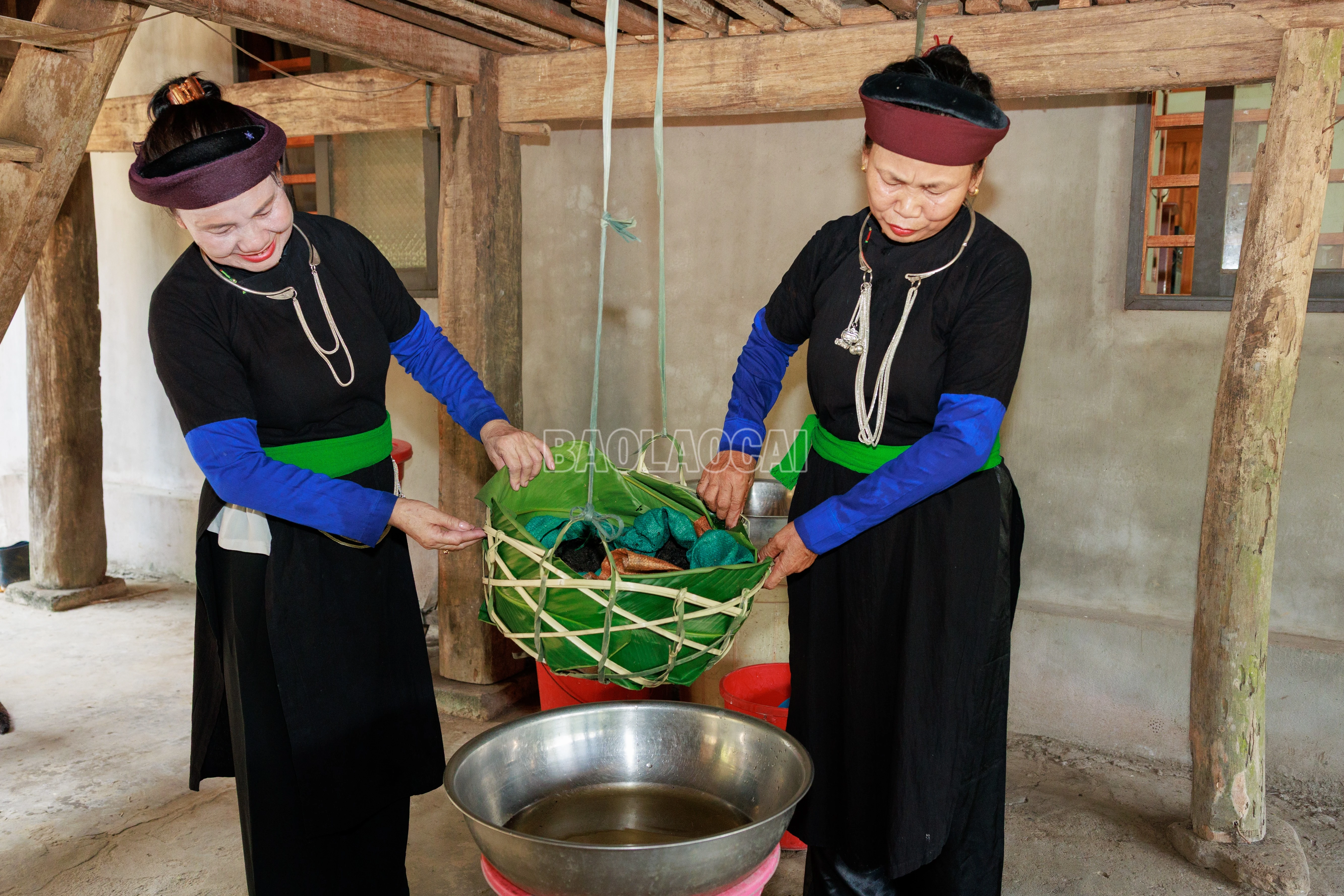
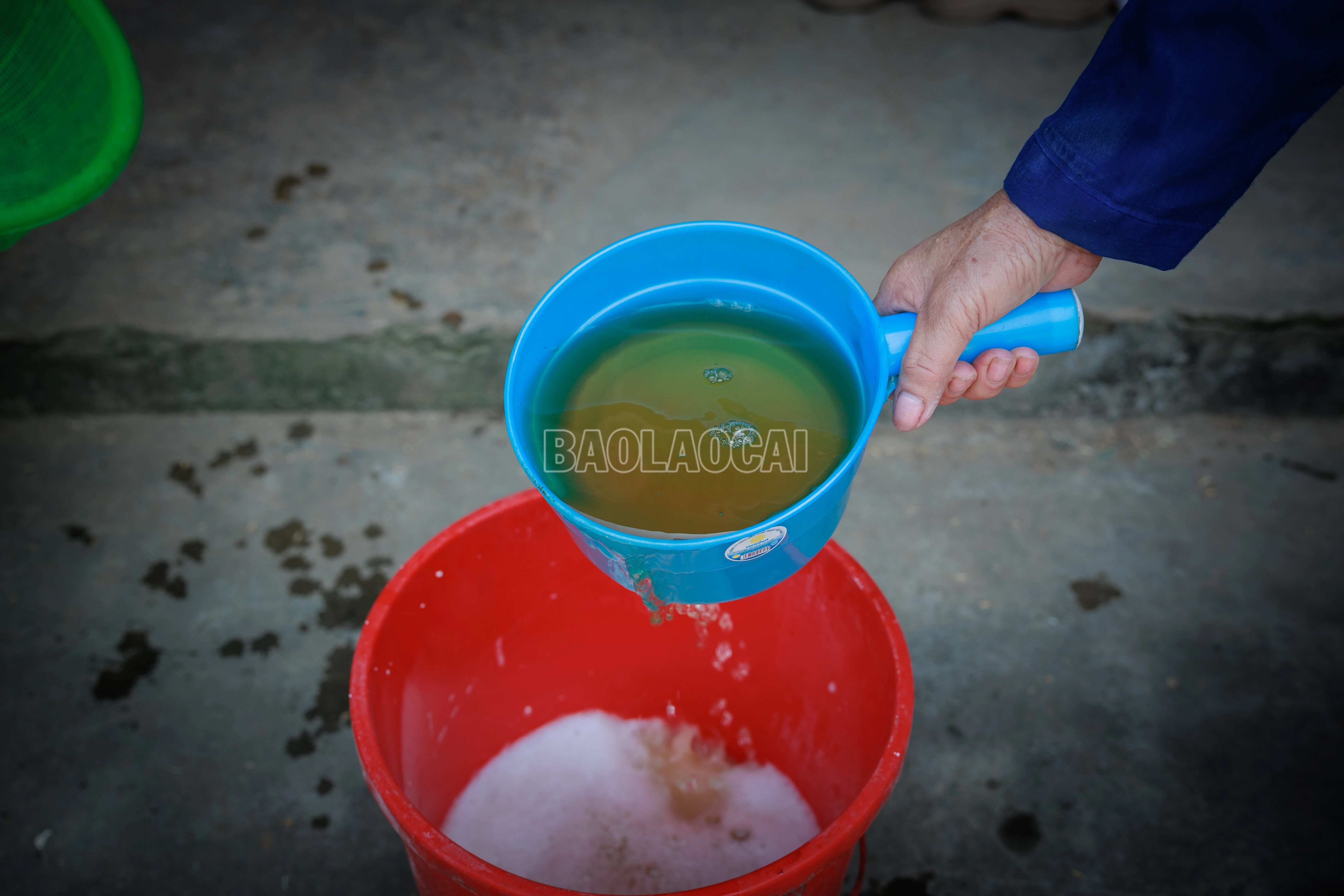
The ash after burning is thoroughly mixed, finely ground, and then mixed with water in the appropriate ratio.
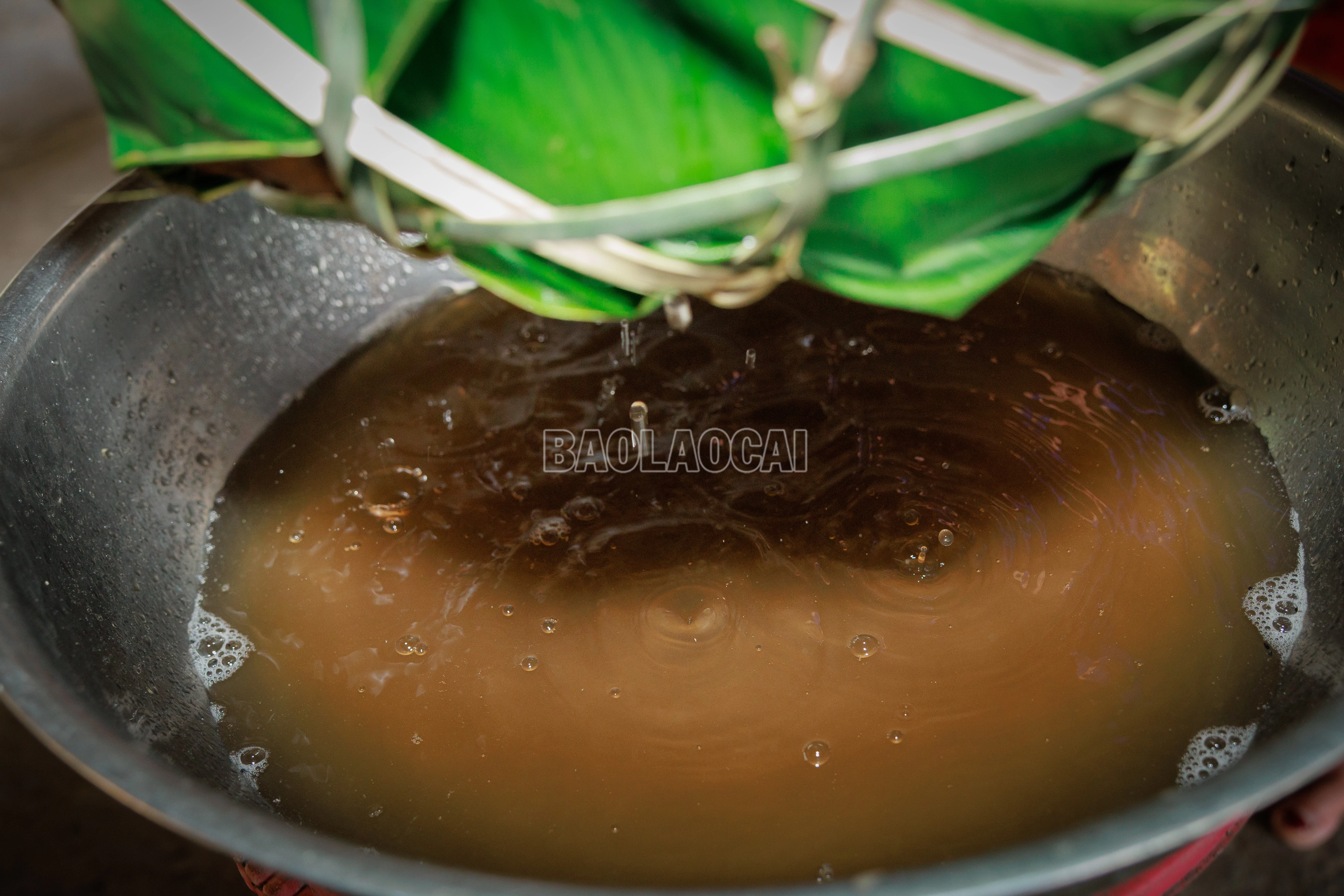
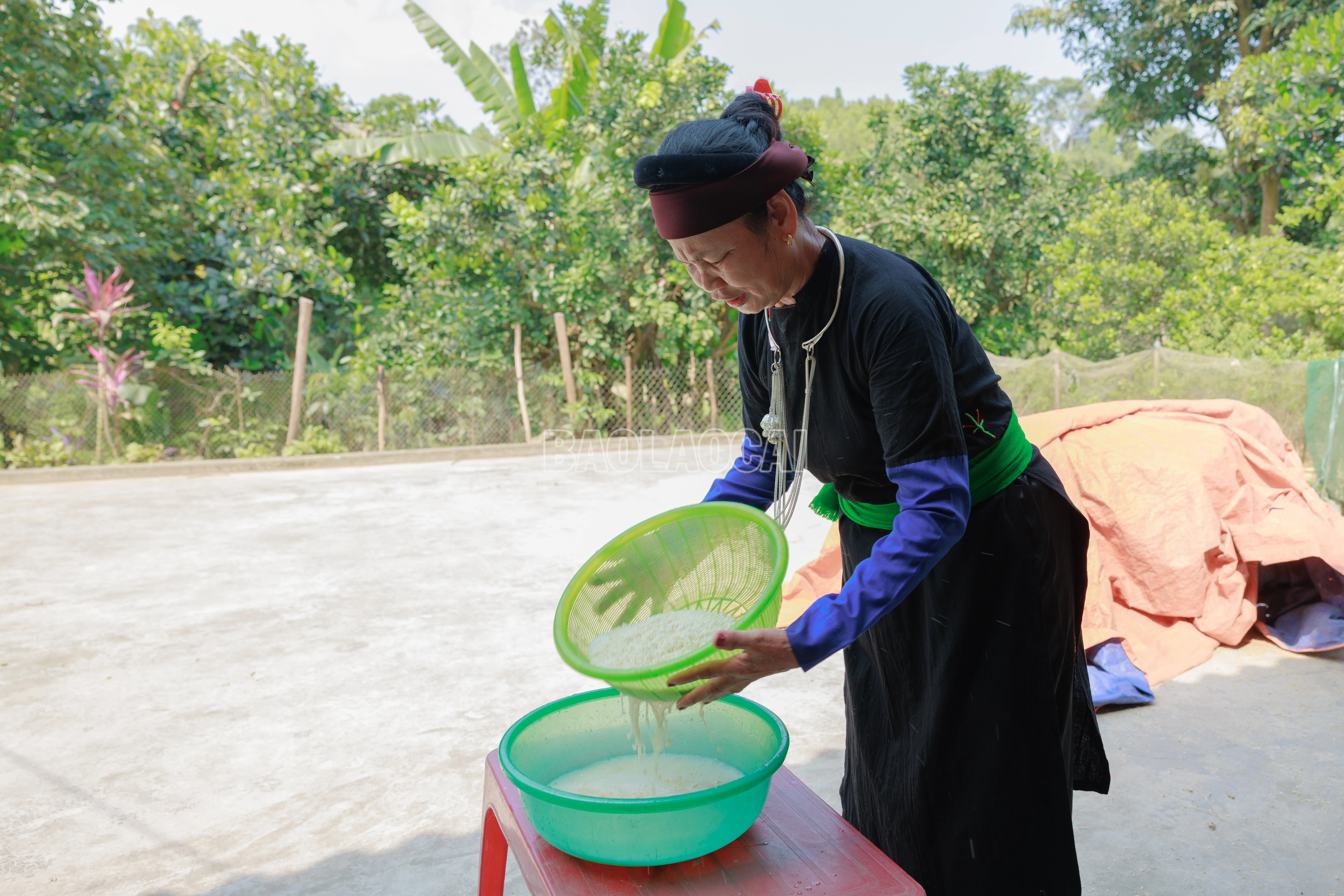
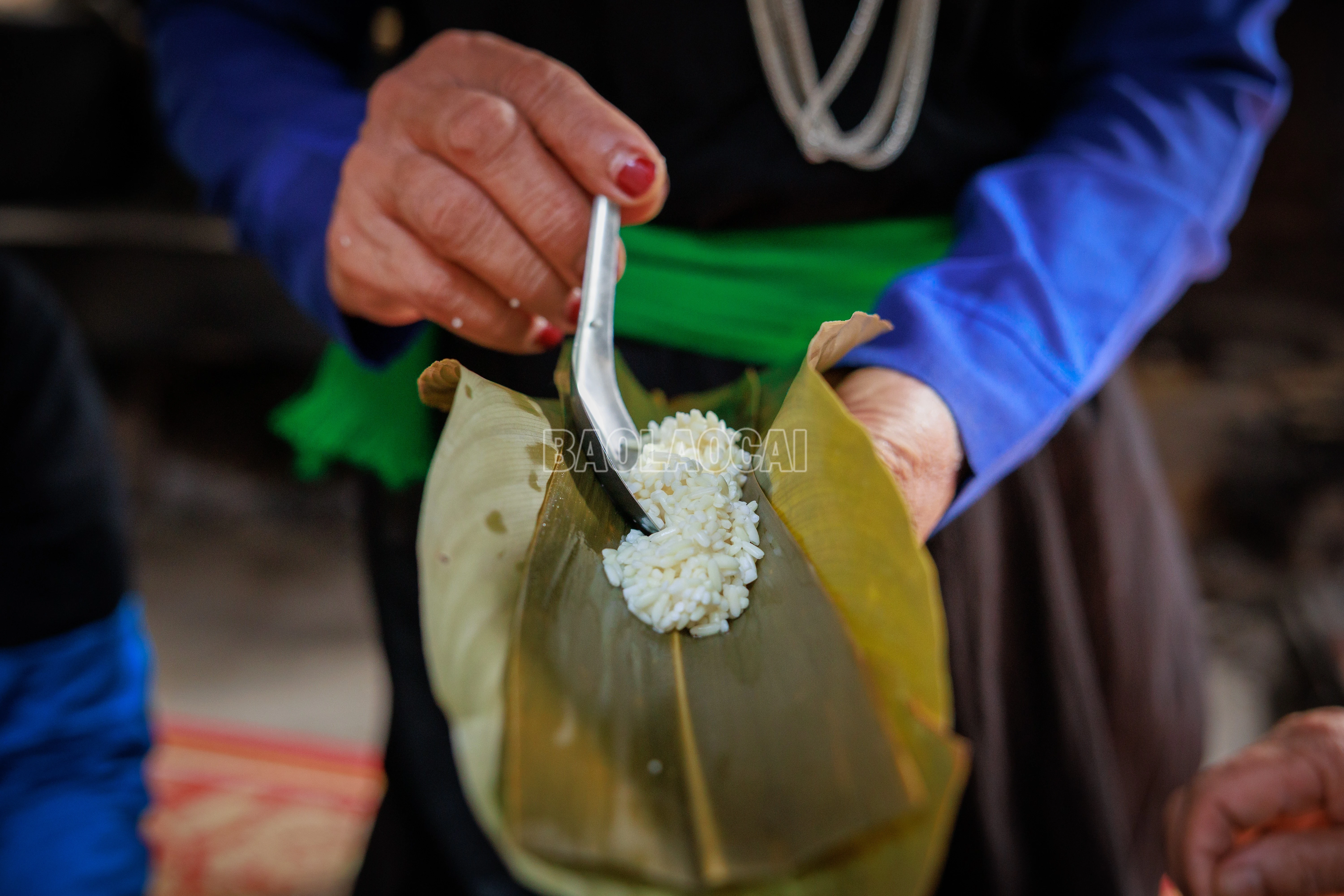
The lye water is filtered through a sack or a layer of dry glutinous rice straw placed in a bamboo basket to remove impurities, yielding a clear, golden-yellow liquid. This is the most important step in the process of making lye rice cakes. After obtaining the clear, golden-yellow lye water, the baker begins preparing the glutinous rice. The rice is washed thoroughly several times, removing any broken grains and impurities before being soaked in the lye water. Good quality glutinous rice, after being washed and drained, is soaked in yellow ash water for 3 to 5 hours. After soaking for the required time, the rice is drained before wrapping. The glutinous rice grains, having absorbed the lye water evenly, become plump and shiny, indicating that the batch of cakes is of good quality.
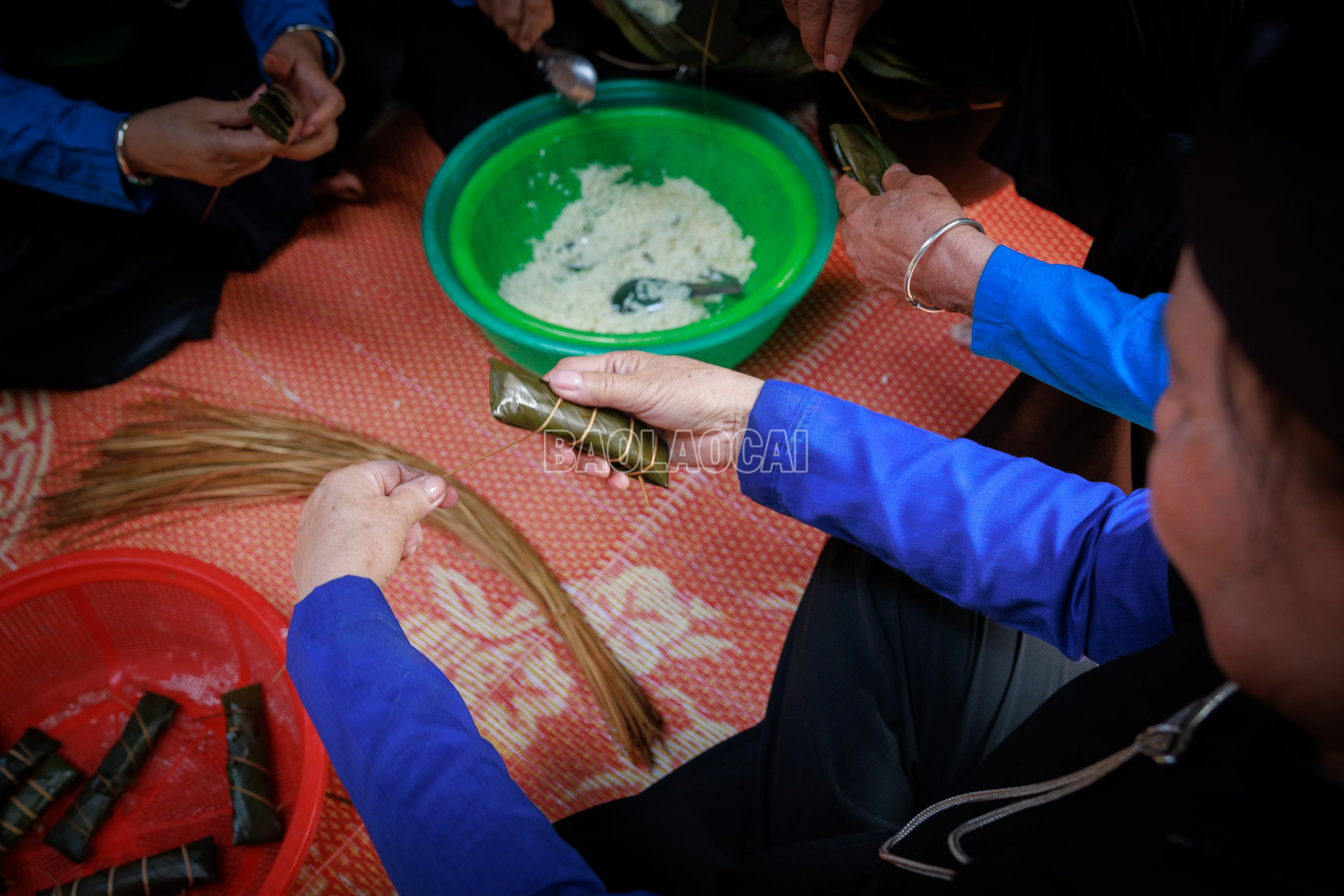
The Tay Khao woman skillfully arranges the leaves, puts the rice into the leaf mold, and wraps the cake with expert hands. The finished cakes are tied with roasted bamboo strips. The strips are tightened just right to ensure the cakes maintain their shape throughout the boiling process.
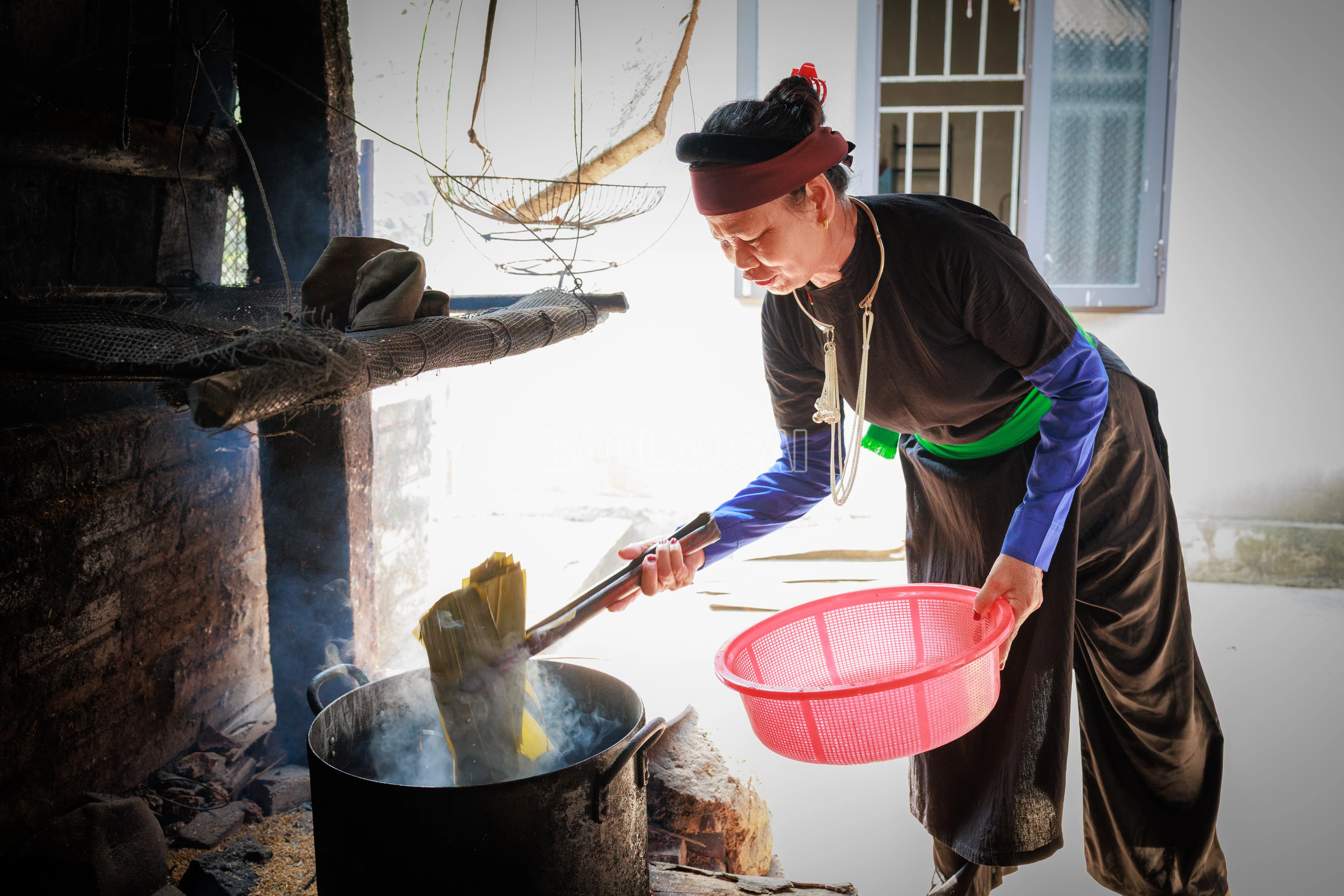
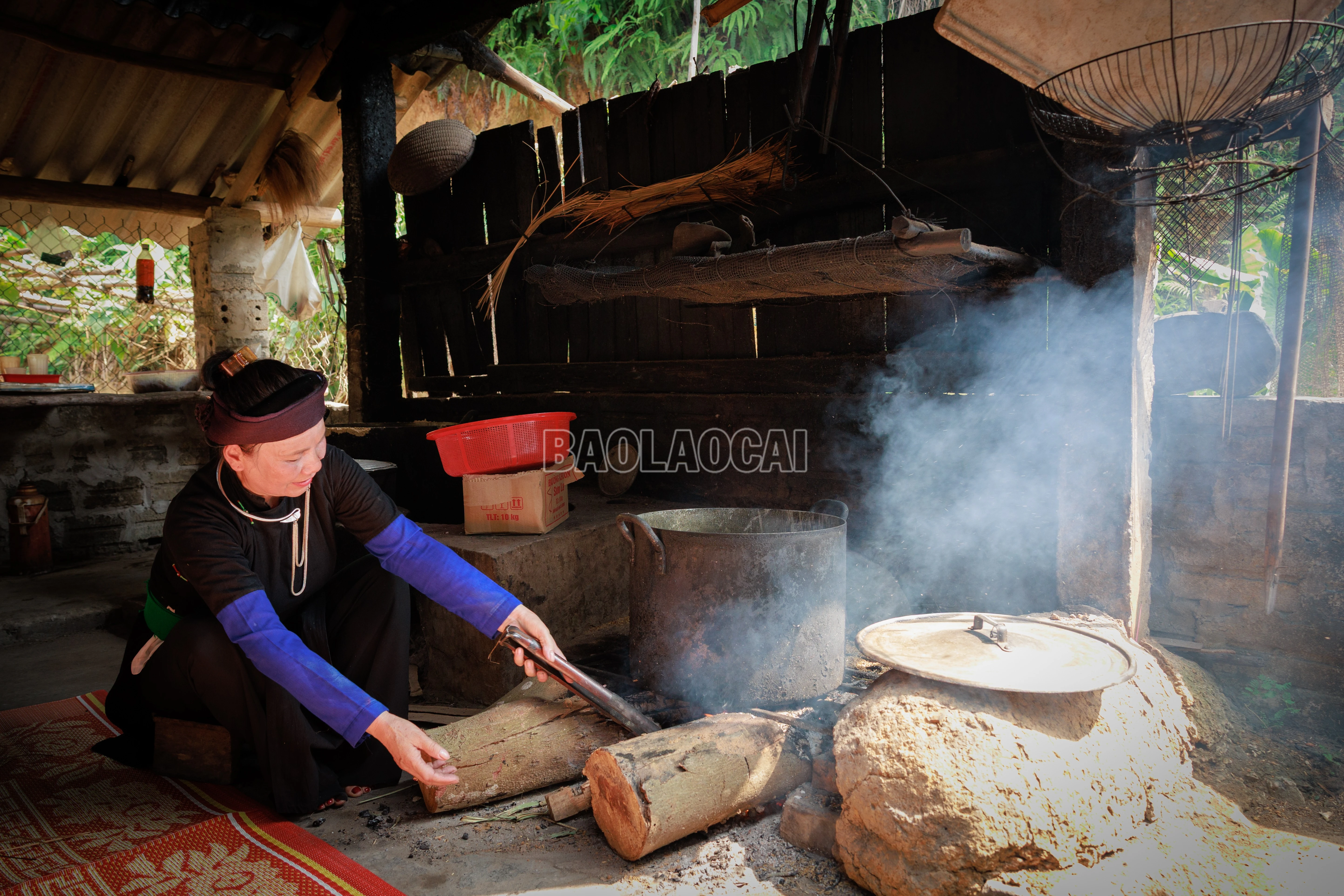
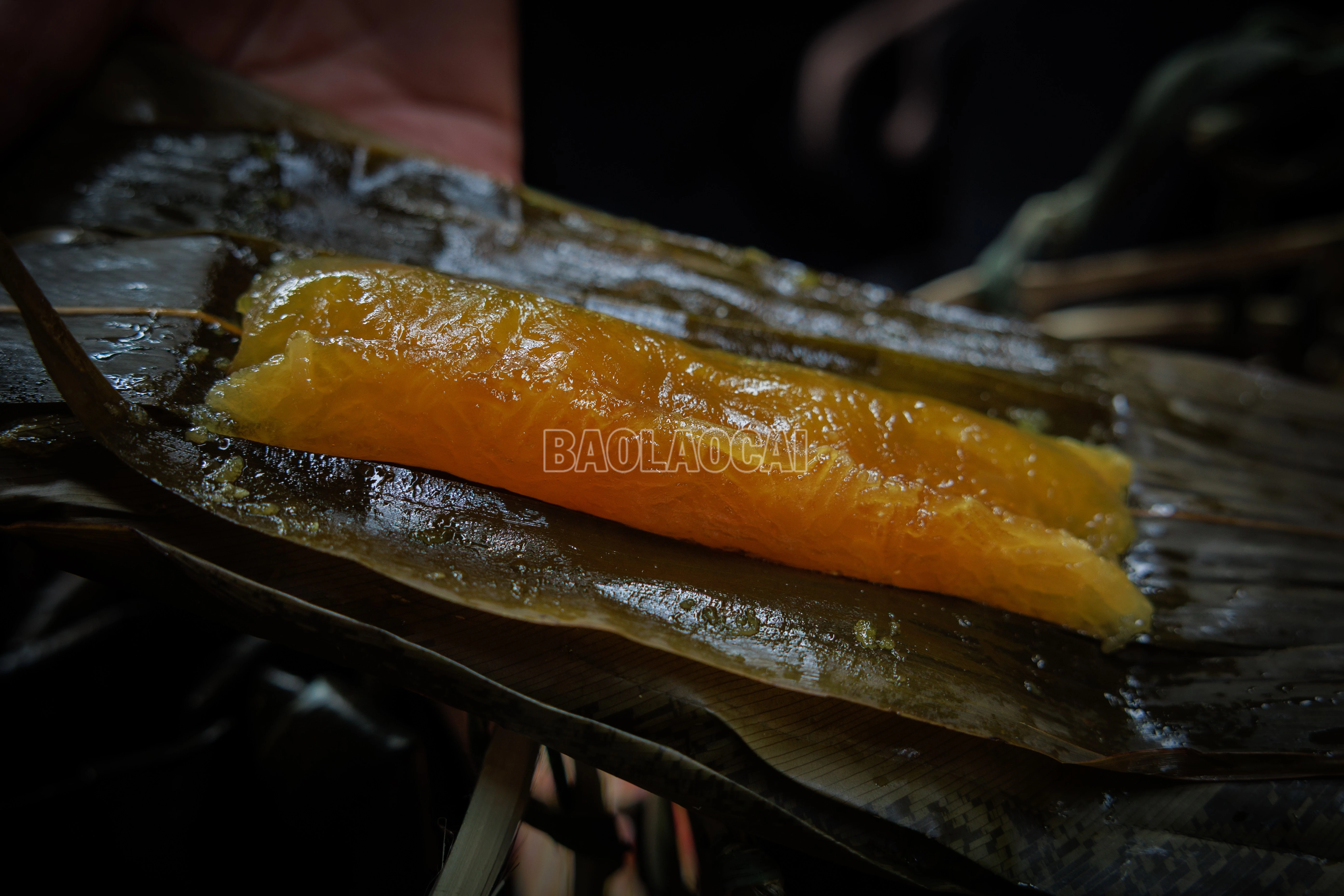
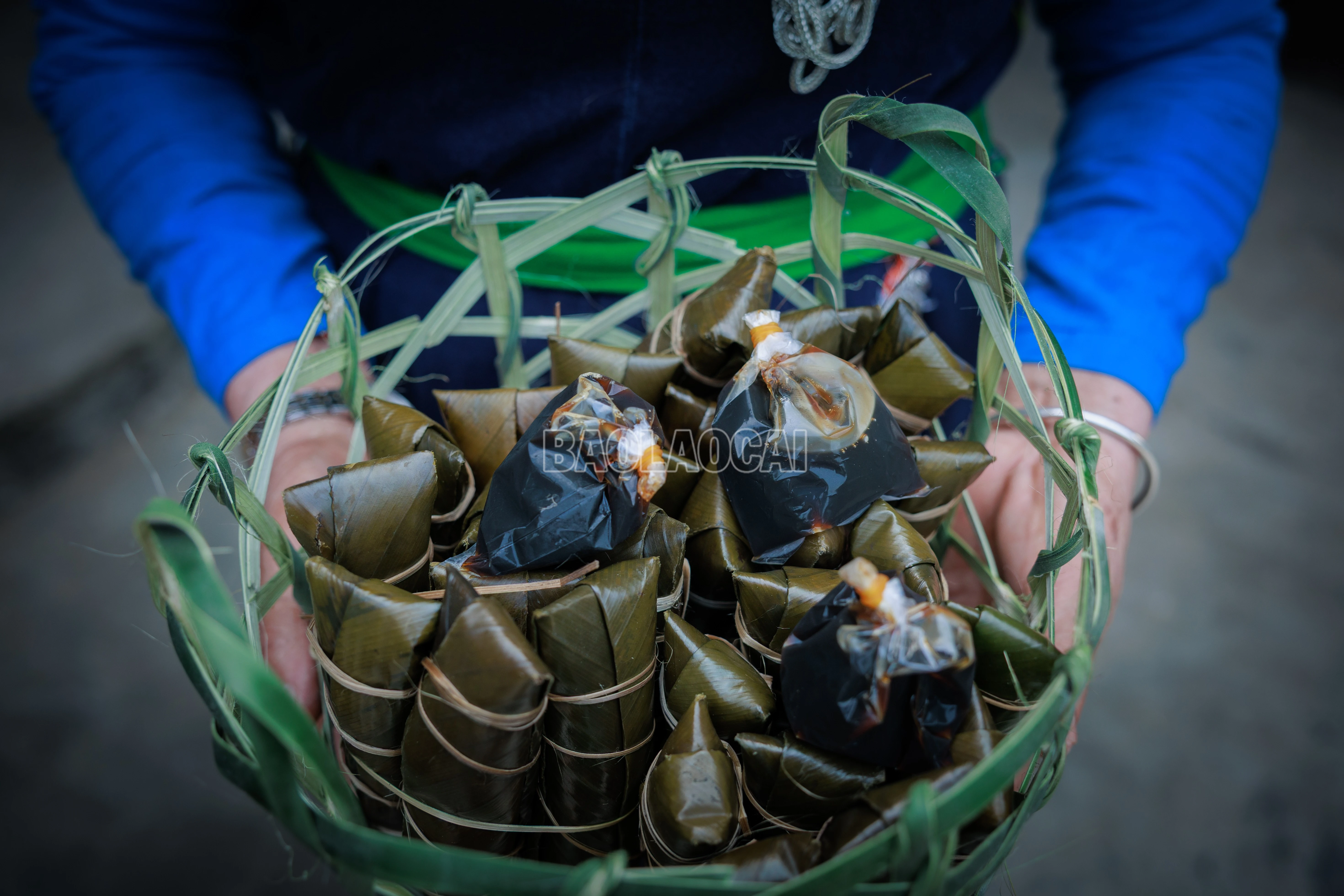
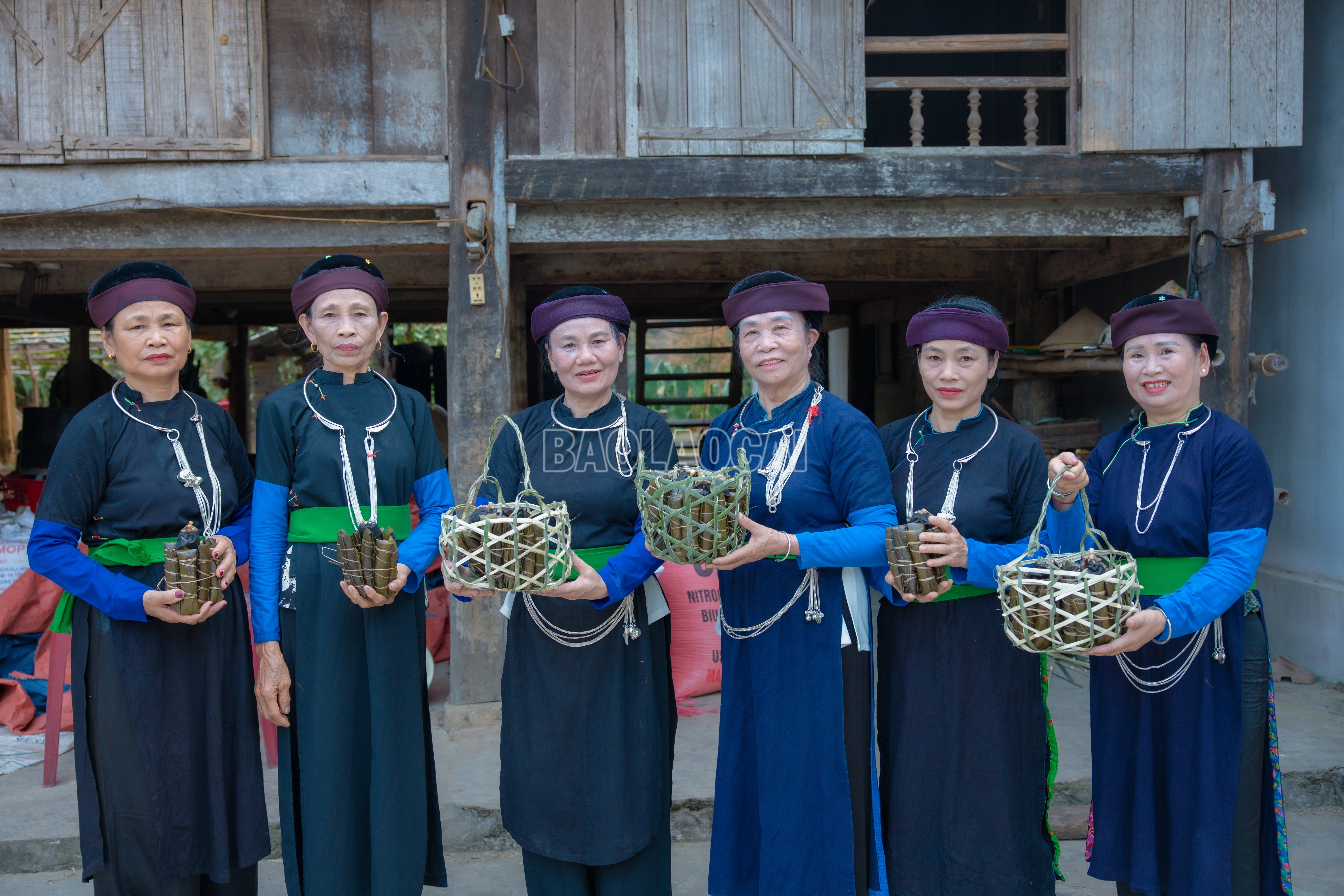
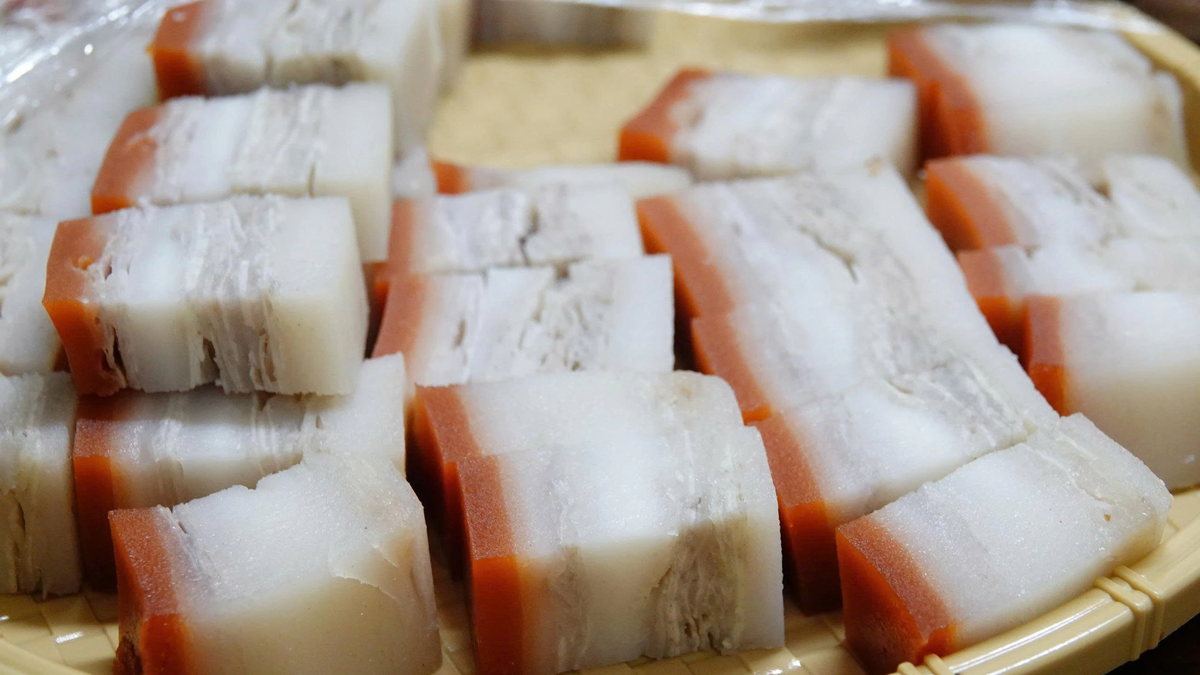
After being carefully wrapped and neatly arranged in a pot, the cakes are continuously boiled for 6 to 8 hours in boiling water. The baker must carefully monitor the fire, frequently adding water and maintaining a stable temperature so that the cakes cook evenly, achieving the desired soft texture and characteristic color. Bánh nẳng has a golden-brown color, a soft, smooth texture, and a translucent appearance. When enjoyed with molasses, the delicate sweetness blends with the aroma of glutinous rice, creating a unique culinary experience of the Tay Khao people in Dong Cuong. In Dong Cuong, batches of golden-brown rice cakes are arranged in handcrafted bamboo baskets instead of plastic bags. This method not only keeps the cakes airy but also helps preserve the traditional weaving craft of the Tay Khao people.
The craft of making nẳng cakes is still preserved and passed down through many generations by the Tay Khao people in Dong Cuong. Not only present in daily life, nẳng cakes are also offered as sacrifices to the Mother Goddess. From a traditional dish, nẳng cakes have now become a culinary product sought after by many tourists visiting Dong Cuong, contributing to the continued preservation and dissemination of local cultural values in contemporary life.

 Báo Lào Cai•03/06/2026
![[Image] Shipbuilders exposed to steel and record-breaking heat.](https://vphoto.vietnam.vn/thumb/1200x675/vietnam/resource/IMAGE/2026/06/04/1780545781745_ndo_br_img-5402-4683-jpg.webp)



































![[Video] Sunset at Lap An Lagoon – Where the sun sets over the fishing nets](https://vphoto.vietnam.vn/thumb/1200x675/vietnam/resource/IMAGE/2026/05/31/1780192137701_beach-landscape-sea-water-nature-grass-745871-pxhere-com.jpeg)





























Comment (0)