

Specifically, gold bars from SJC, Bao Tin Manh Hai, and PNJ brands are being bought at 160 million VND/ounce and sold at 163 million VND/ounce, an increase of 1 million VND/ounce in both directions.
DOJI and Phu Quy both increased the price of gold bars by 1.5 million VND/ounce in both buying and selling directions, trading at 160 - 163 million VND/ounce.
Specifically, as of this afternoon (May 21), the price of gold bars in the domestic market is listed as follows:
Yellow | Afternoon of May 20th | Afternoon of May 21 | Difference | ||||||
Buy | Sell | Buy | Sell | Buy | Sell | ||||
SJC | 159 | 162 | 160 | 163 | +1,000 | +1,000 | |||
Bao Tin Manh Hai | 159 | 162 | 160 | 163 | +1,000 | +1,000 | |||
DOJI | 158.5 | 161.5 | 160 | 163 | +1,500 | +1,500 | |||
PNJ | 159 | 162 | 160 | 163 | +1,000 | +1,000 | |||
Phu Quy SJC | 158.5 | 161.5 | 160 | 163 | +1,500 | +1,500 | |||
Following the same trend as gold bars, the price of gold rings also surged today compared to yesterday, selling at a high of 163 million VND/ounce, matching the selling price of gold bars.
Specifically, SJC gold rings are trading at 159.5 - 162 million VND/ounce (buying price - selling price), an increase of 1.5 million VND/ounce.
Bao Tin Manh Hai is buying 999.9 gold rings at 158.5 million VND/ounce, an increase of 1 million VND/ounce.
DOJI and PNJ gold rings are trading at 160-163 million VND/ounce (buy-sell), an increase of 1 million VND/ounce.
Phu Quy gold rings are trading at 159.8 - 162.8 million VND/ounce for buying and selling, an increase of 1.3 million VND/ounce in both directions.
 |
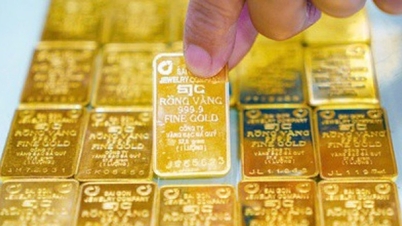
Gold prices today (afternoon of May 21): Reversed course and increased. Illustration photo: suckhoedoisong.vn |
On the international market, this precious metal is trading at $4,527 per ounce, up more than $40 per ounce from yesterday.
Currently, the world gold price, converted using the listed exchange rate, is approximately 144 million VND per tael.
Gold prices rose due to falling oil prices, driven by talks between the US and Iran and signs that oil tanker traffic through the Strait of Hormuz was resuming.
According to experts, in the short term, gold may face further pressure as inflation continues to rise. However, if a "stagflation" scenario occurs, meaning high inflation is accompanied by slowing growth, the US Federal Reserve (Fed) will be unable to raise interest rates further. That is when gold, as an inflation hedge, will once again appreciate in value.
The current sell-off may simply be a sharp correction in the financial markets. History shows that gold often comes under pressure when interest rates rise, but it has also repeatedly recovered strongly after periods of monetary tightening.
Source: https://www.qdnd.vn/kinh-te/tin-tuc/gia-vang-hom-nay-chieu-21-5-dao-chieu-tang-1040595




































































































Comment (0)