After the devastating floods at the end of 2025, the Yen Na protective forest ( Nghe An province ) had not yet recovered when it was once again overwhelmed by a fierce man-made disaster: the illegal gold rush.
Rumors of gold nuggets hidden in the Huoi Luc ravine fueled a dream of a better life, leaving behind jagged pits, torn-apart forests, and buried farmland.
This series of investigative reports by VNA reporters will expose the blind dream of a better life, the bleeding of protected forests, the "decisiveness on paper" spirit, and the search for ways to break the "curse of gold thieves" in Yen Na.
In early June 2026, the atmosphere in Hat village and neighboring villages in Yen Na commune (Nghe An province) was permeated by a瘋狂 and irrational desire for a better life.
It all started with baseless rumors about people striking it rich with gold after the devastating floods at the end of 2025.
No official agency has verified the truth of the matter. All that is known is that, for many months, a massive influx of people from various places tore apart the peace of Huoi Luc ravine, attacking the crucial core of the Yen Na protected forest.
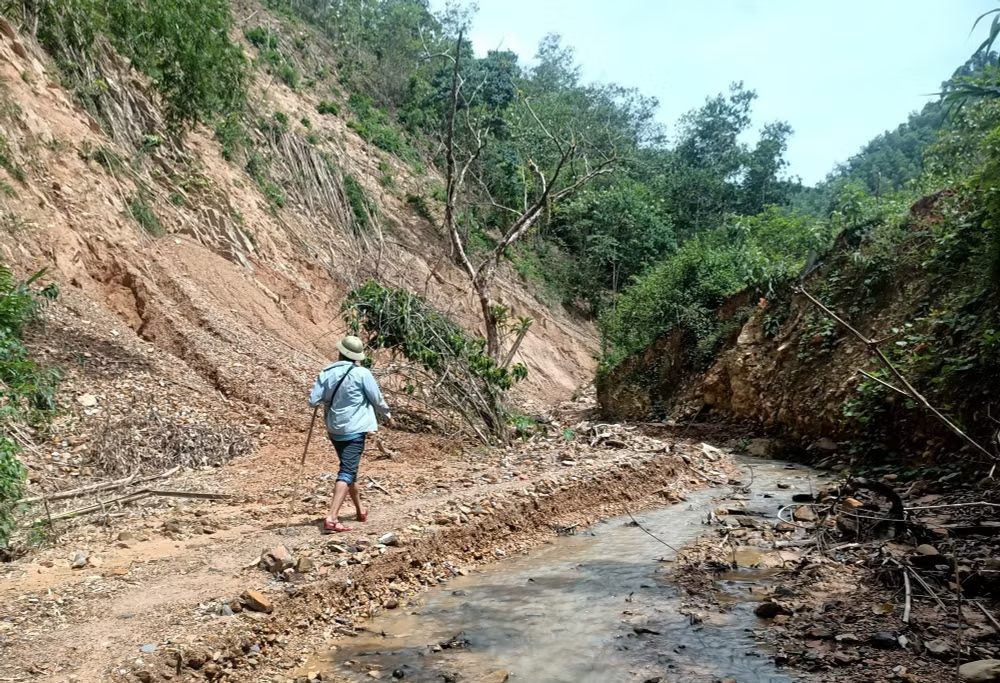
Along a stretch of more than 2km upstream from Huoi Luc stream, deep pits and frog-mouth-shaped trenches carved into the base of the protected forest are the traces left behind by illegal gold miners.
Rumors about exposed gold deposits.
From the Cửa Rào junction – where the Nậm Mộ and Nậm Nơn rivers converge to form the Lam River – we had to travel dozens of kilometers along National Highway 48C, navigating winding mountain roads with steep slopes and deep ravines.
Turning at the Xieng Nua intersection, and traveling dozens of kilometers further along the treacherous Provincial Road 543C with its steep hairpin bends, the center of Hat village finally appears.
This is the "epicenter" where rumors spread, leading people down the path of becoming "gold thieves."
At midday in the mountainous region, Hat village was unusually quiet. Under the scorching sun that seemed to pour down like fire on the stilt houses, most of the houses in the village were closed and locked.
The place was eerily silent, with only the elderly and young children remaining. This wasn't because the villagers were taking a nap, but because most of those who were still healthy had left the village and gone into the protected forest to search for gold.



Those hands, once accustomed to holding plows and sickles, familiar with planting and harvesting in the fields, are now spending their days and nights traversing forests, squeezing through cliffs, turning over every meter of earth, and churning up every clod of gravel in search of gold, dreaming of "changing their lives" overnight.
Ms. H., a resident of Hat village, revealed to reporters the origin of this madness: "Phanh (Van), whose house is at the foot of the slope, went digging for rocks in the Huoi Luc ravine at night and used a metal detector to find a huge gold nugget. Since then, he has been going into the ravine every day to look for gold."
To verify this, we went to the house of Mr. Vi Van N. Mr. N. added information that further fueled the greed of the gold prospectors: "Mr. Phanh only struck it rich, not as much as Kim. I personally held the gold nugget that Kim mined; when he weighed it, it was huge, the size of a fist. It's all gold nuggets here, not alluvial gold!"
These unverified rumors, spread by word of mouth, fueled the frenzy of illicit enrichment.
This trend isn't limited to just Hat village; it has spread to neighboring villages and communes like Yen Hoa commune. People are traveling in large groups, some as many as 15 people.
A reporter's observations at the slope leading down to Huoi Luc ravine in the early afternoon showed groups of motorbikes roaring, carrying "gold miners" of all ages, men and women, laden with hoes, shovels, crowbars, backpacks, food, and flashlights, heading straight towards the stream bank.
After dropping off the gold prospectors who had disappeared into the deep forest, the drivers quickly turned around and went back up the slope, dispersing in all directions. Those who drove their own vehicles left them under the stilt houses of nearby residents.
“In the late afternoon and evening, a lot of people come. After the police confiscated dozens of motorbikes, people from far away came by car, dropped them off at the top of the slope, and then walked into the ravine. Once inside, they worked all night, digging through the night until dawn. Sometimes there were hundreds of people in there, working continuously for months,” Mrs. H. added.
From farmer to "gold thief"
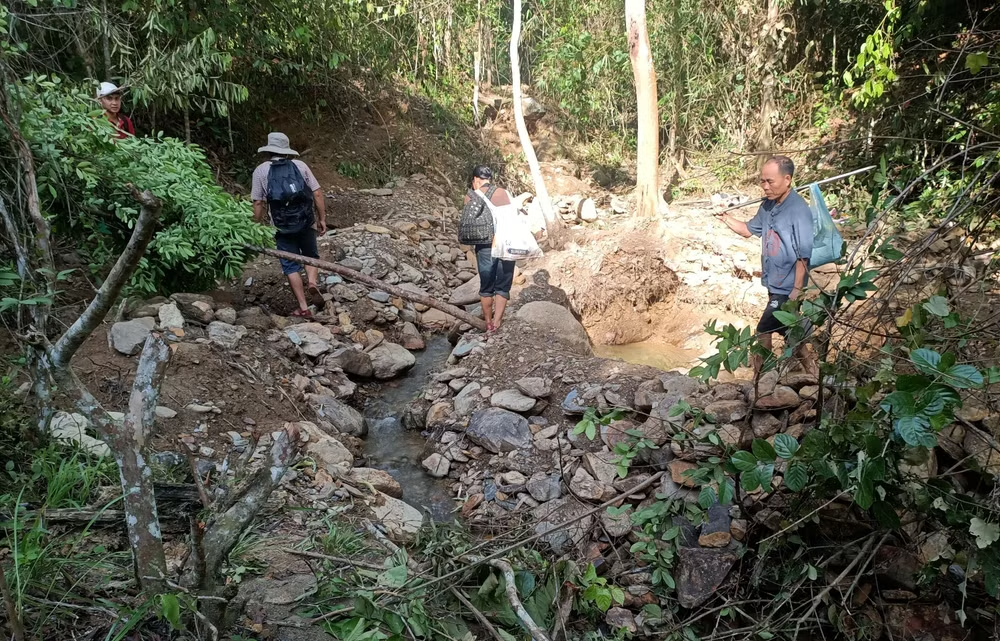
For generations, farmers in Hat village, many other villages in Yen Na commune, and other communes have been accustomed to working in the fields with plows and sickles. Now, driven by a strong desire to "change their lives and fortunes," they are rushing into the rocky crevices of the protected forest, regardless of the danger, turning over every meter of soil and digging up every block of gravel in the hope of finding a gold vein.
Greed transforms gentle, simple farmers into environmental destroyers. Uncontrolled, massive gold mining means a lack of procedures and labor protection, forcing them to gamble with their lives beneath collapsing cliffs.
Beside the muddy stream, an elderly woman, hunched over, raked the earth with a bent iron blade, sifting through a deep wooden tray to find tiny grains of gold dust.
After carefully observing the strangers to dispel any suspicions, she admitted she was a local resident, and due to her old age and frailty, she couldn't venture further upstream, so she only dared to sit and scavenge on the outer edge. After an hour of repeating her futile efforts, she still hadn't found anything but a pile of soggy mud.
Sadly, this destruction received tacit approval from those who remained. When we spoke to people unable to go into the forest due to health reasons, we didn't receive condemnation of the deforestation, but rather regret, resentment, and envy: "Seeing them go to work makes me so upset, upset because I don't have the health to go searching for gold like them."
Clearly, this misguided mindset is gnawing away at an entire community. At night, the Yen Na protected forest has transformed into a "lawless land" teeming with hundreds of gold-hungry "ghosts."
The consequences of the gold rush are clearly evident in the local socio -economic landscape. Mr. Nguyen Huu Hue, Head of the Economic Department of Yen Na Commune, acknowledged: “This situation has a significant impact on people's livelihoods. People have become lazy, neglecting livestock farming and cultivating fields. It seriously affects the morale of the majority. Those who were previously diligent and hardworking, seeing others searching for gold, will also quit their jobs and follow suit, causing a serious decline in the local workforce.”



The consequences are obvious, yet the local authorities' efforts to prevent it have only been reactive. Mr. Luong Van May, Secretary of the Party Branch of Hat village, sadly shared the helplessness of the local authorities: “Upon hearing the information and discovering the situation, the village security team and the village elders went directly into the ravine to educate the people and prohibit digging for gold. However, when the security team went in, the gold miners left, and when the security team left, the people continued digging for gold. The village security team only has three people, and they cannot regularly inspect and educate the people. We have reported the matter to the commune police and the People's Committee, and they have intervened, but the people still secretly go to dig for gold. Recently, the commune police confiscated motorcycles from people involved in gold mining, but we don't know the exact number.”
A security team was "powerless" due to limited resources, but what about the local government? When the village Party branch reported to the police and the People's Committee of the commune, the answer they received was that the raids had been ineffective. The measure considered "optimal" by the Yen Na commune police was to confiscate the motorbikes that the gold miners left under the stilt houses of the villagers.
But even the village Party Secretary didn't know the extent of the damage. After months of plowing, damming, and blocking the stream with rocks, Huoi Luc stream had been completely deformed, its bed riddled with jagged holes, and the water murky.
These are not only the glaring traces of greed and blind dreams of a better life, but also the seeds of devastating flash floods and landslides that are waiting to happen during the upcoming rainy season.
We invite readers to read on:
Article 2: The Golden Dream and Tears of Yen Na Protective Forest: The Protective Forest "Bleeding"
Source: https://www.vietnamplus.vn/giac-mo-doi-doi-tu-tin-don-ve-vang-lo-thien-post1116751.vnp