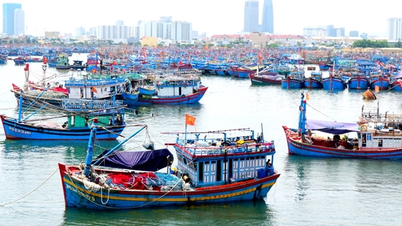
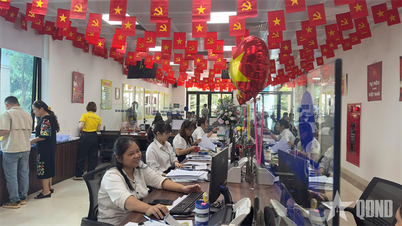
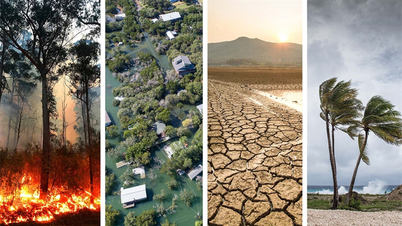
June 16, 2025, marked a momentous milestone for the people of Cat Ba : the island district officially became a special economic zone named Cat Hai Special Economic Zone. This represents a new development space, awakening the potential and advantages of a land rich in forest and sea resources and world natural heritage sites, transforming the archipelago into a "green jewel" in the Gulf of Tonkin.
From a pristine archipelago...
Mr. Pham Vinh Toan, Deputy Director of the Management Board of Bays in the Cat Ba Archipelago, has over 30 years of experience working in the island district (now the Cat Hai Special Economic Zone). He was born and raised in Phu Long island commune. Witnessing the changes in his island homeland, Mr. Toan considers it a miracle.

Cát Hải plans to develop three aquaculture zones linked to marine conservation. Photo: Provided.
In the 2000s, the island district still lacked a national power grid. In the central area, only key government agencies had electricity powered by generators, while the island communes of Gia Luan, Tran Chau, Xuan Dam, Hien Hao, Phu Long, and Viet Hai remained low-lying areas. Although it was an island close to the mainland, only 30 km from the city center, getting to Cat Ba during that period required two ferry trips: one at Got pier and the other at Cai Vieng pier. These ferries were outdated and old, each trip taking hours, and there were only a few trips a day… Therefore, the island communes were distant from the mainland, even in our… thoughts.
"In the 2000s, Cat Ba was still a pristine island, with very difficult transportation, and its economy mainly depended on extensive aquaculture in floating cages. Tourism was almost non-existent. Even farmed seafood had limited consumption due to the mountains and rivers separating the islands. Tourism in Cat Ba and Lan Ha Bay only truly boomed in the last 10 years thanks to strong government investment in transportation infrastructure (bridges, roads, cable cars, etc.), telecommunications networks, and promotional communication," Mr. Toan shared.
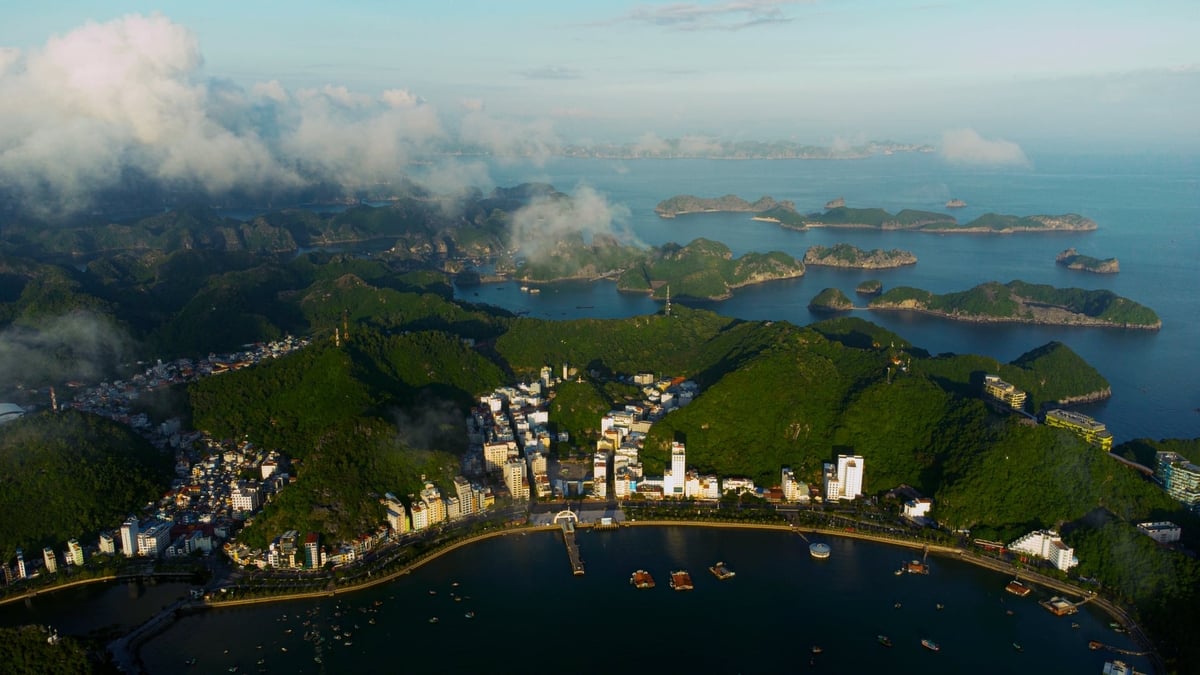
The Cat Hai Special Economic Zone possesses advantages in forest and marine resources, as well as world natural heritage sites, making it a potential "green gem" of the Gulf of Tonkin. Photo: KT.
Located southeast of Hai Phong city, about 30 km by sea from the city center, the Cat Hai Special Economic Zone has a total natural area of nearly 345 km2 (excluding the Long Chau archipelago) with 388 islands of varying sizes. The two main islands are Cat Hai Island (also known as Don Luong area) and Cat Ba Island (also known as Ha Sen area). Cat Hai is famous throughout the country for its renowned fish sauce brand. Cat Ba, on the other hand, is a "green gem" at the mouth of the sea, holding within it world heritage sites.
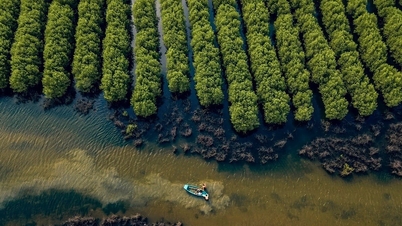
In the pride of its islanders, Cat Hai is a place where forests, seas, limestone mountains, and the Phu Long mangrove ecosystem converge, creating a harmonious, majestic, and poetic beauty rarely found elsewhere. This area is the southwestern gateway to the Gulf of Tonkin, bordering Ha Long Bay, and is part of a unique interconnected marine and island ecosystem.
With UNESCO recognizing the Cat Ba archipelago as a World Biosphere Reserve (2004); the Most Beautiful Bays in the World (MBBW) recognizing Lan Ha Bay as one of the most beautiful bays globally (2020); and the Cat Ba - Ha Long Bay World Natural Heritage Site being recognized as a World Natural Heritage Site, Cat Ba's reputation has become globally renowned.
In particular, Cat Ba Island is the only habitat of the golden-headed langur – one of the world's rarest primate species, classified as critically endangered (CR) in the IUCN Red List. The Cat Ba langur is not only a symbol of the endemic ecosystem but also a unique "brand identity" of Cat Ba, similar to the gray-footed langur of Son Tra Peninsula. Furthermore, the vast sea area allows Cat Hai to expand the development of aquaculture and other fishing-related industries and services.
These potentials allow Cat Hai to dream big, especially in the era of ocean-oriented development and maritime-focused economic strategies.
...to major policy decisions
The first Party Congress of the Cat Hai Special Economic Zone (2025-2030 term) sets the goal of becoming a modern and civilized special economic zone, a key marine economic hub of the city and northern provinces, with Cat Ba Island becoming a national tourist area and an international marine ecotourism center; and Cat Hai Island becoming a port and logistics service center and a modern industrial zone.

The most beautiful coastal road in Northern Vietnam perfectly encircles the center of Cat Ba. Photo: TT.


From resolution to action, Pham Van Hop, Head of the Economic and Infrastructure Department of the Cat Hai Special Economic Zone, said that the locality is accelerating the land clearance process for key projects and completing technical infrastructure as a prerequisite for socio-economic development. Public investment projects are prioritized in order of urgency, focusing on projects that promote growth and improve infrastructure serving tourism. Specific goals include a growth rate of over 15% in the gross domestic product; an increase of over 15% in per capita income; total budget revenue reaching 580 billion VND; and welcoming over 4.7 million tourists.
To achieve the set goals, the People's Committee of Cat Hai Special Economic Zone has implemented a series of specific and comprehensive solutions. The focus is on strengthening the promotion and advertising of Cat Ba tourism through diverse and rich forms, coordinating with units to carry out communication and conservation, and promoting the value of the Ha Long Bay - Cat Ba Archipelago World Natural Heritage Site.
In the field of marine economy, the locality continues to implement tasks related to aquaculture according to the plan, completing the allocation of sea areas to aquaculture facilities; proactively coordinating to expand the area of mooring areas for ships to stay overnight, and accelerating the progress of announcing eco-tourism, resort, and entertainment zones in the bays of the Cat Ba archipelago.
In addition, the locality focuses capital on key projects and works, projects that have a positive impact on socio-economic development in the area, and encourages investment in infrastructure serving tourism and the local economy. It also accelerates the progress of projects and the disbursement of public investment capital to ensure the plan is met.

The Cat Hai Special Economic Zone is dreaming big in the era of ocean-oriented development. Photo: TT.
The special economic zone possesses significant potential, room for growth, and space for developing tourism and agricultural production with economically valuable OCOP products, both of which are closely linked to the marine environment. The strategic vision of the special economic zone always harmonizes these elements: exploiting advantages while preserving the marine and island ecosystems.
According to Mr. Hop, the Cat Hai Special Economic Zone currently boasts over 40 OCOP (One Commune One Product) products, including 2 national 5-star products (Cat Hai and Quang Hai fish sauce); 40 4-star products; and 2 3-star products, along with many other distinctive local seafood specialties. These green economic models simultaneously develop the economy while preserving and protecting the marine ecosystem; strengthen control over aquaculture activities, address violations, and ensure environmental hygiene throughout the bay. This is considered a crucial solution for protecting the ecosystem and creating a foundation for sustainable tourism development.

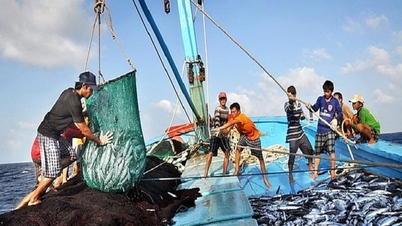
Raising seafood in cages on Cat Ba Island. Photo: KT.
In implementing Resolution No. 08 of the City Party Committee on the green transformation of Hai Phong City for the period 2026-2030, with a vision to 2050; and Plan No. 133/KH-UBND dated April 16, 2026, of the City People's Committee, on March 20, 2026, the Party Committee of the Cat Hai Special Zone issued Resolution No. 03 on green transformation on Cat Ba Island, Cat Hai Special Zone, for the period 2026-2030, with a vision to 2050, aiming to green transform all sectors on Cat Ba Island, comprehensively across six areas (tourism, transportation, energy, agriculture, construction, and lifestyle); taking green tourism development as the pillar and driving force for the comprehensive green transformation process; determined to build Cat Ba into a "green island," making Cat Ba Island an international tourism center.
Handing over the sea, developing the marine economy in conjunction with marine conservation.
According to Pham Vinh Toan, Deputy Director of the Management Board of Bays in the Cat Ba Archipelago, the problem of floating styrofoam buoys was very serious in the past, especially in 2023, but has now significantly decreased because Cat Ba almost no longer uses styrofoam buoys. The Management Board is encouraging tourist boat owners to switch to using biodegradable plastic bags to reduce plastic waste.

Cruise ship on Lan Ha Bay. Photo: KT.
Regarding aquaculture water resources, the plan follows Decision No. 3876 of the Hai Phong City People's Committee, with three planned areas: Ben Beo Bay (86 cage farming locations), Phoi Quyt Island (31 cage farming locations), and Gam Ang Ke Crab Farm area (24 mollusk farming locations). The regulated area is 320 m² for each fish cage and 600 m² for mollusk farming platforms. To date, water surface area has been allocated to 97 establishments out of a total of 141 locations.
Mr. Toan stated that the process of allocating water surface area is facing difficulties due to new licensing procedures requiring people to develop production plans and obtain approval from the provincial department, posing a major obstacle as people are unfamiliar with the paperwork. The planned area is insufficient to meet demand because previously, over 150 households were involved in aquaculture, but only 117 locations were designated for fish cages and 24 for shellfish farming, leaving many people without sufficient water surface area for cultivation. To address this issue, the Committee has surveyed and proposed that the city expand the shellfish farming area to include Xuan Dam and Tran Chau communes to create legal aquaculture space for the people.

Cat Hai Island is a center for port and logistics services and a modern industrial zone. Photo: KT.



The initial aquaculture project in Cat Hai encouraged the use of HDPE floating materials, but in reality, HDPE is very expensive (approximately 900 million VND per raft); water circulation in the fish farming areas is poor, steel connections are prone to rust and breakage, and people face difficulties in repairing damaged rafts. The current direction is to pilot the use of extruded composite materials. This material is half the cost (approximately 450 million VND per raft), is durable, lightweight, resistant to termites and corrosion like wood, easy to integrate and mix colors, and most importantly, people can repair and maintain it themselves. Regarding support policies, according to Resolution 51 of the City People's Council, people building new rafts will receive 30% government support, with a maximum limit of 300 million VND per raft.
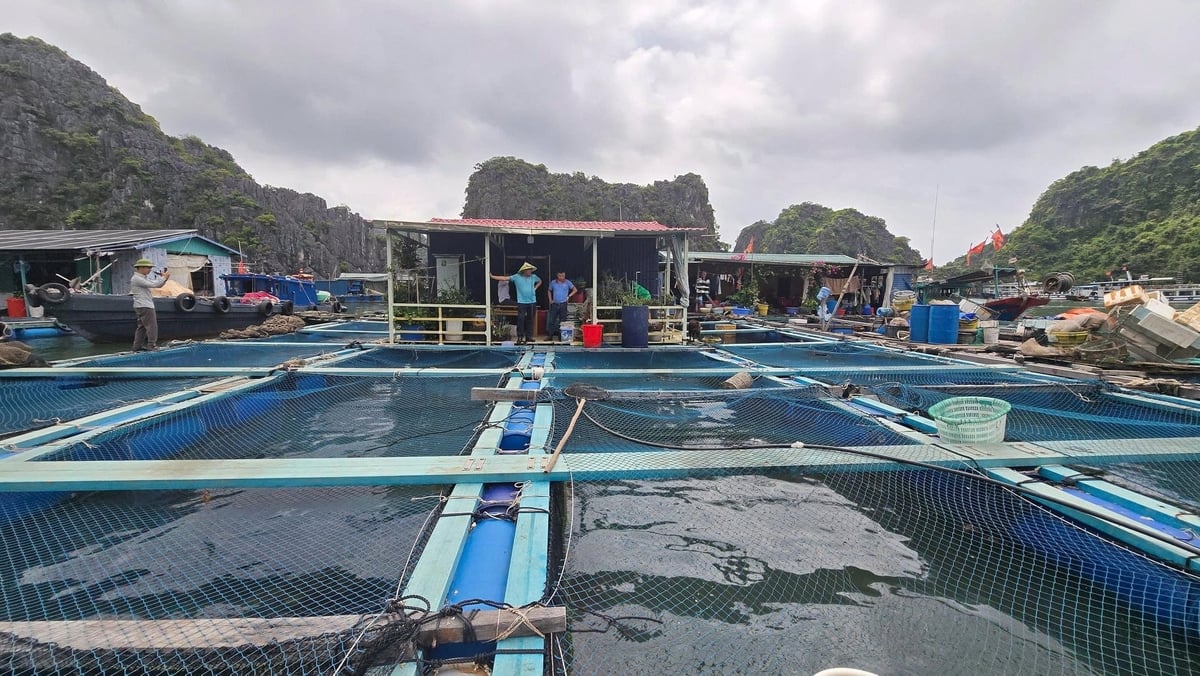
A pilot project is being implemented using extruded composite materials to construct cages for aquaculture in the Ben Beo area, Cat Ba.
To ensure the water environment in the bays, the special zone requires aquaculture facilities to install standard septic tank systems for treating domestic waste and commit to sorting waste at source. On average, the Management Board collects waste daily (generating 8-10 cubic meters of waste per day, and up to several dozen cubic meters on peak days). Domestic waste mainly comes from nearly 70 overnight cruise ships and naturally occurring drifting debris. Floating styrofoam buoys were once a major problem (peaking in 2023 due to debris replacing buoys drifting from Quang Ninh), but now Cat Ba almost no longer uses styrofoam buoys, so this phenomenon has significantly decreased. After collection, the waste is gathered and transported to the central landfill in Ang Tra area (Tran Chau commune) for burial.
“The Management Board of the Bays in the Cat Ba Archipelago has been assigned a target of 300 billion VND in 2026, and to date, revenue has reached over 110 billion VND. We are confident that we will achieve the assigned target. Notably, 70% of the revenue comes from international tourists staying overnight,” the leader of the Bay Management Board confidently stated.
Recently, Regulation 113 on regional tourism connectivity between Hai Phong and Quang Ninh has allowed for the opening of a tourism route between Ha Long Bay and Lan Ha Bay. Tourists from both sides can visit each other. Revenue from ticket sales will be shared through an automated QR code scanning system. However, according to Mr. Toan, the difficulty is that Hai Phong does not yet have a deep-water marina, so most large ships still have to pick up passengers from Tuan Chau (Quang Ninh).
Source: https://nongnghiepmoitruong.vn/giac-mo-lon-tren-dac-khu-cat-hai-d814011.html































![When forestry is a 'weakness' of Nghe An?: [Final Article] Don't let difficulties stifle your belief.](https://vphoto.vietnam.vn/thumb/402x226/vietnam/resource/IMAGE/2026/06/30/1782811988922_z7872568475948_0880389d368a3dd3e37a88462d9cc25f-142345_983-163134.jpeg)