

Lan Dat, located in Lan Chau village, is nestled behind a range of steep, jagged mountains. These mountains not only divide the landscape but also block out very ordinary opportunities for the local people.
Rough and uneven Lan Dat
From the center of the commune, one must cross the Dong Lam grassland – during the rainy season, when the water rises, people have to use bamboo rafts to cross nearly 2km. After getting past that section, they then face the Dat Pass, about 2km long, full of sharp, jagged rocks. This is the only trail leading to Lan Dat.
No motorbikes, no bicycles. All transportation relies entirely on foot. Mr. Trieu Sinh An, from Lan Chau village, shared: "My family has moved to the upper hamlet, but every week I have to go back to visit my grandmother in Lan Dat. Walking from the village, if I don't rest at the top of the pass, it takes about 45 minutes to reach where I can park my motorbike. The children also have to walk to school, and then go to the boarding school nearby."
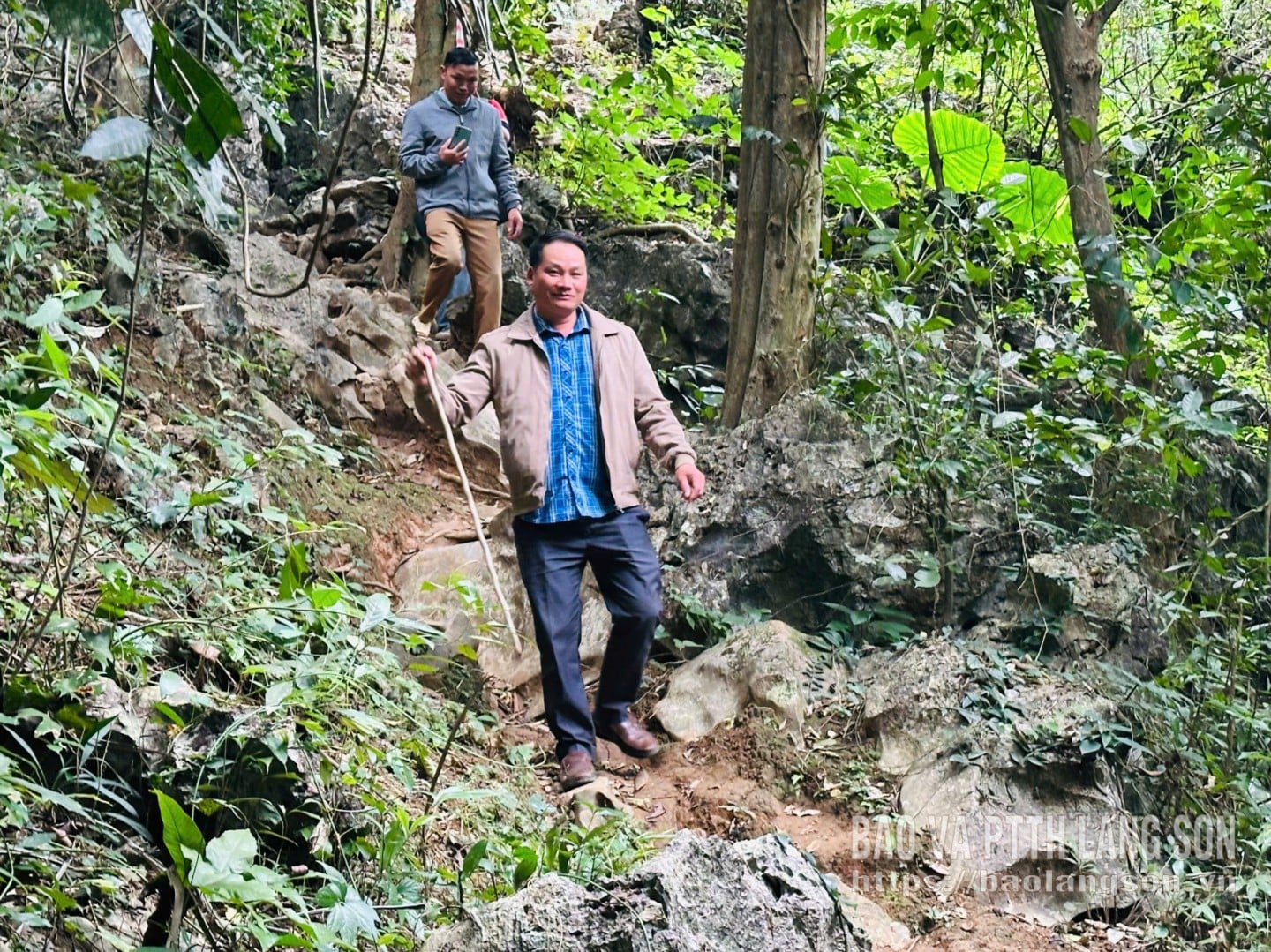
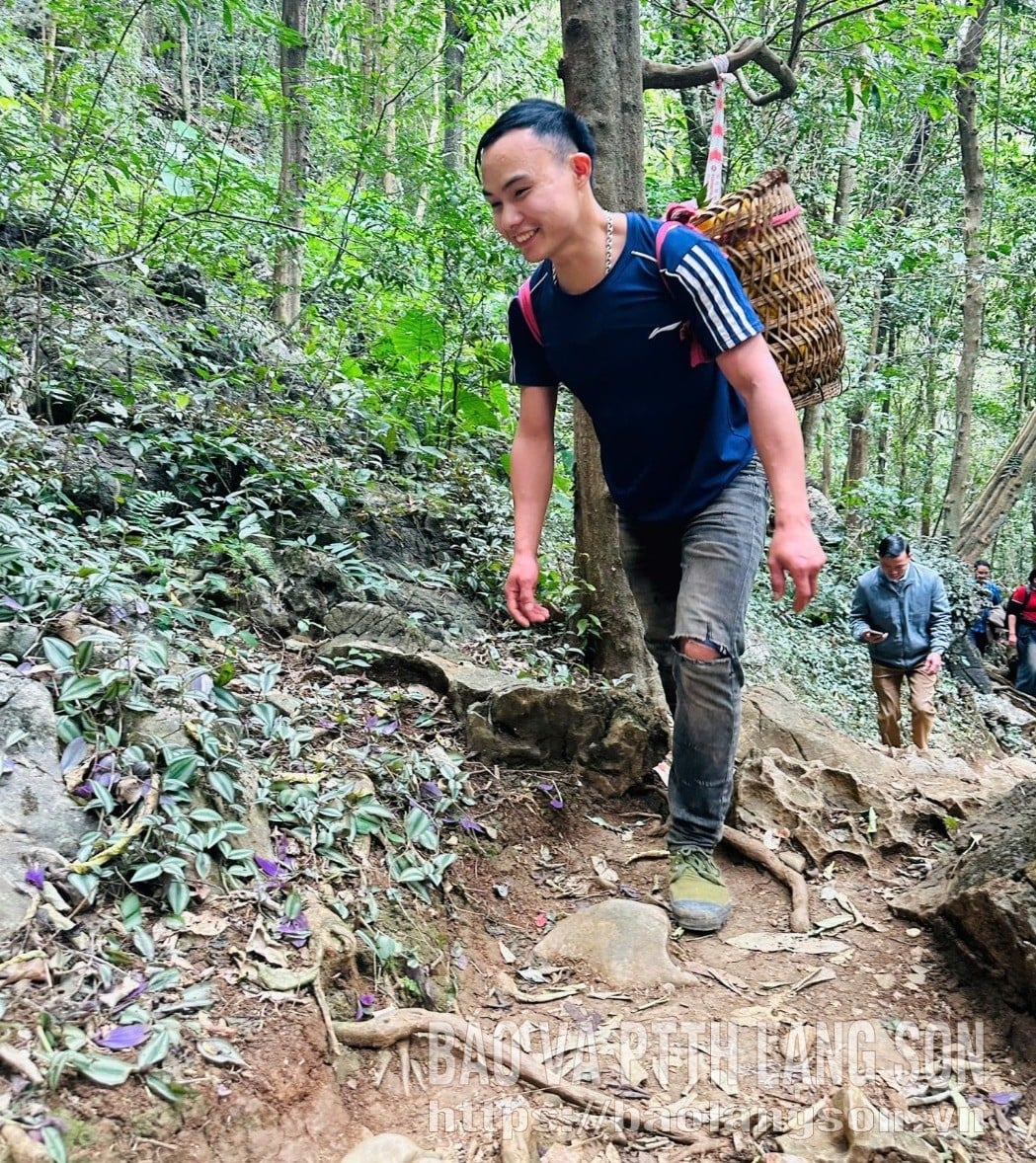
Amidst the year-end chill in the mountains, we encountered Mr. Ban Duc Lam and his son carrying heavy baskets of tangerines, hurrying along the slippery rocky path. Their thin clothes were soaked with sweat, but no one dared to stop for long, as they had to get the tangerines to the commune center in time to deliver them to customers.
Mr. Ban Duc Lam shared: "Our family has over 120 mandarin orange trees. During harvest season, selling the fruit is difficult, but transporting the mandarins out is even harder. We pick mandarins in the morning, and after lunch, my son and I carry them out. Each load weighs about 30-40 kg."
Along that path, the greatest fear isn't fatigue, but slipping. Just one small misstep, and both the person and the tangerines could roll down the rocky ravine. Despite the danger, the tangerines sell for only around 15,000–25,000 VND/kg, fluctuating precariously with each shipment.
Not only is finding markets difficult, but everything brought into the village from outside is also priced many times higher. Mr. Trieu Sinh Cai, from Lan Dat village, Lan Chau hamlet, shared: "A few days ago, I bought a 25kg bag of fertilizer for 250,000 VND. I'm old and can't carry it myself, so I had to pay an extra 100,000 VND to hire someone to carry it to my house."
Lack of roads, rising living costs, low income – the vicious cycle of poverty continues relentlessly. Although only about 5km from the commune center, beyond that jagged, rocky mountain lies a world almost completely isolated.
According to Mr. Trieu Sinh Hien, Party Secretary and Head of Lan Chau village, Lan Dat has 17 households with nearly 70 people, 100% of whom are poor. The village has no roads, no national power grid, no school, and no telephone signal. But the biggest difficulty for the villagers is the lack of roads for socio-economic development. Anything they do is blocked by transportation.
The dream of a small path
For the people of Lan Dat village, they don't talk about concrete roads or cars. What they long for is very specific and humble: a small road, just wide enough for motorbikes to pass through.
"Having a road means having everything," that saying is repeated by many villagers. However, building that "small road" is an extremely difficult problem. Mr. Hoang Minh Tien, Vice Chairman of the People's Committee of Huu Lien commune, said: The planned road to Lan Dat is located entirely within the Huu Lien special-use forest area. Opening the road faces not only difficulties due to the terrain, but the biggest obstacle is the legal regulations. The final decision rests with the Prime Minister . This is a bottleneck that leaves the local authorities very perplexed, even though the people's needs are entirely legitimate.

Efforts to find alternative solutions have also faced many obstacles. Previously, in 2005-2006, the commune had a relocation project, but it failed. The elderly were unwilling to leave their ancestral homes. Temporary solutions such as providing boarding school support for children or creating alternative livelihoods only helped households to survive, but could not create a breakthrough.
Without roads, poverty is not just limited to income, but permeates the lives of every family.
We met Mr. Ban Duc Lam again at dusk on the summit of Dat Pass. In that quiet space, he confided: "The hardest thing is that my family has to live far apart. So that my children can get an education, my wife took them to live with the local government in the commune. I'm alone, looking after the older child who goes to school while also carrying the baby, who is only a few months old. I only go to pick them up on weekends. I miss home and love my children, but I have no other choice. We don't mind working, we don't mind the hardship. We can grow corn, cassava, peanuts, anything. But we can't keep carrying this burden forever. We just hope for a road..."
The sun was setting over the jagged, cat-ear-shaped mountain slopes, while the villagers' end-of-day calls still echoed as we left Lan Dat village.
They remained there, holding on and waiting. Waiting for the day the road would be opened. Waiting for the day the sound of motorbikes would replace the sound of footsteps on the rocks, and waiting for the day "change" would reach their village, just as they saw on the other side of the mountain.
Source: https://baolangson.vn/ben-kia-nui-da-and-the-dream-of-a-small-road-5071643.html


![OCOP during Tet season: [Part 3] Ultra-thin rice paper takes off.](/_next/image?url=https%3A%2F%2Fvphoto.vietnam.vn%2Fthumb%2F402x226%2Fvietnam%2Fresource%2FIMAGE%2F2026%2F01%2F28%2F1769562783429_004-194121_651-081010.jpeg&w=3840&q=75)


Comment (0)