

However, when competing on the continental stage, a recurring limitation remains: disadvantages in physique, fitness, and endurance, especially the phenomenon of many athletes experiencing a decline in physical fitness after the 70th minute. Modern sports science affirms that training only accounts for half of success; the other half lies in nutrition and recovery, that is, how to "refuel" and regenerate the body scientifically.

Today's top-level football is no longer just about skillful play. The physical exertion required in 90 minutes combines endurance and speed (continuous running, acceleration and deceleration, turning, tackling, and bursts of speed). FIFA's nutritional guidelines describe that at a high level, players can cover approximately 10-13 km per match, resulting in significant energy expenditure.
The key lies in muscle glycogen, the carbohydrate reserve in muscles. FIFA emphasizes that glycogen is the “most important fuel” for energy production, and fatigue towards the end of a match is associated with a depletion of glycogen in some muscle fibers, reducing acceleration and even affecting skill. Recent scientific reviews on glycogen in football also reinforce this, showing a strong correlation between late-match fatigue and recovery speed between matches, especially in the context of demanding schedules and training.
In Vietnam, the "breakdown" in physical fitness after the 70th minute has become a familiar sign. If training plans and tactics are considered necessary conditions, then nutrition and recovery are the sufficient conditions for players to maintain their full performance quality, instead of gradually declining in the crucial stage.
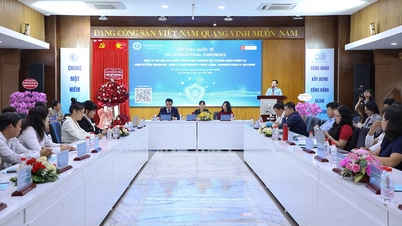
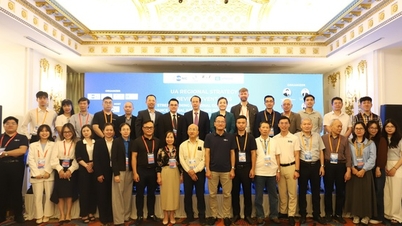
At the scientific conference "Research on developing a specific nutritional regimen for Vietnamese football athletes," recently held at the Vietnam Institute of Culture, Arts, Sports and Tourism, discussions highlighted the reality that while there has been a shift in perception from simply "eating enough" to "eating scientifically," practice remains weak and there are still many "gaps" in both theory and implementation.
Athletes follow their eating habits, many clubs lack in-depth expert advice, and notably, there is a significant discrepancy between international recommendations (carb intake of 6-12g/kg/day) and the reality in Vietnam (~4.8g/kg/day). The workshop also highlighted the issue that over 70% of athletes miss the "golden window" of 30-60 minutes after a match, a crucial time for energy regeneration and muscle repair.
These figures, when compared to international guidelines, reveal that the core weakness lies not simply in "underfeeding," but in eating at the wrong time, at the wrong time of day, and in a lack of monitoring mechanisms. This is an ecological problem: nutrition must be managed as part of performance science, not left to individual habits.
International recommendations unanimously agree that carbohydrates are the "main fuel" of football. FIFA sets clear practice goals for each stage (daily recovery, endurance training, immediate recovery after exercise).
It's worth noting that international standards don't advocate a "high-carb diet year-round," but rather emphasize carbohydrate periodization based on the principle of "fuel for the work," with increased intake on days of heavy load and adjusted intake on recovery days. Overviews of periodization in football consider this a crucial trend to ensure both performance and adaptation to training goals.
Why is the period immediately after a match so important? FIFA states that the goal for early recovery within 0-4 hours after exercise is to regularly consume carbohydrates according to body weight to optimize the rate of glycogen resynthesis.
When the schedule is packed, slow recovery means players enter the next training session/match with an empty fuel tank. Overviews of post-exercise recovery nutrition also confirm that carbohydrates after training/competition are crucial for glycogen replenishment, especially when recovery time is limited; a suitable replenishment strategy helps maintain performance quality and reduces the risk of performance decline in subsequent training sessions. This is also why the workshop emphasized the reality of Vietnamese athletes "missing the golden window," because if the refueling phase is skipped, "energy debt" will accumulate - and that debt will "come back" at the end of the match.
A key focus of the workshop was the scientific approach to local cuisine , specifically transforming pho, rice dishes, braised fish, etc., into specialized, nutritious menus that are still palatable and compliant. This is a direction consistent with international standards. UEFA emphasized the "food first" philosophy – prioritizing real food and limiting added foods; and acknowledged the cultural context – diverse tastes – as a factor to consider when implementing nutrition in football. Vietnam has the advantage of diverse carbohydrate sources (rice, noodles, pho, potatoes, fruits), suitable proteins (fish, lean meat, eggs, beans), and soups/broths that help replenish fluids.
By incorporating nutritional goals into meals (increasing carbs on heavy load days, dividing meals for recovery after competition, etc.), Vietnamese kitchens can absolutely become "efficiency kitchens" without mechanically adapting menus from foreign sources.
If the goal is to reach continental level, Vietnamese football needs a sufficiently robust physical fitness foundation, and that foundation cannot be built solely on endurance running or gym workouts. FIFA has set clear guidelines for carbohydrate intake across different phases, emphasizing that early recovery after exercise is key to glycogen regeneration.
Therefore, Vietnamese football needs a starting point for the "standardization" process, from theory to practice, which is to establish a scientific framework suitable to the physiology of Vietnamese people; to scientificize traditional dishes to increase compliance; to build a nutritional mechanism at clubs/national teams; and to apply technology for personalization.
When nutrition is properly managed as a component of football development strategy, the "70th minute" will no longer be a dividing line, but simply a moment in the match when Vietnamese players have enough energy to accelerate.
Distance traveled is just as important as a goal.
Football today is not just measured by goals or shots on goal. With the development of fitness data, distance covered has become a crucial indicator reflecting physical exertion and how a team implements pressing, transitions, and defensive coverage. At the highest level, non-goalkeeper players typically cover 10-13km per match, depending on their position; midfielders are often among those who run the most.
When a match goes to 120 minutes (extra time), the total distance covered can increase significantly. Reports from the 2022 World Cup show that in the Croatia vs. Japan match (round of 16), one player covered 16.7km in 120 minutes – a record for distance covered in a single World Cup match. Beyond the World Cup, national leagues also have notable milestones in terms of distance covered. James Milner once ran 13.5km in a single match, a record for distance covered in the English Premier League.
In Vietnam, distance covered in matches is not often discussed due to technological barriers. However, an assistant to coach Park Hang-seo once revealed that the two players who covered the most distance in the national team at that time were "Nguyen Quang Hai and Do Hung Dung. If I'm not mistaken, in one intense match, the 'tiny' player Quang Hai ran up to 10.5 km - 11 km." Meanwhile, Coach Park emphasized that "very few players can run 10 km per match," considering this the world average and hoping that Vietnamese players would increase their distance and run at a higher intensity.
These figures show that in modern football, "kilometers" are no longer a secondary statistic, but a key indicator of match intensity, tactical roles, and recovery needs. The saying "the more you run, the more tactical skill you develop" is not without reason.
DANG XA
Source: https://baovanhoa.vn/the-thao/giac-mo-world-cup-va-rao-can-phut-70-219027.html












































































Comment (0)