It is difficult to contain the epidemic.
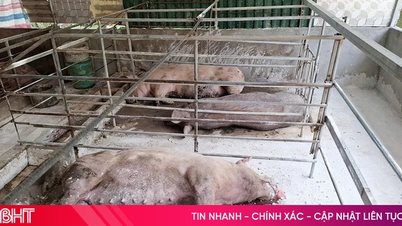
Following the costly lessons learned from the first outbreak in 2019, the agricultural sector has intensified its efforts to raise awareness and guide people in proactively implementing biosecurity measures. Authorities have even applied stricter penalties to address violations that spread the disease. A report from the Livestock, Veterinary and Fisheries Sub-Department (Department of Agriculture and Environment) shows that in 2025, African Swine Fever (ASF) outbreaks occurred in 116 communes, resulting in the death of over 168,000 pigs and causing significant losses to the livestock industry.
It is noteworthy that the disease persists and recurs. Since the beginning of the year, six communes have reported outbreaks: Binh Thuan, Kim Binh, Yen Nguyen, Na Hang, Yen Thanh, and Linh Ho. Although the number of infected pigs is not large, the risk of a widespread resurgence is entirely possible as some farmers and traders continue to disregard the risks for profit.

|
Authorities in Mau Due commune are handling pigs infected with the disease. |
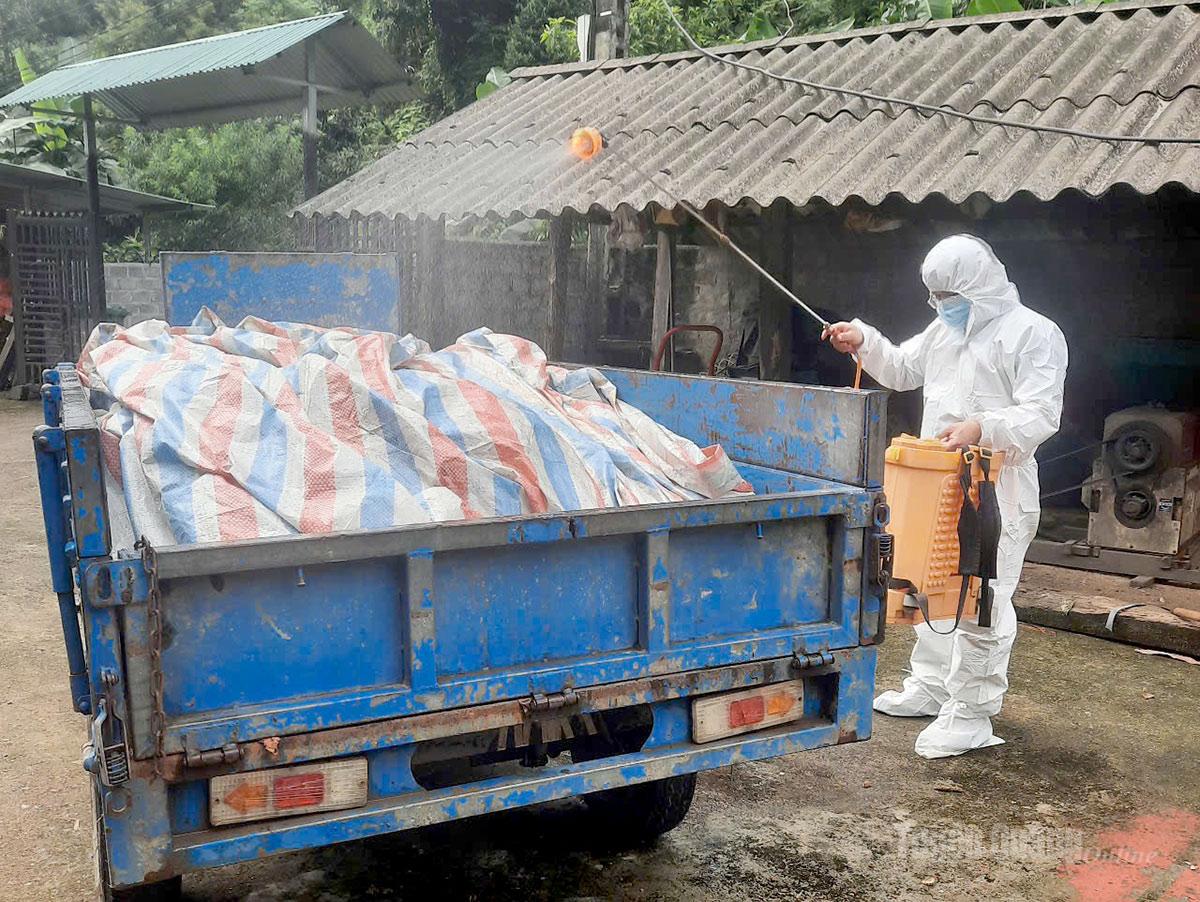
Mr. Vu Minh Thao, Head of the Veterinary Department, expressed his concern: The mentality of selling off pigs in a panic when they show suspicious symptoms still persists. Instead of reporting to the veterinary authorities, many small-scale farmers, fearing total losses, choose to sell off their pigs quickly. The transportation of sick pigs from one region to another inadvertently turns the transport vehicles into machines that spread the virus widely.
Besides the desire of some livestock farmers to salvage their assets, the habit of secretly slaughtering pigs at unregulated locations that do not meet hygiene and epidemiological standards is also a serious threat. Wastewater and pig blood that are not properly treated are the source of transmission and spread of disease to neighboring farms.
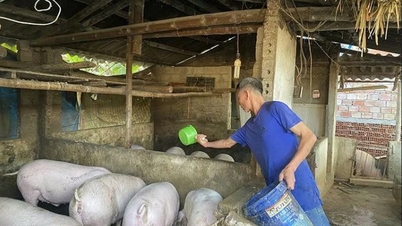
Furthermore, the use of unprocessed leftover food or lax control over people and vehicles entering and exiting livestock areas is making the biosecurity shield more fragile than ever. Mr. Ha Van Quan, from Tan Hoa village, Tan An commune, said: His family raises livestock completely separate from their living quarters and strictly adheres to disease prevention and control measures. However, just one moment of carelessness, allowing a trader's vehicle to get close to the livestock area, led to an outbreak and the loss of his entire herd of 8 pigs, each weighing 80 kg.
Veterinarians agree that while subjective causes can be addressed through awareness, objective factors pose a significant challenge for scientists . This is the unpredictable mutation of the African Swine Fever (ASF) virus; it doesn't remain static but constantly adapts. Recently, experts have observed the emergence of new virus subtypes with low and medium virulence, leading to atypical clinical symptoms. Infected pigs don't die immediately but have a prolonged incubation period, making early detection and isolation of outbreaks difficult.
Notably, despite Vietnam's pride in being a pioneer in ASF vaccine production, its implementation still faces enormous challenges. New virus strains sometimes mean the vaccine does not provide absolute protection; the complex structure and extreme environmental tolerance allow it to survive in frozen meat for extended periods, making disinfection and sterilization difficult.
Sustainable livestock farming solutions
At the February regular meeting of the Provincial People's Committee, the leaders of the Department of Agriculture and Environment reported in detail on the complex developments of African Swine Fever (ASF). Although it is not a new disease, with its rapid spread and mutated virulence, no locality can confidently claim to be in a state of absolute safety.
|
Authorities sprayed disinfectant in the area and on vehicles used to transport infected pigs. |
The core reason why disease outbreaks are difficult to control lies in the gaps in biosecurity practices, especially in small-scale farms interspersed within residential areas. Once pathogens have established themselves in the environment, even a small lapse in hygiene procedures allows the virus to immediately re-enter. Mr. Vu Minh Thao stated: Vaccines are not currently the only measure to completely replace traditional methods, as they mainly only protect fattening pigs and do not provide comprehensive protection for breeding pigs and sows. Therefore, the root of disease control must still begin with the awareness and biosecurity techniques of livestock farmers.
Sharing this view, Mr. Nguyen Ngoc Sang, Director of Sang Nhung Safe Food Production and Processing Cooperative in Dong Tho commune, shared his practical experience: The key factor is to tighten biosafety discipline from the workforce to the process of importing and exporting materials and transportation vehicles. However, Mr. Sang also emphasized: The principle of biosafety must aim for effectiveness but must be simple enough for workers to easily implement. If the process is too complicated, workers may develop a mentality of doing things superficially, creating loopholes for viruses.
To elaborate on the technical solutions, Mr. Trinh Van Binh, Deputy Director of the Department of Agriculture and Environment, stated that the Department is collaborating with AMAVET Veterinary Pharmaceutical Trading Joint Stock Company to pilot a contactless pig farming model in Tan Thanh commune. This model is considered to have a very high level of protection, featuring thorough netting to completely prevent insects and rodents – intermediate hosts that transmit diseases; and a system of ditches containing lime water surrounding the pigpens, maintaining a disinfectant concentration 24/7. Importantly, all operations from feeding and cleaning to vaccination are performed through automated or indirect systems, absolutely preventing workers from having direct hand contact with the animals.
According to Trinh Van Binh, Deputy Director of the Department of Agriculture and Environment: The fight against African Swine Fever (ASF) is no longer just a matter for the veterinary sector, but has become a test of the discipline of livestock farmers and the adaptability of science. In the current context, tightening biosecurity procedures is a necessary condition, and continuously researching and updating variants to improve vaccines is a sufficient condition for the sustainable development of the livestock industry.
Text and photos: Doan Thu
Source: https://baotuyenquang.com.vn/kinh-te/202603/giai-phap-ngan-chan-dich-ta-lon-chau-phi-45467d4/




































































































Comment (0)