

Currently, higher education institutions have proactively reviewed and streamlined their organizational structure and personnel towards greater efficiency. The role of the University Council has been concretized and enhanced in the organizational and operational management of most higher education institutions. Based on practical implementation, the obstacles related to the operation of the University Council have been addressed by universities and management agencies.
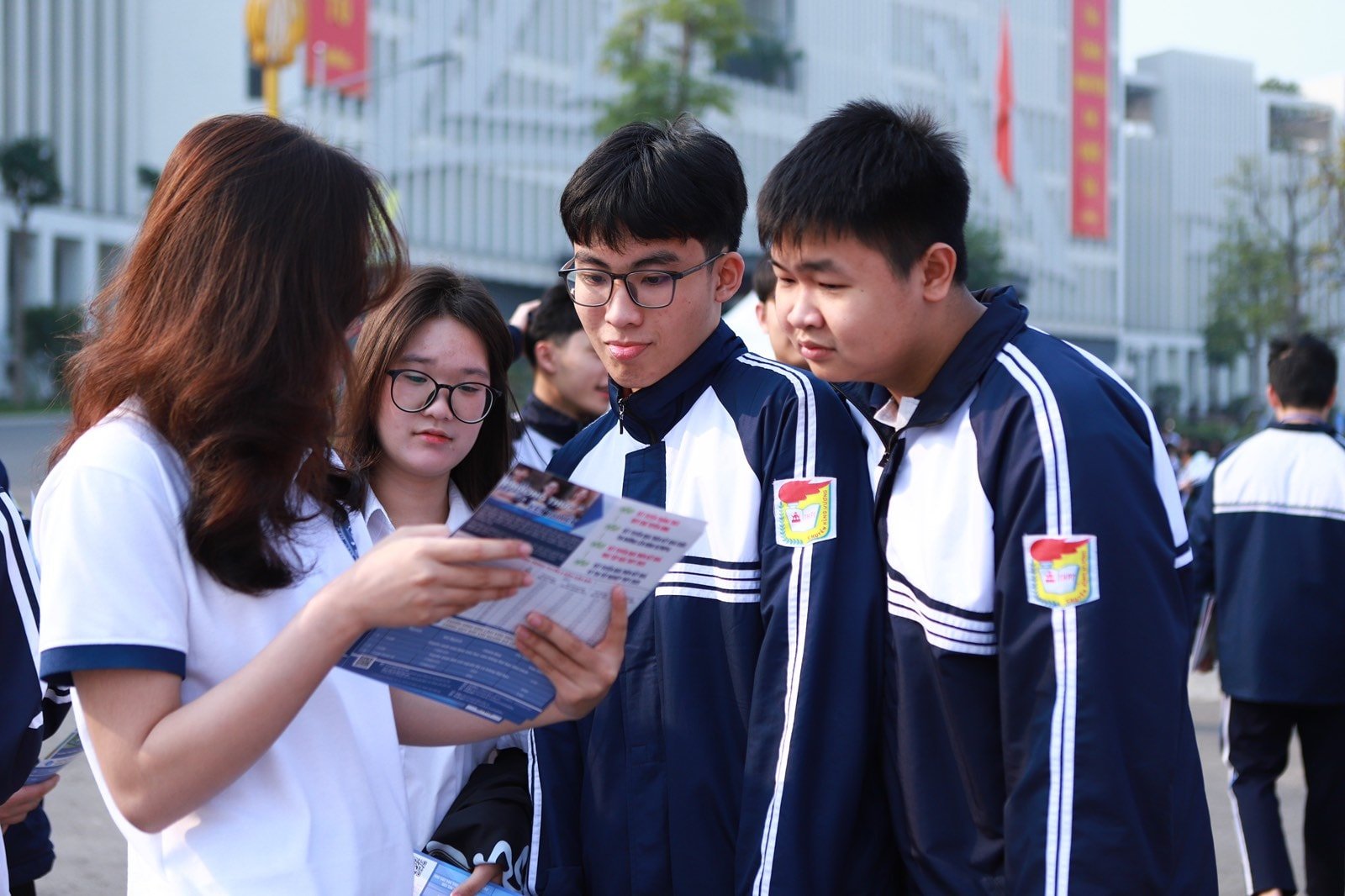
The key to effective coordination is clear role assignment.
Dr. Le Viet Khuyen, Vice President of the Association of Vietnamese Universities and Colleges, believes that the mechanism for establishing a University Council is closely linked to autonomy. Only autonomous universities need a University Council, while non-autonomous universities are "still constrained" by their governing bodies.
“To date, only 23 public universities have been granted the right to pilot the implementation of university autonomy. The remaining universities are still operating under a governing body mechanism, meaning they have a direct managing agency. In reality, problems have arisen in some universities stemming from the unclear ‘division of roles’ between the responsibilities and powers of the rector, the university council, and the governing body,” Dr. Le Viet Khuyen stated.
Statistics from the Ministry of Education and Training (MOET) indicate that a small number of public and private higher education institutions have yet to establish a School Council. Meanwhile, there are 174 public higher education institutions with numerous different governing bodies; some are directly under the Ministry, others under the Provincial People's Committee… The higher-level Party organizations also vary, with some under the Party Committee of the Ministry of Education and Training, and others under the Party Committee of the Bloc… Therefore, leadership, guidance, and especially personnel management will be inconsistent across units.
In Hanoi, most universities and colleges have established School Councils with various models such as the Party Secretary serving as the Chairman of the School Council; the Party Secretary also serving as the Rector; the Party Secretary serving as both the Chairman of the School Council and the Rector… Many of these schools have developed and implemented regulations on coordination between the Party Committee and the School Council and Board of Directors, but the coordination methods are still loose and inconsistent in the implementation of tasks. To overcome this situation, the Hanoi City Party Committee has issued a model framework regulation on “Coordination between the Party Committee and the School Council and Board of Directors of universities and colleges in Hanoi” to help school activities be implemented harmoniously, without overlap, and with clearly defined functions and responsibilities. From this, each school can develop its own operational regulations with specific and detailed assignments within the school leadership, with a high degree of consensus on roles, responsibilities, and authority, ensuring effective and smooth coordination of work.
Sharing practical experiences in coordinating between the Party Committee, the University Council, and the Rector at Vinh University, Professor Nguyen Huy Bang – Rector of Vinh University – stated that regarding the university's development strategy, the Party Committee sets the direction for development. Based on this, the Rector develops the strategy, gathers feedback from relevant parties, and submits it to the University Council for approval and promulgation. This serves as the basis for implementing annual activities. Professor Bang affirmed that the Party Committee, the University Council, the Board of Directors, along with other institutions, are indispensable components for promoting the harmonious and sustainable development of a higher education institution. The key is to play the right role, understand the responsibilities, and act at the right time, in the right place, and in the right way. If the models and operating regulations of these three institutions are not harmonized, it will lead to difficulties in operation.
Dr. Chu Manh Hung, Chairman of the University Council of Hanoi Law University, stated that previously, many decisions regarding the university's development orientation belonged to the governing body. However, after the establishment of the University Council, it has decided on major issues of the university in accordance with the Law on Higher Education, such as: decisions on the strategy, development plan, and annual plan of the university; promulgation of regulations on organization and operation, financial regulations, and regulations on grassroots democracy; decisions on enrollment direction, opening new majors, training, joint training, scientific and technological activities, international cooperation; policies to ensure the quality of higher education, cooperation between the university and businesses, and employers…
Professor Nguyen Dinh Duc - Chairman of the University Council of the University of Technology (Vietnam National University, Hanoi) also proposed solutions related to clearly defining the role and position of the University Council in relation to the Board of Directors. For autonomous public universities, the University Council is similar to the Board of Directors in a business, while the Rector and the Board of Directors are like the director and the board of directors. For private universities, the Board of Directors must have a decisive role similar to that of the University Council. According to Professor Duc, the Chairman of the University Council is more important than the Rector, directly formulating policies and strategies, but this is not clearly stated in the law, leading to many places still struggling with the question of "who is more powerful," and then making hasty selections.
A comprehensive solution starting from the legal framework.
Currently, after five years of implementation, Decree 99/2019, issued by the Prime Minister on December 30, 2019, has revealed several shortcomings. One issue of particular concern is the lack of clear regulations specifying whether the authority to appoint the Rector of a public higher education institution is the University Council or the direct management agency. In practice, recent years have seen instances where the University Council issues resolutions granting the Rector the authority to manage a unit without the "recognition" of the governing body, while in other cases, this recognition has been obtained, leading to conflicting opinions.
The draft amendments to Decree 99/2019 implementing the Law on Higher Education, currently being implemented by the Ministry of Education and Training, clearly define the authority responsible for appointing and recognizing the Rectors of public higher education institutions as the direct management body. Previously, the guiding decree did not clearly specify whether this authority belonged to the University Council or the direct management body.
The direct management agency also decides on the appointment of the Rector or the assignment of responsibility for the university in the case of newly established universities or universities that have been without a Rector for more than six months without submitting a proposal for the recognition of a Rector to the direct management agency. This will remain in effect until a decision is made to officially recognize the Rector based on the proposal of the University Council.
Regarding the members of the University Council, the Ministry of Education and Training also included in the draft regulations a minimum of 30% of the total number of members from outside the university, including representatives from the direct management agency. The number of representatives from the direct management agency appointed shall not exceed 50% of the total number of members from outside the university, in order to promote autonomy. Meanwhile, the draft also adjusted the percentage of total staff and employees of the university attending the delegate conference to elect members of the University Council from over 50% to a minimum of 20%. The draft also adjusted the regulations on the dismissal and removal of the Chairman and members of the University Council, and added regulations on the procedure for replacing members of the University Council…
A series of shortcomings arising in the implementation of legal regulations on the establishment and operation of school councils have been pointed out. The Ministry of Education and Training is taking these into account and making adjustments, as reflected in the draft, in order to ensure that these institutions operate effectively and harmoniously.
In addition, Professor Bui Van Ga, former Deputy Minister of Education and Training, also suggested that the operation of universities is currently governed by numerous legal documents, not just the Higher Education Law. To successfully implement autonomy, it is necessary to amend many related laws and legal documents such as the Finance Law, the Public Investment Law, the Law on Civil Servants, etc. In these documents, the governing body should be replaced by the University Council.
Dr. Le Dong Phuong - former Director of the Center for Higher Education Research, Vietnam Institute of Educational Sciences (Ministry of Education and Training): Be cautious when selecting members of the school board.
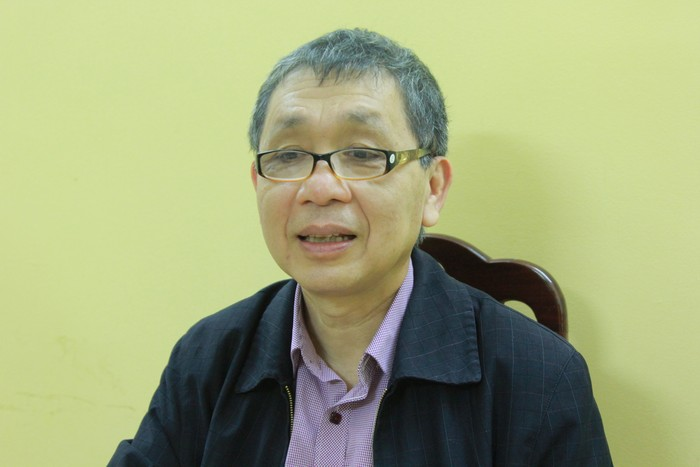
For the School Board to make correct and effective decisions, many factors are required, among which management capacity is crucial. The School Board should not be a board representing any particular group, nor should it be merely a formality; it must be comprised of truly outstanding individuals in society, knowledgeable about socio-economic development, and capable of anticipating changes to provide advice and guidance for the school's development. Regarding members of the School Board who are also employees of the school, I believe careful selection is necessary because they have a "dual role," making it difficult for them to be truly independent in making decisions and effectively and sustainably monitoring implementation, given the limited time they can serve on the School Board, which may only be one term. All members of the School Board who perform ineffectively should be subject to a mechanism for dismissal through periodic reviews and evaluations of their collaborative work.
(to be continued)
Source: https://daidoanket.vn/tu-chu-dai-hoc-va-trach-nhiem-quyen-han-hoi-dong-truong-bai-2-giai-phap-tu-thuc-tien-10302197.html

![[Photo] General Secretary and President To Lam presides over the meeting to approve the draft report on the results of the second inspection by the Politburo of the Standing Committee of the Hanoi City Party Committee.](https://vphoto.vietnam.vn/thumb/1200x675/vietnam/resource/IMAGE/2026/05/26/1779789811432_a2-bnd-4430-9620-jpg.webp)












































































Comment (0)