

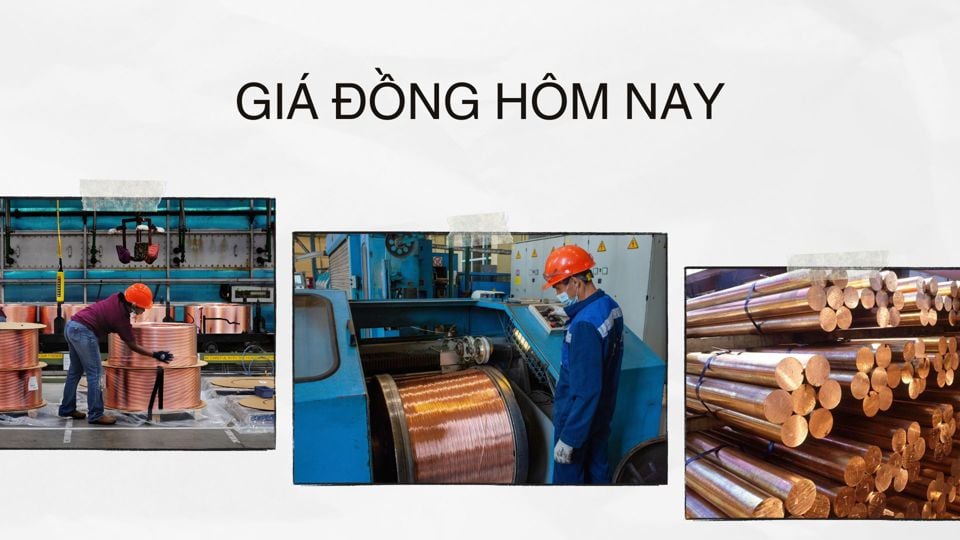
The three-month benchmark copper contract on the London Metal Exchange (LME) fell 0.8% to 9,854 yuan per ton. The contract hit a five-month high of 10,046.50 yuan per ton on Thursday.
The most actively traded copper futures contract on the U.S. Comex exchange fell 0.1% to $5.1085 per pound. They had hit a 10-month high on Thursday.
Late last month, US President Donald Trump ordered the US Commerce Department to investigate the possibility of imposing tariffs on copper for national security reasons, a move that caused copper futures prices in New York to surge against other global benchmarks.
The price spread between the New York Comex commodity exchange and the London Metal Exchange has risen above $1,200 per ton, nearing the record high reached in mid-February. This represents a 12% premium and provides a significant incentive for traders and producers to continue shipping copper to the US before tariffs are imposed.
Goldman Sachs Group Inc. and Citigroup Inc. predict the U.S. will impose a 25% import tariff on copper by the end of the year. Even with the tariff, U.S. copper buyers have little choice but to continue importing the metal because the U.S. consumes twice as much as it produces.
US buyers are now seeking more supplies from countries like Chile and Peru amid a surge in copper inventories. Some of the metal from Mexican and Canadian mines is likely to be diverted to Europe due to President Donald Trump's comprehensive tariffs on key US trading partners. Chilean state-run producer Codelco – a leading shipper to the US – is working to meet the additional demand from US customers after meeting with them last month.
This marks a shift for China, which purchased around 4 million tons of the metal last year and accounts for about 40% of the world 's refined copper. According to the International Copper Study Group, the U.S. is becoming the preferred selling destination for the world's leading producers and traders, putting the Asian nation at a disadvantage.
This creates a lucrative environment for manufacturers and traders, allowing them to exploit price differences between the U.S. and other markets.
Citigroup analyst Tom Mulqueen said in an interview: "There is the potential for a broader reshaping of supply chains."
According to a major trader operating in the Asian market, monthly cargo volumes into Chinese ports in April and May could fall by as much as a third compared to the same period last year. Demand for copper shipments from London Metal Exchange warehouses in Asia has risen to its highest level since August 2017.
Source: https://kinhtedothi.vn/gia-kim-loai-dong-ngay-24-3-giam-0-8-tren-san-giao-dich.html
![[Photo] National Assembly Chairman Tran Thanh Man attends the policy seminar to promote Vietnam-Türkiye cooperation.](https://vphoto.vietnam.vn/thumb/1200x675/vietnam/resource/IMAGE/2026/04/16/1776351415367_vna-potal-chu-tich-quoc-hoi-tran-thanh-man-du-toa-dam-chinh-sach-thuc-day-hop-tac-viet-nam-tho-nhi-ky-8705791-jpg.webp)


























![[Image] Bridges and roads connecting the eastern part of Ho Chi Minh City](https://vphoto.vietnam.vn/thumb/1200x675/vietnam/resource/IMAGE/2026/04/16/1776328595108_ndo_br_bh-vt5-jpg.webp)


































![[Infographic] Details of the Hanoi-Quang Ninh High-Speed Railway Project](https://vphoto.vietnam.vn/thumb/402x226/vietnam/resource/IMAGE/2026/04/16/1776338188424_anh-man-hinh-2026-04-16-luc-18-16-10.png)

![[Photo] National Assembly Chairman Tran Thanh Man meets with the Speaker of the Georgian Parliament](https://vphoto.vietnam.vn/thumb/402x226/vietnam/resource/IMAGE/2026/04/16/1776338494029_anh-man-hinh-2026-04-16-luc-18-21-21.png)

























Comment (0)