

The global rice market is entering a correction phase after a prolonged period of rising prices. Simultaneously, many importing countries are tending to change their stockpiling and import policies, making the market outlook more difficult to predict.
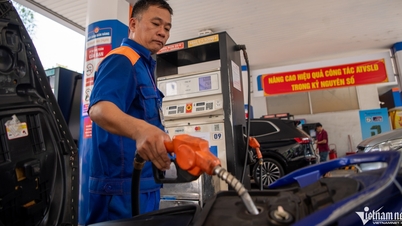
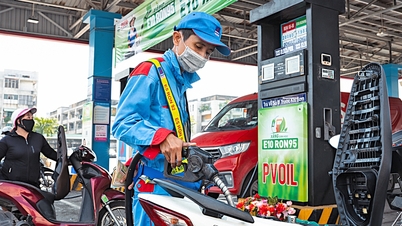
This development, coupled with the negative impact of conflicts in the Middle East, has led to increased fuel, transportation, and labor costs, putting significant pressure on domestic production and consumption. Meanwhile, domestic rice prices are trending downward, widening the gap between costs and income for rice farmers.
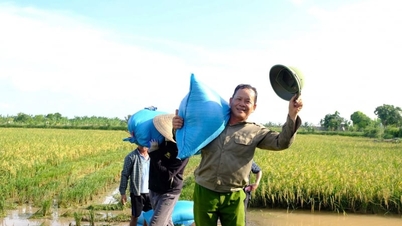
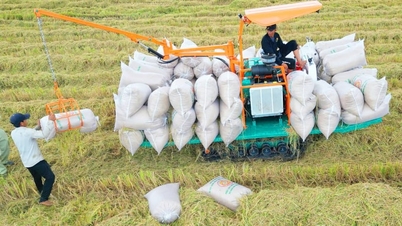
More worryingly, this decline coincides with the peak harvest season for the winter-spring crop – the most important rice crop of the year – in the Mekong Delta provinces, and in some areas, preparations are underway for the summer-autumn crop. In key rice-growing provinces such as An Giang , Dong Thap, Can Tho, and Vinh Long, many farmers are facing the paradox of a bumper harvest but lower selling prices compared to the same period last year, while the costs of fertilizer, fuel, and transportation have all increased, becoming a heavy burden on producers. This has affected their income and impacted their morale for subsequent seasons.
In this context, Prime Minister 's Directive 21/CD-TTg on managing rice production and consumption in the new situation requested ministries, sectors, and localities to closely monitor market developments, ensure a balance between supply and demand, promote rice consumption and export, and proactively develop solutions to support farmers and businesses.
However, practical experience shows that the effectiveness of policies largely depends on the speed and quality of implementation. One of the key points now is organizing timely rice procurement, thereby contributing to stabilizing market sentiment during periods of strong seasonal supply increases. When the procurement process runs smoothly, downward price pressure can be limited, helping the market avoid negative short-term fluctuations. The connecting role of local authorities between businesses, cooperatives, and farmers therefore becomes particularly important in order to limit bottlenecks or price manipulation during the harvest season.
For rice procurement and "short-term storage" to truly play a role in regulating supply and demand, the key solution must begin with immediately activating a credit package to support rice procurement. Banks need to promptly allocate preferential interest rate credit limits based on market principles so that businesses have sufficient working capital. This is not a subsidy but a support tool to ensure the smooth functioning of the market, helping businesses proactively procure and store rice, thereby contributing to stabilizing rice prices for farmers.
Simultaneously, the pressure of input costs in the rice value chain is becoming a significant bottleneck. Rising fuel prices, transportation costs, and logistics expenses have significantly eroded the profits of both producers and businesses. In this context, cost-reduction solutions, ranging from optimizing transportation and supporting agricultural logistics to promoting mechanization and improving supply chain efficiency, can create crucial room for improved competitiveness.
In the long term, the story of the rice industry is not just about production volume or consumption capacity, but about added value and sustainability. In reality, the fragmented nature of production and the lack of strong supply chain linkages remain inherent limitations. When the links between farmers, cooperatives, and businesses are strengthened in a substantive way, not only will output be more stable, but product quality will also have the opportunity to improve.
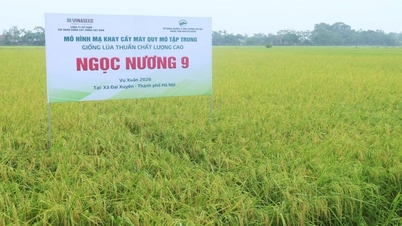
The shift towards producing high-quality, fragrant, and specialty rice in the Mekong Delta is the right direction, helping to elevate brand image and reduce dependence on low-price competition. This also provides a foundation for the Vietnamese rice industry to better adapt to fluctuations in the international market.
This year's winter-spring rice crop is a test of our management capacity and policy coordination. In an increasingly volatile market, proactive and decisive implementation of solutions will be key to maintaining the sustainable development of the rice industry.
Source: https://www.sggp.org.vn/giam-ap-luc-chi-phi-giu-nhip-thi-truong-lua-gao-post843558.html



















































































Comment (0)