Accordingly, energy saving is no longer seen as a temporary solution but is gradually becoming an important resource, contributing to enhancing competitiveness and creating room for sustainable growth.
On May 24, 2026, the Prime Minister issued Decision No. 924/QD-TTg on the Plan for implementing activities in response to the National Day for Energy Saving and Waste Prevention in 2026 with the theme "Energy Saving - Future Prosperity". This decision was issued in the context of increasing pressure to ensure energy supply, while the economy aims to maintain a high growth rate in the coming years, clearly demonstrating the orientation of considering energy saving as an important resource for sustainable development.
In fact, at the beginning of summer, the national power system has continuously set new records for peak power and electricity consumption. On May 26 alone, the system's peak power reached 58,103 MW, the highest since the beginning of the year. In the north, electricity demand also approached 30,000 MW amidst prolonged and widespread heatwaves.
These figures reflect the positive recovery of the economy as demand for production, business, and consumption has all increased sharply. However, the rate of load increase also highlights the urgent need to utilize existing energy resources more efficiently.
Conversely, this poses a significant challenge in ensuring energy supply to meet development needs.
Over the years, Vietnam's energy story has largely focused on developing power generation and transmission systems to meet the growing demands of the economy. However, developing power supply always requires a long time and very large investment resources.
Meanwhile, energy saving is a solution that can be implemented effectively immediately through technological innovation, optimizing production processes, improving equipment efficiency, and changing energy consumption behavior.



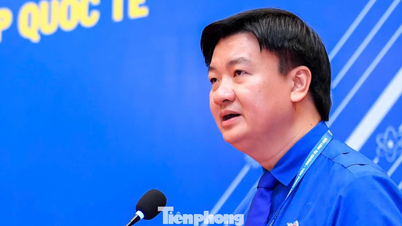
According to Minister of Industry and Trade Le Manh Hung, in the context of rapidly growing electricity demand, in addition to ensuring fuel supply, improving the availability of power sources, and operating the power grid safely, the most direct and effective solution currently is to use electricity economically and efficiently and to regulate the load, especially during peak hours.
According to Mr. Dinh The Huu, Deputy Director of the Electricity Department, during working sessions between the Ministry of Industry and Trade and local departments of industry and trade and energy corporations on the implementation of Prime Minister's Directives No. 09 and 10/CT-TTg, the Ministry requested localities to resolutely implement solutions that can yield immediate results, such as turning off unnecessary lighting and decorations, reducing the power of outdoor advertising signs, and strengthening the promotion of energy-saving practices in the community.
Citing the actual operation of the power system on May 26th and 27th, Mr. Dinh The Huu stated that during the peak evening hours from 6 PM to 11 PM, the proactive reduction of unnecessary electricity consumption by residents and businesses contributed to the power system's ability to meet remaining essential needs.
According to Mr. Huu, initial results show that these seemingly simple solutions have significantly contributed to curbing the peak load increase during the heatwave at the end of May. This demonstrates that, in addition to the efforts of the electricity sector, the coordinated involvement of local authorities and the people is crucial in ensuring a safe and stable electricity supply.
In recent times, the Government has issued many important directives to promote energy conservation and efficiency, including Directive No. 09/CT-TTg on strengthening energy saving, promoting energy transition and developing electric transportation; and Directive No. 10/CT-TTg on strengthening electricity saving and developing rooftop solar power. Mr. Do Van Nam, a member of the Board of Directors of the Northern Power Corporation (EVNNPC), emphasized that, in the context of very high summer load increases, electricity saving is no longer a temporary solution but should be considered the most important and least expensive "on-site power source".
Experts believe that the greatest pressure on the power system does not lie in the total daily electricity consumption but is often concentrated during peak hours. During these times, the system has to mobilize additional, more expensive power sources and operate under more stressful conditions. Adjusting electricity demand during peak hours will significantly contribute to ensuring the safe and stable operation of the power system during the hot season.
In addition, many modern management tools are being implemented, such as demand response (DR), demand management (DSM), and the development of self-generating and self-consuming rooftop solar power combined with energy storage.
According to energy experts, from a system operation perspective, shifting 1 kilowatt-hour of electricity away from peak hours is often equivalent to saving 1 kilowatt-hour of electricity. This is also why load adjustment and electricity demand management programs are being intensified nationwide.
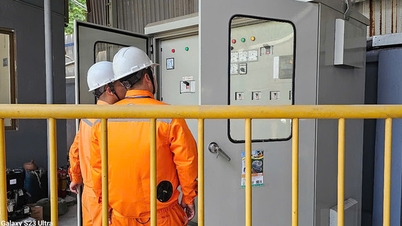
When businesses proactively adjust their production plans to reduce peak-hour load; manufacturing facilities invest in energy-efficient production lines; and households change their electricity usage habits or utilize on-site solar power, these seemingly individual actions significantly contribute to reducing pressure on the entire system.



Energy expert Ha Dang Son commented: "With the current peak load growth rate of nearly 10% per year, if there is no strong shift in thinking about energy use towards saving and efficiency, new power generation investment projects will always have to chase the ever-increasing demands of society."
Using energy efficiently and effectively is not only a solution to cope with heatwaves or the risk of immediate supply shortages, but also one of the important conditions for ensuring national energy security. When each agency, business, and citizen uses electricity more efficiently, the benefits extend beyond reducing costs or easing pressure on the power system, contributing to enhancing the competitiveness of the economy, strengthening energy self-sufficiency, and realizing green growth and sustainable development goals.
Source: https://nhandan.vn/giam-ap-luc-cho-he-thong-dien-post970314.html





![[Video] Weather forecast for tonight and tomorrow, June 27, 2026: Thunderstorms cover Northern Vietnam, cool weather.](https://vphoto.vietnam.vn/thumb/402x226/vietnam/resource/IMAGE/2026/06/26/1782479124716_dem-26-png.webp)