

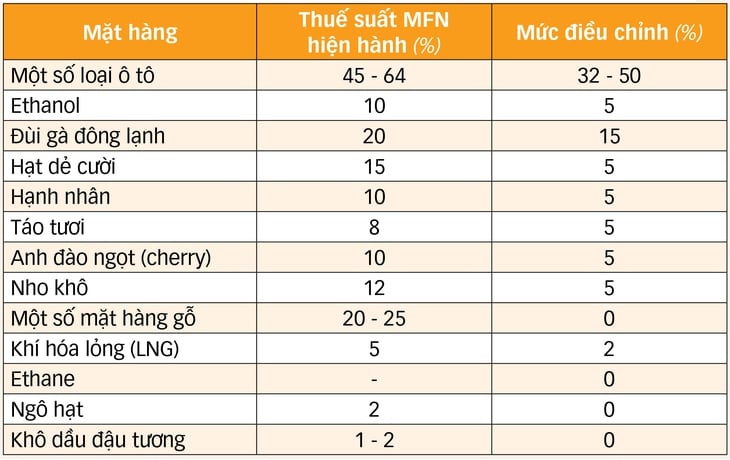
Source: Decree 73/2025/ND-CP dated March 31, 2025, amending and supplementing the preferential import tax rates of some goods - Data: NGOC AN
A range of imported goods from the US have had their tariffs reduced to low levels, even to 0%, according to a recently issued government decree.
This move comes before President Donald Trump announces retaliatory tariffs on all countries, and is considered positive given the recent surge in Vietnamese exports to the US.
Proactively reduce taxes.
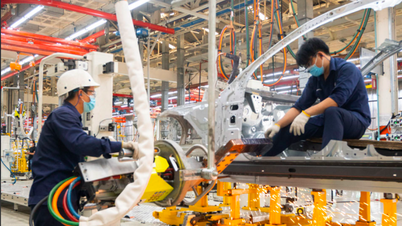
According to the new decree, the preferential import tax rate for automobiles under HS codes 8703.23.63 and 8703.23.57 has been reduced from 64% to 50%, and for HS code 8703.24.51 from 45% to 32%. These are vehicles with engine capacities from 2,000cc to 2,500cc and four-wheel drive models.
Many agricultural products also had their tariffs reduced: frozen chicken thighs from 20% to 15%, pistachios from 15% to 5%, almonds from 10% to 5%, fresh apples from 8% to 5%, cherries from 10% to 5%, and raisins from 12% to 5%.
Specifically, wood and wood products under headings 44.21, 94.01 and 94.03 (including clothes hangers, chairs and wooden furniture) will have their tariffs reduced from 20% and 25% to 0% from March 31st.
Other items also had their tariffs reduced: corn kernels from 2% to 0%, soybean meal from 1% and 2% to 0%, liquefied natural gas (LNG) from 5% to 2%, and ethanol from 10% to 5%. Ethane was assigned HS code 2711.19.00 with a 0% tariff.
Mr. Vu Tan Cong, former General Secretary of the Vietnam Automobile Manufacturers Association (VAMA), assessed the government's tax reduction move as proactive and positive, especially since the Trump administration had announced plans to impose a 25% import tariff on all cars not manufactured in the US (effective from April 2) and a 25% tariff on car components (applicable no later than May 3).
Although Vietnam does not import many American car models and the tax reduction does not apply to popular models, this tax reduction helps diversify the supply, increase market competition, and boost the domestic automotive industry.
Currently, domestic businesses mainly produce vehicles with low engine displacement (under 2,000cc), suitable for the needs of the vast majority of consumers, while vehicles with higher engine displacement are mainly imported.
Expectations from businesses
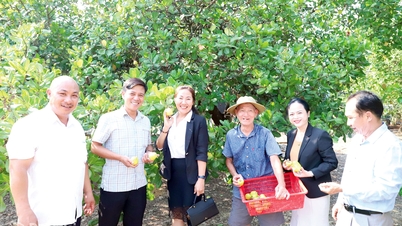
The fruit and vegetable sector is considered to be able to "avoid" reciprocal taxes. Mr. Dang Phuc Nguyen, General Secretary of the Vietnam Fruit and Vegetable Association, hopes that reciprocal taxes will not be applied to fruits, because the balance of import and export turnover is maintaining a trade deficit.
In 2024, Vietnam exported fruit to the US worth $360.4 million, but imported fruit from the US worth $543 million, mainly apples, cherries, and oranges.
"With a trade deficit and relatively low export value, the likelihood of tariffs being imposed is low," Mr. Nguyen commented. Currently, businesses are still boosting exports to the US but are facing difficulties in logistics and preservation technology.
Only a few items, such as fresh coconuts and pomelos, can be transported by sea; dragon fruit and mangoes, however, must be transported by air. Therefore, even though the US imports up to $60 billion worth of fruits and vegetables, the presence of Vietnamese goods remains modest.
Mr. Nguyen Chanh Phuong, vice chairman of the Ho Chi Minh City Handicraft and Wood Processing Association, said that the wood industry has proposed a policy to reduce taxes on imported wood materials from the United States. He assessed that the government's swift issuance of the tax reduction policy is a positive move and brings hope to businesses.
Regarding the timber industry, Mr. Phuong believes that the Vietnam-US relationship is not one of direct competition but rather of complementarity. In the US, the cost of producing wooden furniture is very high due to wages and other factors.
Meanwhile, the US has abundant timber resources, and Vietnam imports US timber in large quantities, ranking second in the world . Importing raw materials helps the US timber industry sell its products and boosts forestry production. Conversely, when wood products are manufactured in Vietnam at competitive costs and exported to the US and other markets, it will support the US timber industry.
However, Mr. Phuong noted that taxation can be applied at the national level. Therefore, he hopes the Government will take more drastic measures to reduce taxes on imported products from the US, such as popular car models.
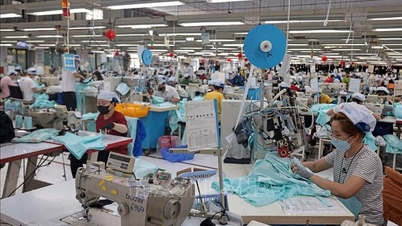
Because Vietnam's exports of textiles, footwear, and wood products to the US account for a very large proportion and value, even a single unfavorable tariff move could cause partners to hesitate to purchase goods, directly impacting hundreds of thousands of exporting businesses.
Mr. Phuong also recommended that the Government review import flows from countries unfriendly to the US, as well as closely manage investment from these countries to avoid tax evasion investigations that could harm the entire industry.
Source: https://tuoitre.vn/giam-thue-hang-my-truc-gio-g-20250402223637065.htm
![[Photo] Da Nang: A sea of people respectfully paying homage to the Bodhisattva Avalokiteshvara.](https://vphoto.vietnam.vn/thumb/1200x675/vietnam/resource/IMAGE/2026/04/06/1775454198203_ndo_br_lh24-jpg.webp)

![[Photo] National Assembly Chairman Tran Thanh Man takes the oath of office](https://vphoto.vietnam.vn/thumb/1200x675/vietnam/resource/IMAGE/2026/04/06/1775453300886_ndo_br_1-2229-jpg.webp)
















![[Photo] Sidewalks in Vung Tau ward are now more spacious.](https://vphoto.vietnam.vn/thumb/1200x675/vietnam/resource/IMAGE/2026/04/06/1775455388046_5-6796-jpg.webp)
































































Comment (0)