

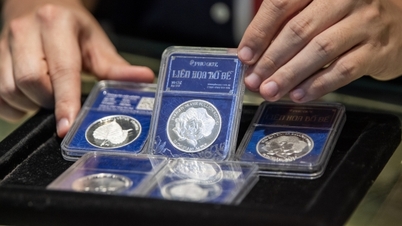
The silver market in the second week of April (April 6-10) saw positive recovery developments in both domestic and international markets; however, the overall trend still showed a tug-of-war in the face of several important macroeconomic factors, especially inflation and monetary policy.
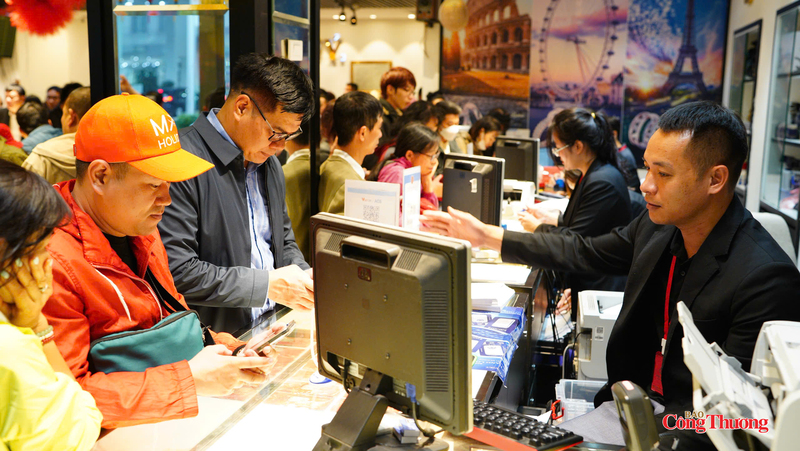
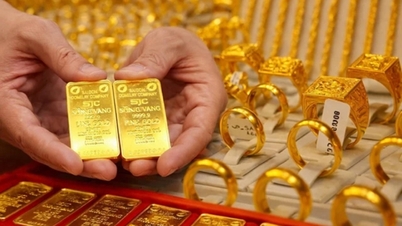
Silver prices have recovered significantly, with a positive long-term trend but fluctuating short-term outlook. Photo: Thai Manh
Inflationary pressures and geopolitical factors are driving the trend.
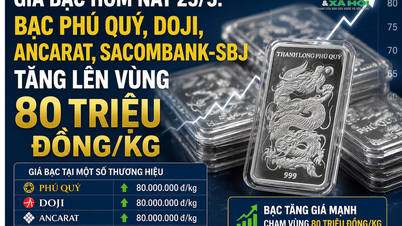
According to a report by Phu Quy Gold, Silver and Gemstone Group, the price of silver bars in the domestic market increased sharply last week, with the selling price reaching approximately 75.38 million VND/kg and the buying price at 73.11 million VND/kg, corresponding to a 4.62% increase compared to the end of the previous week.
At the time of this update, Phu Quy silver ingots were trading around VND 74.399 million/kg (selling price) and VND 72.159 million/kg (buying price), indicating a slight correction after a strong upward trend.
On the international market, spot silver closed the week at $73.01 per ounce, up 4.69% for the week and up 0.86% year-to-date. Silver futures contracts on the Comex and Shanghai exchanges also recorded corresponding gains, reflecting a consensus recovery trend across major markets.
However, the upward momentum in silver did not last throughout the week. The price of this precious metal came under downward pressure towards the end of the week due to a stronger US dollar and rising energy prices. In addition, the Easter holiday in Western countries reduced market liquidity, causing silver prices to mostly trade sideways around $72 per ounce.
Economic data released last week showed a strong increase in US non-farm payrolls, reinforcing expectations that the economy will continue to grow and increasing the likelihood that the Federal Reserve (FED) will continue to maintain a cautious monetary policy.
Meanwhile, escalating geopolitical tensions in the Middle East, particularly concerning Iran, along with developments in Ukraine, continue to create unpredictable volatility in commodity markets, including silver.
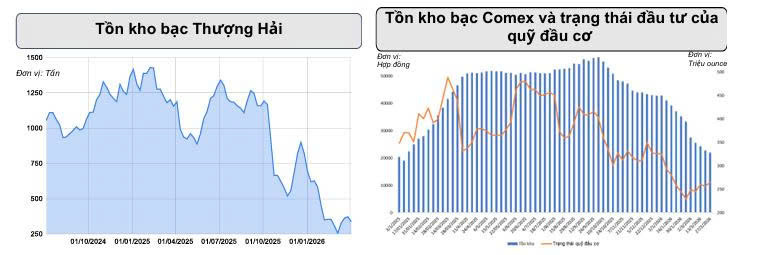
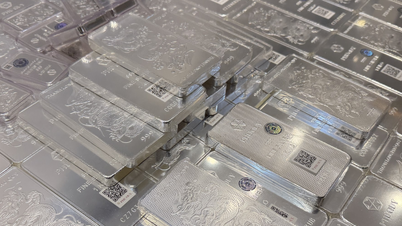
Notably, silver inventories on major exchanges continued to decline sharply. Silver inventories in Shanghai fell by more than 33 tonnes to approximately 338 tonnes, while inventories at Comex dropped by more than 19 tonnes to their lowest level since the beginning of 2025. The amount of silver available for delivery currently accounts for only about 23% of total Comex inventories.
This development indicates that supply is shrinking, thereby providing long-term support for silver prices, although short-term pressure from monetary policy and capital costs remains.
According to information provided to reporters from the Industry and Trade Newspaper, Phu Quy Gold, Silver and Gemstone Group predicts that, in the short term, silver prices will be significantly impacted by inflation and interest rate policies, but in the long term, the upward trend will be maintained due to reduced supply and increased demand for safe-haven assets.
In addition, oil price fluctuations and geopolitical tensions will continue to be important variables influencing the silver market in the coming period.
The market is awaiting inflation data and signals from the Fed.
This week, the market will focus on key economic data such as the US manufacturing PMI, consumer price index (CPI), and core PCE, along with Germany's CPI.
If inflation shows signs of rising again, the possibility of the Fed delaying or even continuing to raise interest rates could put pressure on silver prices in the short term. However, in the long term, a high-inflation environment could boost demand for precious metals as a safe haven.
Technically, silver prices are currently fluctuating within the range of $65-$75 per ounce, with an equilibrium zone around $70 per ounce. Key support levels are at $65 and $60 per ounce, while resistance is identified at $80 and $90 per ounce.
Although the long-term upward trend remains intact, the silver market is projected to continue experiencing significant volatility in the short term, influenced by inflation, energy prices, and global geopolitical factors.
Source: https://congthuong.vn/gia-bac-bat-tang-tro-lai-450559.html
![[Image] Hanoi's urban life under the challenge of a "scorching hot" environment](https://vphoto.vietnam.vn/thumb/1200x675/vietnam/resource/IMAGE/2026/05/25/1779706979265_nang-nong-t5-2026-minh-duy-7-4636-jpg.webp)

![[Image] Close-up view of the interchange connecting the two expressways and Long Thanh Airport.](https://vphoto.vietnam.vn/thumb/1200x675/vietnam/resource/IMAGE/2026/05/25/1779703378210_ndo_br_z7863716673926-224453a31600126cce10622af6290afd-4549-jpg.webp)





















































































Comment (0)