

 |
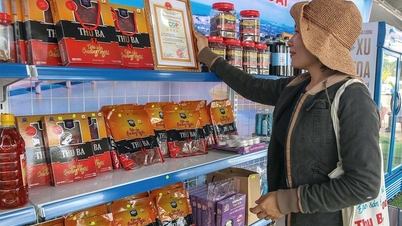
| The products of NaDo Agricultural and Pharmaceutical Cooperative utilize natural raw materials. |
In line with sustainable consumer trends.
From a plant that grew naturally in the hills and mountains, its economic value largely overlooked, the wild lemongrass plant, also known locally as "forest lemongrass," has now become a key raw material for NaDo Cooperative to develop various agricultural and household care products in line with modern consumer trends. Wild lemongrass is a plant with natural essential oils that have a distinctive aroma, containing a high content of citral, which has antibacterial, deodorizing, insect-repelling, and relaxing properties.
Recognizing the great potential of abundant local and neighboring resources, NaDo Cooperative has invested in research, essential oil extraction, and the development of vegan products, minimizing industrial chemicals and targeting customers who care about health and the environment. The cooperative has also invested in a well-equipped system of machinery for essential oil distillation, blending, and product packaging. From raw materials including leaves, fruits, and stems of the *Moringa oleifera* plant, through various processing stages, products with natural fragrances are created. Currently, the cooperative produces and sells approximately 10 different product lines, such as *Moringa oleifera* essential oil, herbal shampoo, aromatherapy essential oil, mosquito repellent, natural floor cleaner, and various other agricultural products. The common thread among these products is their focus on "green, clean, and safe" standards, aligning with sustainable consumption trends.
Ms. Tran Thi Thu Hang, Director of NaDo Cooperative, said that from its inception, the cooperative has clearly defined its development direction as building a brand from products of natural origin. “According to the cooperative's motto, products must be green, clean, and environmentally friendly. We want to bring consumers products that are safe for their health, while effectively utilizing readily available raw materials in the local area and surrounding regions,” Ms. Hang shared.
Targeting the tourism and export markets.
In addition to selling to individual customers, NaDo Cooperative also targets hotels, homestays, resorts, and tourists. These are large potential customer groups because the tourism industry increasingly prioritizes products of natural origin and health benefits. Besides the domestic market, the cooperative has also started receiving export orders. The products have received positive feedback from customers thanks to their natural fragrance, high safety standards, and increasingly professional packaging.
To meet the increasingly high demands of the market, the cooperative has focused on standardizing its production process towards modernization. The machinery and factory systems have been invested in comprehensively to ensure consistent quality for each product. In particular, all of the cooperative's products currently hold ISO 9001:2015 and Hala Vietnam certifications, facilitating access to major markets, especially those prioritizing green and safe standards.
Alongside improving quality, the cooperative also invests in modern packaging and designs that are easily accessible to young consumers. Online sales channels and social media platforms are also being promoted to expand the consumer market. Not only does it create green products, but the NaDo cooperative's model also contributes to job creation for local workers in the mountainous region. Currently, the cooperative has 5 official members and many seasonal workers from the local area.
Mr. Nguyen Van Hung, Chairman of the City's Cooperative Alliance, assessed: The development model of NaDo Cooperative is in line with the current trend of the green economy. Following modern consumer trends, people are increasingly interested in products of natural origin, safe for health, and environmentally friendly.
According to Mr. Nguyen Van Hung, the City Cooperative Alliance has been accompanying NaDo Cooperative through various support activities such as consulting on improving production processes, connecting and promoting trade, supporting product promotion, and training to enhance management capacity and digital transformation. In addition, the City Cooperative Alliance has also supported the cooperative in building its brand and standardizing its products to meet the increasingly high demands of the market.
Source: https://huengaynay.vn/kinh-te/nong-nghiep-nong-thon/huong-di-xanh-tu-cay-mang-tang-165971.html



![[Image] Hanoi's urban life under the challenge of a "scorching hot" environment](https://vphoto.vietnam.vn/thumb/1200x675/vietnam/resource/IMAGE/2026/05/25/1779706979265_nang-nong-t5-2026-minh-duy-7-4636-jpg.webp)
![[Image] Close-up view of the interchange connecting the two expressways and Long Thanh Airport.](https://vphoto.vietnam.vn/thumb/1200x675/vietnam/resource/IMAGE/2026/05/25/1779703378210_ndo_br_z7863716673926-224453a31600126cce10622af6290afd-4549-jpg.webp)


































































































Comment (0)