

"Thinking about having to worry about paying bank interest every time we wake up, and not daring to change jobs for fear of not having enough income to cover the debt, my husband and I decided to put our house buying plan on hold," Thuy Van said.
When they got married three years ago, the young couple also planned to buy a house to "settle down" like many other families. But in 2023-2024, apartment prices in Hanoi increased so rapidly that their plans were repeatedly disrupted. "Some apartments increased by several hundred million dong in just a few months. Our savings were nowhere near enough," Van recounted.
Currently, even though their family income exceeds 100 million VND per month, nearly five times the average (21.5 million VND) for a household in Hanoi, the couple still hesitates to restart their plan to buy a house.
According to Van's calculations, if they buy a 64 m2 apartment priced at around 5 billion VND, she and her husband will have to borrow 3 billion VND from the bank for 20 years. During the preferential interest rate period, the family will have to pay about 30 million VND per month. When the interest rate becomes variable, the amount to be paid could increase to 35 million VND per month.
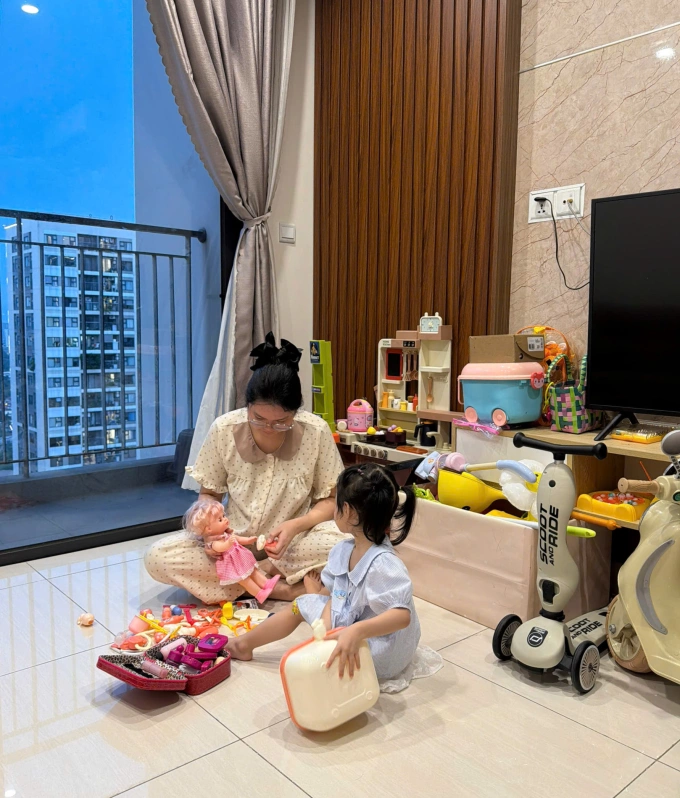
Last year, she and her husband bought a car for transportation. They rent a 43-square-meter, one-bedroom apartment for over 10 million VND per month, including electricity, water, and service fees. Their three-year-old daughter attends a private school that costs over 7 million VND per month. The total cost of raising their child is over 20 million VND. "Clearly, renting is much more manageable," Van said. "I can shop as I like, eat as I need, and travel a few times a year because I'm not burdened by debt."
Using a similar calculation, Thu Huong, 32, and her husband, residing in An Khanh ward, Ho Chi Minh City, also chose to rent a 56 m2 apartment in a condominium complex with a swimming pool, gym, and sports facilities, for 20 million VND per month.
Friends advised them to take out a loan to buy a house because the rent was substantial. However, a two-bedroom apartment equivalent to their current rental price was around 4.5 billion VND. If they borrowed 3.5 billion VND to buy a house, over 20 years, they would have to pay more than 40 million VND per month. "I would have to bear this debt for a third of my life," she said.
If they were to pay off the debt early, the couple would have to sacrifice many current needs, not to mention the added burden of having a child. "Thinking about the debt, we're temporarily renting to ease our minds," she said.
Currently, the rented apartment is about one kilometer from Huong's husband's company and four kilometers from her workplace. If she changes jobs, she can easily choose to rent another apartment near her new workplace. "Renting allows the living space to always be aligned with practical needs instead of being stuck in one place for a long time and eventually finding it unsuitable," Huong said.
After work, the couple goes to the gym, plays pickleball, or takes their pets for a walk. What Huong likes most about renting is that she doesn't have to worry about repairs or maintenance. If any appliance in the house breaks down, she just needs to call the rental company, and it will be taken care of immediately.
The couple budgets for several overseas trips each year, investing in personal hobbies and life experiences. Soon they will move to a larger house to add a sauna and space for their two cats to run around.
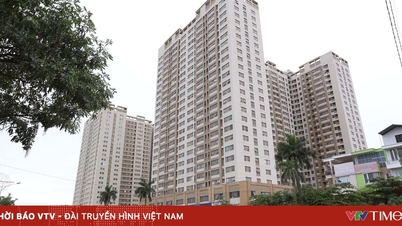
More and more young families are abandoning their plans to buy a house in favor of renting, like Thuy Van and Thu Huong's couple. Research by the Vietnam Association of Real Estate Brokers (VARS) shows that over 60% of young people under 35 in major cities (Hanoi, Ho Chi Minh City, Da Nang) prefer renting, considering it the optimal solution to reduce financial burdens and enjoy freedom amidst rising real estate prices.
According to data from Numbeo, a major global cost of living statistics platform, Vietnam ranks among the top 10 countries globally for housing accessibility. Experts say that in 2023-2024, people needed approximately 23 years of income to buy a house, this number increased to 26 years in 2025, and has now exceeded 30 years due to real estate prices rising faster than income growth. This is double the global average.
Businessman Le Quoc Kien, who has many years of experience in the real estate sector in Ho Chi Minh City, believes that most young people currently work in the city center. With 10-15 million VND in rent per month, they can live in a fully equipped apartment and commute conveniently to work. "Many people would rather rent a comfortable place than own a house too far from their workplace," he said.
Independent living and late marriage are also reasons why young people choose to rent, as high housing prices and the lack of financial support from relatives make buying a home impossible.
Expert Phan Dung Khanh, who has over 20 years of experience in investment consulting, believes that the Vietnamese mindset of "settling down and establishing a career" leads many families to unconsciously tie their entire financial plans and lives to a single fixed asset.
Furthermore, when burdened by mortgage pressure, they often choose secure jobs to maintain a steady cash flow for debt repayment, thereby limiting opportunities to experiment with new ventures or risky investments to increase their wealth. Conversely, those with less debt pressure tend to allocate their money to experiences, learning, and diversifying investment channels to expand their long-term income opportunities.
"There's no right or wrong conclusion when it comes to renting. The ultimate goal is to live happily, not to be burdened by an asset," Mr. Khanh said.
Conversely, Associate Professor Nguyen Duc Loc from the Institute for Social Life Studies is concerned that the feeling of temporary residence could weaken community cohesion. If the trend of renting continues, large cities risk becoming "cities of temporary residents," where neighborly relationships and social connections become increasingly loose.
He also argued that the lack of a stable place to live contributes to many young people delaying marriage, being hesitant to have children, or choosing to have fewer children.
According to experts, current housing policies do not pay enough attention to the long-term living needs of young families. Many rental apartments or social housing units are small, lacking communal living spaces, schools, playgrounds, or amenities for children.
Each month, Thuy Van and her husband buy two taels of gold as savings and deposit a sum of money in the bank. They can also spend money on English courses or personal development when needed. "I will only buy an apartment when I have saved about 70% of its value. If it's still not enough, I will continue to rent and save money to buy land in my hometown for retirement," Van said.
According to vnexpress.net
Source: https://baodongthap.vn/nhung-gia-dinh-chon-o-thue-thay-vi-mua-nha-a241239.html

![[Image] Hanoi's urban life under the challenge of a "scorching hot" environment](https://vphoto.vietnam.vn/thumb/1200x675/vietnam/resource/IMAGE/2026/05/25/1779706979265_nang-nong-t5-2026-minh-duy-7-4636-jpg.webp)


![[Image] Close-up view of the interchange connecting the two expressways and Long Thanh Airport.](https://vphoto.vietnam.vn/thumb/1200x675/vietnam/resource/IMAGE/2026/05/25/1779703378210_ndo_br_z7863716673926-224453a31600126cce10622af6290afd-4549-jpg.webp)























































































Comment (0)