2 main objectives
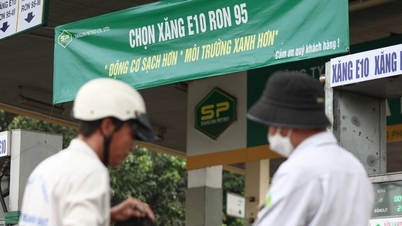
At a recent government press conference, a representative from the Ministry of Finance stated that the ministry is continuing to review and study tax policies to encourage the production and consumption of E10 bioethanol as part of the roadmap for transitioning to clean fuels.
Currently, tax policies are focusing on two main objectives: reducing production costs for businesses and reducing usage costs for consumers. For businesses producing bioethanol, there are already preferential regulations regarding import tax, non- agricultural land use tax, and corporate income tax. These are all projects eligible for investment incentives in the clean energy sector. However, to further support the reduction of E10 gasoline production costs, the Ministry of Finance has advised the Government to adjust the import tax on ethanol used for blending from 10% down to 5%. This tax reduction is expected to help businesses reduce input costs, thereby lowering product prices. For consumers, the current Special Consumption Tax Law stipulates a 10% tax rate for conventional gasoline, while E10 gasoline is only subject to a 7% tax rate, creating a certain level of incentive for biofuels.

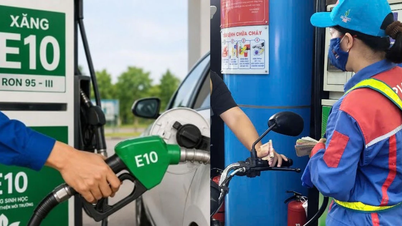
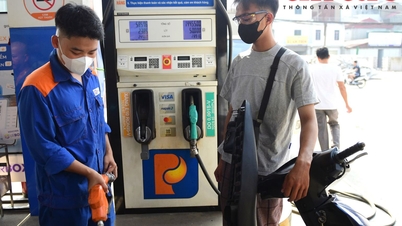
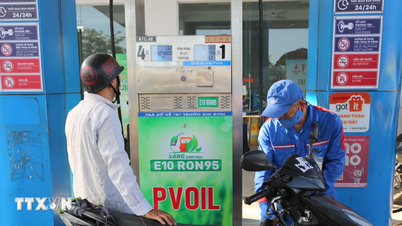
E10 gasoline has just been reduced, now costing nearly 21,000 VND/liter.
PHOTO: NHAT THINH
According to Government Resolution 29 on piloting some policies to implement the roadmap for using E10 gasoline, the State will announce the base price for E10 RON95-III bio-gasoline to replace RON95-III mineral gasoline. The components of the base price include world oil prices determined by the Ministry of Industry and Trade ; fuel ethanol prices determined by the Ministry of Finance; import costs, transportation costs, premiums, and other standardized business costs, similar to the mechanism applied to E5 RON92 gasoline.
Notably, the environmental protection tax currently only applies to the fossil fuel portion of the product. Therefore, for E10 gasoline, only 10% ethanol is exempt from this tax. Resolution 29 also assigns the Ministry of Finance to continue researching and reviewing regulations related to excise tax and environmental protection tax on E10 bio-gasoline.
Currently, many taxes applied to gasoline and diesel are being reduced according to a government resolution, effective until June 30th. If no new regulations replace them after this date, the current taxes may be reinstated, including excise tax, value-added tax, and environmental protection tax. According to estimates by some experts, if the tax incentives are not extended, the retail price of E10 gasoline could increase by approximately 28-30% compared to the current price.



There is still room for further price reductions.
According to experts, the possibility of further price reductions for E10 gasoline depends significantly on adjustments to the special consumption tax, environmental protection tax, and import tax policy for ethanol used in blending. Previously, the Vietnam National Petroleum Group (Petrolimex) had proposed to the Ministry of Finance to consider exempting or reducing the import tax on ethanol to lower the cost components of E10 gasoline and make it easier for people to access this new fuel.
Mr. Bui Ngoc Bao, Chairman of the Vietnam Petroleum Association, said that there are currently three taxes directly related to E10 gasoline that need to be considered: the 7% special consumption tax; the environmental protection tax calculated only on the base gasoline component, which accounts for about 90%; and the import tax on ethanol, which has now been reduced from 10% to 5%.
"During periods of volatile global oil prices due to geopolitical conflicts, many taxes were reduced to support the market. However, to promote the development of biofuels, tax policies need to be long-term and stable, rather than just short-term. What businesses need is not only tax reductions but also policy stability so they can build long-term investment and business plans," Mr. Bao emphasized.
Besides taxes, Mr. Bui Ngoc Bao mentioned the formula for calculating the production cost of E10 gasoline. Currently, the production cost of E10 gasoline is still based on the cost of E5 gasoline, which was established more than 10 years ago. This is no longer suitable for current conditions and needs to be revised and recalculated. In addition, the mechanism for determining gasoline prices does not fully reflect market developments, causing difficulties for many gasoline businesses, from primary blending and distribution to retail.
"The fundamental solution is to promptly issue a new decree on petroleum business to replace Decree 83, which contains many regulations that are no longer suitable in the new situation and with new products. In particular, it is necessary to clarify the price management mechanism and the autonomy of businesses. If the tax review and the issuance of a new decree on petroleum are carried out simultaneously, the market can operate stably and sustainably," Mr. Bao proposed.
Previously, the Vietnam Chamber of Commerce and Industry (VCCI) advised the Ministry of Finance that gasoline is currently subject to two taxes aimed at restricting consumption: excise tax and environmental protection tax. Meanwhile, gasoline is not a luxury item, so the application of excise tax needs to be reconsidered.
Mr. Dau Anh Tuan, Deputy Secretary General and Head of the Legal Department of the Vietnam Chamber of Commerce and Industry (VCCI), said that maintaining the special consumption tax on gasoline has long been a concern for many experts and businesses. The reason is simple: gasoline is an important commodity, not a luxury item to be restricted, and is essential for the production and business activities of enterprises and individuals. Now, with E10 bioethanol gasoline, stemming from the policy of reducing emissions and protecting the environment, the special consumption tax on E10 gasoline needs to be reconsidered.



"Even though the regulation doesn't tax ethanol, 90% of the base gasoline in each liter of E10 gasoline is still subject to this tax. Furthermore, gasoline itself is already subject to environmental protection tax. Therefore, E10 gasoline is currently subject to two different taxes: environmental protection tax and special consumption tax. In my opinion, we should focus on one tax: the environmental protection tax on RON95 base gasoline. We should consider removing gasoline from the list of goods subject to special consumption tax," Mr. Tuan proposed.
"In the strategy to promote the stable development of E10 gasoline, it is important to avoid double taxation. Environmental protection tax combined with excise tax will create significant obstacles, reducing the competitiveness of Vietnamese goods. Considering whether to abolish or set an appropriate tax rate for E10 is extremely important and necessary," Mr. Dau Anh Tuan emphasized.
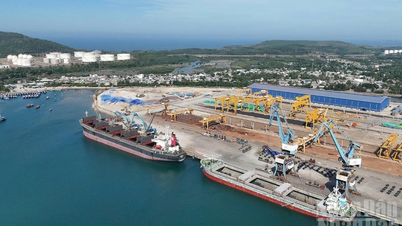
According to the Ministry of Industry and Trade, the supply of ethanol for blending E10 gasoline currently comes from two main sources: domestic production meets approximately 18% of the demand, while 82% is imported. Currently, there are four ethanol production plants nationwide. Along with gradually increasing capacity and the self-sufficiency rate of domestic supply, ethanol production is expected to reach approximately 45,000 m³ /day by 2027. Improving domestic production capacity will be a crucial factor in ensuring the success and sustainability of the biofuel development program.
Source: https://thanhnien.vn/giam-thue-nao-de-giam-gia-xang-e10-185260619194935454.htm