

From small individual households to cooperative models, the people here are always striving to preserve their craft. The goal is not only to maintain income but also to preserve the quality of silk thread, a refined agricultural product deeply rooted in local culture and identity.
Increase silkworm farming efficiency with hybrid mulberry varieties.
Silkworm farming is currently one of the occupations that provides quick and stable income for people in Dong Nai province . After only 15-17 days of investment and care, farmers can recover their capital and make a profit. However, for silkworm farming to develop sustainably, a prerequisite is a sufficient supply of raw materials, which is mulberry trees.
Remarkably, from their tiny bodies, each silkworm can spin silk threads ranging from 700 to 1,200 meters in length. These shimmering silk threads are not only a precious asset of the silkworm but also a source of pride for the farmers of Dong Nai, who are striving every day to preserve the essence of their traditional craft.
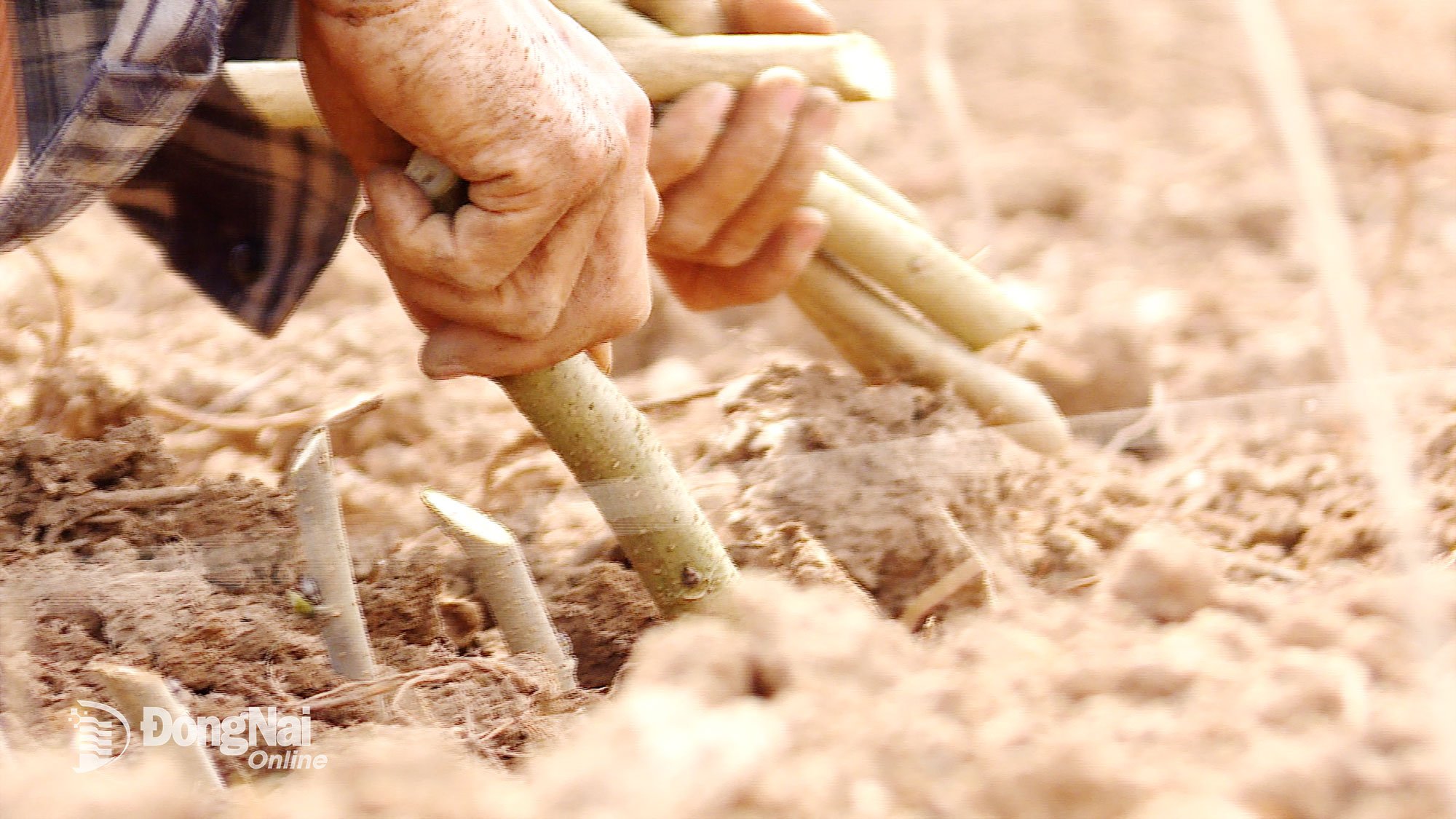
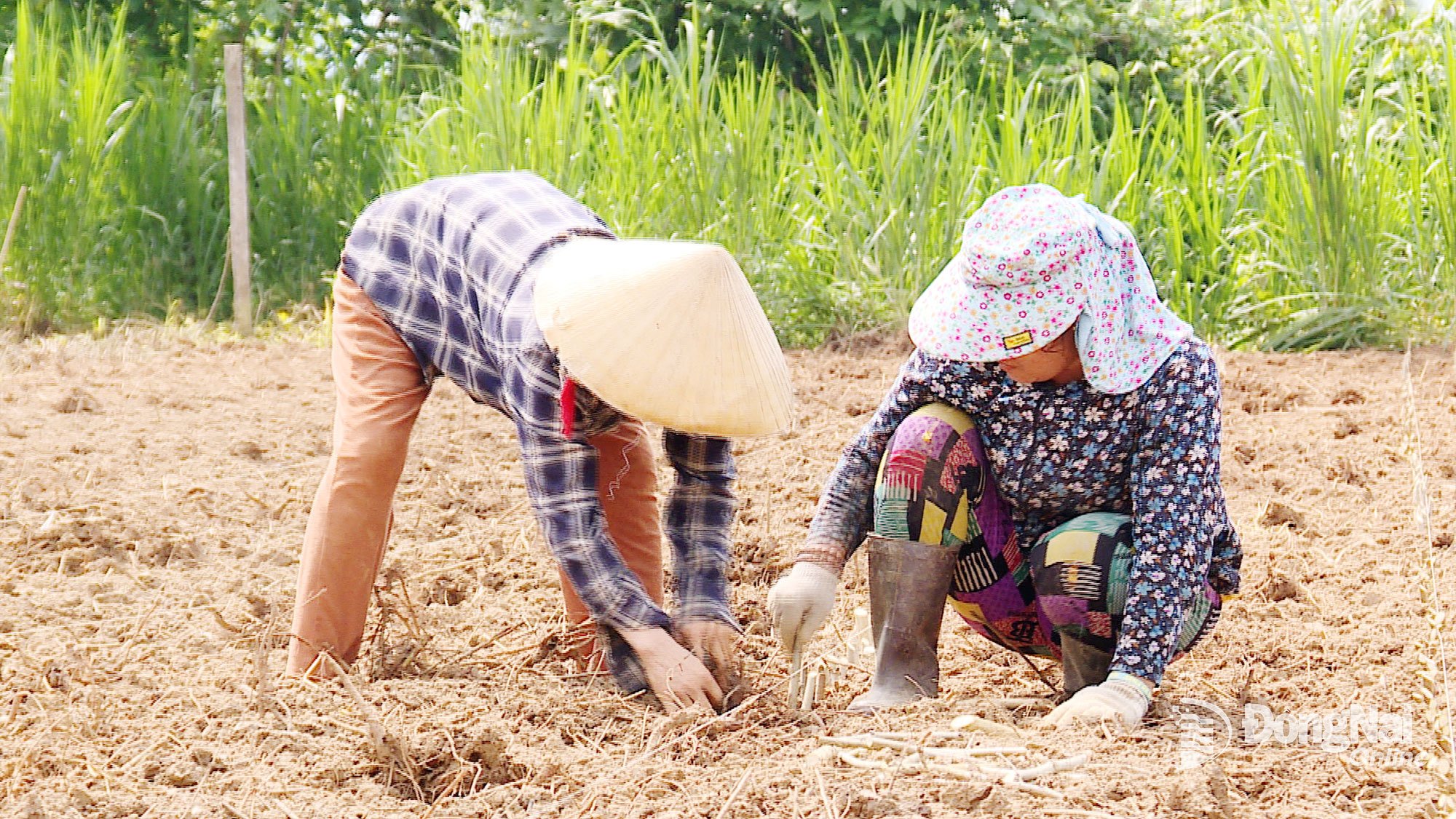
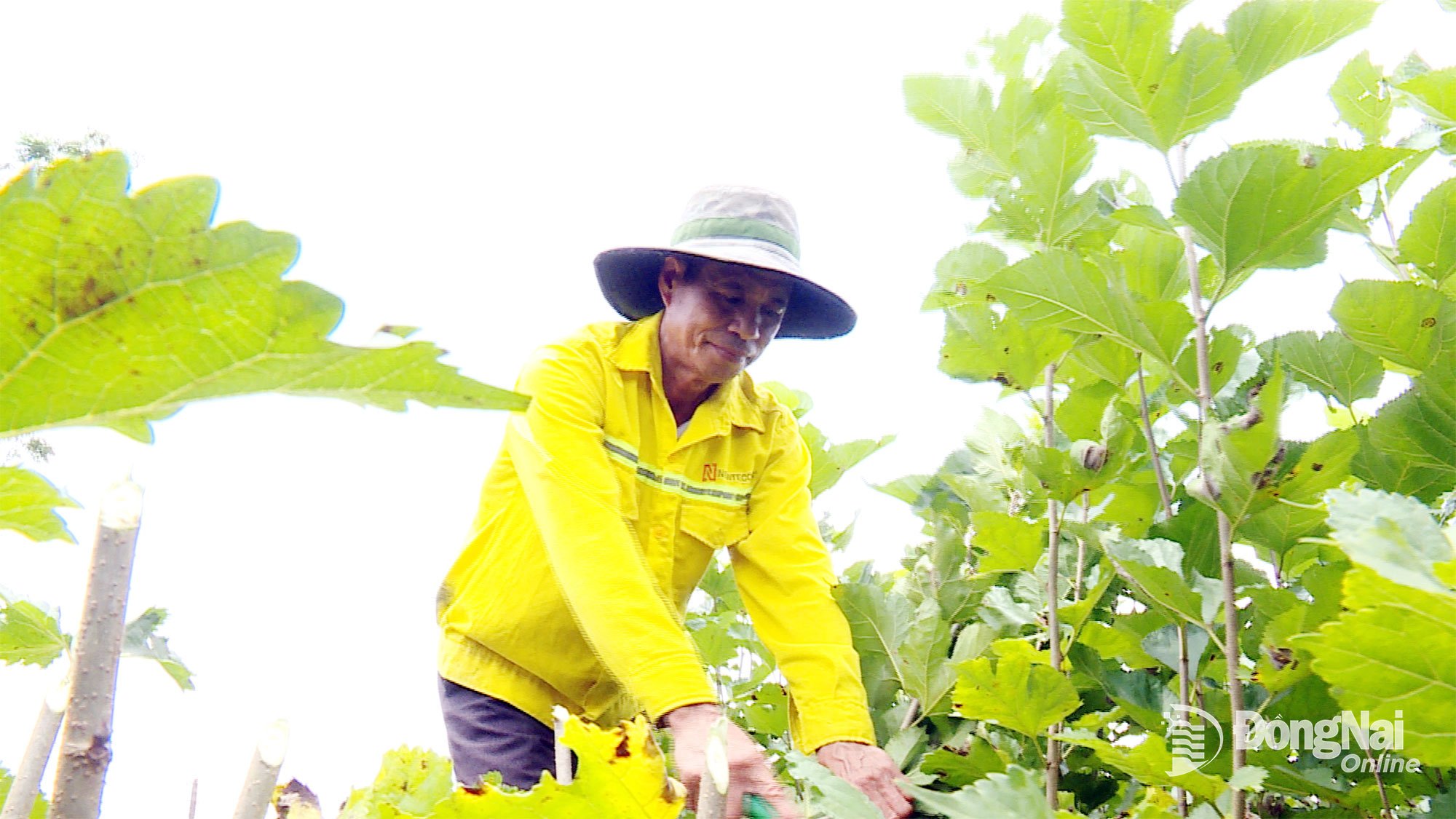
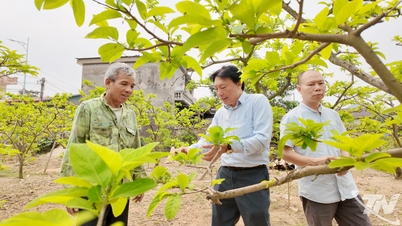
Currently, Dak Lua commune has the largest mulberry cultivation area in Dong Nai province, with over 260 hectares. Recently, farmers have boldly switched from old mulberry varieties to new, higher-yielding ones. After 8 years of working in mulberry cultivation and silkworm farming, Ms. Luc Thi Hanh, from Dak Lua commune, decided to convert her entire 3 sao (approximately 0.3 hectares) of mulberry trees from the old variety to a hybrid variety, which has thick leaves, high yield, and is easy to care for. Similarly, Mr. Nguyen Dinh Mai, who has over 20 years of experience in the profession, also boldly converted his 3 hectares of mulberry trees to this high-yielding variety.
 |
 | |
|
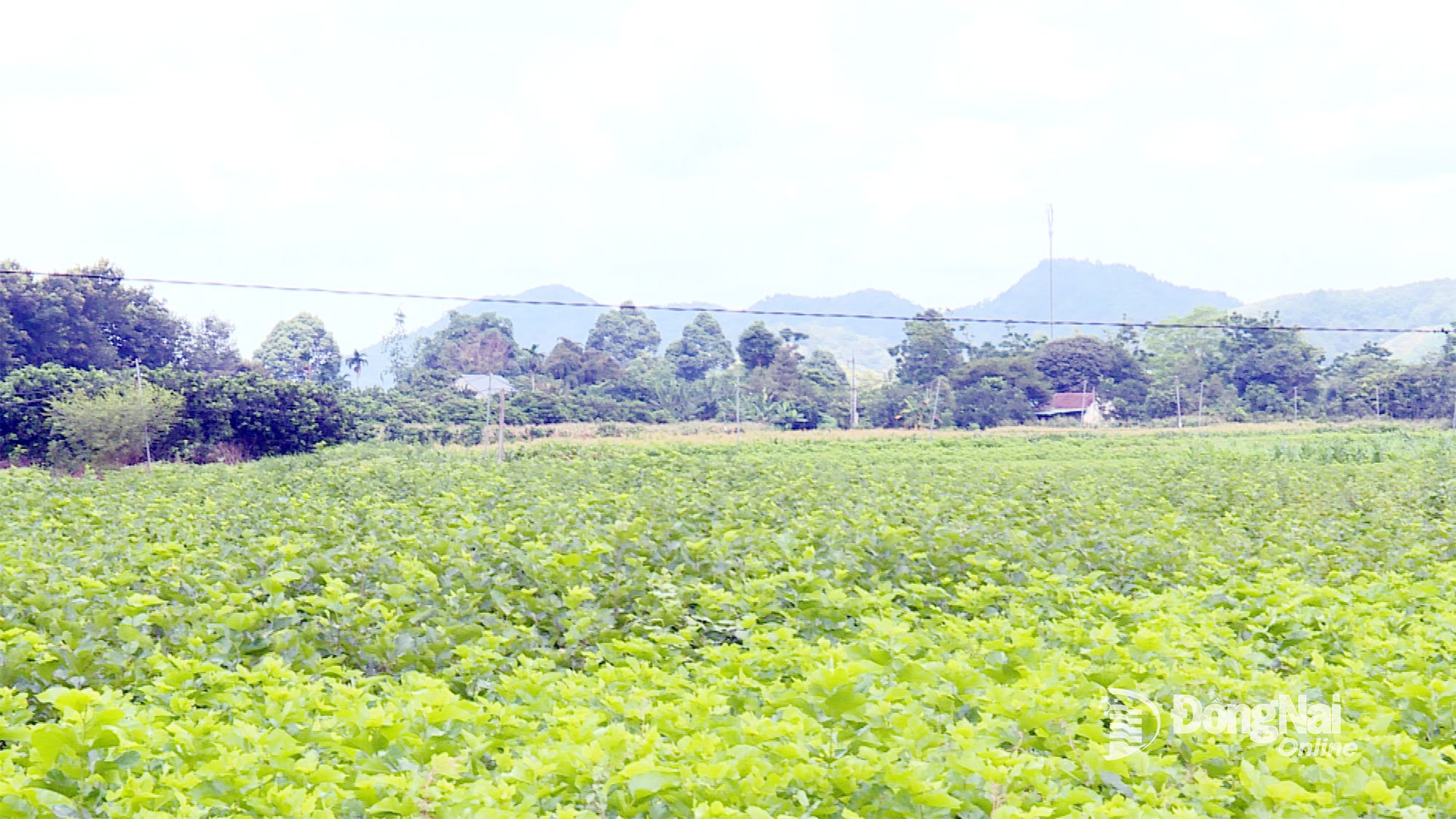 |
| Farmers in Dak Lua commune are actively converting and replanting many old mulberry fields with hybrid mulberry varieties that yield higher productivity. Photo: Tu Huy |
Ms. Luc Thi Hanh said: "Because the old strawberry variety required a lot of care and had low yields, my family decided to switch to a hybrid variety. This new variety yields five times more than the strawberry we've been growing all this time."
Similarly, Mr. Nguyen Duy Mai shared: “More than two years ago, my family decided to gradually convert our old mulberry plantation to hybrid mulberry trees, and now we have completely replaced all 3 hectares with this new variety. Since the conversion, our family's economy has developed faster. Because of the success from many households, people here are also gradually converting and expanding the area under cultivation.”
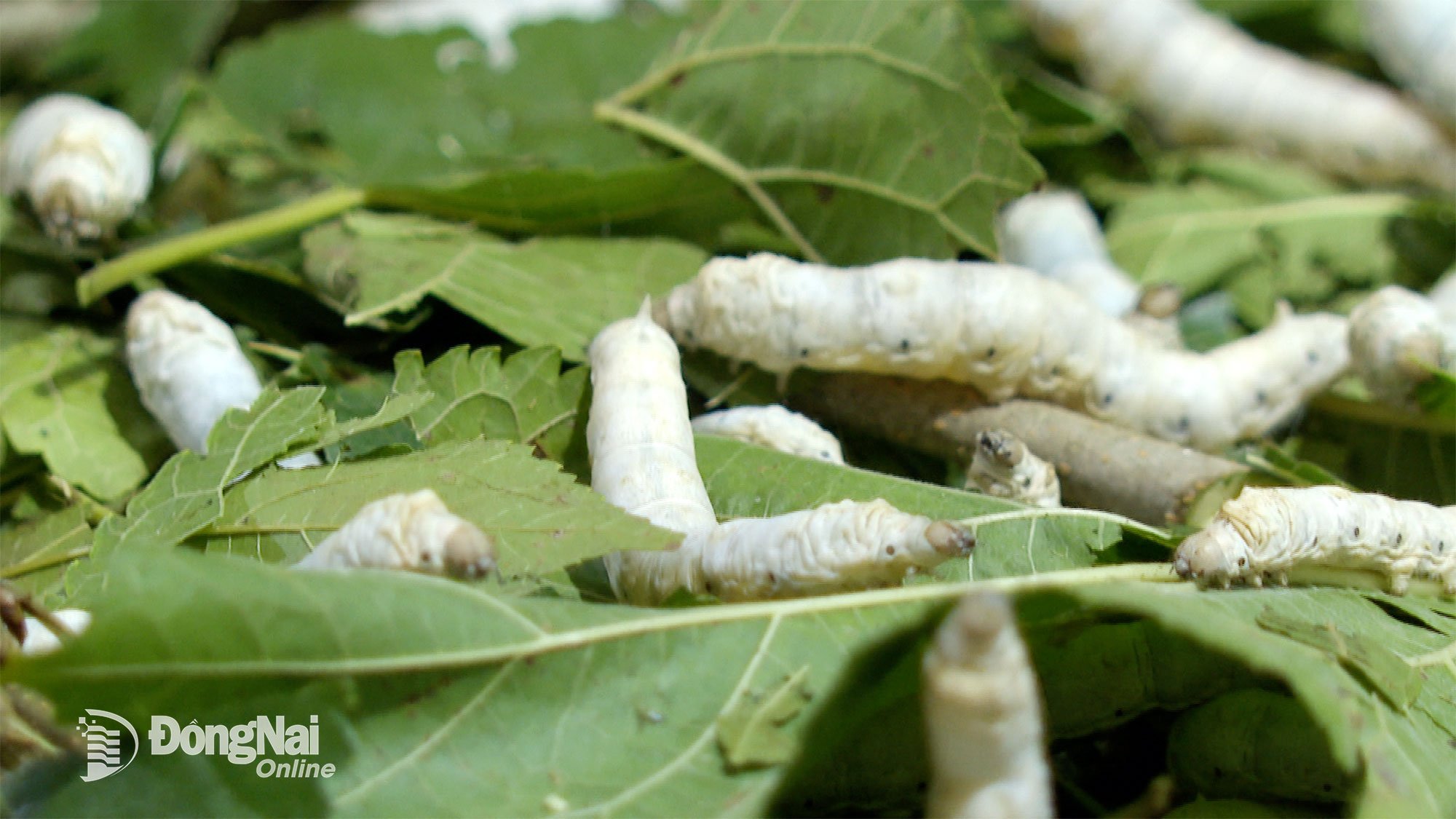
Previously, with the old mulberry variety, farmers had to harvest each leaf individually. Since planting this new variety, at harvest time, farmers can cut the entire stem and leaves, put them into a shredding machine, and then spread them for silkworms to eat. This change saves labor in harvesting and increases the yield of usable mulberry leaves by 10-15 times, allowing farmers to raise more silkworms and thus generate higher income.
 |
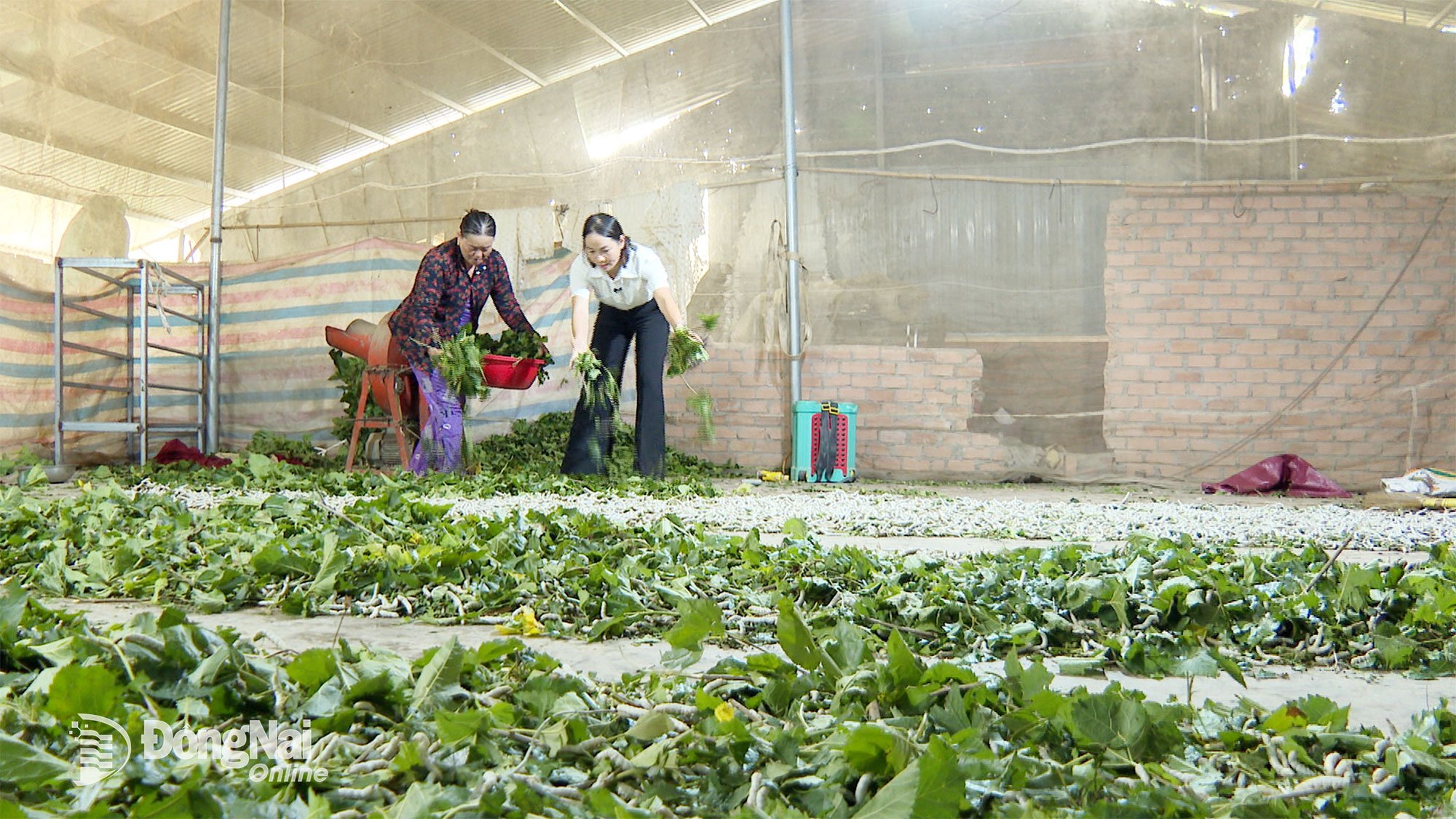 |
| Thanks to the switch to new mulberry varieties, the silkworm farming productivity of local people has increased significantly. Photo: Tu Huy |
With over 30 years of sustained development, mulberry trees are not only a food source for silkworms but also a "money-making crop" for the people of Dak Lua commune. Each hectare of mulberry trees can yield 230-300 million VND per year, making mulberry cultivation and silkworm farming an effective and sustainable economic direction for farmers in Dong Nai province.
Preserving the quality of silk fibers.
Silkworm farming determines the value of mulberry trees, and selling silkworm cocoons determines each family's income. However, obtaining high-quality cocoons is not easy. Experience, weather, and humidity are crucial factors that directly affect the quality of the silk thread as well as its selling price.
Having been involved in mulberry cultivation and silkworm rearing for nearly 30 years, Mrs. Vu Thi Hai in Dak Lua commune can now raise up to two batches of silkworms each month. From the time the silkworms are on their frames until their cocoons are harvested, it only takes 3 days, but the breeder must monitor them closely.
 |
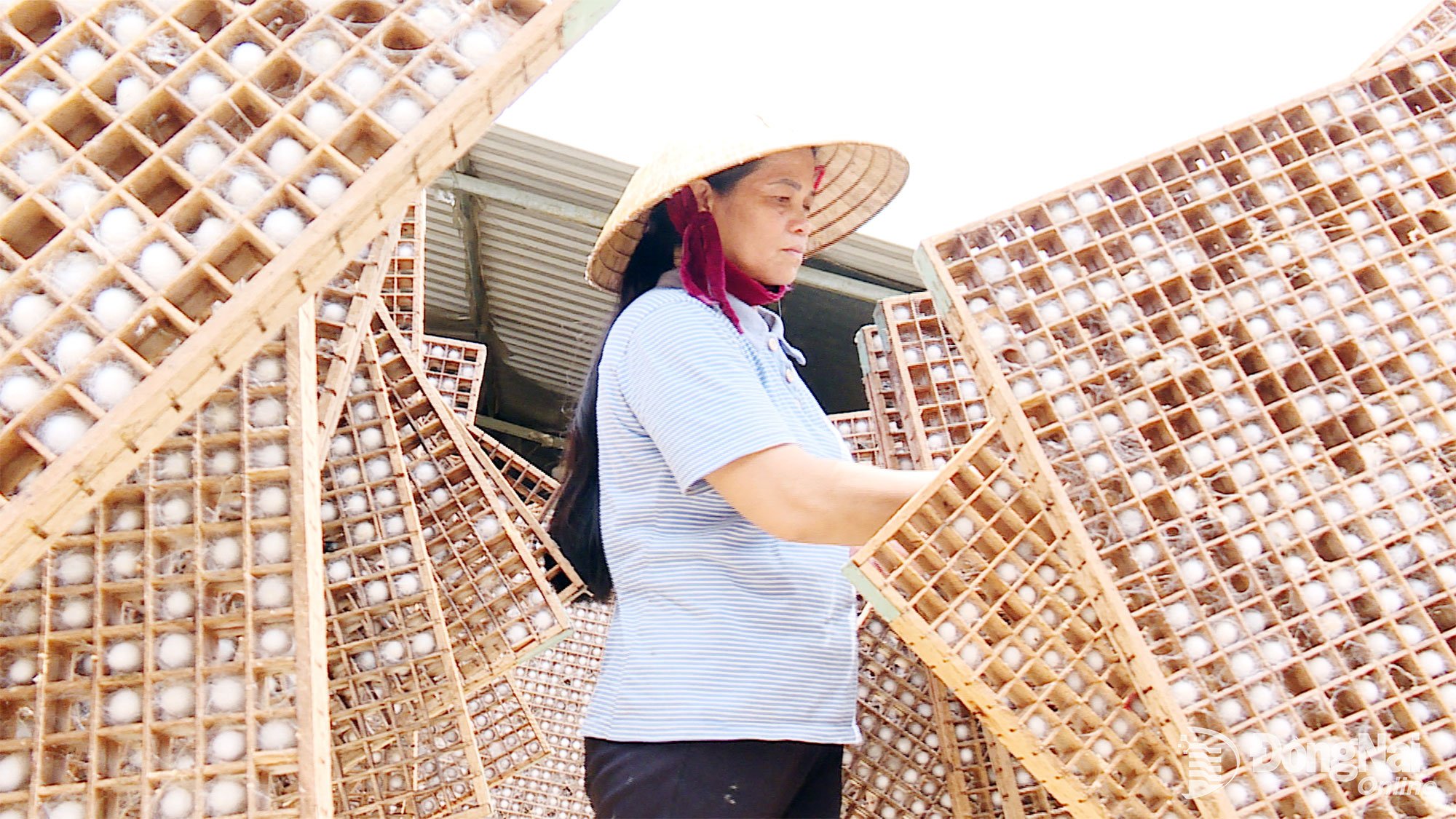 |
| To produce high-quality cocoons, silkworm farmers must pay attention to many technical aspects. Photo: Tu Huy |
Currently, in Dong Nai province, there is only one silk spinning factory located in Dak Lua commune, which is the Duy Dong Factory. Each year, the factory has the capacity to purchase 300-400 tons of cocoons.
To ensure a stable supply of raw materials and enhance production capacity, since 2023, Mr. Nguyen Duy Dong, the factory director, has established the Silk Production and Service Cooperative with more than 20 local households specializing in mulberry cultivation and silkworm rearing, supplying cocoons to the factory.
Mr. Nguyen Duy Dong added: “The source of silkworm cocoons in Dak Lua commune is quite abundant. This is a long-standing silkworm farming area with a history of over 30 years. The quality is stable and meets the factory's standards. Currently, the factory also has many silk production lines using modern technology, including new generation automatic silk reeling machines. I am still gradually investing in the remaining parts and will try to convert them in the near future to standardize the product.”
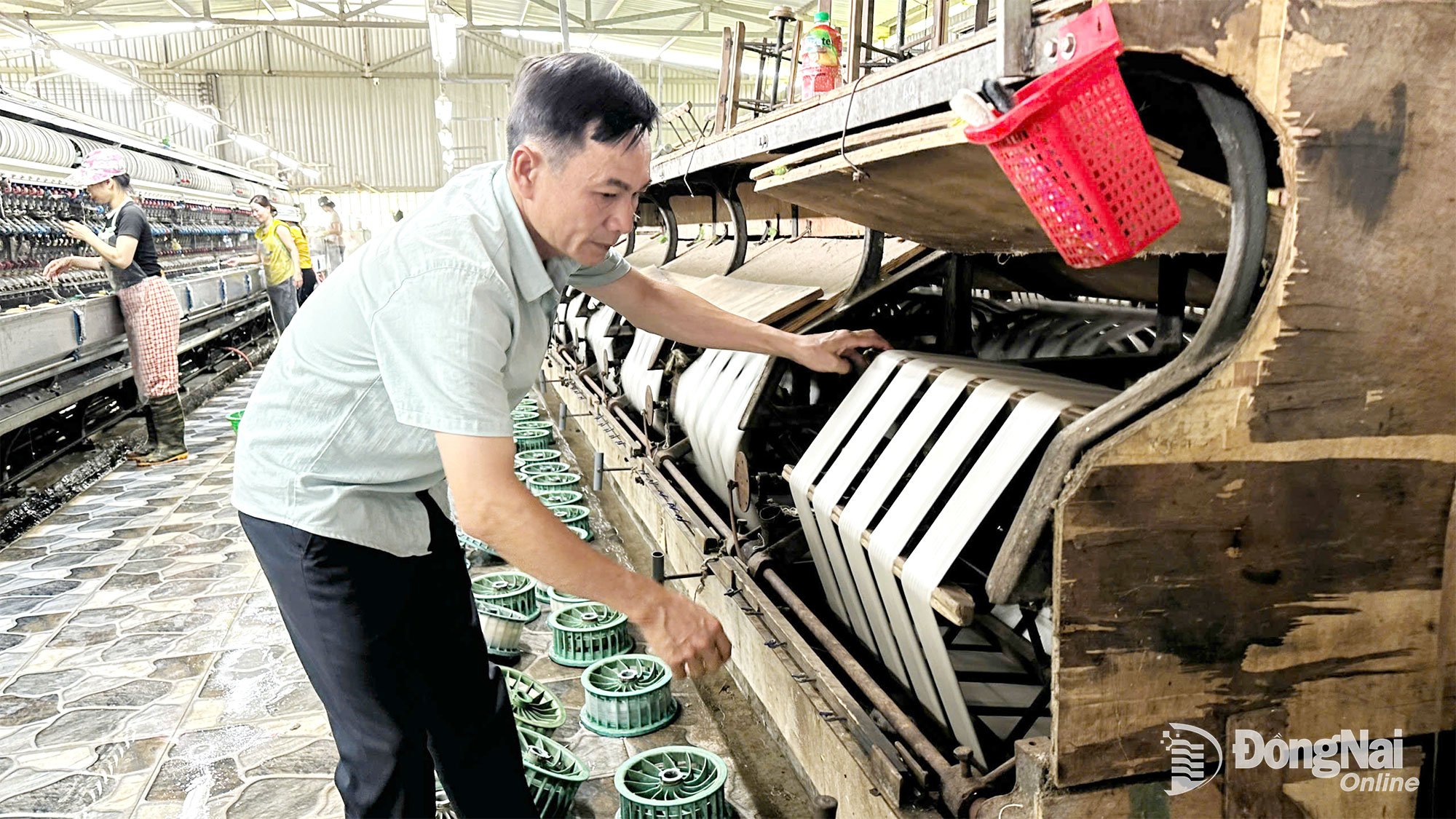 |
| Mr. Nguyen Duy Dong, the factory director, is inspecting the quality of silk at the factory. Photo: Tu Huy |
Ms. Do Hong Nhung, a long-time skilled worker at the factory, revealed: "To achieve export-quality silk, we have to pay close attention. This requires sharp eyesight, able to clearly see the silk threads of each cocoon to accurately connect the threads. Even a new worker needs two months of training to ensure they know everything about each step and stage of the process."
Currently, the factory's silk yarn products not only serve the domestic market but are also exported to demanding markets such as India and Japan. However, the majority are still in raw form, meaning the economic value does not match its inherent potential.
For the mulberry cultivation and silkworm farming industry in Dong Nai to develop sustainably, local authorities, associations, and businesses need to play a crucial supporting role, not only in investing in technology, but also in building brands and expanding consumer markets.
 |
 |
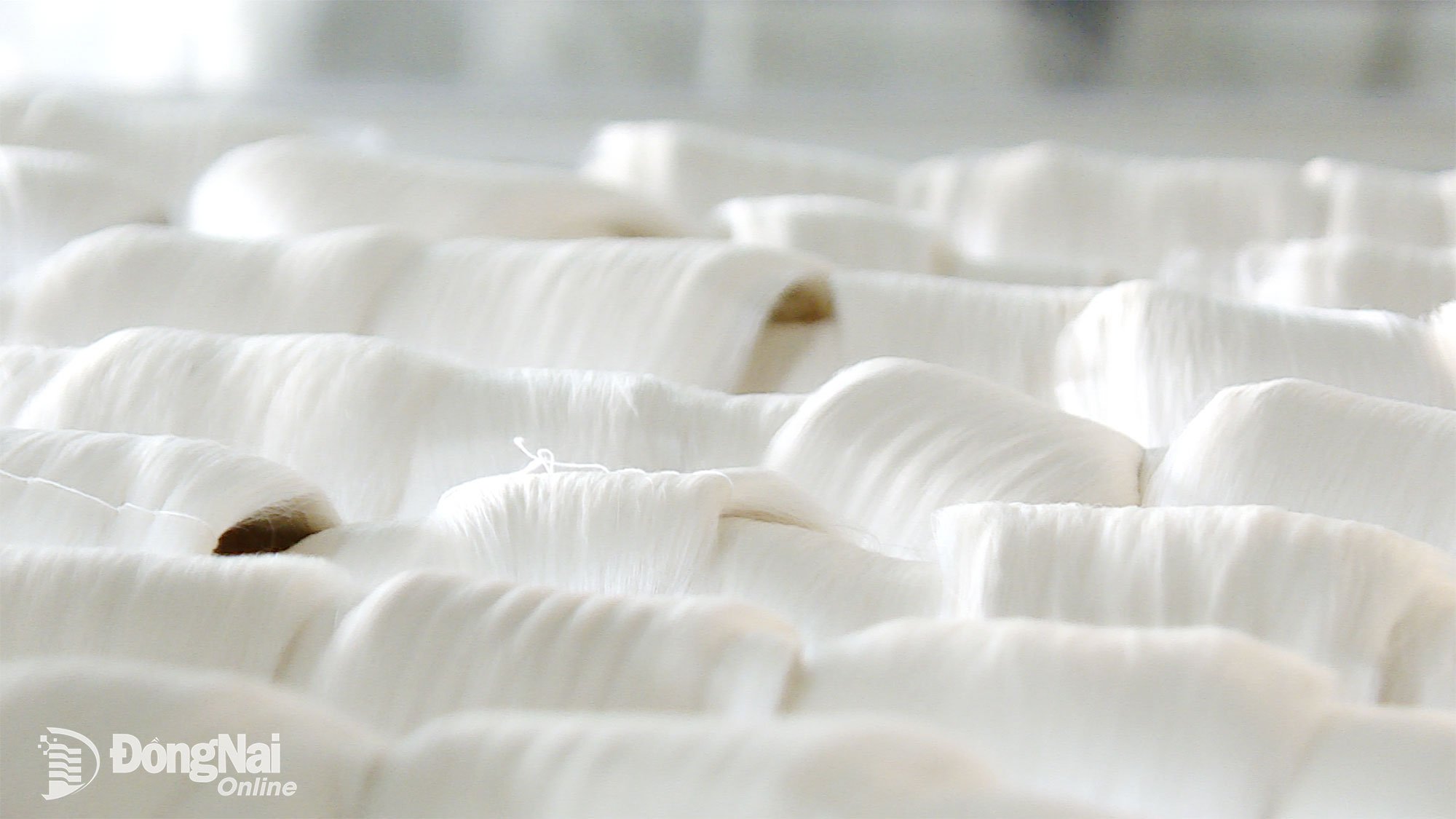 |
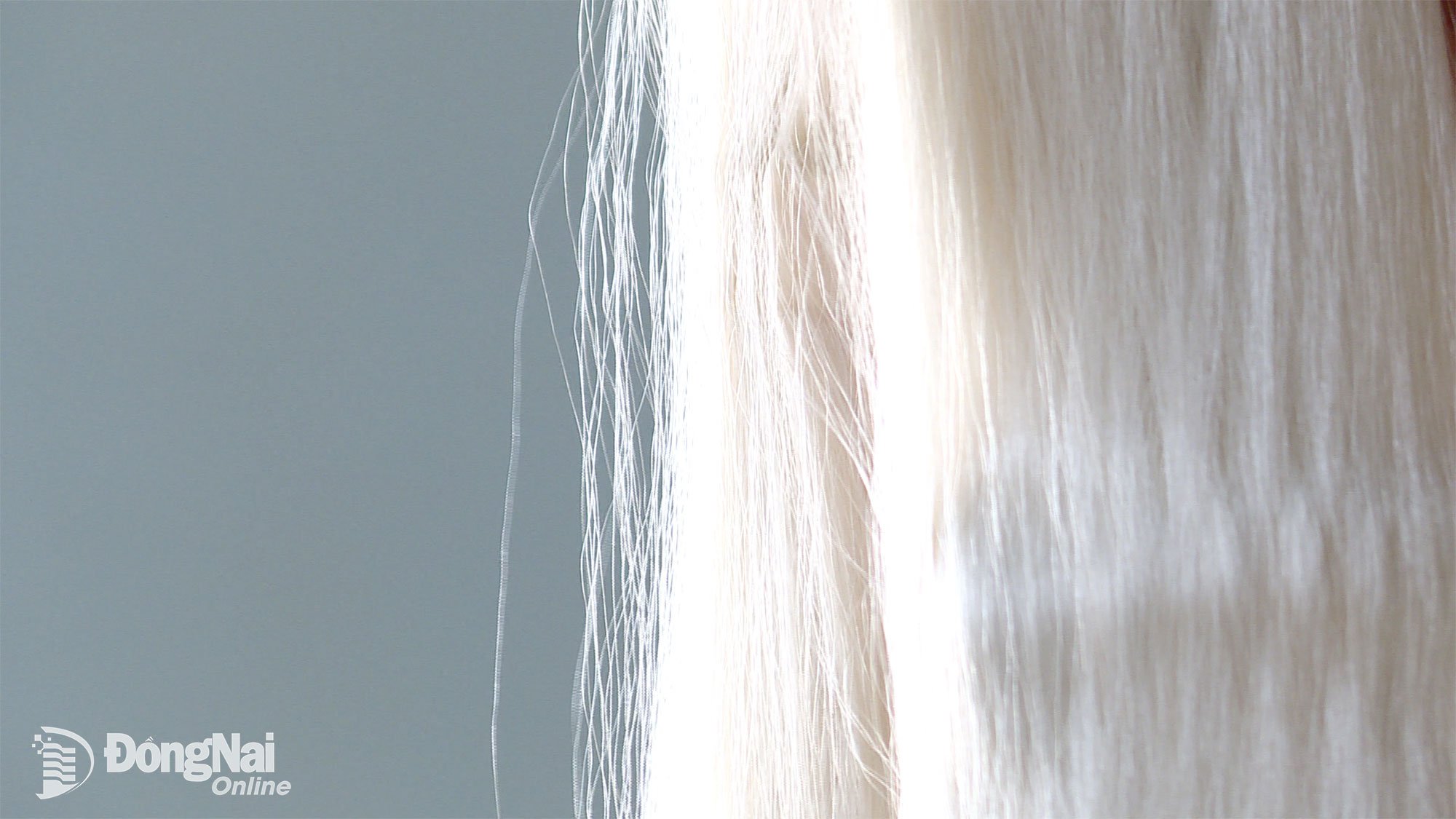
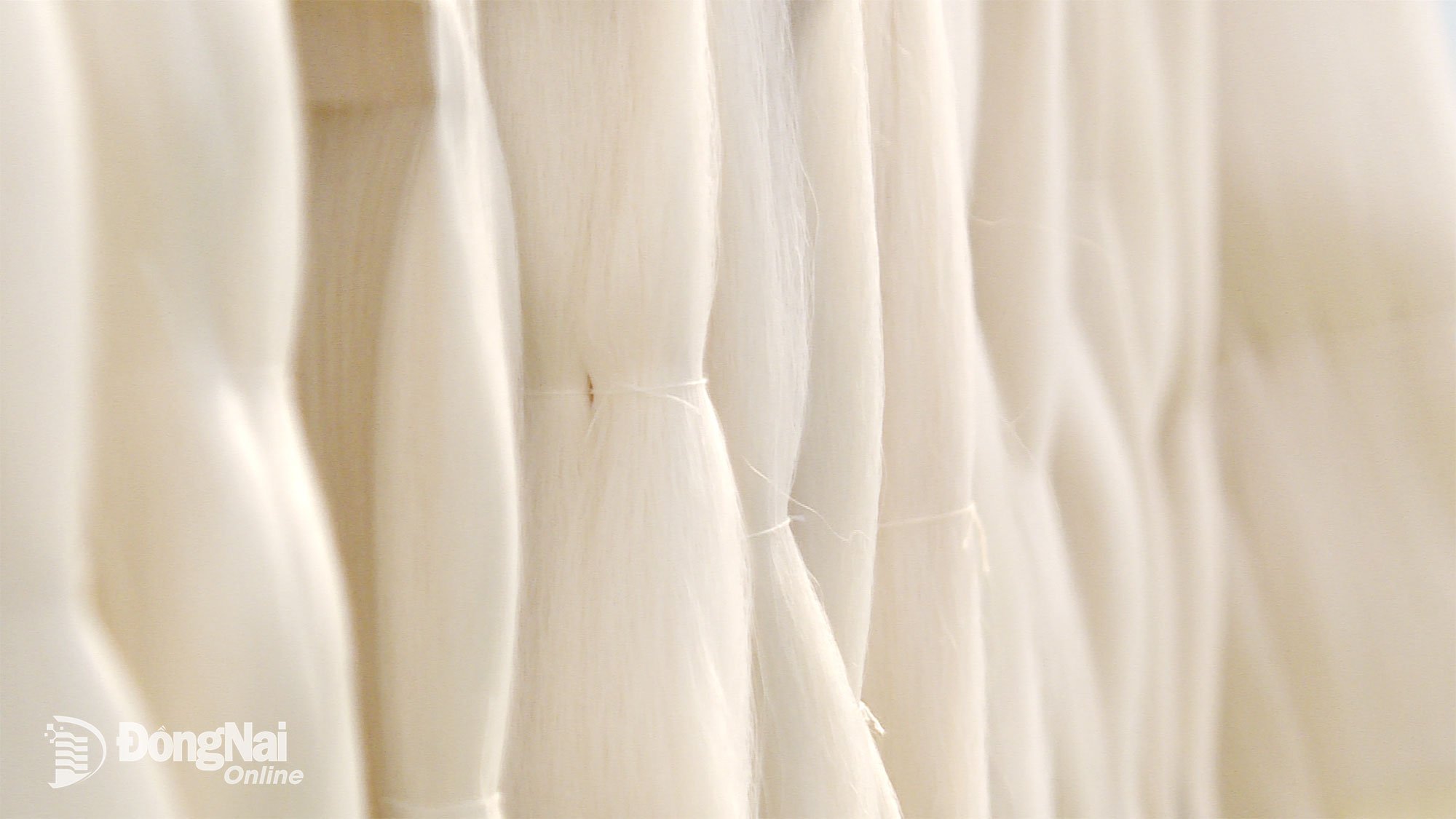
| Finished silk threads. Photo: Tu Huy |
Ly Na Phan
Source: https://baodongnai.com.vn/kinh-te/202508/gin-giu-to-tam-tren-dat-dong-nai-95020a4/

![[Photo] “Red Journey” 2026: Vietnamese Youth Continue Building the Bridge of Friendship Between Vietnam and China](https://vphoto.vietnam.vn/thumb/1200x675/vietnam/resource/IMAGE/2026/04/20/1776629730866_4055880775670638308-9618-4200-jpg.webp)






































































Comment (0)