

The art of patience
I arrived in Thanh Son on a dry, sunny day, when the sound of Thi waterfall echoed from the vast forest like an endless melody. Here, the Red Dao people of Thanh Son village have a tradition of making handmade paper, a craft closely tied to the water source, bamboo forest, and the rhythm of village life for over a century.
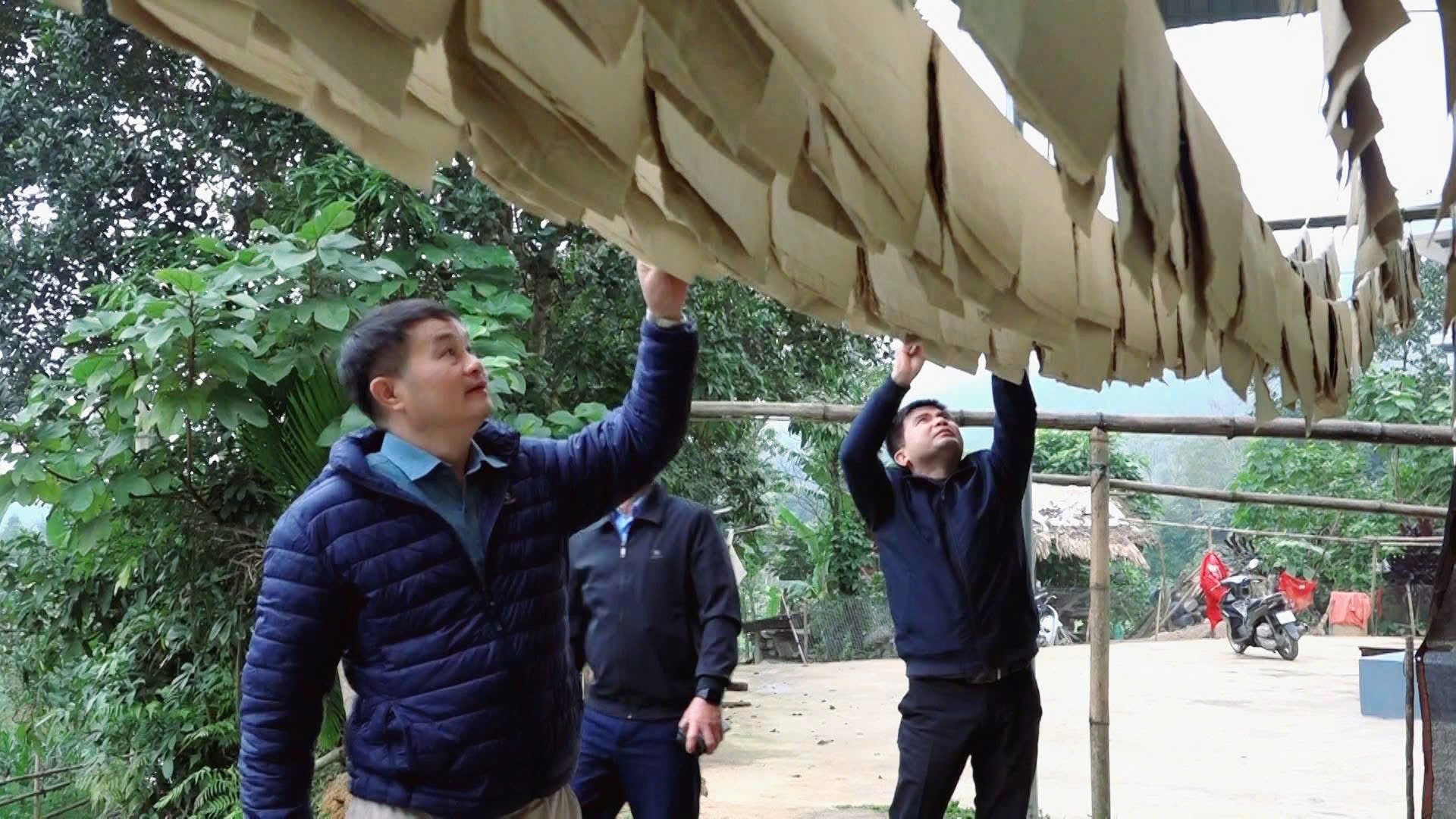
The paper is dried after being coated.
PHOTO: DO TU
In an atmosphere thick with the smell of quicklime and the pungent scent of forest resin, Mr. Lo Duc Chiu (born in 1978) is straining himself on a bamboo stuffing tank. Watching Mr. Chiu work, I understood why people call this profession "using human strength to overcome the strength of trees."
He tied the rope securely to the crossbeam for support, his bare feet stepping steadily and rhythmically on the milky white bamboo pulp in the pool. His muscles tensed, sweat poured down, soaking his shirt, mingling with the cool water flowing from the Thí waterfall.
Mr. Chìu said that the craft of making handmade paper in Thanh Sơn was passed down from his ancestors around the 1920s. Making handmade paper requires many complex steps, with all the raw materials sourced from the forest. In particular, to obtain that smooth pulp, young bamboo stalks must undergo a difficult process: they are chopped into small pieces, soaked in lime water for a month, and then left to "sleep" in clean water for another month and a half until they become soft and pliable.
"This profession isn't for the impatient. Just skipping a day of soaking, or being lazy with the foot pedal, and the paper coming out of the kiln will be rough and speckled," Chieu said, wiping sweat from his brow, his eyes shining with the pride of someone who has been involved in the craft of making traditional paper for over 30 years.
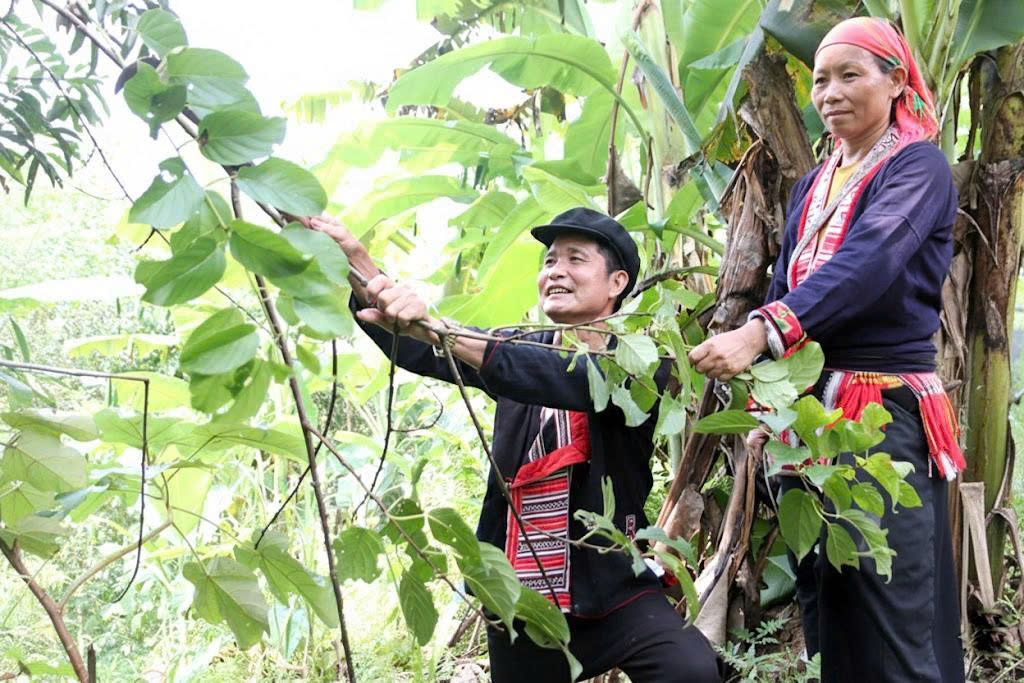
The "sa kieu" tree is an indispensable ingredient for making handmade paper.
PHOTO: DO TU
Amidst the gentle sound of flowing water, I was most impressed by the tree sap that the Dao people call "sa kieu." This is the "soul" that gives handmade paper its distinctive adhesive properties and golden color. The craftsmen have to venture deep into the forest to find old vines, bring them back, chop them into small pieces, and soak them to extract the natural glue.
Without the "silk resin," bamboo pulp would simply be loose fibers. It is this forest resin that binds nature to the paper, creating the resilience that allows Thanh Son handmade paper to last for decades without being damaged by termites or decay.
Preserving one's craft is preserving one's moral principles.
In his wooden house perched precariously on the mountainside, Mr. Ly Van Vang (70 years old) - considered the "living history book" of the craft village - slowly turns the pages of ritual books written in Dao Nôm script on old paper.
Mr. Vang recounted that his father had brought this craft to the area since 1920. Before becoming a traditional craft village, this type of paper played an important role in the lives of the Dao people, used in spiritual rituals such as initiation ceremonies, prayers for peace, and ancestor worship. In addition, the paper was used to write Dao Nôm script, make handicrafts, and burned as a substitute for votive paper during festivals and holidays.
"The Dao people make paper not just to sell it, but to preserve their faith. The paper used in initiation ceremonies and prayers for peace must be truly clean and pure. Therefore, papermakers must maintain an upright heart, and their hands must not do anything bad. If a batch of paper is spoiled, it must absolutely not be sold but soaked again. That is the self-respect of the craftsman," Mr. Vang reflected.
It is this meticulous approach that has helped the paper-making craft in Thanh Son village survive the ups and downs of time. In 2018, when the traditional paper-making technique was recognized as a National Intangible Cultural Heritage, the entire village of Thanh Son celebrated. This was not only a recognition from the State, but also an affirmation of the enduring value of a culture.
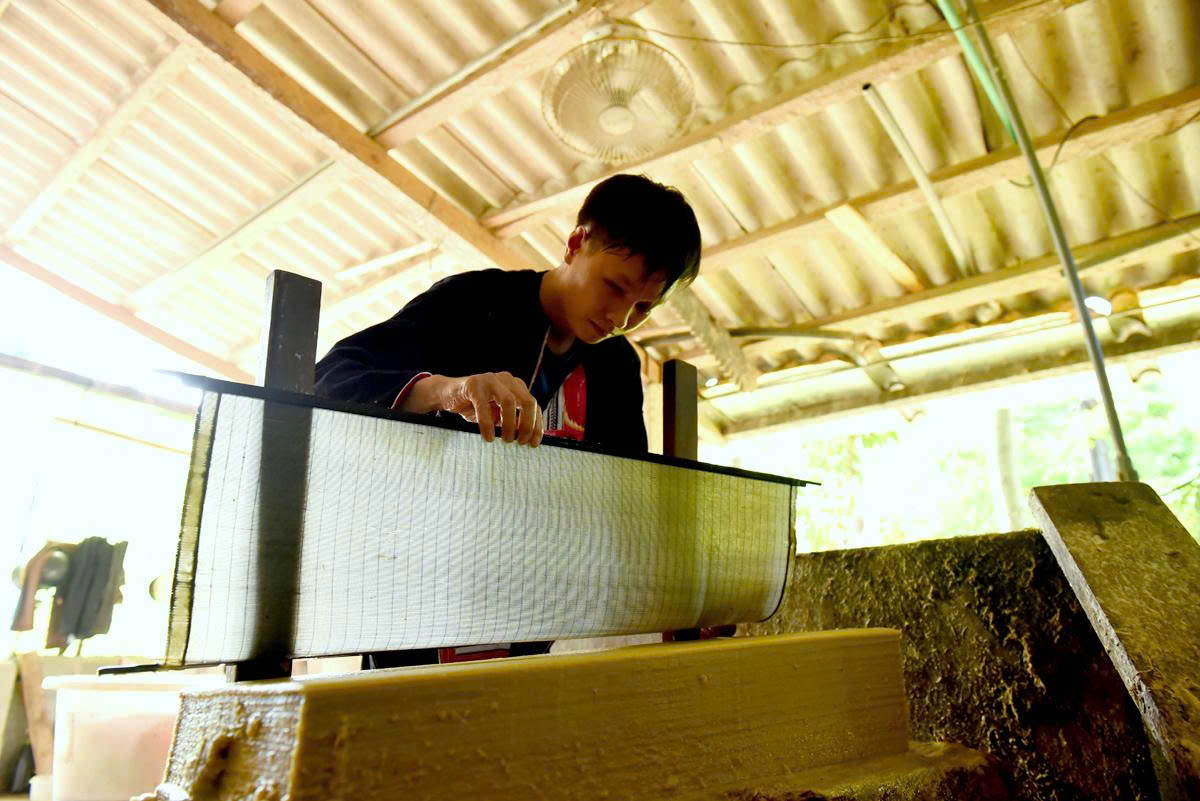
The paper coating process requires a great deal of skill and meticulousness.
PHOTO: DO TU
New life at the foot of Thi Waterfall
Leaving Mr. Vang's house, I met Hoang Van Sieu (born in 1990), a young man following in the footsteps of those who make traditional paper in Thanh Son. Unlike his father's generation, who only made paper during their leisure time between farming seasons, Sieu and many other young people in the village consider this a "key economic sector."
In Thanh Son, out of 145 households, more than 90 maintain this craft regularly. Each year, the village supplies approximately 30,000 bundles of paper to the market. With prices ranging from 220,000 to 250,000 VND per bundle, many families have escaped poverty, built decent houses, and purchased vehicles thanks to these fragile sheets of paper.
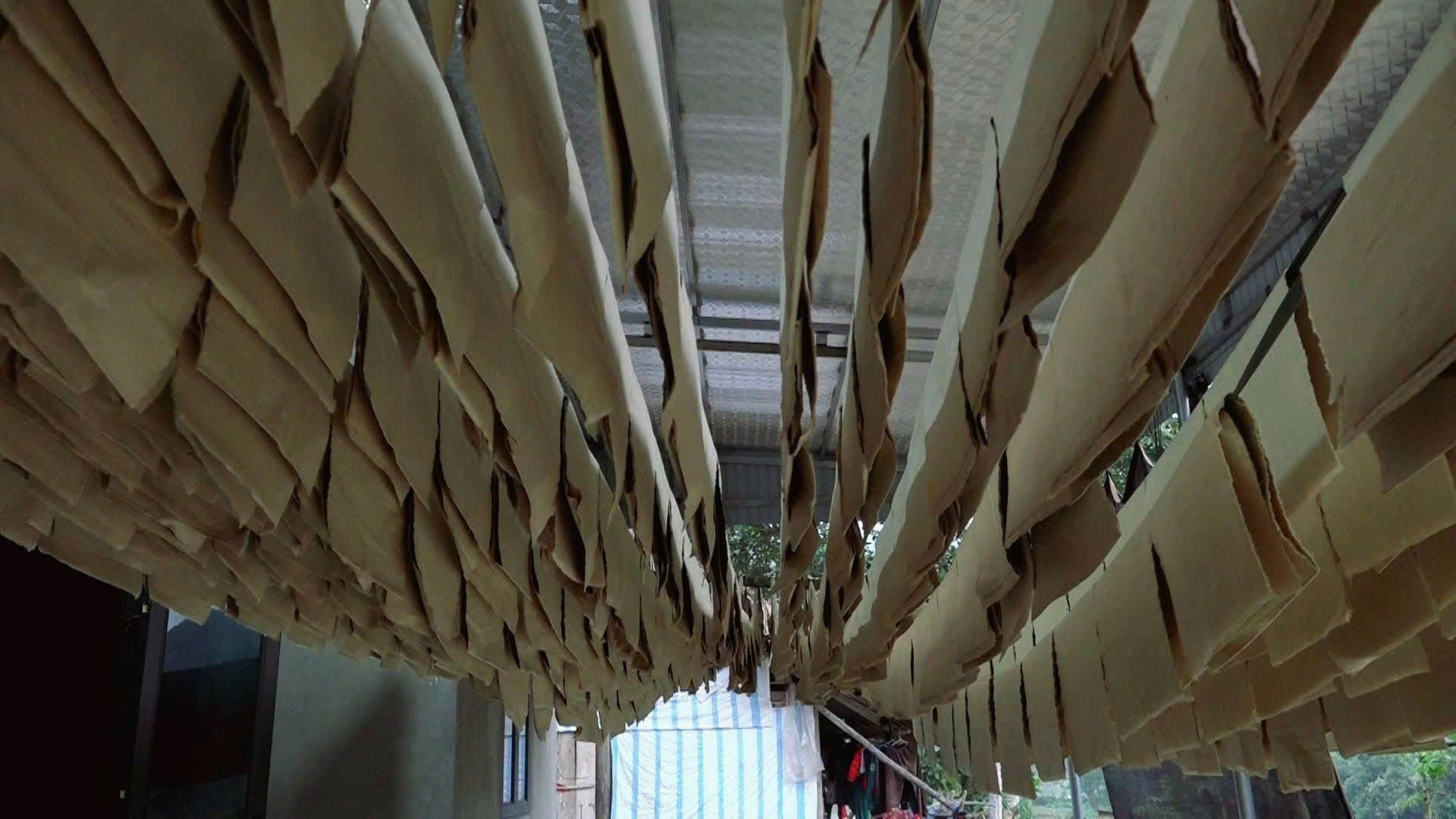
90 out of 145 households in Thanh Son still maintain the traditional craft of making handmade paper.
PHOTO: DO TU
Mr. Trieu Tran Phu, head of Thanh Son village, happily shared: "The best thing now is that the villagers no longer have to carry paper around to sell. We have agents in Ha Giang ward and neighboring communes who place regular orders. In fact, Thanh Son paper is now even appearing on e-commerce platforms, traveling with tourists to all over the country."
The dream of the people of Thanh Son now extends beyond simply selling paper. They are aspiring to transform their craft village into a destination on the Tuyen Quang tourism map. Visitors will come not only to admire the majestic Thi Waterfall, but also to personally dip molds into the pulp bath and glue wet sheets of paper onto wooden walls to dry under the sun and wind of the vast forest.
Looking at the ivory-white sheets of paper stretched taut on the wooden walls, basking in the dry sunlight of the highlands, I understood that the vitality of the craft village lies not only in revenue figures, but in its unceasing continuity: the elderly keep the spiritual "flame" alive, and the young maintain the economic "rhythm."
At the foot of Thi Waterfall, the water still flows, and the rhythmic sound of footsteps pounding bamboo continues to echo. Thanh Son handmade paper will go even further, carrying with it the flavor of the bamboo forest and the dedication of the gentle, simple Red Dao people.
Source: https://thanhnien.vn/giu-hon-nui-rung-บน-giay-ban-185260226194119473.htm





































































Comment (0)