

TRADITIONAL RICE FLAKES WITH A RICH, HOME-STYLE FLAVOR
The small road winding through Thoi Thanh neighborhood leads to the traditional Xom Dua rice flake production facility.
In the clean kitchen, Ms. Dang Thi Hong Van, a woman with many years of experience in the profession, is busy stirring the pan of roasted rice. The firelight reflects on her radiant, gentle face.
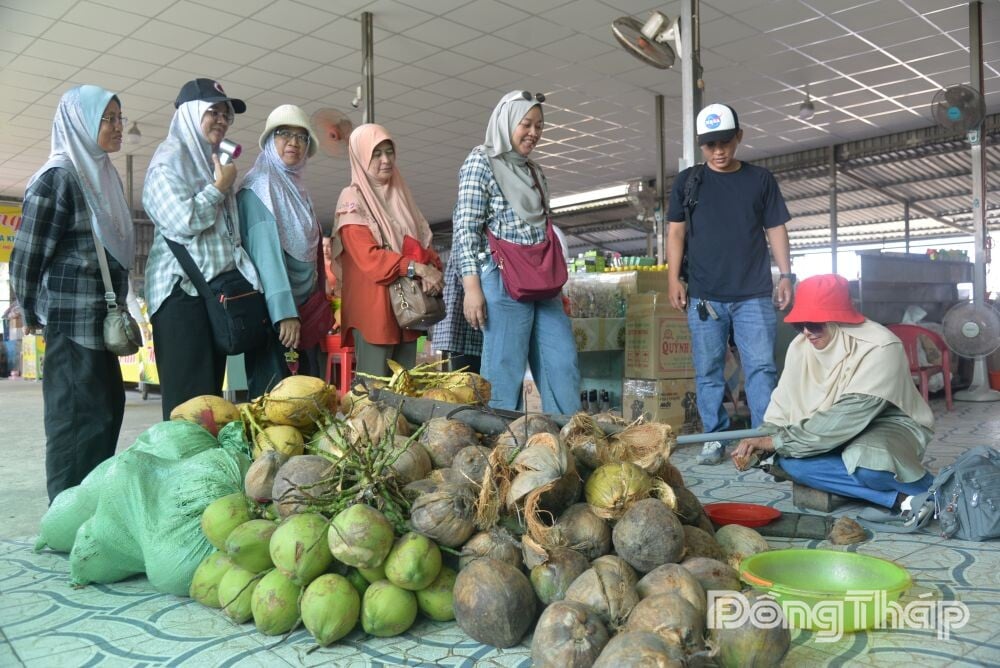
Every movement of hers is skillful. "This rice flake making craft was passed down from my grandmother to my mother, and then from my mother to me," Ms. Vân recounted. In the past, the family only made sticky rice flakes, but now they create many new varieties to keep up with market demands. But no matter how much things change, the essence of the craft must remain.
The green, chewy green rice flakes from Thoi Son are different from those of Northern Vietnam. The ingredients can be white rice, glutinous rice, or corn that has puffed up after roasting. To make a delicious batch of rice flakes, the rice grains must be carefully selected, roasted with white sand, and stirred continuously to prevent burning.
Once the rice grains have expanded evenly, the worker will sift them to remove any husks, then mix them with coconut milk and honey that has been simmered to enhance the aroma.
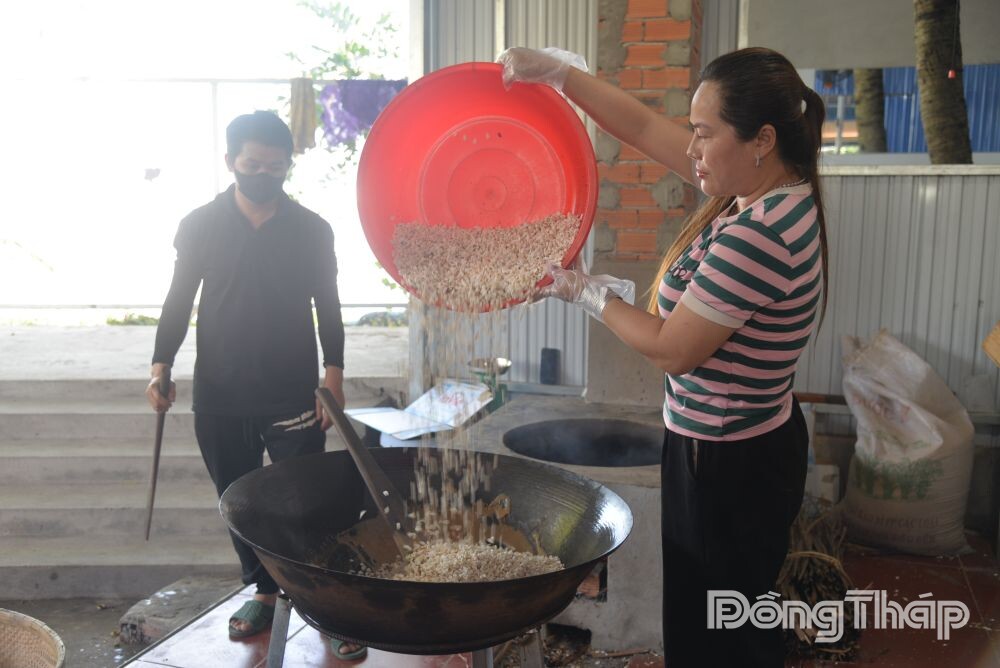
The kitchen smoke mingled with the fragrant aroma of roasted sticky rice and peanuts. Ms. Vân smiled gently: “I replaced the sugar with honey for a milder sweetness, which is healthier. Nowadays, everyone is afraid of too much sweetness, so we have to adjust. But the richness of the coconut and the aroma of the sticky rice must remain – that’s the soul of Western Vietnam’s sticky rice flakes.”
Each piece of sticky rice is pressed into a mold, cut into neat squares, and arranged on a wooden table to cool. The finished rice cakes are light golden, crispy, with the nutty flavor of peanuts and the delicate richness of honey – a dish as genuine as the person who made it.
SWEET COCONUT CANDY FROM THE HOMELAND
Not far from the Xóm Dừa facility is the Hồng Loan coconut candy facility owned by Ms. Trần Thị Thúy Quỳnh, where every morning the sounds of pots and pans and the stirring of candy fill the air.
The workers here usually start their work at dawn. When the pot of coconut milk is heated, the whole space is immediately filled with the familiar rich, creamy aroma.
While checking the pot of candy, Ms. Quynh said, "Making coconut candy isn't too difficult, but the secret is making it delicious. Insufficient heat will make the candy soggy, too much heat will burn it. Good candy must have just the right softness, a mild sweetness, and a beautiful golden color."
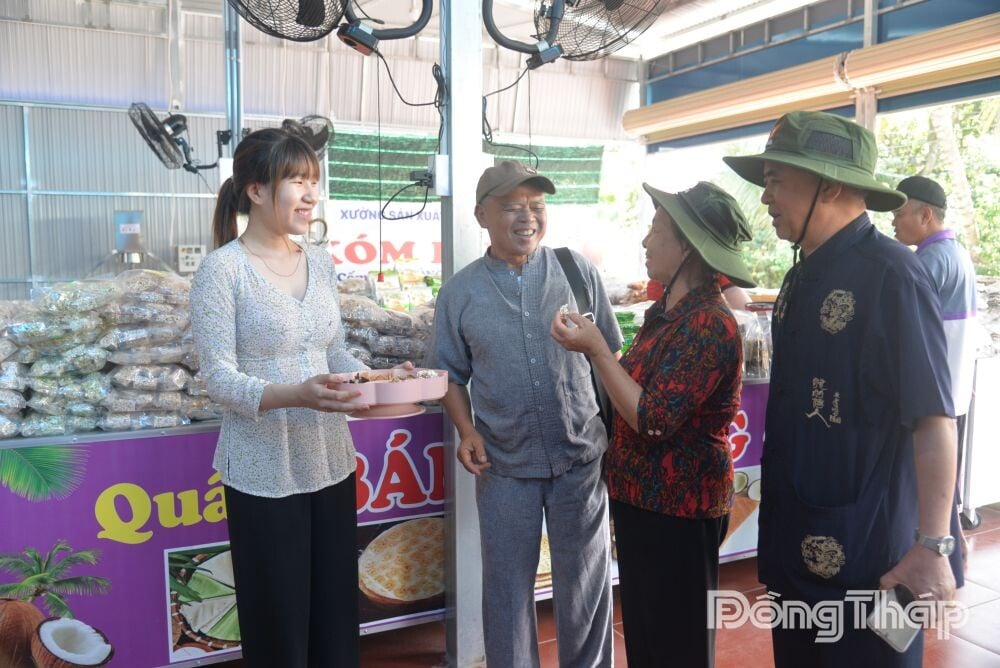
In the past, everything was done manually; the candy maker had to stir the candy continuously for hours. Now, with the help of machinery, the work is easier, but the technical requirements remain very high. "Machines only provide assistance; the dedication of the craftsperson must still be paramount," Ms. Quynh said.
To increase competitiveness, her family has created many new flavors: durian, cocoa, peanut… Recently, the business has also researched a less sweet candy line to suit consumer tastes. Despite the innovations, what she retains is the traditional candy-making method – the very essence of Thoi Son coconut candy.
The candy maker carefully removes the warm candy bars, spreads them out on the table, and begins wrapping them in paper. Each movement is quick and skillful, like a small dance of the hands.
TOURISTS AND MOMENTS OF ENGINEERING IN THE PROFESSION
While many traditional crafts face the risk of disappearing, Thoi Son's sticky rice flakes and coconut candy are still preserved and developed, becoming a model that connects culture, tourism , and community livelihoods.
The craft not only creates jobs for local people but also contributes to the formation of unique tourism products, increasing the attractiveness of the destination.
Over the years, sticky rice flakes and coconut candy have become signature tourism products of Thoi Son islet. Visitors not only hear about them but also get to experience each stage of production firsthand.
Mr. Nguyen Ngoc Thanh, a tourist from Hanoi , recounted his first experience making puffed rice: "I thought it would be simple, but after roasting the rice, I realized how hard it was. The grains had to expand evenly and not burn. Eating a piece of puffed rice that I made myself tasted unusually delicious."
Not only domestic tourists, but many international visitors also enjoyed the experience. A Malaysian girl, experiencing coconut grating for the first time, exclaimed excitedly: "I will definitely come back here if I have the chance. Everything was wonderful - the scenery, the people, and the experience."
These moments serve as a bridge, helping visitors better understand the local culture. A small coconut candy, a crispy rice flake snack—all are enough to tell the story of the diligence, skill, and pride of the people in the countryside.
At the end of the day, as the sun gradually sets behind the orchards, the ovens for puffed rice and candy begin to cool down. The workers tidy up, preparing for the next batch. Outside, people leave, carrying a few packets of puffed rice and some coconut candy – small gifts that hold the soul of the countryside.
In Thoi Son, making sticky rice flakes and coconut candy is not just a craft. It's a part of the memories of the Mekong Delta, a living heritage passed down through generations by the hands, breath, and perseverance of the people of this island.
And perhaps that's why each crispy rice flake, each soft, sweet coconut candy, carries the taste of the land, the water, and the people – a flavor that anyone who tastes it once will remember forever.
Today's rice puff and candy factories have been modernized, but the cultural and spiritual values of the traditional craft remain intact. The people of Thoi Son continue to pass on the craft to the younger generation, so that the sounds of pestles, roasting machines, and candy wrapping still resonate every day as a testament to perseverance and love for the profession.
MORNING
Source: https://baodongthap.vn/-giu-lua-com-nep-keo-dua-tren-cu-lao-thoi-son-a233796.html
![[Photo] Life on both banks of the river returns to its bustling pace on the day the Long Bien Bridge opens to traffic.](https://vphoto.vietnam.vn/thumb/1200x675/vietnam/resource/IMAGE/2026/05/28/1779949763708_cau-long-bien-minh-duy-7-3610-jpg.webp)
![[Image] Checking the security conditions at the exam site, ready for the 10th grade exam.](https://vphoto.vietnam.vn/thumb/1200x675/vietnam/resource/IMAGE/2026/05/28/1779943458889_z7872507660648-d764421a26e8cd7b61d70d142a48a685-jpg.webp)










![[Photo] Opening Ceremony of the National People's Council Conference on the Implementation of Directions and Tasks for the 2026-2031 Term](https://vphoto.vietnam.vn/thumb/1200x675/vietnam/resource/IMAGE/2026/05/28/1779939257690_ndo_br_bnd-1991-jpg.webp)



































Comment (0)