

The Tru Son pottery village originated in the 17th century, stemming from the cooking and daily life needs of the people in the Nghe An countryside. The first earthenware pots were simply rustic utensils in each kitchen. However, over time, the craft of pot making has gradually been elevated, becoming a distinctive cultural hallmark, closely intertwined with the material and spiritual lives of many generations.
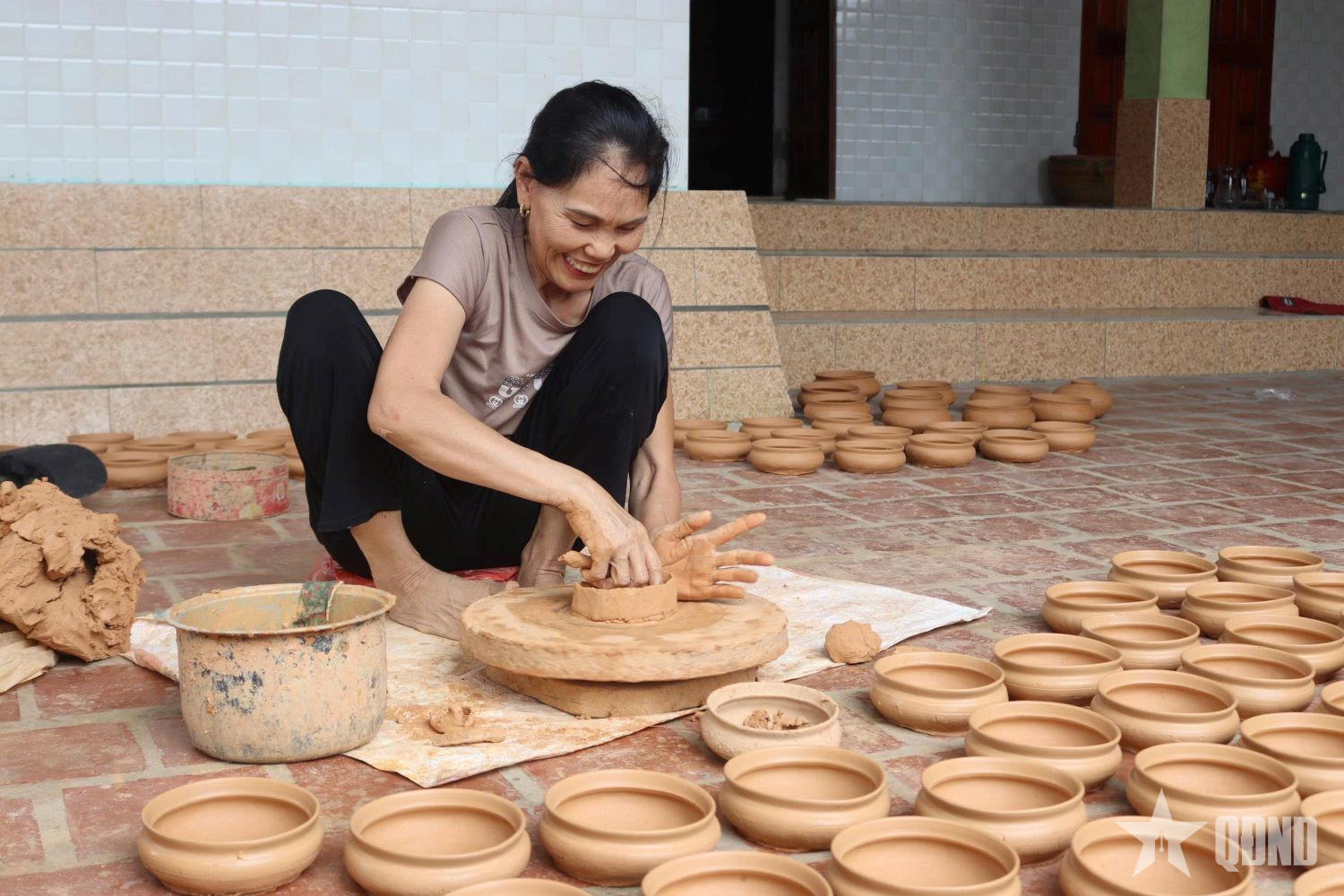 |
| Ms. Nguyen Thi Hong diligently works with the rotating wheels to create the clay pot. |
 |
| Each clay pot is created with the diligence and meticulousness of the local laborers. |
The clay used to make Tru Son pots is no ordinary clay. It's clay taken from the alluvial plains along the Dao and Lam rivers, where the water has deposited sediment over the years, creating a pliable, smooth layer of clay with high heat resistance. After being dug up, the clay must be sun-dried, impurities removed, and then meticulously kneaded as an indispensable ritual before the shaping process begins. On the potter's wheel, the lifeless mass of clay gradually takes shape, from rice pots and frying pans to jars and vases… Every hand movement requires skill and a keen sense of touch. Just one misstep and the pot can lose its shape and soul.
 |
| The earthenware pot is placed in a kiln at high temperature. |
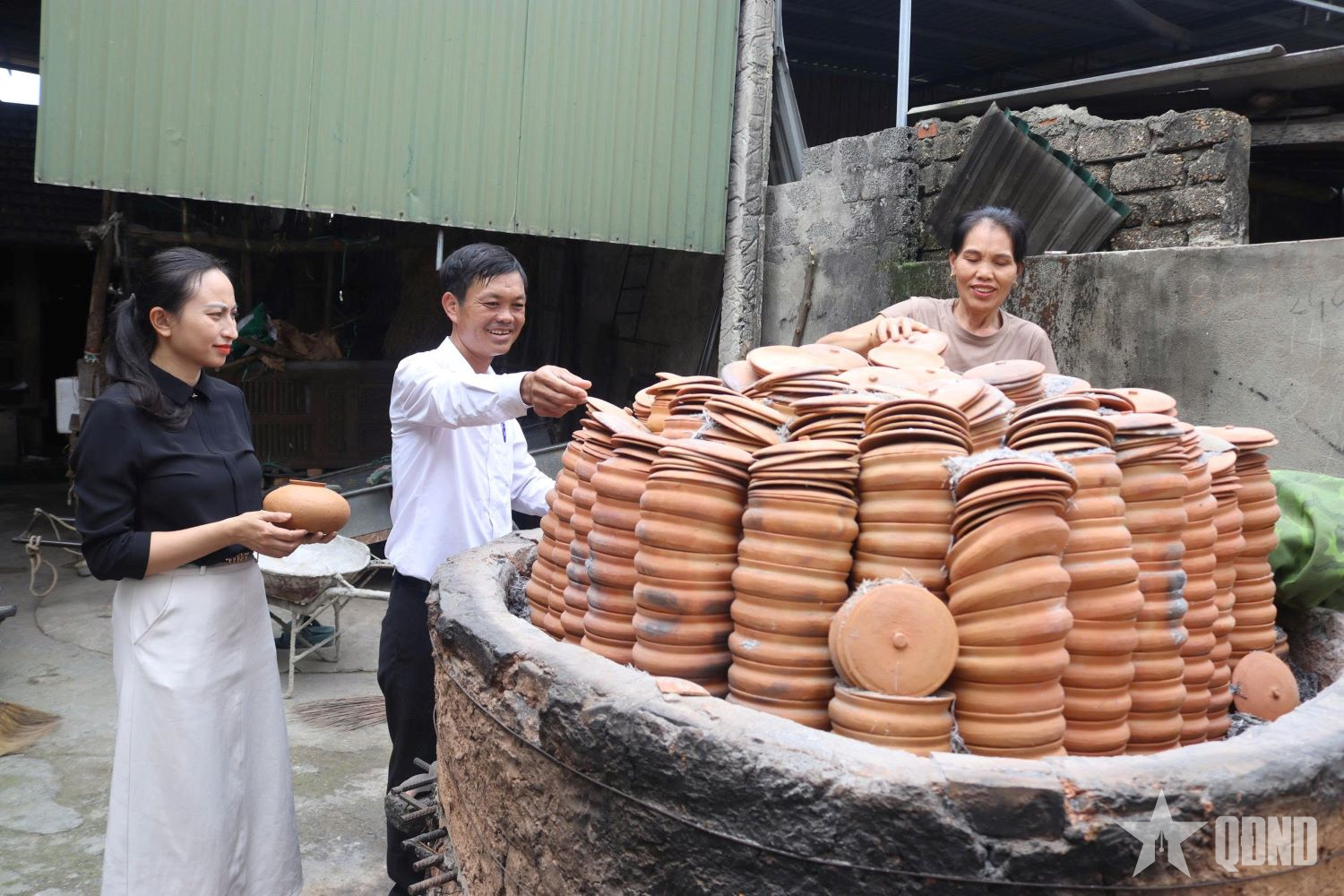 |
| Restaurant and eatery owners often order clay pots in large quantities. |
After shaping, the products are air-dried naturally for one to two days, then placed in a kiln at a temperature of 800–900 degrees Celsius. The blazing fire in the kiln is the final test. When the kiln is opened, the earthenware pots appear in a dark brown, solid color, carrying with them the sweat and patience of the craftsmen. Each product is carefully inspected, as the villagers cherish their own hard work.
In the small courtyard covered in brown earth, Mrs. Nguyen Thi Hong nimbly molded each piece of clay while sharing in a simple voice: "During the off-season, my husband and I can make about 50 pots. Each one sells for about 10,000 dong, and together, this craft brings in about 50 million dong a year."
That amount isn't huge, but for the people of Tru Son, it's a valuable source of income, helping them make ends meet, raise their children, and keep the family together. For Mrs. Hong, each pot is the culmination of hard work and a deep connection to the ancestral craft. Her hands are accustomed to the earth, the fire, and the slow, steady turn of the potter's wheel. Mrs. Hong says that this profession doesn't make you rich quickly, but it provides a steady income and allows you to work right at home.
 |
| These earthenware pots hold memories and flavors of the past. |
It's no coincidence that Tru Son clay pots are favored by many families and restaurants. The pots retain heat for a long time, cooking food slowly and bringing out its unique, rich flavor. A clay pot of rice or stew always evokes a warm, familiar feeling, like a traditional country meal.
Today, the craft village continues to operate with over 200 households participating in production, creating thousands of products each year. The pottery-making craft helps people increase their income, contributes to building a local brand, and preserves a part of the soul of Nghe An province.
However, amidst the modern pace of life, earthenware pots are facing competition from aluminum and stainless steel pots, electric stoves, and other more convenient and faster options. The supply of clay is also not yet stable, making production difficult. More worryingly, the younger generation is increasingly less interested in the craft, leading to a dwindling number of people continuing the tradition.
 |
| The traditional pottery-making villages preserve a part of the cultural soul of Nghe An province. |
 |
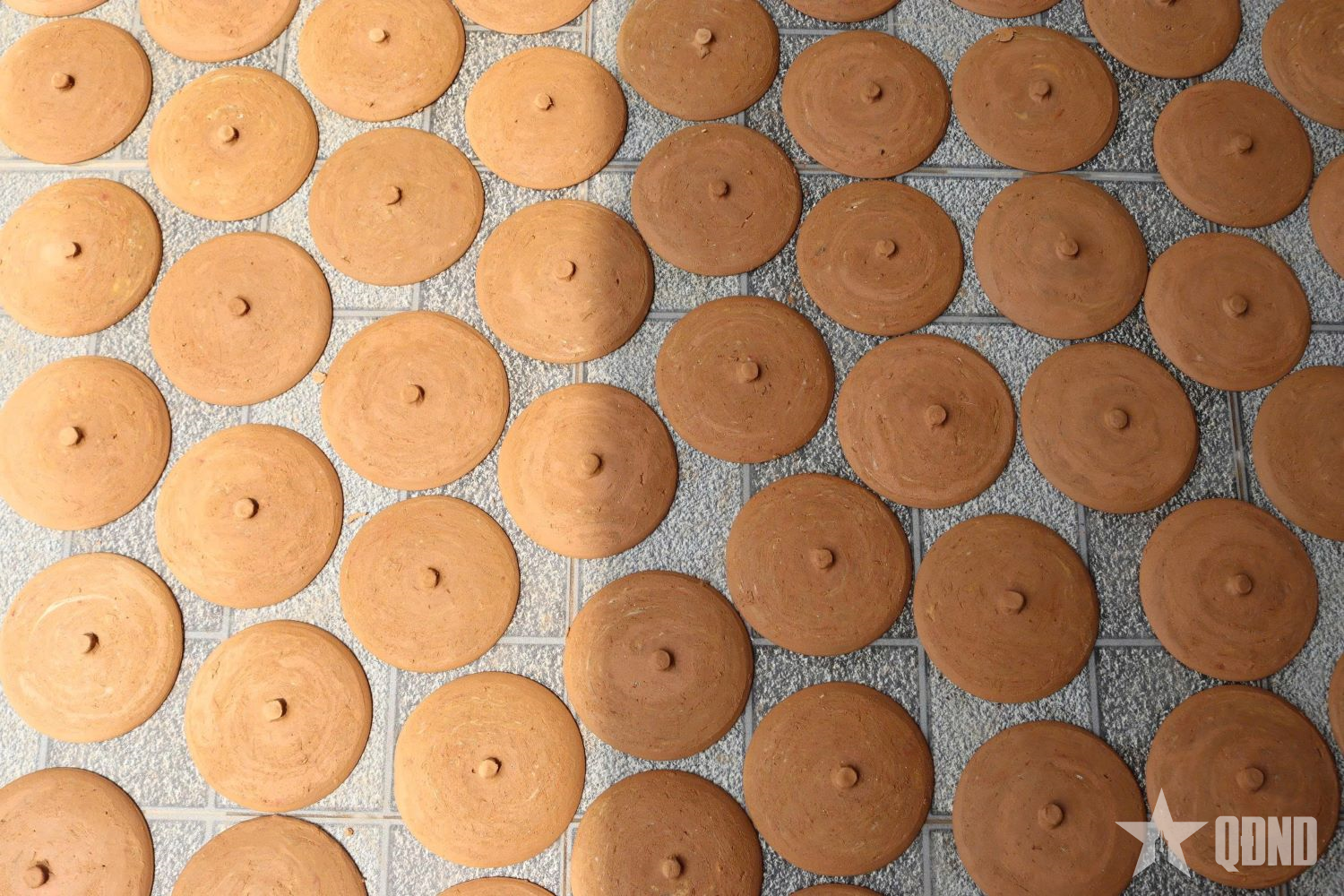
| The earthenware pots are drying in the sunny courtyard. |
In a corner of Tru Son village, Mrs. Nguyen Thi Que's house always carries the scent of damp earth and kiln smoke that has accompanied her family for three generations. In the small courtyard, rows of clay pots are neatly arranged, still retaining their warmth. Mrs. Que shared that the craft of making clay pots still regularly provides additional income for her family. "We sell everything we make; sometimes customers ask for more but we don't have enough to sell," Mrs. Que said with a gentle smile. These simple pots are still popular in the market, as a way for people to reconnect with the flavors of the past amidst modern life.
However, behind this story of high demand lies a significant concern. According to Ms. Que, the biggest difficulty currently is the source of raw materials. "Even if we wanted to, we couldn't find land to buy because there's no stable mining area plan yet," she said, her eyes slightly downcast.
In Tru Son, the clay pots continue to turn silently, and the kilns burn brightly every day. Despite numerous difficulties, the people here diligently preserve their craft as if it were a part of their family tradition. They only hope that, with a more stable supply of raw materials, these simple clay pots will continue to be produced, ensuring the village's enduring legacy and preserving the beauty of Nghe An province.
Source: https://www.qdnd.vn/van-hoa/doi-song/giu-lua-lang-nghe-noi-dat-tru-son-1032582



















![[Photo] General Secretary To Lam attends the ceremony commemorating the 75th anniversary of the founding of the Central Military Hospital 108.](https://vphoto.vietnam.vn/thumb/1200x675/vietnam/resource/IMAGE/2026/03/30/1774866343623_a1-bnd-5435-7415-jpg.webp)








































Comment (0)