

Preserving the spirit of Vietnamese Tet (Lunar New Year)
In the days leading up to Tet (Lunar New Year), we visited Thanh Ha pottery village (Hoi An Tay ward), seeking the springtime atmosphere of the "season" for sculpting Kitchen God statues. However, the bustling scene from our memories was gone. After wandering around the village asking around, we only received headshakes and sighs. The old craft still exists, but those who are dedicated to it are gradually dwindling.
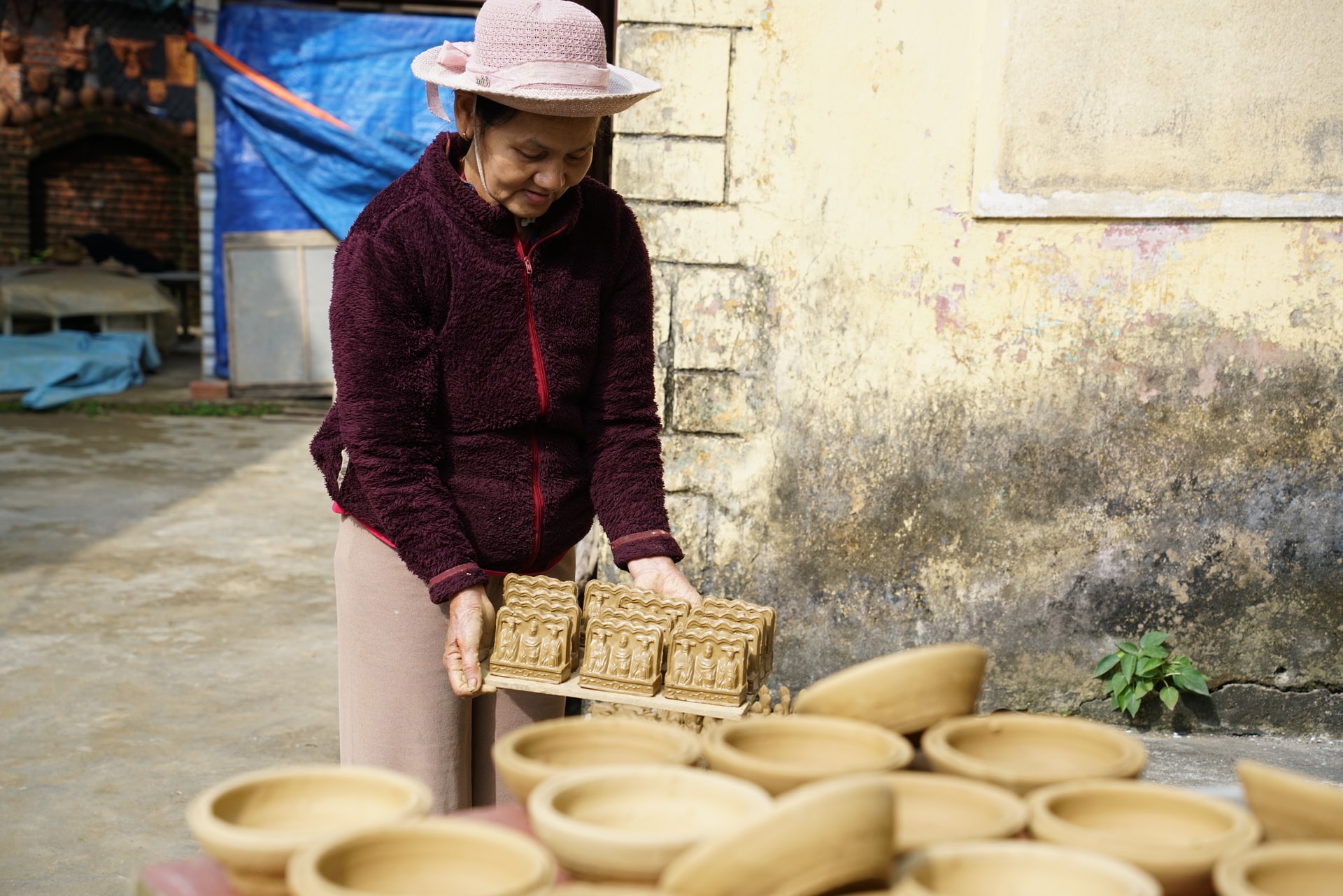
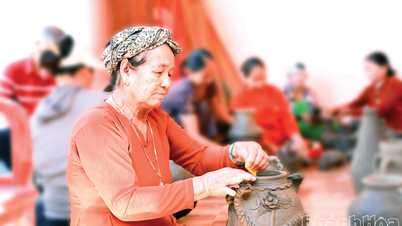
Amidst the earthy scent of a traditional craft village approximately 500 years old, we met Mrs. Duong Thi Ca (born in 1962). In her small house, she slowly recounted her life intertwined with clay and kilns. Five generations in Mrs. Ca's family have continued the craft, like a persistent underground stream flowing through the generations.
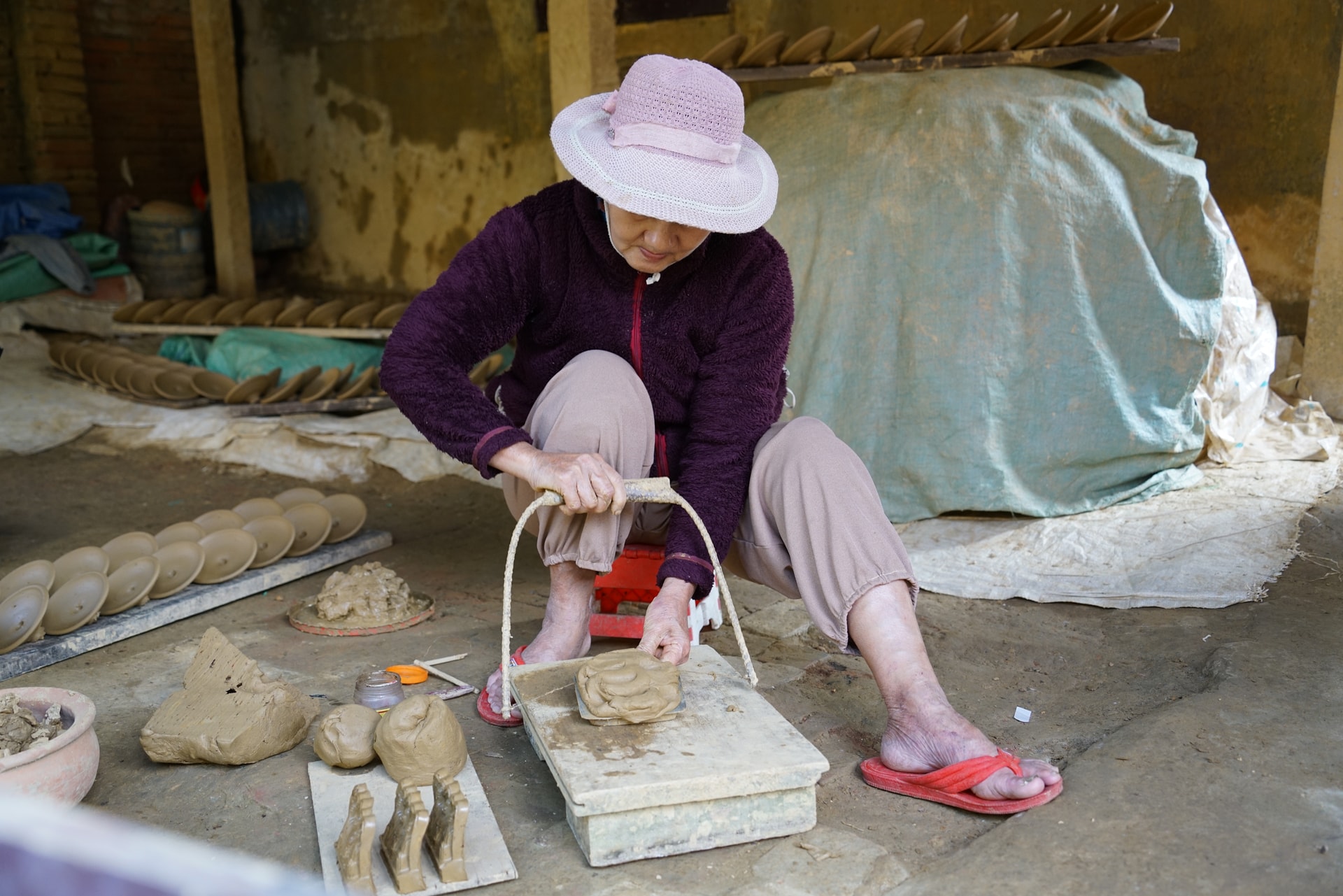
From her childhood days of observing in silence, her hands grew up with the clay, the molds, and the slow, rhythmic breathing of the ancient craft. Like many people in Thanh Ha village, Mrs. Ca is skilled in making many pottery items for daily life and religious purposes.
Among them, the Kitchen God statue – a product closely associated with Vietnamese cultural life at the end of each year – was once the main source of livelihood for her family for a long time.
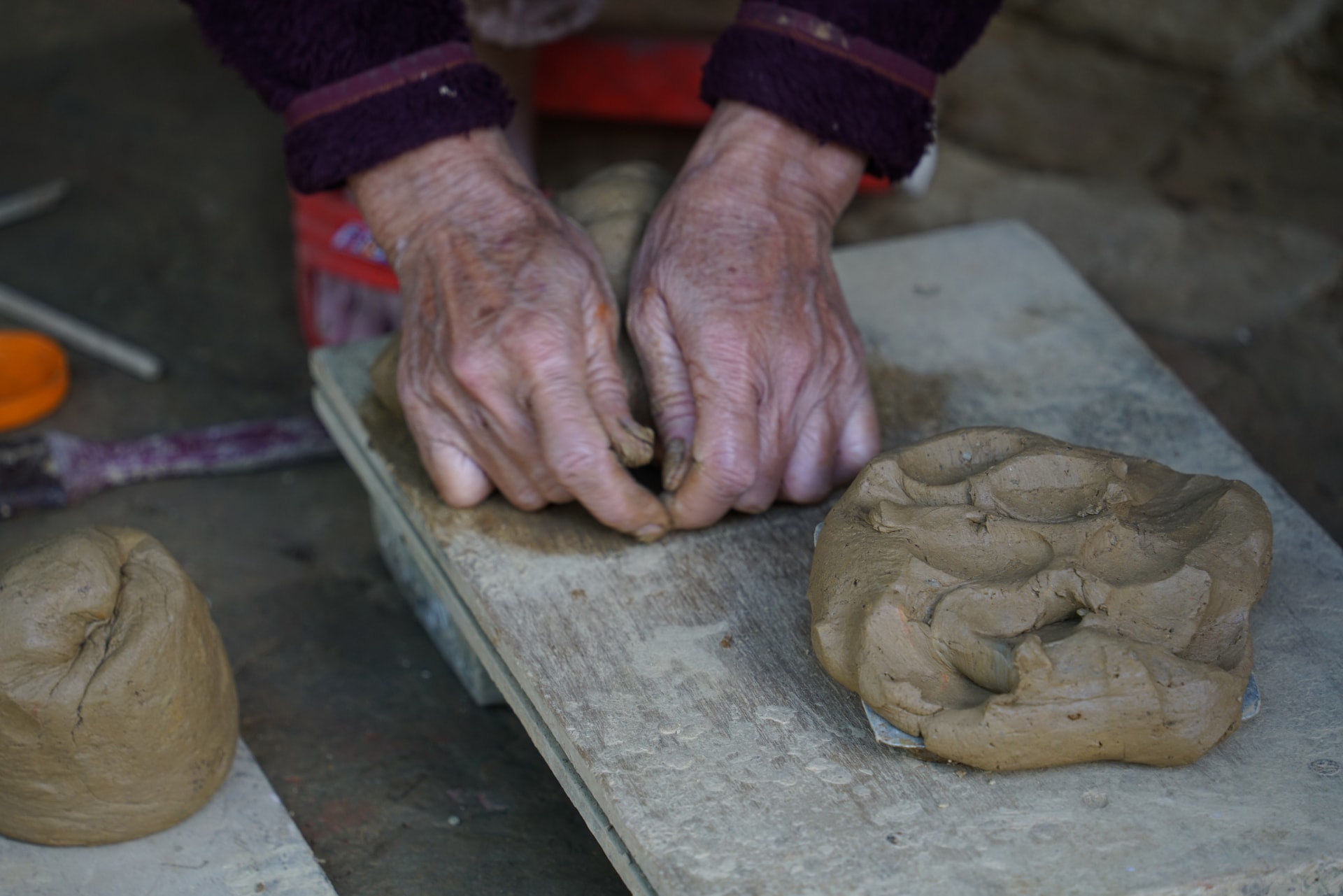
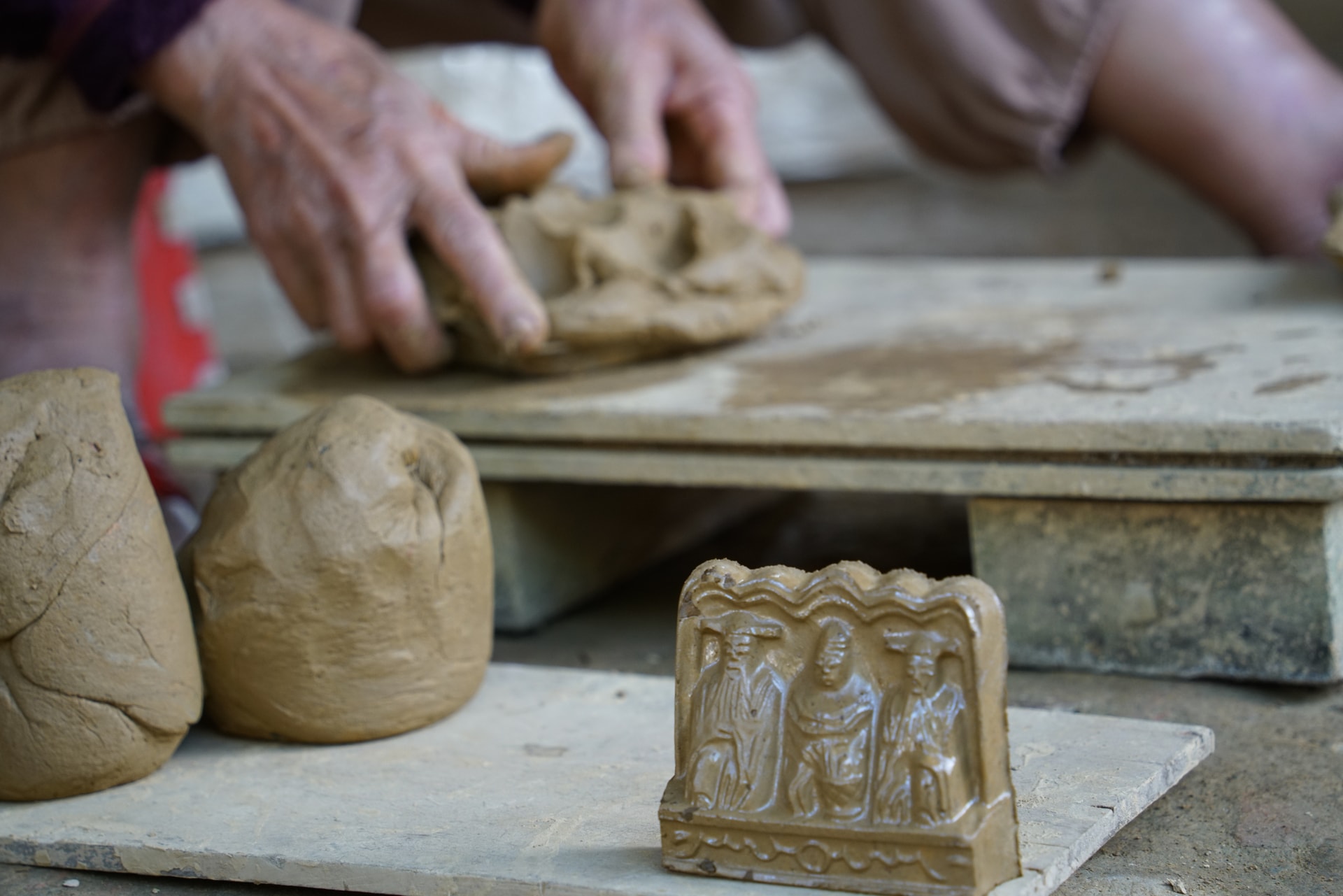
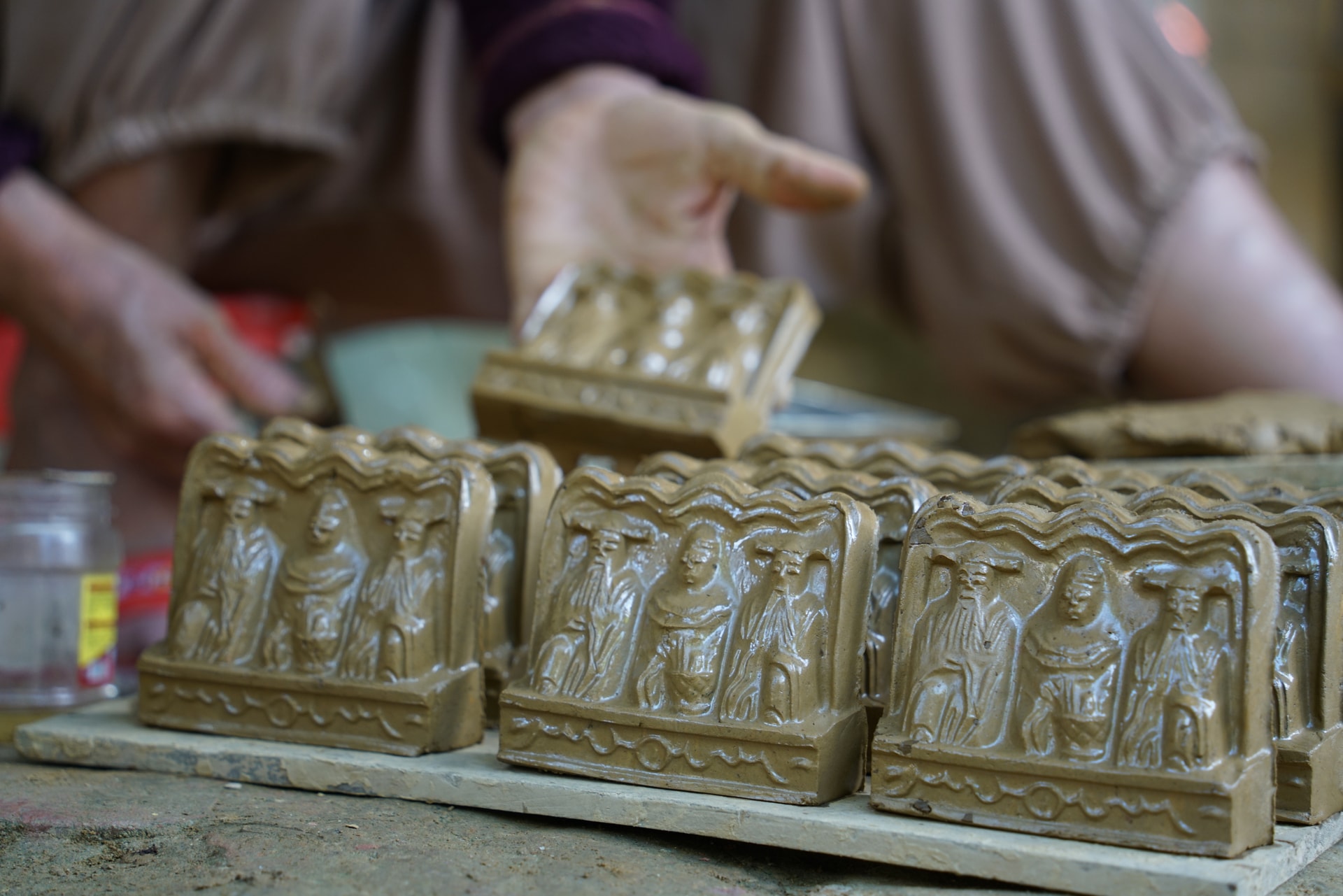
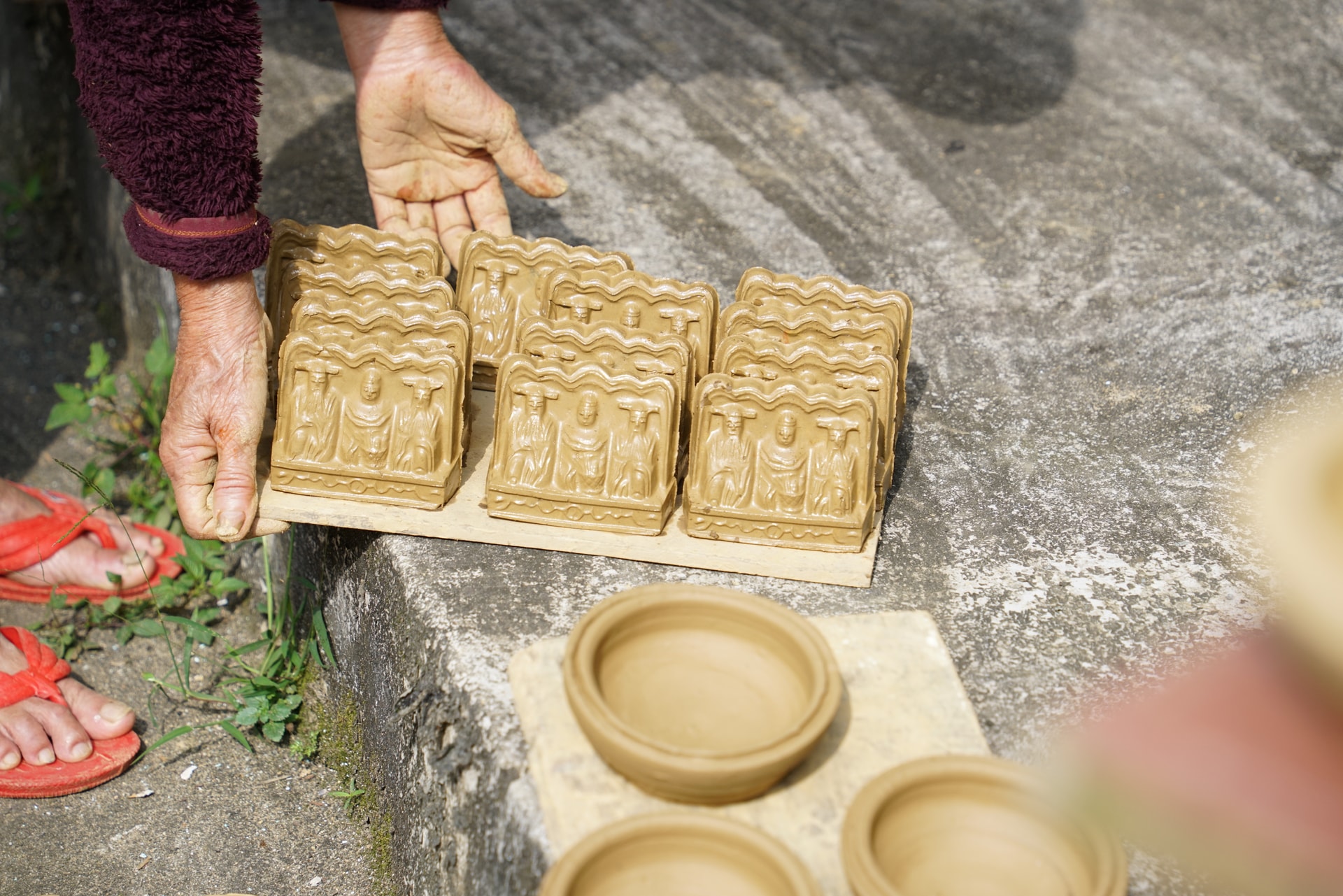
To create a statue of the Kitchen God, each step requires meticulous attention to detail. The clay must be kneaded and molded repeatedly until it is smooth and uniform. According to Mrs. Ca, the quality of the clay determines the durability of the product; if the clay is not up to standard, it will easily crack and break when fired. Once the clay meets the requirements, the craftsman applies a thin layer of oil to the mold, compresses the clay tightly, and removes the excess.
After casting, the statues are left to dry naturally in the sun. This process is highly dependent on the weather; during the rainy season, production almost comes to a standstill.
Therefore, statue-making usually begins in May or June of the lunar calendar. "Without sunshine, we can't work," Mrs. Ca said. The craft of statue making thus depends not only on human skill but also on favorable weather conditions.
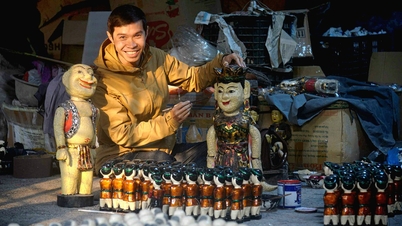
In the small courtyard, clay statues are neatly arranged, drying in the sun, awaiting the fire, carrying the dedication of the craftsmen silently preserving the spirit of Vietnamese Tet for future generations.
From the "golden age" to the choice of staying in the profession.
Sitting on the porch, where clay figurines were once piled high waiting to be shipped out every year during the Lunar New Year season, Mr. Nguyen Van Xe (husband of Mrs. Ca, born in 1958) recalls what was considered the "golden age" of the craft.
Back then, during each Tet season, his family could produce tens of thousands of Kitchen God statues. "We couldn't keep up with the demand; there were so many orders that sometimes we didn't dare accept any more," he recounted. The craft not only provided a livelihood for his family but also nurtured the pride of the pottery artisans in the village.
However, market trends have shifted. In recent years, production has significantly decreased. According to Mr. Xe, price competition is the biggest obstacle to the craft of making Kitchen God statues today.
Many similar products are brought to market at lower prices due to the advantage of local fuel sources (rice husks, straw, etc.); while production costs in Thanh Ha are higher because the artisans have to buy firewood for firing.
This drives up costs, making it difficult to keep up with the market. Currently, his family only produces a few thousand products each year, mainly to serve the local community and preserve the craft.
It's not just Mr. Xe's family; many pottery makers in Thanh Ha are facing the challenge of adapting in order to survive. Mr. Nguyen Sau (born in 1966), who has been involved in the craft of sculpting Kitchen God statues for many years, said that under market pressure, pottery makers are forced to find new directions.
With the development of tourism , Thanh Ha potters have shifted to molding and firing clay figurines, creating artistic pottery using molds, ceramic masks, and ceramic statues for interior and exterior decoration. These products have helped the village adapt to the new context to some extent.
Consequently, some people took a break, while others continued production at a reduced pace. For Mrs. Ca's family, continuing to make statues of the Kitchen God is a choice to preserve the craft and maintain a part of the soul of their homeland.
Source: https://baodanang.vn/giu-lua-nghe-nan-tuong-ong-tao-3322630.html







































































Comment (0)