

Monitoring the "rhythm of life" in the operating room.
On the evening of the fourth day of the Lunar New Year, while many families were still gathered around their New Year's meals, the atmosphere at the Surgery - Anesthesia and Resuscitation Department of Khanh Hoa General Hospital was tense. In just three hours, we witnessed the anesthesiology team busily moving between operating rooms, administering anesthesia to three consecutive emergency surgeries.
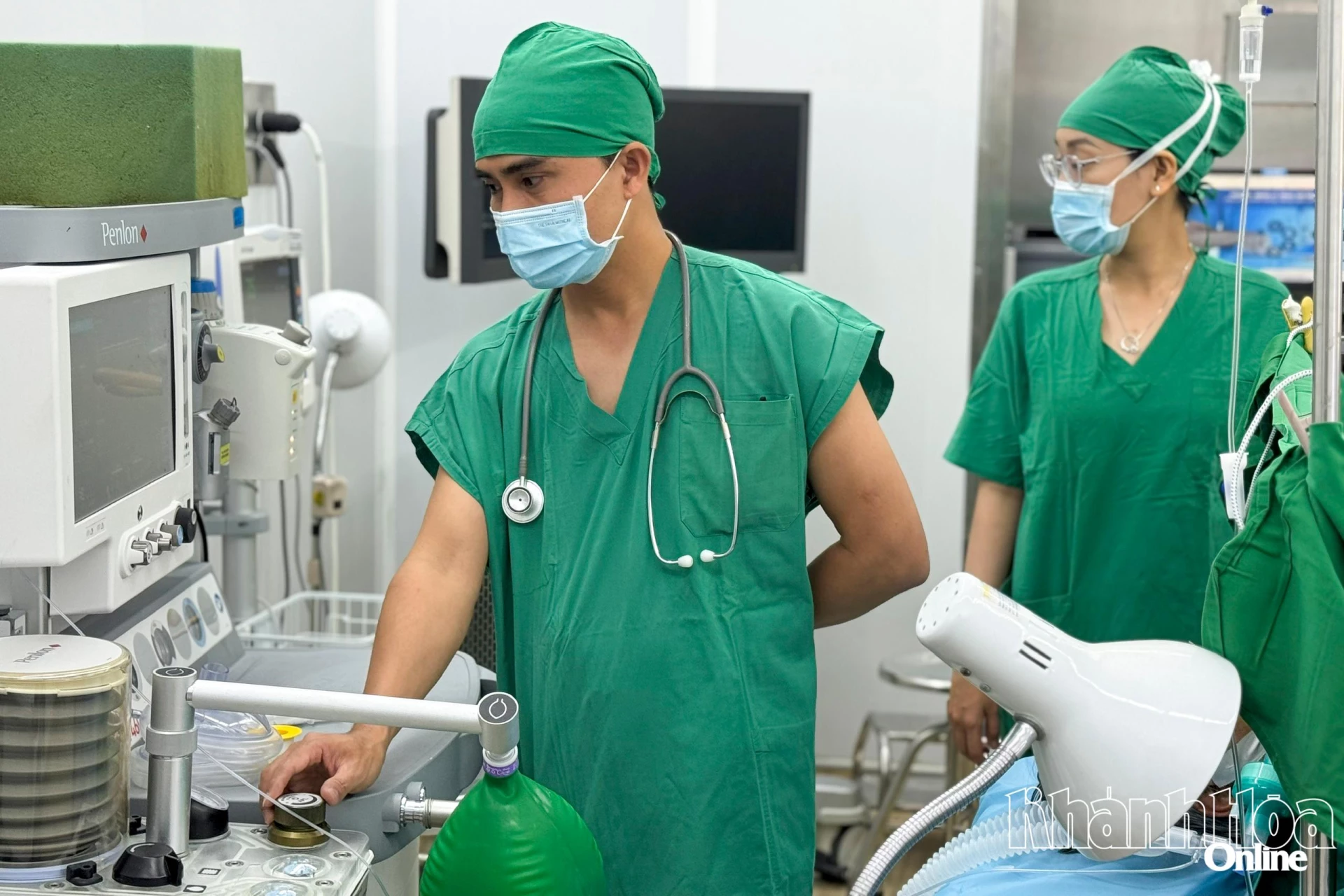 |
| Doctors Trinh Nguyen Hung and Tran Nhat Linh monitor the patient's vital signs through a machine system. |
The first case involved a 70-year-old woman who suffered a tibial fracture due to a domestic accident. Due to her advanced age and history of hypertension, arrhythmias, and heart failure, before the surgeons began bone fixation, Dr. Trinh Nguyen Hung and Dr. Tran Nhat Linh – the two main anesthesiologists – conducted a thorough examination, assessed cardiovascular risk, prepared preventative vasopressors, and checked the ventilator and infusion pump systems. They skillfully performed concise questions, established IV lines, attached monitors, and monitored heart rate. Once anesthesia was administered and the patient's vital signs stabilized, the surgery proceeded. At the head of the operating table, Dr. Hung kept his eyes glued to the monitor, where each heartbeat was displayed as a steady stream of bright green lines. After the surgery concluded, Dr. Hung moved on to the second surgical team, which was performing surgery to repair a perforated hollow organ in a patient with colon cancer that had metastasized to the liver and had undergone multiple rounds of chemotherapy and radiation. This was a major surgery, expected to last many hours, with a high risk of blood loss due to the patient's clotting disorder and multiple organ failure. Before anesthesia, the patient's medical history, liver, kidney, heart, and lung function were thoroughly assessed. Dr. Hung shared: "The most difficult aspect of anesthesia is that each patient presents a different challenge; there's no one-size-fits-all formula. Many people think anesthesia is just about 'putting someone to sleep,' but in reality, it's about controlling pain, cardiovascular and respiratory functions, and the entire physiological and non-physiological process of the body before, during, and after surgery." In the adjacent operating room, Dr. Linh was administering anesthesia to a child with soft tissue damage to their hand caused by a firecracker explosion. For young children, Dr. Linh decided on general anesthesia instead of regional anesthesia. Dr. Linh explained: "Children are often fearful, uncooperative, and unable to lie still throughout the surgery. If the child doesn't cooperate, even a sudden movement can affect the surgeon's work."
Three surgeries, three different patient scenarios. But the common thread is the quiet presence at the head of the operating table, where the anesthesiologist is the one who monitors the patient's breathing and sustains their life.
Pressure behind the spotlight
If the operating room is the most stressful place in a hospital, then the head of the operating table is perhaps where the pressure is most concentrated. There, the anesthesiologist cannot afford to be careless, not even for a single heartbeat. Every patient's vital sign is a piece of the puzzle in building the safest anesthesia plan. Even a small oversight can significantly increase the risk during surgery. "There are no small anesthesia procedures, only insufficient preparation. The more thorough the preparation, the lower the risk," shared Dr. Nai Thanh Thuc (Department of Surgery - Anesthesia and Resuscitation, Ninh Thuan General Hospital).
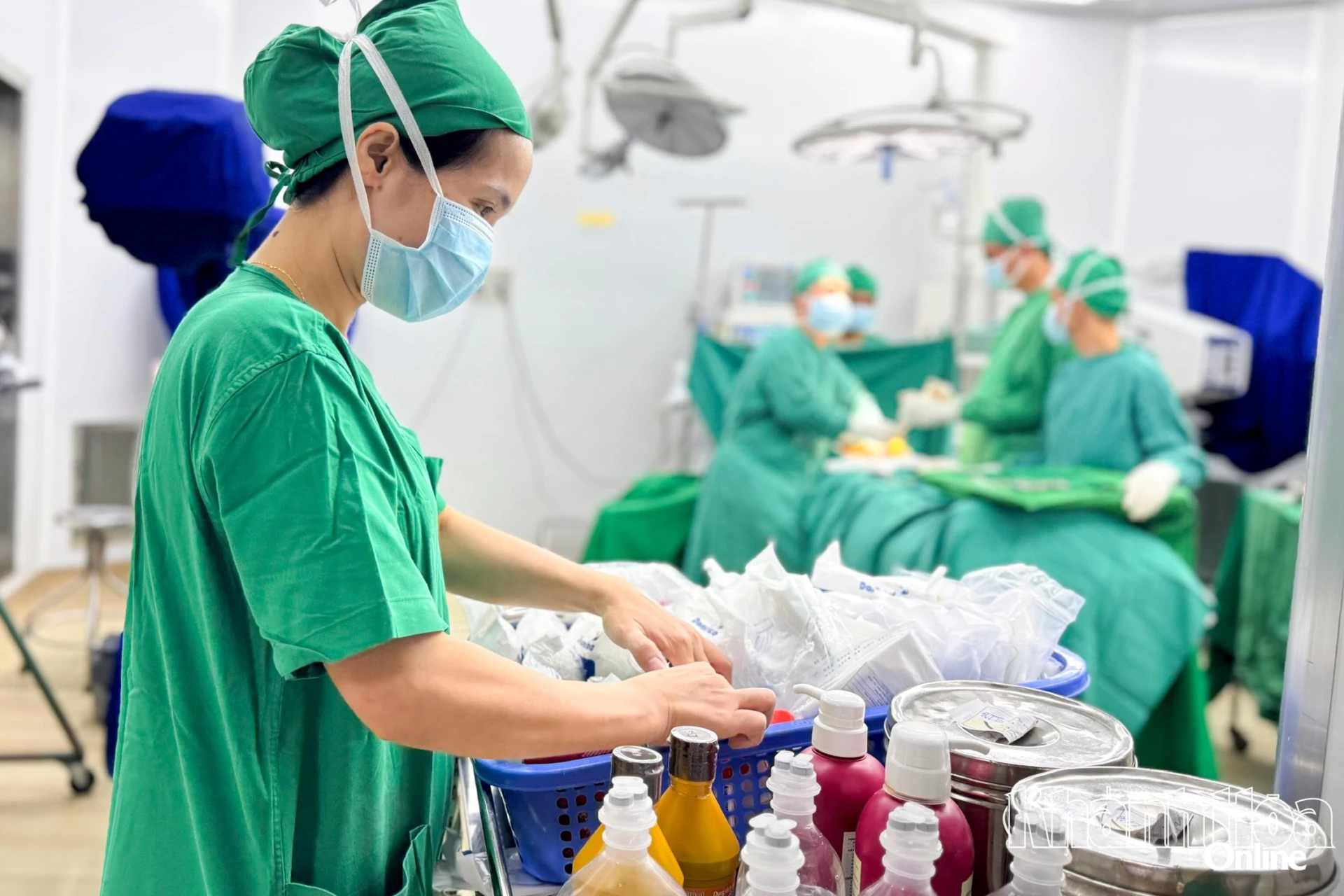 |
| Doctors and nurses from the Surgery - Anesthesia and Resuscitation Department of Khanh Hoa General Hospital are arranging the necessary supplies and equipment for the surgical team. |
But no matter how well prepared, unforeseen events can happen in an instant. This could include a sudden drop in blood pressure upon induction of anesthesia; difficult intubation due to an abnormal airway structure; bronchospasm causing a rapid decrease in blood oxygen levels; or an anaphylactic shock reaction to medication, with blood pressure plummeting in just a few seconds… In those moments, there is no room for panic. The anesthesiologist must remain absolutely calm, follow the correct procedures for calling for assistance, administering vasopressors, controlling the airway, and performing chest compressions if necessary. Every action must be precise and decisive. Dr. Hung stated: “In anesthesia, mistakes are almost irreversible. Once the medication enters the body, it directly affects the patient's entire condition. If treatment is delayed or incorrect, the consequences can be immediate. Therefore, we must always maintain a cool head and a warm heart.”
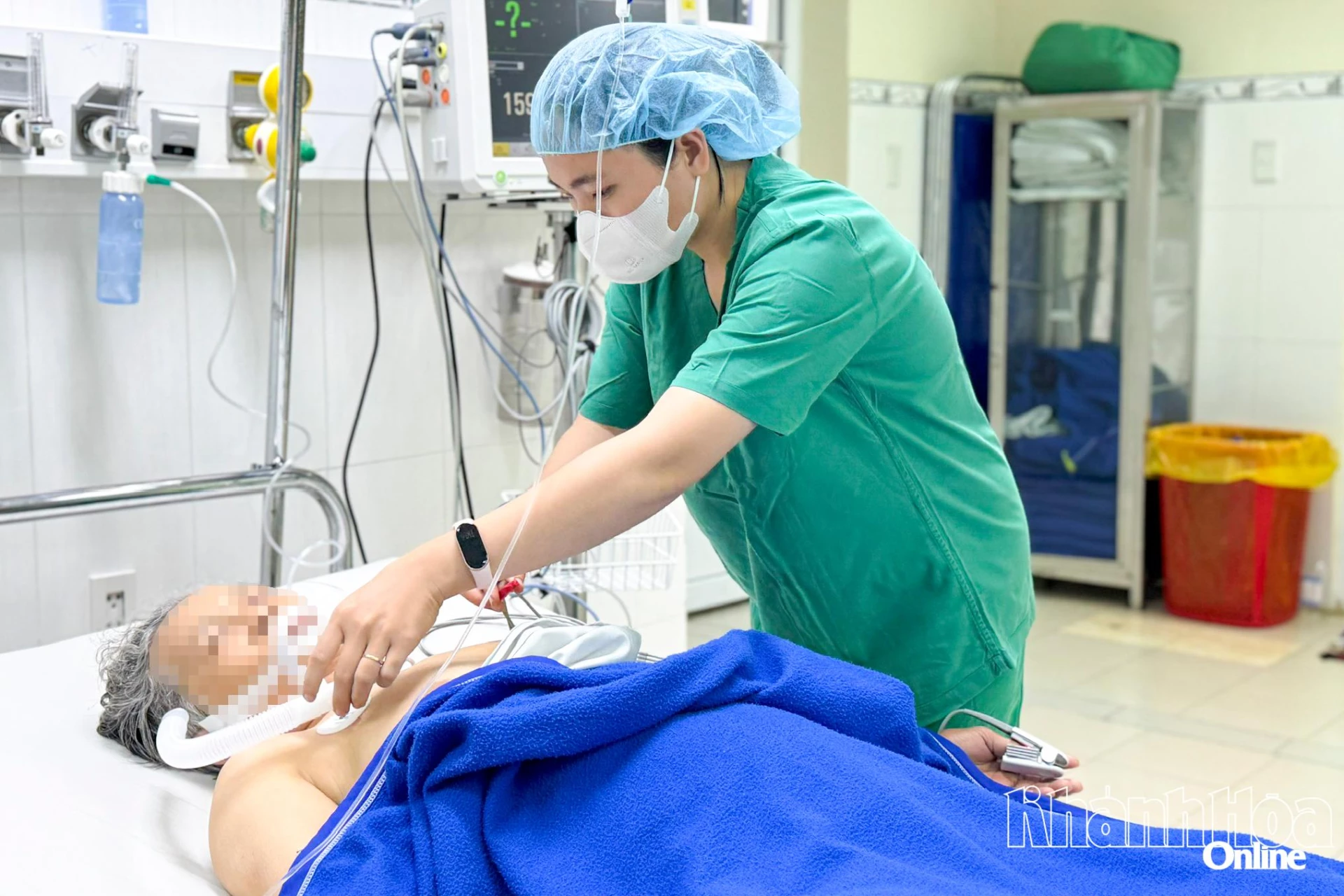 |
| The medical team of the Surgery - Anesthesia and Resuscitation Department, Khanh Hoa General Hospital, cares for patients after surgery. |
Anesthesiologists not only need to master the field of anesthesia and resuscitation, but they must also thoroughly understand the surgical procedures of each specialty, from cesarean sections, orthopedic trauma, abdominal surgery to major cardiovascular surgery… Before surgery, anesthesiologists must prepare a plan, anticipate surgical procedures that will cause significant pain, and adjust the pain medication dosage accordingly. Often referred to as the "first in, last out" team, after the surgery is over, they must continue to monitor the patient in the intensive care unit, assessing their ability to breathe independently, their level of alertness, managing post-operative pain, and detecting complications early…
The pressure on anesthesiologists isn't loud; it lies in the tense silence at the head of the operating table, in the watchful eyes following every number on the screen, in the responsibility of keeping the heart rate within safe limits. In an environment where even a few seconds of delay can cost a life, they still choose to stand in that silent position. Because for them, the greatest reward isn't the spotlight, but the moment a patient wakes up safely and can call their loved ones. Dr. Nguyen Van Hung, Specialist II (Department of Surgery - Anesthesia and Resuscitation, Ninh Thuan General Hospital), shared: "I chose and pursued the specialty of anesthesia and resuscitation because, for me, each time I and the surgical team save a patient's life is a great happiness that nothing can compare to."
Dr. Le Huy Thach, Director of Ninh Thuan General Hospital: Anesthesia and resuscitation play a particularly important role in the entire examination and treatment process of hospitals. Especially in complex, prolonged surgeries leading to a high risk of blood loss or emergency situations triggering a "red alert" protocol, the anesthesiologists are the core force ensuring airway and circulatory control and timely resuscitation, creating conditions for the surgical team to effectively and safely manage injuries. As the "safety shield" in surgery, anesthesiologists always work at a high intensity, requiring precision and close coordination with other specialties. Their silent contributions have significantly improved the overall quality of treatment at the hospital, building trust among patients seeking examination and treatment.
CAT DAN - HAN NGUYET
Source: https://baokhanhhoa.vn/xa-hoi/202602/giu-su-song-cho-benh-nhan-nang-ff87b29/




























































































Comment (0)