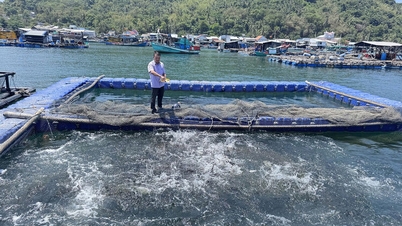
A model of fish farming in cages on Hon Nghe island commune. Photo: THUY TRANG
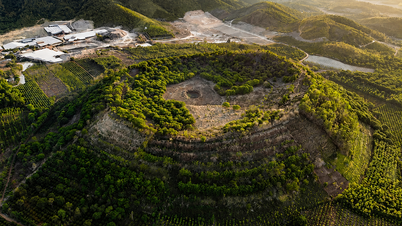
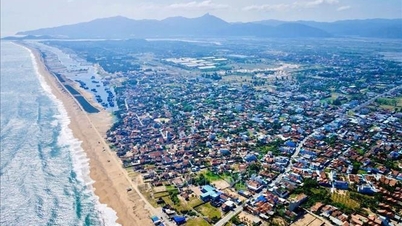
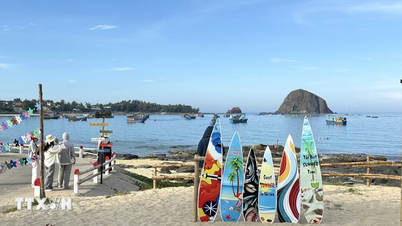
According to the Provincial Fisheries and Aquaculture Inspection Department, the Ba Lua archipelago possesses an extremely abundant source of aquatic resources for the province. With a protected aquatic resource area of over 38,000 hectares and 5 natural aquatic seed beds totaling nearly 15,000 hectares, this area is of exceptional value in terms of biodiversity and provides livelihoods for thousands of households through mollusk farming and cage fish farming.
In recent years, the marine economy in Kien Luong, Son Hai, and Hon Nghe communes has continued to develop. The farming of blood cockles, hairy cockles, silk clams, and cage fish farming has gradually become more effective. Farmers are increasingly investing in and adopting new technologies in production, notably the transition from wooden raft fish farming to HDPE plastic cages. Technical infrastructure such as irrigation, electricity, and transportation has received investment from the local government and is gradually being improved, creating favorable conditions for the development of marine farming.
To date, in the two communes of Son Hai and Hon Nghe, six models of converting wooden cages to HDPE plastic cages have been implemented (24 cages, totaling 1,600 m³). The Provincial Fisheries and Aquaculture Inspection Department has issued 180 identification codes for cage farming facilities with 1,885 cages, serving the purpose of traceability.
Despite the achievements, the management and protection of aquatic resources in the Ba Lua archipelago still face many difficulties, including disputes over fishing grounds, encroachment on coastal waters, and illegal exploitation, which cause a complex situation of insecurity and disorder at sea. Tran Binh Trong, Deputy Secretary of the Party Committee and Chairman of the People's Committee of Kien Luong commune, said: “In recent times, several disputes have arisen between groups of fishermen in the local waters. The local authorities have coordinated with functional forces to strengthen patrols, control, and propaganda, and promptly handle the incidents. To date, the security and order situation at sea is basically stable, creating conditions for people to work and produce with peace of mind.”
In the aquaculture sector, people face significant pressure due to rising input costs, especially the nearly doubled price of bait fish used in cage farming, while product output remains unstable. Production and consumption chain linkages are limited; the local supply of marine fish fry is not readily available; and most cages still utilize traditional wooden materials, posing significant risks from natural disasters. Coastal shellfish farming is also increasingly impacted by environmental pollution and climate change. Ta Minh Tai, Secretary of the Party Committee of Hon Nghe commune, stated: “Cage fish farming in Hon Nghe is facing difficulties due to high investment costs, resulting in low profits for farmers. Furthermore, water pollution has led to a reduction in farming area; currently, the commune has only 902 cages.”
To protect the aquatic resources in this sea area, the Department of Agriculture and Environment, in coordination with local authorities, is strengthening public awareness campaigns; patrolling, monitoring, and handling administrative violations in the fisheries sector. A promising solution is the co-management model for clam resources implemented by the Department of Agriculture and Environment in Son Hai commune on an area of 500 hectares with the participation of 56 members. The model has initially proven effective, promoting the role of the community in marine resource management.
As one of the members participating in the model, Mr. Tran Van Cam, residing in Hon Heo hamlet, Son Hai commune, said that in the first harvest after being assigned to manage the area, the co-management group harvested about 120 tons of clams. After the season, the members continue to take turns protecting the assigned area, promptly preventing illegal exploitation. By participating, members have become more responsible in preserving and protecting aquatic resources.
According to Deputy Director of the Department of Agriculture and Environment Quach Van Toan, in the coming time, the sector will focus on perfecting and expanding the co-management model of clam resources in Son Hai commune; advising the Provincial People's Committee to issue regulations on prohibited areas, fishing methods and gear within its authority; surveying and re-identifying natural aquaculture breeding grounds and gradually completing the Aquatic Resource Protection Area in the Ba Lua Archipelago. At the same time, it will effectively implement the sustainable marine aquaculture project for the period 2026-2030; apply science and technology in marine aquaculture, strengthen seed quarantine, disease monitoring, and implement marine aquaculture planning zones associated with the transformation of fishing methods, ensuring harmony between resource conservation and marine economic development…
Source: https://baoangiang.com.vn/giu-von-bien--a491377.html
![[Photo] General Secretary and President To Lam working with the Technical and Professional Center, Ministry of Public Security](https://vphoto.vietnam.vn/thumb/1200x675/vietnam/resource/IMAGE/2026/07/06/1783318005842_a1-bnd-1129-2263-jpg.webp)