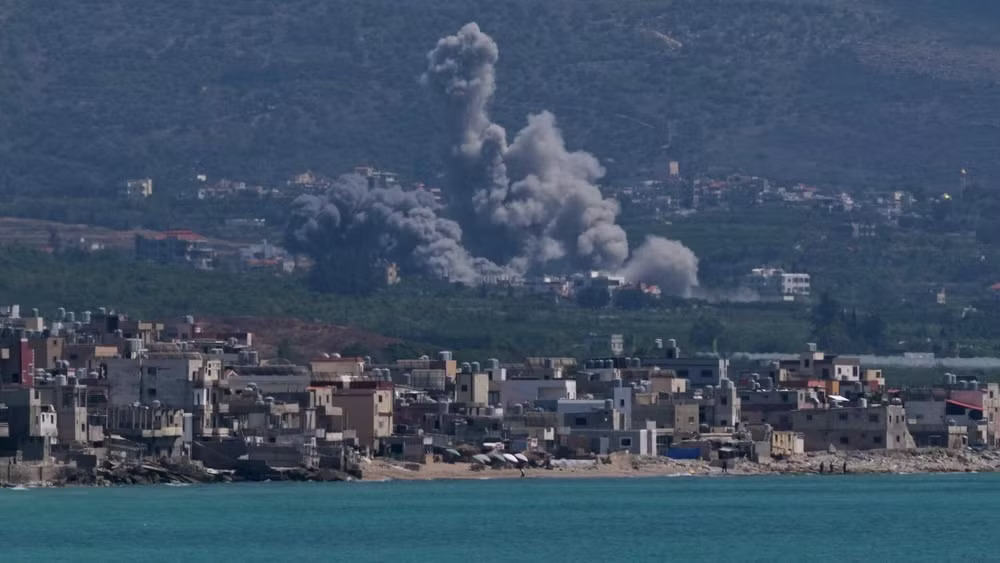
Toul is one of the key areas controlled by Hezbollah, a long-standing rival of the Israeli Defense Forces (IDF). According to the IDF, their aircraft sortie was due to Israeli air defense systems intercepting two flying objects launched from Lebanon into northern Israel in the early morning of June 2nd. Conversely, Hezbollah also confirmed conducting 41 military operations targeting Israeli forces in southern Lebanon and northern Israel on June 1st.
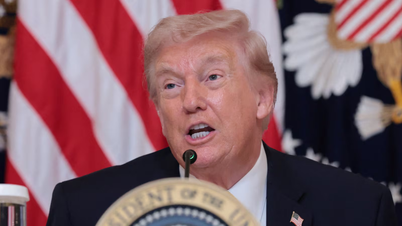
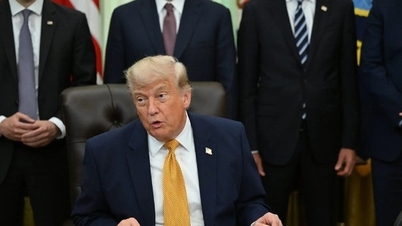
Tensions escalated just ahead of a new round of Israel-Lebanon talks, amid US President Donald Trump's announcement on the social media platform Truth Social that Israel and Hezbollah had agreed to cease attacks on each other, and his assertion that Israel would not send troops into Beirut, Lebanon (the country where Hezbollah has its headquarters), which clearly carried significant implications.
Simply put, much like the Israel-US relationship, Hezbollah is a long-standing ally of Iran, and has been resisting the Washington-Tel Aviv axis alongside Tehran. When trust—a prerequisite for any negotiations to succeed—remains so fragile, it inevitably reflects on other related dialogues.
As the Arab media outlet Al Jazeera commented on June 2nd: More than three months after the fighting began, Washington and Tehran have yet to agree on how to handle international shipping through the Strait of Hormuz. Currently, Iran asserts control over this waterway, while the US Navy blockades the ports of the Islamic Republic. Therefore, no international analyst is certain whether the two sides can reach a long-term agreement on Iran's nuclear development program and its highly enriched uranium, or on the lifting of sanctions against Iran. These are difficult sticking points to resolve and could completely derail bilateral negotiations.


Ignoring the current US president's repeated social media posts suggesting a deal with Iran is very close, according to Al Jazeera, Iran's top military, religious, and political leaders continue to emphasize that they will not surrender, amid deep distrust of the US, despite existing internal differences in their positions.
Meanwhile, according to Axios (US), US President Donald Trump reportedly had a tense phone call with Israeli Prime Minister Benjamin Netanyahu regarding Israel's expansion of military operations in Lebanon, amidst Washington's efforts to maintain negotiations with Iran and prevent the spread of conflict in the region. While the White House acknowledges Israel's right to self-defense against attacks from Hezbollah, US officials still consider some of Israel's recent military actions to be excessively escalatory.
Returning to the Israel-Lebanon negotiations, the key point of interest is Beirut's uncertain position, caught in the crossfire. Since the conflict escalated in April, Lebanon has been plunged into a severe humanitarian crisis, while the IDF has advanced deep into its territory.
The United Nations World Food Programme (WFP) has just issued an urgent appeal for $112 million to sustain relief operations (until August), warning that a funding shortfall could disrupt supplies for 1.24 million people facing severe hunger and more than one million displaced. Currently, ongoing evacuation orders and Israeli bombing are severely hampering humanitarian efforts, causing more than half of WFP's aid convoys to be delayed or canceled due to security risks.
However, Israel's move to initiate dialogue with Lebanon could create the impression that Tel Aviv is trying to divide and isolate Hezbollah from Beirut. And that would further dilute the already scarce trust between the parties...


( According to nhandan.vn )
Source: https://baodongthap.vn/giua-sa-mac-long-tin-a241690.html
![[Photo] Opening Ceremony of the 13th National Congress of the Ho Chi Minh Communist Youth Union](https://vphoto.vietnam.vn/thumb/1200x675/vietnam/resource/IMAGE/2026/06/24/1782286753905_ndo_br_1-8510-jpg.webp)

![[Photo] General Secretary and President To Lam attends the Central Public Security Party Committee Conference](https://vphoto.vietnam.vn/thumb/1200x675/vietnam/resource/IMAGE/2026/06/24/1782302063612_a1-bnd-9302-9166-jpg.webp)
![[Photo] The 13th National Congress of the Youth Union conducts personnel work.](https://vphoto.vietnam.vn/thumb/1200x675/vietnam/resource/IMAGE/2026/06/24/1782299943080_ndo_br_1-6868-jpg.webp)





















![[Infographic] 9 groups of people whose basic salary will increase from July 1, 2026](https://vphoto.vietnam.vn/thumb/402x226/vietnam/resource/IMAGE/2026/06/24/1782293974496_infographic-9-nhom-doi-tuong-duoc-tang-luong-co-so-tu-1-7-202620260624040844.webp)