

In a tense hearing before the House Financial Services Committee, Jerome Powell, the most powerful man in the world of finance, delivered a clear and unmistakable message: the Fed will not rush.
"We are in a good position to continue to wait and observe economic developments before considering any adjustments to monetary policy," Powell stated emphatically.
This statement came as a cold shower to expectations of an early interest rate cut, particularly from President Donald Trump and his allies in Congress . It suggests that, at least in the short term, the Fed prioritizes containing the potential inflationary risks from new tariffs and the oil price shock, rather than rushing to ease policy to support an economy showing signs of slowing down.
The political storm from the White House and Capitol Hill
The Fed's patience is putting President Donald Trump's patience to the extreme test. Since returning to power, Trump has relentlessly attacked Chairman Powell – a man he himself appointed during his first term.
The President's argument is that maintaining high interest rates is costing the United States hundreds of billions of dollars annually in interest payments on its massive public debt. He demanded that the Fed drastically cut interest rates, even by 2-3 percentage points. This pressure didn't stop at criticism; Trump also repeatedly hinted at the possibility of firing Powell, an unprecedented action that could seriously damage the Fed's independence.
Political pressure is not only coming from the White House but is also spreading to Congress, creating a bipartisan confrontation. Republican lawmakers generally support Trump's calls for interest rate cuts, while Democratic lawmakers tend to favor the Fed's cautious stance, emphasizing the need for independence from political influence.
Despite these storms, Powell remained steadfast. He asserted that the Fed's independence is protected by law and enjoys broad support in Congress. He stressed that the Fed's top priority is "maintaining stable long-term inflation expectations," even when faced with difficult choices between the goals of price stability and full employment.
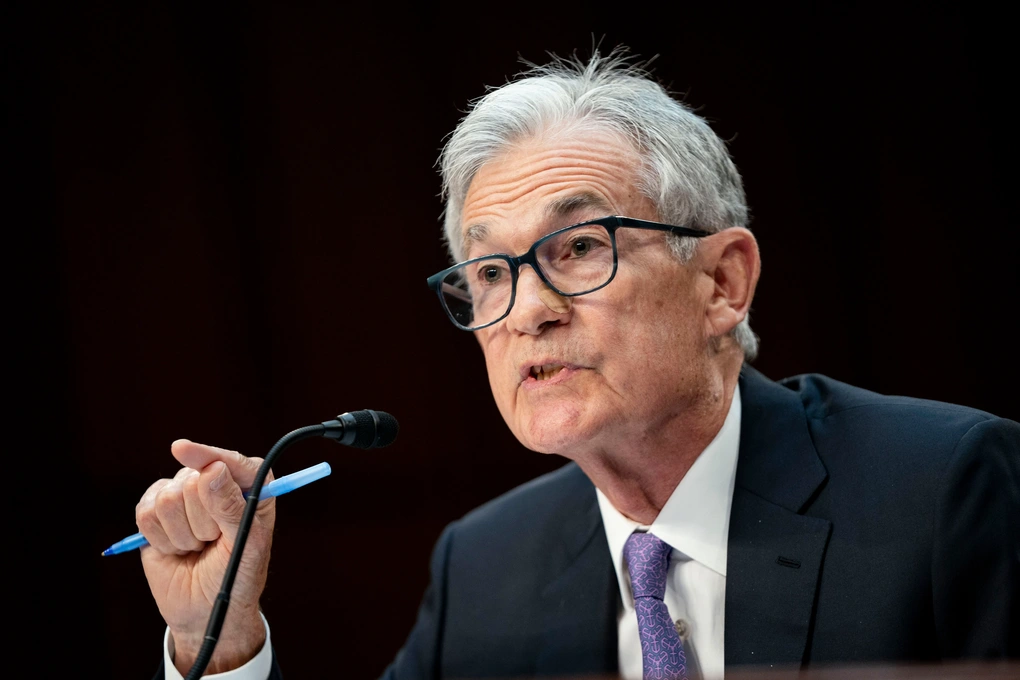
According to the Fed chairman, new tariffs this year could drive up prices and weaken economic growth (Photo: Getty).
Dissenting voices from within
Powell's challenges don't just come from the outside. Within the Federal Open Market Committee (FOMC), the Fed's policymaking body, cracks in opinion are beginning to appear.
Some officials appointed by Mr. Trump are voicing support for an earlier interest rate cut. Governor Christopher Waller recently called for an interest rate cut at the next meeting, arguing that the inflation risk from tariffs is not as great as initially feared. Similarly, Vice Chair for Oversight Michelle Bowman also expressed support for a rate cut at the July meeting, provided inflation remains under control.
These disagreements highlight the increasingly heated debate within the Fed, reflecting the uncertainty of the economy. A recent "dot plot" chart shows FOMC members are divided, with one group wanting to keep interest rates unchanged or cut them only once a year, while another group still expects two or more cuts.
This puts Powell in the position of steering the Fed through turbulent waters, having to reconcile internal viewpoints while also facing external challenges.
Geopolitical "cards" and the oil price shock.
Overshadowing all the economic and political calculations is a huge uncertainty: the simmering conflict between Israel and Iran. Escalating tensions in recent weeks have raised concerns about the possibility of Iran closing the Strait of Hormuz – a shipping lane that carries approximately 25% of the world's oil consumption.
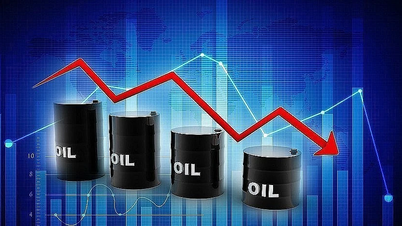
Such a scenario would be catastrophic, potentially driving up oil and gasoline prices, triggering a severe inflationary shock for the US and global economies. Although oil prices have cooled after a ceasefire was declared, the situation remains volatile. Any escalation could cause energy prices to rise again.
Oxford Economics warns that while the ceasefire may be fragile, oil prices will continue to fall unless there are attacks on energy infrastructure. However, this scenario could change in an instant.
This uncertainty, coupled with the possibility of a rebound in oil prices, further reinforces the reason for the Fed to act cautiously. "If crude oil prices rise sharply, people will feel it immediately," Powell concluded succinctly but forcefully.
The road ahead: What path should the number one economy take?
The Fed's benchmark interest rate remains at 4.25-4.5%. According to Powell, the US economy remains "in solid shape," with unemployment at a historic low of 4.2% and the Fed's preferred inflation rate at 2.3% – just slightly above its 2% target.
However, the June consumer confidence report showed declining consumer sentiment, primarily due to concerns about inflation and high prices.
Chairman Powell and his colleagues are navigating an extremely narrow path.
If they cut interest rates too soon to ease political pressure or support growth, they risk reigniting inflation, especially if energy prices surge or the impact of tariffs is greater than expected. But if they keep interest rates high for too long, they could inadvertently undermine economic activity, hurt the already robust labor market, and push the economy into recession.
Economists are divided on the next steps. Some believe the Fed is unlikely to cut interest rates before the end of this summer, while others believe that if there is more evidence of a weakening labor market, the Fed could act sooner.
In this complex context, all eyes will be on Washington. In his hot seat, Jerome Powell is facing the most challenging problem of his career: how to protect the economy while preserving the Fed's sacred independence in the face of unprecedented storms.
Source: https://dantri.com.vn/kinh-doanh/ghe-nong-fed-powell-cang-minh-giu-lap-truong-giua-bao-to-20250625062612729.htm
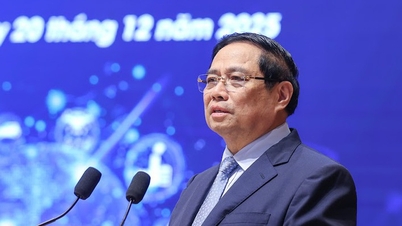
![[Photo] Prime Minister Pham Minh Chinh attends the Conference on the Implementation of Tasks for 2026 of the Industry and Trade Sector](/_next/image?url=https%3A%2F%2Fvphoto.vietnam.vn%2Fthumb%2F1200x675%2Fvietnam%2Fresource%2FIMAGE%2F2025%2F12%2F19%2F1766159500458_ndo_br_shared31-jpg.webp&w=3840&q=75)



























































































Comment (0)