


The tourism industry is gradually removing bottlenecks and accelerating the recovery of what has been lost. Among these, communication and destination promotion are frequently mentioned by businesses and experts as a "weak point" preventing Vietnamese tourism from truly booming.
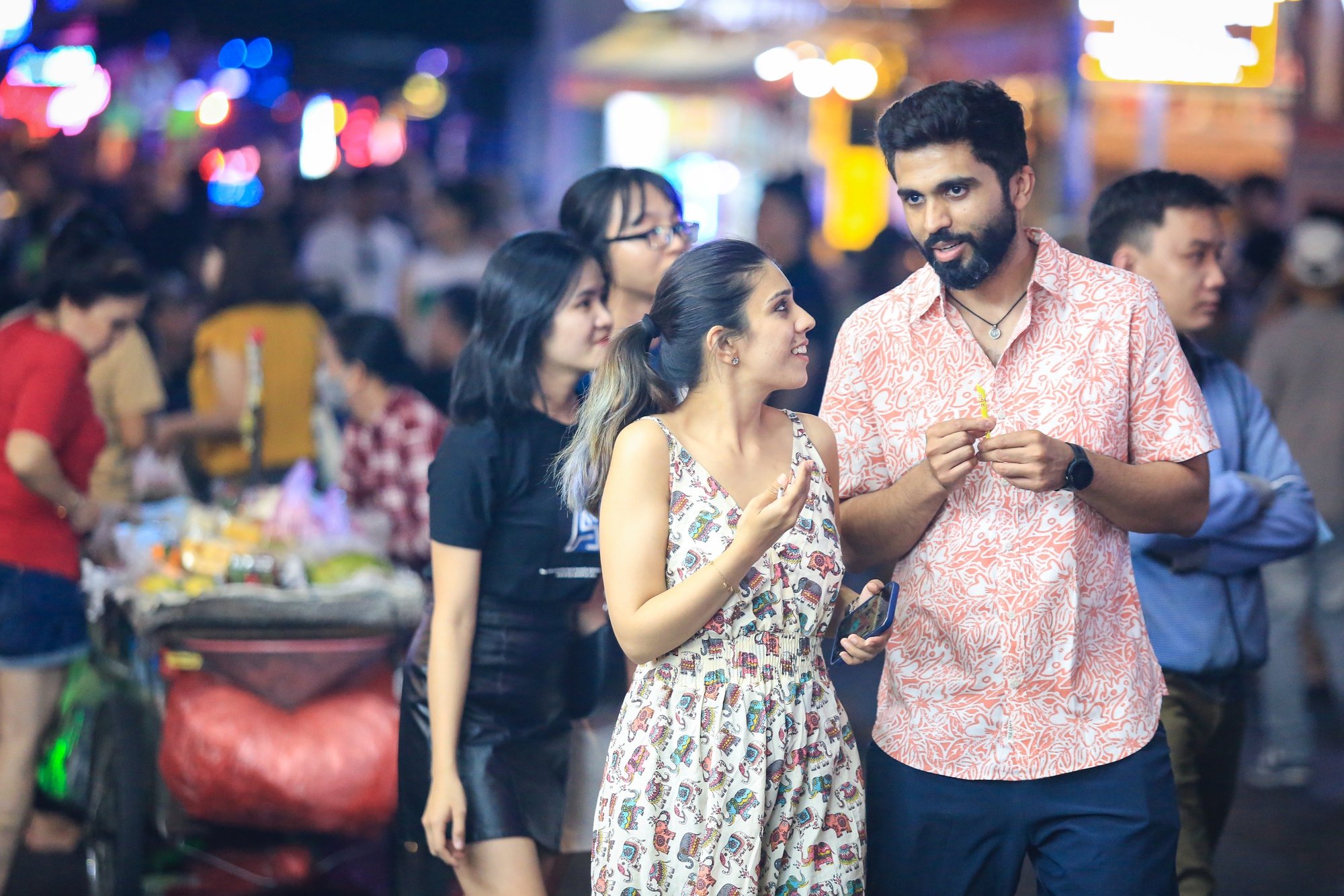
Vietnam is making efforts to attract international tourists.
When there's a new policy, you have to announce it immediately!
"If these visa and immigration policies are approved, they must be immediately publicized to tourists so they can proactively apply for visas to Vietnam . We must avoid a situation where we open our doors but no one knows about it, missing opportunities like when tourism first reopened after Covid-19. No matter how beautiful Vietnam is, how many new products we have, or how open we are, if tourists don't know about it, they won't come," noted Mr. Nguyen Chau A, Director of Oxalis Travel Company.
The missed opportunity that Mr. Nguyen Chau A mentioned remains a source of regret for many in the tourism industry. After officially removing all barriers to disease control in March 2022 to gain an advantage in the race for international tourists, Vietnam almost completely seized the opportunity. Compared to Thailand at that time, Vietnam was much more lenient, only requiring a negative test result, no quarantine, and restoring visa application procedures to pre-pandemic levels. Meanwhile, Thailand still applied the "Test and Go" program, requiring international tourists to quarantine overnight at a hotel while awaiting a PCR test; if positive, they had to quarantine for another 14 days. Not to mention, the quarantine costs were quite high, including transportation from the airport to the hotel, meals, etc. Yet, paradoxically, Thailand quickly snapped up the first tourists to return, especially independent travelers, while we, with our doors wide open, still waited a long time for visitors. The reason is that other countries have a complete, thorough, and detailed entry procedure publicized in the media, while Vietnam at that time was still unclear and lacked information. When specific regulations were finally established, they weren't widely publicized, so nobody knew about them, and therefore few people chose Vietnam .
We need broader and stronger promotion to create destination awareness.
Vietnam's tourism industry needs systematic, professional, long-term, and continuous investment to leverage its competitive advantages and recover quickly. Tourism companies need to shift their model towards B2C, meaning selling directly to tourists and limiting intermediaries with foreign partners. This will allow them to proactively develop new products and capture market opportunities. Simultaneously, the Vietnam National Administration of Tourism needs broader and stronger destination promotion programs. More money needs to be spent on creating destination awareness. Once awareness is established, businesses will find it easier to sell their products.
Mr. Nguyen Chau A, Director of Oxalis Travel Company
Mr. Nguyen Chau A noted that marketing and communication have always been the weakest points of Vietnamese tourism. Even the famous Son Doong Cave, considered one of the most magnificent caves in the world , is unknown to ten Singaporeans. For a long time, Vietnam has primarily relied on foreign partners for marketing and communication. 80% of international tourists to Vietnam are brought in by foreign companies. Most Vietnamese travel companies operate on a B2B model, meaning they only develop products and offer them to partners who then sell them to tourists. This model was successful before the pandemic because the market relied heavily on Asian tourists, mainly traveling in groups. However, the European and American markets are different. Travel companies bringing European tourists to Vietnam don't spend much money on promoting destinations, so these tourists know little about Vietnam and the number of those choosing to travel to Vietnam remains limited.
"Because most businesses promote tourism through B2B channels, the tourism industry only provides support in the form of roadshows and some promotional programs. We have very few programs to promote destinations. The current context has seen major changes in tourism models, especially for European and American tourists. They prefer independent travel, exploration , and experiences. If information and images of destinations are not widely communicated and promoted, it will be very disadvantageous for us in the competitive race," Mr. Chau Asia assessed.
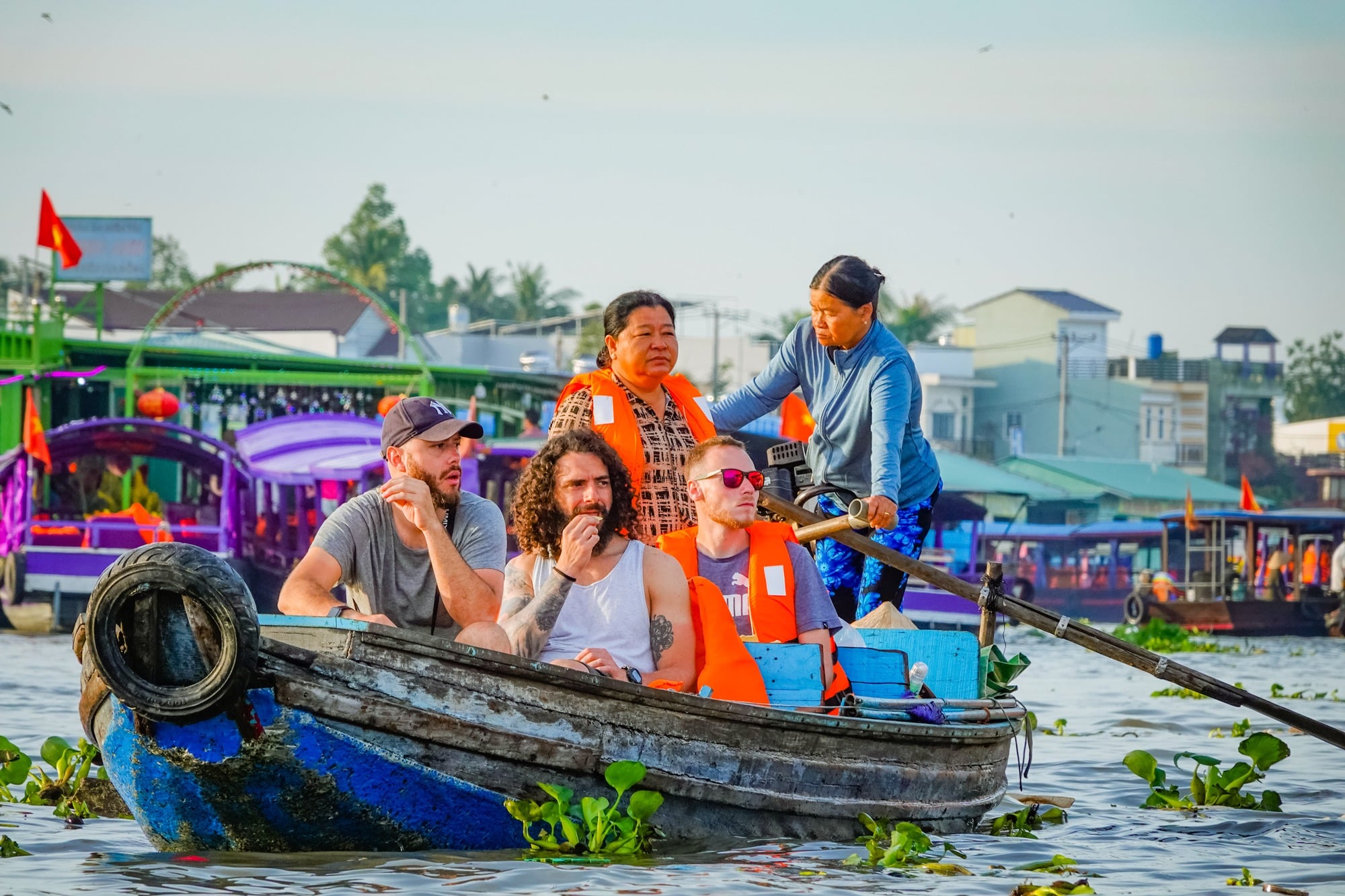
Foreign tourists visit Cai Rang floating market, Can Tho.
The promotional budget is only 1/50th of that of Thailand.
Before the pandemic, the Vietnam National Administration of Tourism participated in an average of 20 major international trade fairs annually, such as Travex, ITB (Germany), MITT (Russia), and Jata (Japan). It organized 10-15 tourism delegations for familiarization and marketing purposes (famtrips, presstrips) to introduce Vietnam 's outstanding tourist destinations and services, and conducted over 20 roadshows in key overseas markets. Domestically, localities also actively organized numerous events to attract tourists from around the world. After the pandemic, Vietnam's tourism promotion and marketing activities have been significantly upgraded in scale and methods, such as actively showcasing Vietnam on renowned international television channels and promoting tourism through film and cuisine.
However, a leader of the Vietnam National Administration of Tourism acknowledged that a major difficulty in promoting Vietnamese tourism is funding. Vietnam 's tourism promotion budget is only $2 million USD per year, while other countries in the region such as Thailand spend approximately $86 million USD, Malaysia around $130 million USD, and Singapore $100 million USD. To address this funding issue, at the end of 2018, the Prime Minister issued a decision to establish a Tourism Development Support Fund, but to date, the fund has not yet established its organizational structure or become operational. The model has never been implemented before, so there are difficulties in terms of personnel, organizational structure, and mechanisms.
International visitors to Vietnam decreased in May.
According to recently released data from the General Statistics Office, the number of international visitors to Vietnam in May was estimated at 916,300, a decrease of 6.9% compared to the previous month. In the first five months of 2023, Vietnam welcomed nearly 4.6 million international visitors, 12.6 times more than the same period last year, but still only 63% of the figure for the same period in 2019, before the pandemic. Revenue from accommodation and food services in the country increased by 22.1% in the past five months, estimated at 268,300 billion VND; revenue from the travel and tourism sector increased by 89.4%, estimated at 11,600 billion VND due to several public holidays during the month.
Furthermore, Vietnam currently has only 3 overseas tourism representative offices (in Japan, South Korea, and the UK), while Thailand already has 29 offices across 3 major continents, including 18 in Asia, 8 in Europe, and 3 in North America; Malaysia has 35 overseas tourism representative offices; Singapore has 23 offices; and South Korea has 31 offices.
"In tourism promotion, the first task is to target, penetrate, and exploit the market. Having representative offices in these markets is crucial. However, for various reasons, Vietnam 's tourism promotion offices in these markets are still very limited. This is also one of the major disadvantages for Vietnam 's tourism industry in the competition for destinations," a leader of the Vietnam National Administration of Tourism stated.
Mr. Cao Tri Dung, Chairman of the Da Nang Tourism Association, believes that the issues of tourism promotion and marketing, and linkages between localities to create attractive new product systems, need to be decisively and quickly addressed to create momentum for Vietnamese tourism.
"The tourism industry has shown great determination, but one sector alone is not enough. Tourism wants to boost promotion, but the budget allocation is insufficient. Vietnam's annual tourism promotion budget is only about 1/50 of Thailand's. No matter how much effort is made, with such limited resources, the destination brand cannot rise quickly. Businesses are very hopeful that Decree 82 will lead to specific and strong policies from the Prime Minister, paving the way for ministries and sectors to quickly implement solutions to overcome difficulties for the tourism industry, in line with the goal of making tourism a key economic sector," Mr. Cao Tri Dung stated.
Source link

![[Photo] The General Secretary presents the title of Hero of the People's Armed Forces to the Navy.](https://vphoto.vietnam.vn/thumb/1200x675/vietnam/resource/IMAGE/2026/02/28/1772251730336_vna-potal-tong-bi-thu-to-lam-du-va-trao-danh-hieu-anh-hung-llvt-nhan-dan-cho-quan-chung-hai-quan-8612073-jpg.webp)



















































Comment (0)