

To rapidly increase the supply of social housing and affordable housing, the first thing to do is to create a clean land fund for construction.
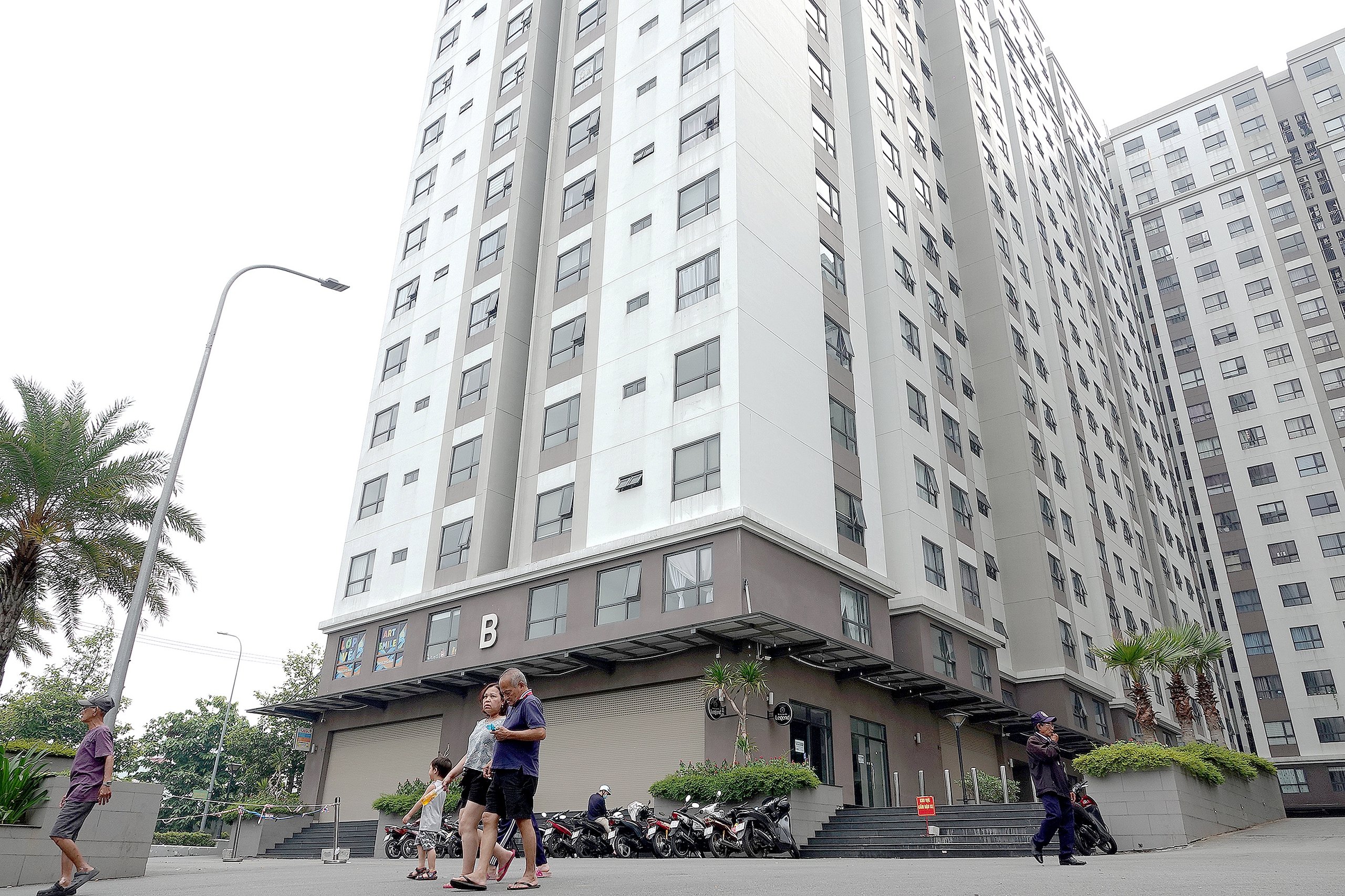
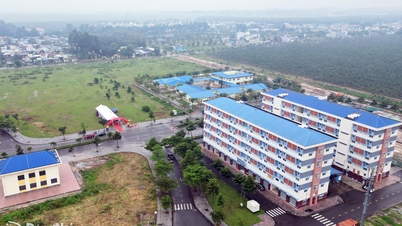
The Green River project is an apartment complex built as an integrated model, comprising social housing (block B) and commercial units (block A), located on Pham The Hien Street, Ward 6, District 8, Ho Chi Minh City - Photo: TTD
The lengthy procedures generate many costs, so besides clean land (where there is clean land, there will be houses), businesses participating in creating a "new player" in the real estate market believe that the government easing procedures is like giving money, reducing investment costs. This is a condition for lowering apartment prices.
With cleared land, apartment prices will decrease.
Commenting on the issue, Mr. Nguyen Huu Duong, chairman of Hoa Binh Group, stated his view: To develop social housing, the most important thing is that localities must properly implement the Housing Law.
That means every year, the People's Committees of provinces and cities must allocate budgets to clear land and create clean land for social housing projects, then organize bidding to select investors for these projects. To build social housing, you first need land to build on, and only after the houses are built can you sell them.
According to Mr. Duong, Hanoi has implemented five concentrated social housing projects in recent years. The cost of land clearance alone to create land for these five concentrated social housing projects is approximately 12,350 billion VND. However, from 2021 to the present, the city has only allocated 47 billion VND for land clearance, making it very difficult to secure clean land.
Mr. Duong proposed that if the city lacks funds for land clearance for social housing projects, there should be a mechanism allowing businesses to advance funds for land clearance, which would then be deducted from their taxes.
"Since land is managed by local authorities, there needs to be a mechanism to facilitate businesses' access to land for housing construction," Mr. Duong emphasized.
Looking at it from a broader perspective, Mr. Le Huu Nghia, General Director of Le Thanh Company (one of the early investors involved in building rental housing in Ho Chi Minh City), believes that a mechanism for allocating budget funds is needed to create a national housing fund.
According to Mr. Nghia, regarding capital for the development of social housing and affordable housing, we have long relied on bank loans. However, now that a national housing fund is being established, there needs to be a mechanism to allocate a portion of the capital to the national housing fund from the state budget.
Every year, the country spends hundreds of thousands of billions of dong on public investment, so a portion of that capital should be allocated to the national housing fund to achieve the goal of providing housing and social security for the people. When funds are available, the national housing fund can be used to subsidize part of the interest on loans for purchasing social housing for homebuyers.
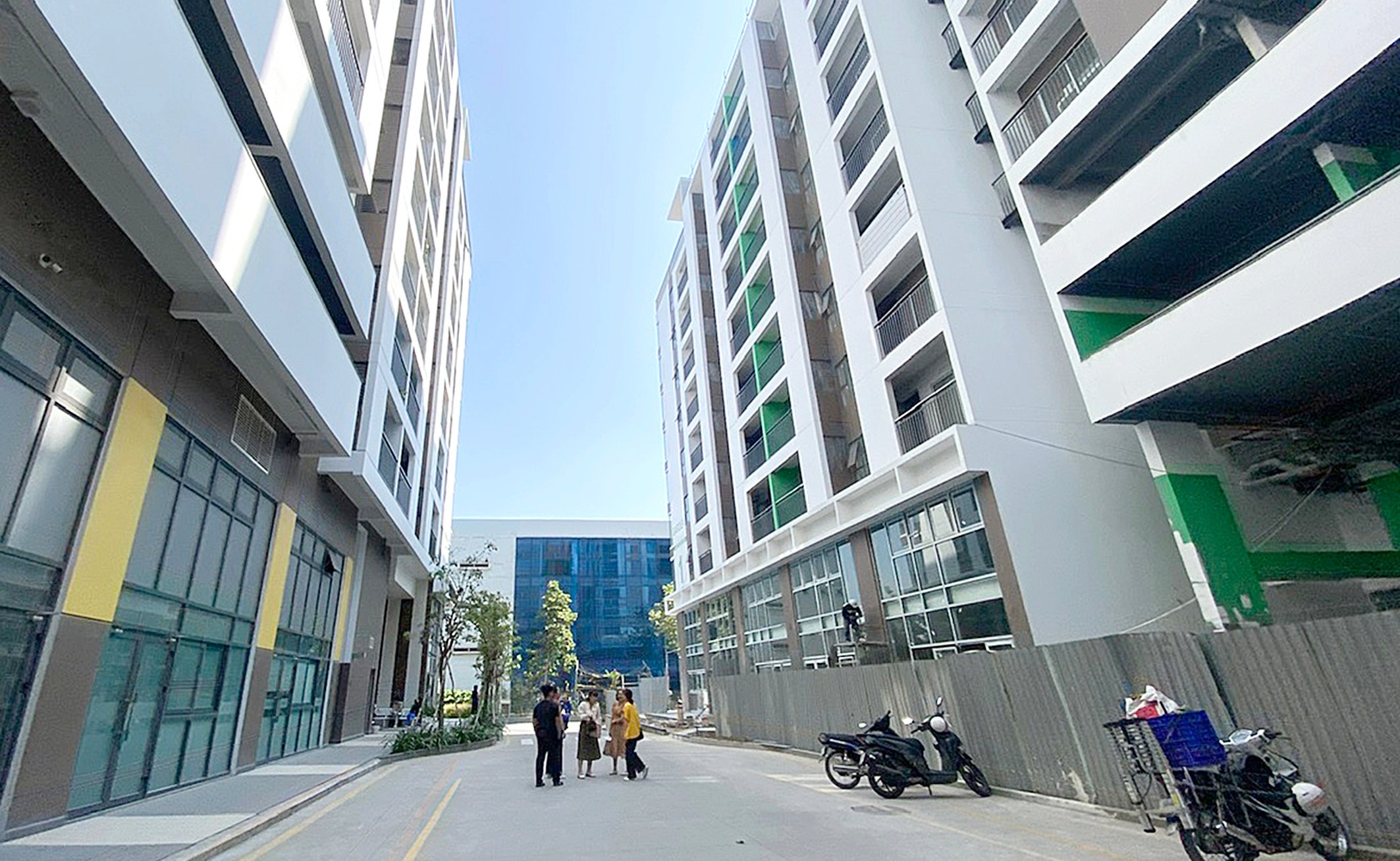
Residents visit the newly completed Thu Thiem Green House social housing complex - Photo: TU TRUNG
The 5-year procedure has been reduced to 1 year, that's fantastic!
Mr. Le Huu Nghia believes that in order to have affordable housing, it is necessary to determine the main costs involved in building a house, such as land costs, construction costs, and loan interest costs.
In particular, the basic construction costs between social housing and commercial housing do not differ significantly.
To reduce costs, one could adjust the quality of interior furnishings and equipment or apply new technologies, but the price reduction would not be significant. Regarding land costs, according to Mr. Nghia, only when the State has clean land available for businesses to develop will the price be affordable.
However, with regulations stipulating compensation at market value, even if the State takes over the land acquisition or businesses negotiate, it is difficult to obtain land at a low price.
Therefore, the biggest support for reducing housing costs is removing legal and institutional obstacles. The government needs to reform mechanisms, policies, and administrative procedures to help businesses build social housing projects get approved as quickly as possible.
Currently, a project takes 4-5 years to complete, resulting in significant increases in interest costs, opportunity costs, and other expenses. If procedures were streamlined and streamlined, businesses could complete projects in just one year, significantly reducing costs and ultimately lowering housing prices. Removing legal obstacles would also lead to a more abundant supply of projects, increased market competition, and ultimately, improved housing quality and lower prices.
Furthermore, Mr. Nghia argued that if the same plot of land allows for 10 floors for both commercial and social housing projects, businesses will prioritize commercial development due to higher profits. Therefore, the State needs to offer incentives to increase the land use ratio to encourage businesses to participate in affordable social housing projects.
"The establishment of a national housing fund is expected by the business community to create a source of preferential loans for businesses as well as buyers of social housing."
"In addition to mechanisms for mobilizing capital, the State also needs to consider allocating budget funds to create preferential loan packages for investors and homebuyers," Mr. Nghia suggested.
Source: https://tuoitre.vn/go-vuong-thu-tuc-con-hon-cho-tien-20250309083110708.htm

































































































Comment (0)