

This is a momentous historical event, marking the victorious end of the arduous, sacrificial, but glorious and heroic resistance war against the French by the people of Hanoi in particular and the whole country in general.
A glorious milestone
According to historical records, from King Ly Thai To's "Decree on Relocating the Capital" in 1010 to the present day, Thang Long - Hanoi has witnessed countless historical changes. The people and soldiers of Hanoi, generation after generation, have diligently worked, bravely fought, and created a glorious civilization.
Throughout its glorious history, Thang Long - Hanoi has endured more than 10 wars against foreign invaders, all ending in triumph. Among these, the Liberation Day of the Capital on October 10, 1954, is one of the most brilliant milestones. It not only marks the victory of a small nation against a leading colonial power in the world , but also ushers in a new era of the Ho Chi Minh era in the development of Thang Long - Hanoi.
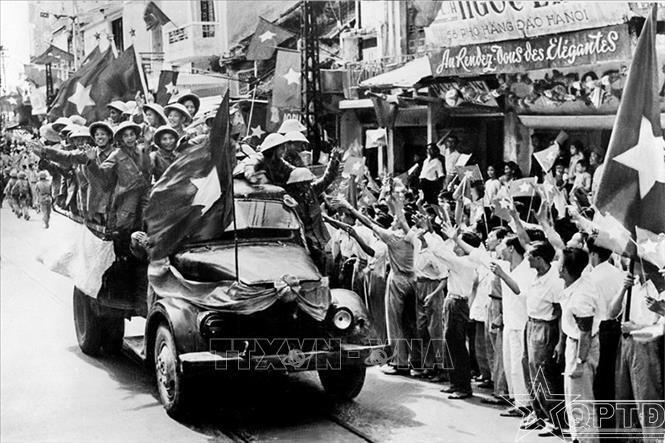
According to surviving documents, after the Geneva Accords were signed, the French army was forced to withdraw from Hanoi, and troops from the Viet Bac War Zone and the battlefields of the Northern Delta advanced to take over the capital. On the morning of October 10, 1954, the City Military and Political Committee and army units including infantry, artillery, anti-aircraft, and mechanized units, divided into several large columns, launched a historic march into Hanoi.
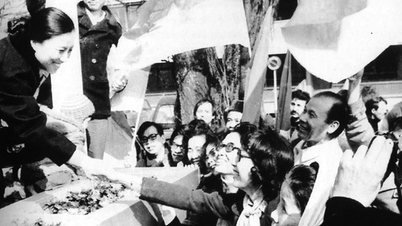
At 3 PM that same day, after a long siren sounded at the Grand Theatre, hundreds of thousands of Hanoi residents and armed forces personnel neatly attended the flag-raising ceremony organized by the Military-Political Committee at the Flagpole Stadium. Following the ceremony, Chairman of the Military-Political Committee Vuong Thua Vu respectfully read President Ho Chi Minh 's appeal to the people of the capital on Liberation Day.
The takeover of the capital was a resounding success. We safely and quickly acquired 129 public offices, factories, hospitals, and schools, including military positions and important government agencies. People's lives remained normal and stable. Electricity, water, and transportation services operated smoothly and efficiently; political security and social order were well maintained; and schools, hospitals, cultural institutions, and the press continued to operate normally under government management.
The Liberation Day of Hanoi marks a crucial turning point, affirming the complete victory of our army and people in the resistance war against French colonial aggression. It also ushers in a new era in the thousand-year history of Thang Long - Dong Do - Hanoi.
Hanoi consistently maintains its growth momentum.
Immediately after taking over the capital, the Hanoi Party Committee and government led the people in quickly stabilizing the situation and embarking on the restoration and renovation of the city. Just one year later, Hanoi completed land reform, a fundamental strategic task of the national democratic revolution.
During the years of resistance against American imperialism, hundreds of thousands of people from the capital city enlisted to fight on battlefields across the country. In the rear, Hanoi became a major economic center of the socialist North, providing support to the front lines with the motto "not a single grain of rice will be lacking, not a single soldier will be lacking."
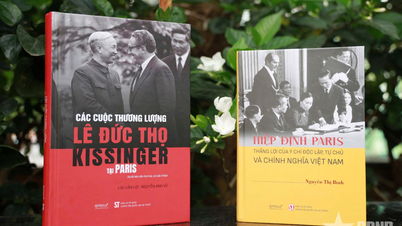
Even more proudly, Hanoi, along with other localities, under the leadership of the Party, created an "air Dien Bien Phu" in December 1972, forcing the US imperialists to return to the negotiating table and sign the Paris Agreement, ending the war and restoring peace in Vietnam (January 27, 1973). This was an important prerequisite for the whole country to achieve the Great Victory of Spring 1975, reunifying the nation.
After the reunification of the country, Hanoi became a major construction site, building and developing the economy, culture, and society, and improving the lives of the people. In particular, by thoroughly understanding and creatively applying the Party's reform guidelines, the Hanoi City Party Committee formulated socio-economic development policies suitable to the local reality, determined to reform the management mechanism, develop a multi-sector commodity economy operating under a market mechanism with state management in accordance with socialist orientation.
In particular, implementing Resolution No. 15/2008/QH12 of the 12th National Assembly, from August 1, 2008, the administrative boundaries of Hanoi were officially adjusted and expanded. This expansion of administrative boundaries is a significant change, bringing new stature, new opportunities, and a new face to the capital city. Over the past 16 years, Hanoi has continued to be a leading example on all fronts, achieving outstanding accomplishments and making a significant contribution to the overall development of the country.
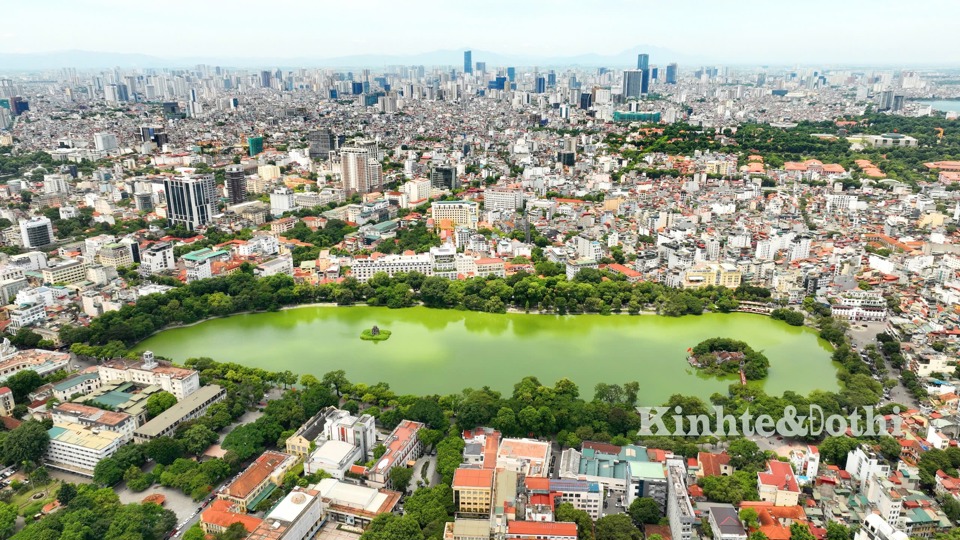
Over the years, Hanoi has consistently maintained relatively strong growth and made a positive contribution to national growth. Specifically, in the first six months of 2024, the Gross Regional Domestic Product (GRDP) is estimated to have increased by 6.0% (compared to a 5.97% increase in the same period last year); total state budget revenue is estimated to have reached 61.7% of the projected target (a 12.5% increase compared to the same period last year); export turnover increased by 8.8% (compared to a 2.7% decrease in the same period last year); and social development investment capital increased by 9.55% (compared to a 9.0% increase in the same period last year). Significant progress has been made in building new rural areas. To date, Hanoi has 18 out of 18 districts and towns (100%) meeting the new rural area standards; 382 out of 382 communes have met the new rural area standards, 186 communes have met the advanced new rural area standards, and 68 communes have met the model new rural area standards.
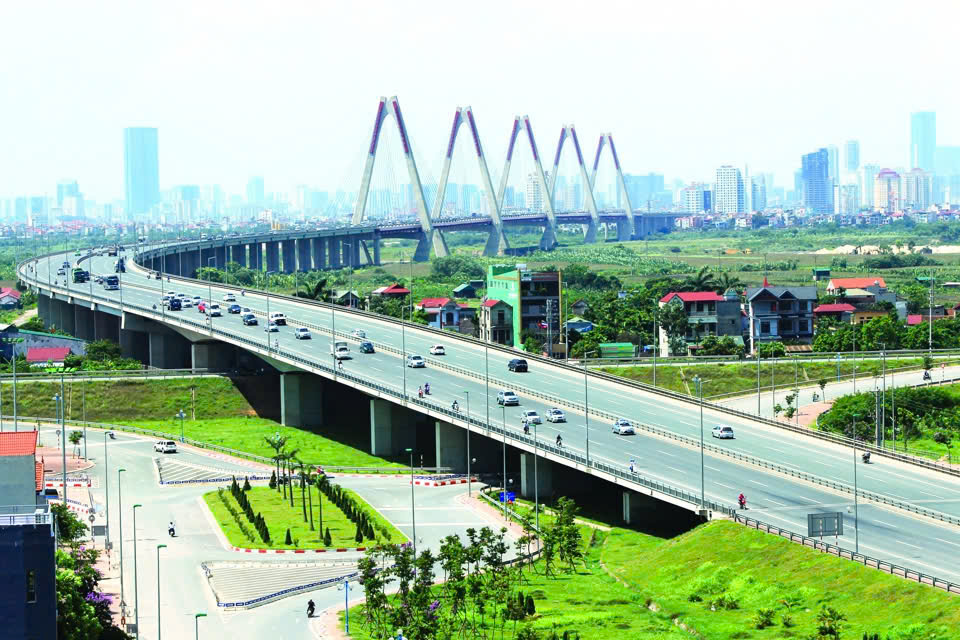
Furthermore, Hanoi has simultaneously focused on developing both its economy and its culture and society, including a dedicated section on cultural development. Hanoi has invested in, preserved, and restored over 5,000 historical relics. Its education sector ranks first in the country. In terms of infrastructure investment connecting the Capital Region, Hanoi has implemented the Capital Region Ring Road 4 construction project and parallel roads to enhance connectivity with other provinces and cities.
In particular, on June 28, 2024, the National Assembly passed the amended Law on the Capital City, effective from January 1, 2025, and provided feedback on two major planning documents: the general planning for the construction of the Capital City until 2030 and a vision to 2050; and the revised general planning for the construction of the Capital City until 2045, with a vision to 2065. These two plans will help shape the spatial layout, urban management, investment, and urban development of Hanoi in the future…
Simultaneously, along with the urbanization process, Hanoi has undergone a strong transformation by boosting investment in urban development and mobilizing diverse social resources. Many new urban area projects have been built in a comprehensive, civilized, and modern manner, creating a more expansive and modern urban development space.
Hanoi is also focusing on investing in and completing the necessary conditions to transform the districts of Dong Anh, Gia Lam, Thanh Tri, Hoai Duc, and Dan Phuong into urban districts. It will continue to promote the expansion of the urban area to the North, investing in synchronous infrastructure to gradually build Hanoi into a smart city in the near future. Regarding urban development orientations for the coming years, Hanoi will focus on effectively implementing the Hanoi Capital City Planning for the period 2021-2030, with a vision to 2050; and the revised Hanoi Capital City General Planning to 2045 and a vision to 2065 after approval.
It is clear that, with the specific, focused, and targeted solutions identified by Hanoi City, along with the unity and solidarity of the entire political system and the people, the capital city will have new momentum, creating an important foundation for successfully achieving political goals and socio-economic development in the coming years. This will contribute to building a civilized, prosperous, and beautiful Hanoi, worthy of its status as the capital – the heart of the country.
Source: https://kinhtedothi.vn/sau-70-nam-giai-phong-thu-do-ha-noi-dat-nhung-buoc-phat-trien-manh-me.html



![[Image] National Assembly discusses the implementation of the socio-economic development plan.](https://vphoto.vietnam.vn/thumb/1200x675/vietnam/resource/IMAGE/2026/04/20/1776696707422_ndo_br_img-20260420-185419-jpg.webp)

![[Photo] General Secretary and President To Lam meets with National Assembly delegates from ethnic minorities.](https://vphoto.vietnam.vn/thumb/1200x675/vietnam/resource/IMAGE/2026/04/20/1776696701056_a1-bnd-8331-3342-jpg.webp)











































































Comment (0)