

The health station acts as an "extension" of the higher-level hospital.
Hanoi currently has 126 commune and ward health stations. Health points at the old station locations are still maintained to ensure uninterrupted access to services for the people. However, changes in administrative boundaries and management structure have led to significant adjustments in personnel and operational methods.
A notable innovation is that Hanoi's health sector is implementing a model where each health station receives professional support from doctors at higher levels. Central hospitals and the health department are implementing training plans, transferring technology, conducting remote consultations, and sending doctors to work directly at the facilities.

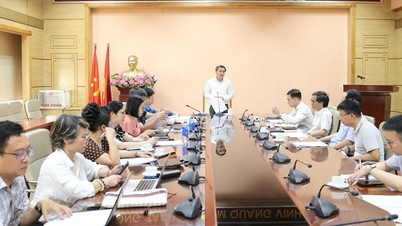
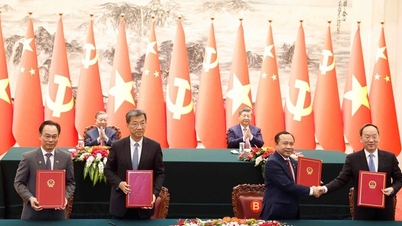
Representatives from Hanoi hospitals and the Viet Hung Ward Health Station signed a cooperation agreement in the presence of the Director of the Hanoi Department of Health (third from the right, back row). Photo: VN.
Therefore, health stations are no longer simply places for measuring blood pressure and dispensing common medications, but are gradually becoming an "extension" of the healthcare system. This change is quite evident at the Tay Ho Ward Health Station.
Following the implementation of the two-tiered local government system, the health station's medical examination and treatment activities not only remained uninterrupted but also grew. On average, the station receives approximately 5,000–6,000 patients per month, a significant increase compared to previous years.
In addition to providing medical services covered by health insurance, the station also operates a Methadone clinic serving 330–350 patients per day, and manages 800–1,000 patients with tuberculosis, HIV, and mental illnesses each month.
To meet the demand for on-site examinations, the station maintains close ties with higher-level hospitals such as Hanoi Heart Hospital, Saint Paul General Hospital, and Dong Da Hospital for remote consultations and the implementation of specialized support programs.
Ms. Bui Thi Dung, a patient who has been receiving treatment for hypertension and dyslipidemia for many years at the clinic, said that she only spends about 30 minutes each month for check-ups and medication. "I'm not worried about the merger; I still have regular check-ups and receive all my medication," she shared.
Hospitals in the local community: Changing healthcare habits.
While the Tay Ho Ward Health Station demonstrated rapid adaptability, the Vinh Hung Ward Health Station opened up a path for deeper cooperation between higher-level and local healthcare facilities. With over 80,000 residents, not including those from neighboring areas who come to live and work, the demand for primary healthcare in Vinh Hung is very high. Previously, many residents bypassed the local health station and went directly to higher-level hospitals, even for illnesses that could have been treated there.
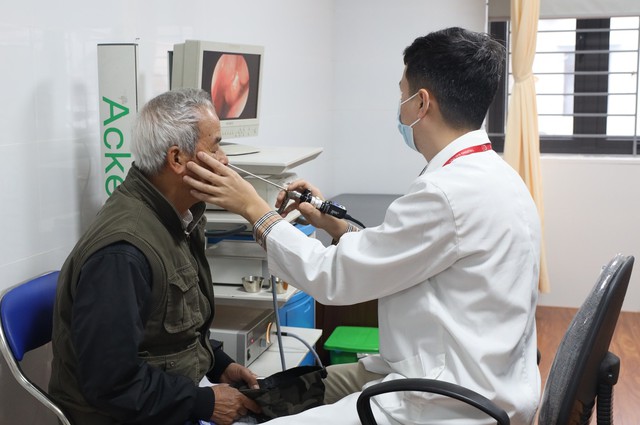
Hanoi Medical University Hospital has invested in good facilities and a team of experienced doctors to work at the Vinh Hung Ward Health Station.
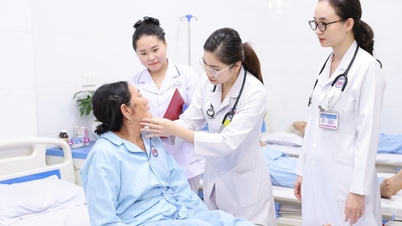
With the participation of Hanoi Medical University Hospital, a significant transformation has taken place at the ward's health station. Hanoi Medical University Hospital has established a clinic right at the station, sent specialist doctors to provide direct examinations, and invested in a comprehensive system of diagnostic imaging and laboratory equipment. Mr. Nguyen Dinh Hoa (68 years old) said that previously he had to go to higher-level hospitals for cardiovascular examinations. Now, being examined by doctors from Hanoi Medical University Hospital right at the ward, he is "very happy" because he receives thorough advice without having to travel far.
Associate Professor Dr. Nguyen Lan Hieu, Director of Hanoi Medical University Hospital, believes that if professional expertise is strengthened in the right direction, many diseases can be detected early and treated right at commune and ward health stations. According to him, investment in health stations should not only focus on building new facilities or renovating existing ones, but more importantly, on training personnel and assigning professional responsibilities tailored to the specific characteristics of each locality.
Dr. Nguyen Thi Hong Lua, Director of the Vinh Hung Ward Health Station, said that the direct visits by doctors from higher-level hospitals have contributed to changing people's mindsets, helping them trust the grassroots level more. Mr. Pham Hai Binh, Chairman of the Vinh Hung Ward People's Committee, assessed that the cooperation model brings double benefits: people have access to high-quality medical services right where they live, while the grassroots medical staff receive training and technology transfer, gradually improving their capacity for early detection and initial treatment.
Focus on prevention and management of chronic diseases.
A key shift in the operational reform of health centers in Hanoi is the move from a focus on "treatment" to "prevention".
The health station not only provides treatment but also promotes early screening for non-communicable diseases such as hypertension, diabetes, chronic obstructive pulmonary disease, and cancer, while also offering nutritional advice and guidance on healthy lifestyles.
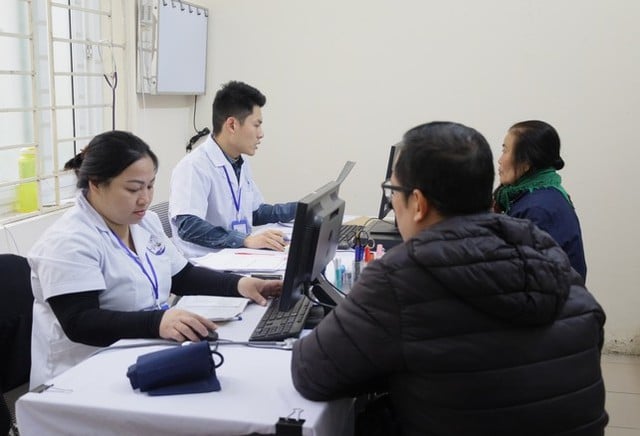
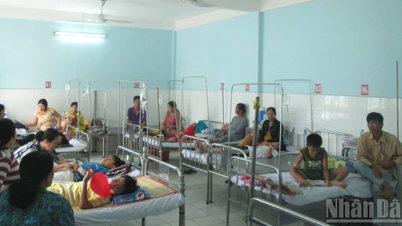
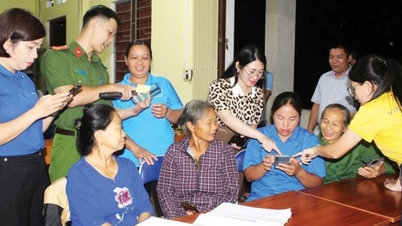
People receive medical treatment at the health station. Photo: VN.
Me Linh General Hospital is one of the units actively supporting commune health stations through continuous training, hands-on technology transfer, consultations on cases beyond its expertise, and coordinated management of chronic diseases in the community. The hospital has signed comprehensive professional support agreements with three commune health stations: Tien Thang, Yen Lang, and Me Linh.
The hospital will periodically send experienced doctors to work directly at the health station, provide clinical practice guidance, transfer technology, and organize training sessions to update new treatment protocols for the medical staff at the commune level. Dr. Tran Quang Trinh, Director of Me Linh General Hospital, emphasized that the signing of the professional support agreement aims not only to transfer technology but also to build trust so that people choose to seek medical examination and treatment locally. "The responsibility of the higher-level hospital does not stop at treatment but must also accompany the grassroots level, standardize procedures, and help commune health workers have enough capacity and confidence to provide primary healthcare for the people," he said.
According to Dr. Nguyen Trong Dien, Director of the Hanoi Department of Health, the biggest challenge for primary healthcare today is the shortage of doctors and limitations in expertise. Bringing doctors from central and city-level facilities to support healthcare will help people access modern services right in their local areas, and enable early disease detection at the grassroots level. He emphasized that primary healthcare focuses on initial diagnosis, laboratory testing, and diagnostic imaging. Advanced techniques requiring operating rooms do not need to be implemented there. Serious cases will be promptly referred to higher-level facilities.
Despite achieving many positive results, the health station system still faces numerous challenges. Many stations, especially in urban areas, have limited space and lack equipment. The workload has increased due to the need to manage additional chronic diseases, substance addiction, and HIV/AIDS, while human resources remain limited.
The commune health station is under the comprehensive management of the commune People's Committee and the professional management of the Department of Health, requiring a flexible coordination mechanism to avoid overlapping responsibilities.
The Hanoi Department of Health has set a clear direction: building a smart and modern grassroots healthcare network; reducing administrative procedures; ensuring convenient access to health insurance benefits; and developing the 115 emergency service system.
When health centers are competent and build trust, people will proactively seek early medical check-ups and prevent diseases early. In that case, the grassroots healthcare system will not only be a place to dispense medicine but will truly become a "gatekeeper" protecting public health, in line with Hanoi's goal in reforming its grassroots healthcare system.
Source: https://suckhoedoisong.vn/ha-noi-lam-moi-tram-y-te-169260225171534269.htm
![[Photo] Capturing each moment at the "People We Meet" photography exhibition.](https://vphoto.vietnam.vn/thumb/1200x675/vietnam/resource/IMAGE/2026/04/15/1776245695648_1-8944-jpg.webp)
![[Image] Current status of the land area of over 5.5 hectares that Ho Chi Minh City is considering reclaiming.](https://vphoto.vietnam.vn/thumb/1200x675/vietnam/resource/IMAGE/2026/04/15/1776245690095_1-3102-8409-jpg.webp)
![[Photo] General Secretary and President To Lam and his wife, along with General Secretary and President Xi Jinping and his wife, attending a tea party.](https://vphoto.vietnam.vn/thumb/1200x675/vietnam/resource/IMAGE/2026/04/15/1776245678527_vna-potal-tong-bi-thu-chu-tich-nuoc-to-lam-va-phu-nhan-cung-tong-bi-thu-chu-tich-nuoc-tap-can-binh-va-phu-nhan-du-tiec-tra-8702812-9829-jpg.webp)
![[Image] Overview of the Tam Trinh-Giai Phong connecting road section after land clearance is completed.](https://vphoto.vietnam.vn/thumb/1200x675/vietnam/resource/IMAGE/2026/04/15/1776245679644_ndo_br_dji-0195-jpg.webp)

![[Photo] General Secretary and President To Lam and General Secretary and President Xi Jinping meet with youth from both countries.](https://vphoto.vietnam.vn/thumb/1200x675/vietnam/resource/IMAGE/2026/04/15/1776245687540_vna-potal-tong-bi-thu-chu-tich-nuoc-to-lam-va-tong-bi-thu-chu-tich-nuoc-tap-can-binh-gap-go-thanh-nien-hai-nuoc-8702371-jpg.webp)








































































Comment (0)