

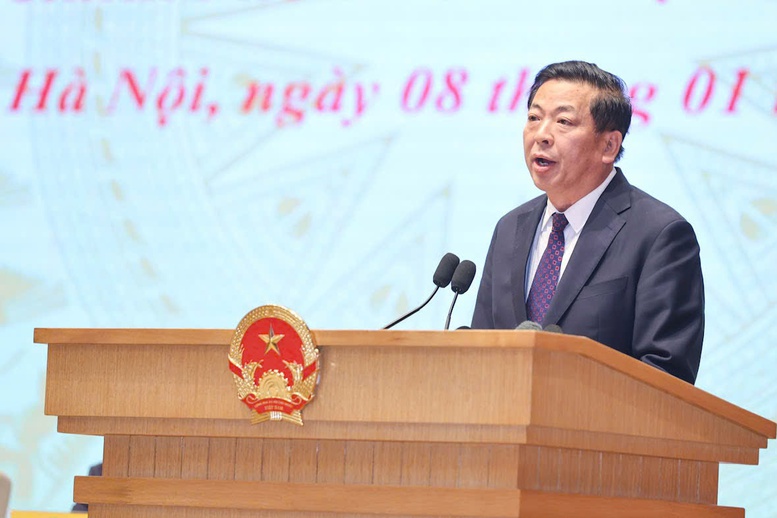
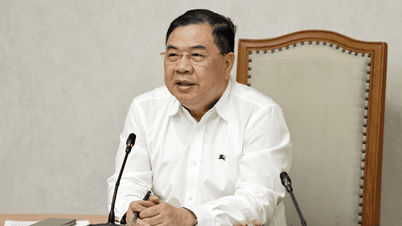
Minister Tran Hong Minh: In 2025, many key tasks were implemented, completed, and achieved important results in the fields of: road, aviation, maritime, inland waterway, railway, housing, and urban development - Photo: VGP/Nhat Bac
At the Government and local authorities' conference summarizing the work of 2025 and outlining tasks for 2026, held on January 8th, Minister of Construction Tran Hong Minh reported impressive figures: in 2025 alone, the country commenced and completed 564 projects, with a total investment exceeding 5.14 trillion VND. This is not only a quantitative achievement but also reflects the strategic depth in the national infrastructure development thinking.
Infrastructure – one of the three strategic breakthroughs.
The Resolution of the 13th National Congress of the Communist Party of Vietnam identifies the development of a synchronous and modern infrastructure system as one of the three strategic breakthroughs. In this context, transportation infrastructure plays a "backbone" role, creating a foundation for economic growth, regional connectivity, and enhancing national competitiveness. The focus is placed on key national transportation infrastructure projects, especially the fundamental goal of completing the Eastern North-South Expressway, from Cao Bang to Ca Mau.
During the period 2021–2025, the Party, the National Assembly , and the Government have allocated significant resources to the transportation and construction sectors. A series of resolutions and action programs have been issued synchronously, aiming to have approximately 3,000 km of expressways nationwide by the end of 2025. This is a challenging goal considering the starting point in 2020, when Vietnam only had 1,163 km of expressways.
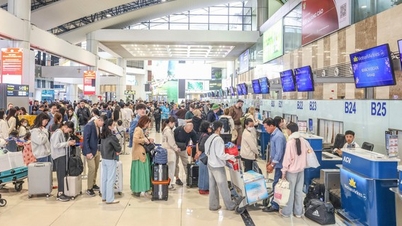
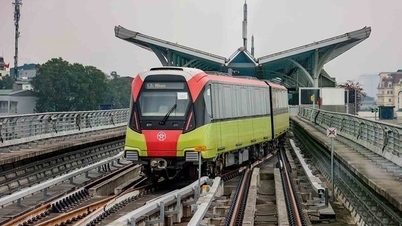
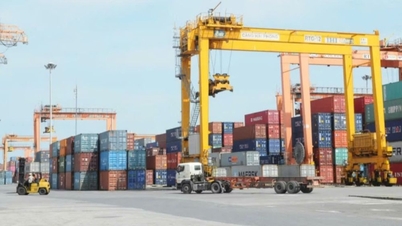
According to Minister Tran Hong Minh, 2025 will see the implementation and completion of many key tasks across most sectors: road, aviation, maritime, inland waterway, railway, housing, and urban development. A series of large-scale national and regional projects have become new symbols of Vietnam's infrastructure: Long Thanh International Airport; Terminal 3 at Tan Son Nhat International Airport; Terminal 2 at Noi Bai Airport; strategic seaports such as Lach Huyen (Hai Phong), Cai Mep – Thi Vai; the Ben Thanh – Suoi Tien urban railway line...
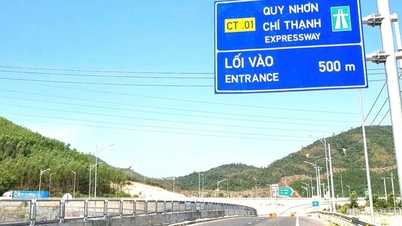
In particular, the completion, commissioning, and technical opening of 3,345 km of main expressways, along with 458 interchanges and access roads, has exceeded the government's target of 3,000 km. In addition, 1,586.5 km of national highways and 1,701 km of coastal roads have been completed, creating an increasingly complete and multimodal transportation network.
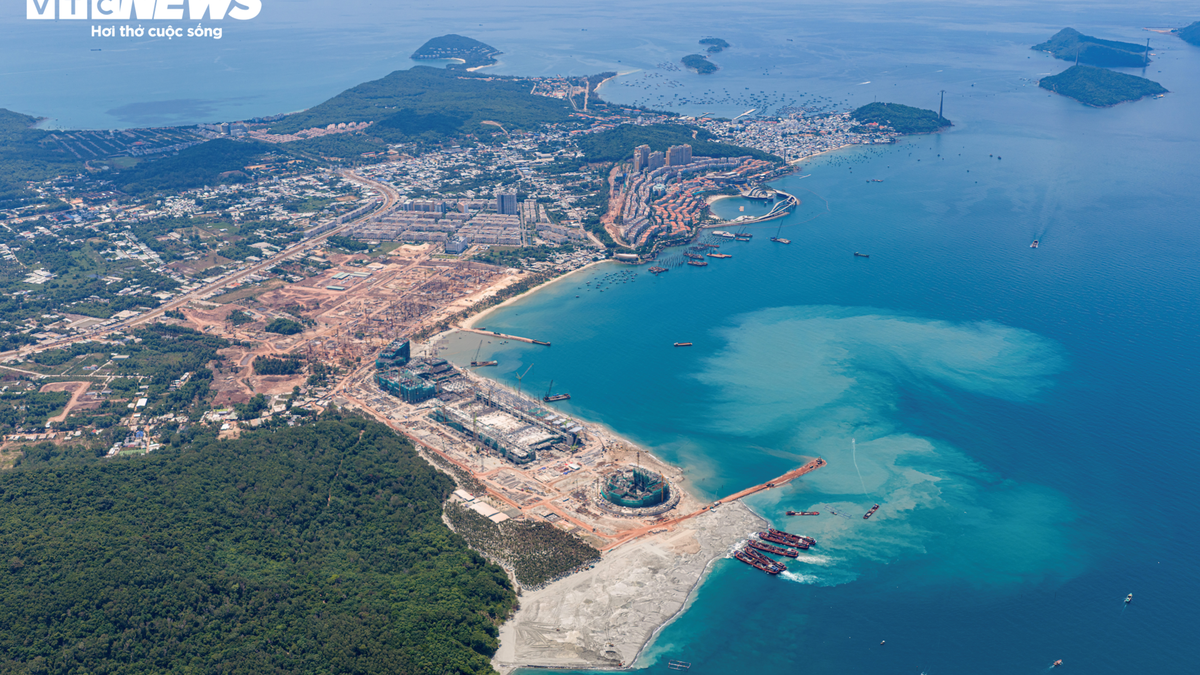
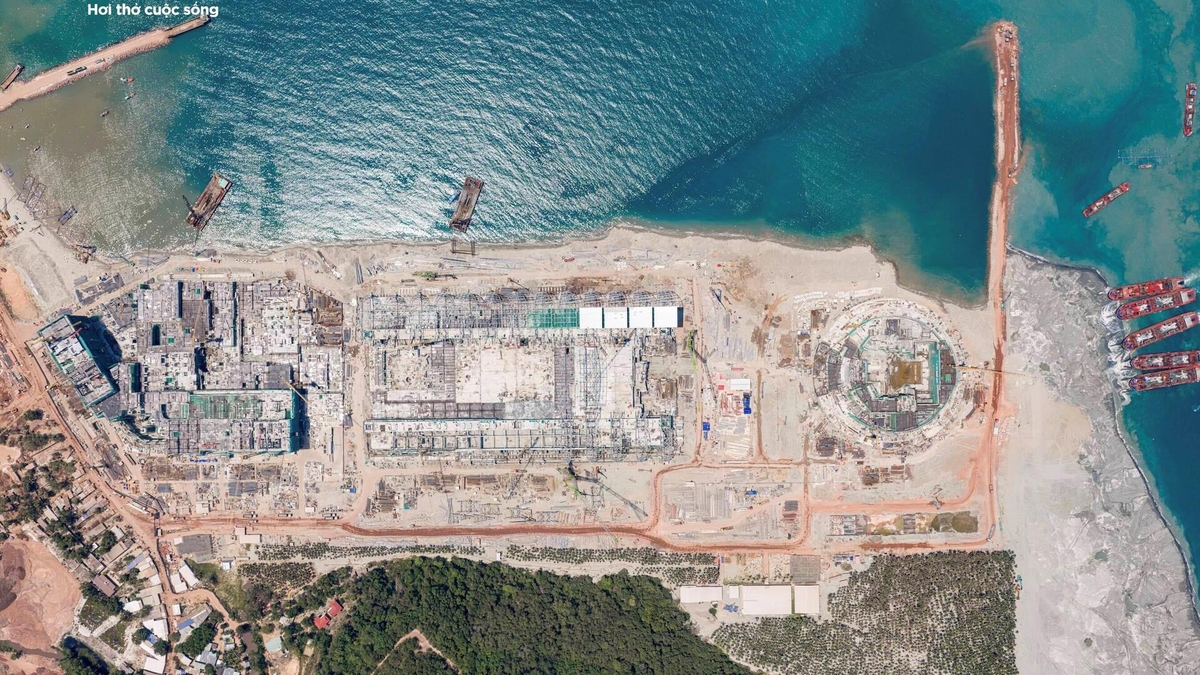
In 2025 alone, the commencement and completion of 564 projects with a total investment of over 5.14 trillion VND created a strong impetus for economic growth, while opening up new development opportunities for regions and inter-regions. Many strategic projects were implemented, such as the Ca Mau – Dat Mui expressway, the road to Hon Khoai port, and the Lao Cai – Hanoi – Hai Phong railway line. Simultaneously, important procedures are being finalized to strive for the commencement of the North-South high-speed railway project by the end of 2026. In the aviation and port sectors, projects such as Phu Quoc International Airport, Hon Khoai dual-use general port, and the Red River scenic boulevard not only have economic significance but also contribute to shaping urban and tourism development in the long term.

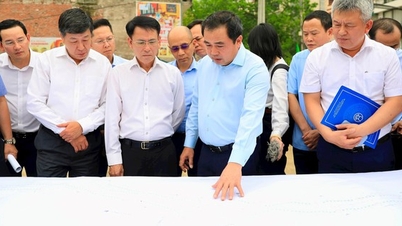
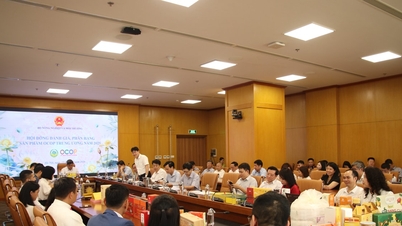
Delegates attending the Conference summarizing the work of 2025 and implementing the tasks for 2026 of the Government and local authorities, held on January 8th - Photo: VGP/Nhat Bac
Lessons learned
Based on the practical implementation of infrastructure projects in the 2021-2025 period, Minister Tran Hong Minh emphasized several lessons learned. First and foremost is the lesson about prioritizing resources; instead of investing in a scattered manner, it is necessary to focus on key national projects that are large-scale, have a ripple effect, and can connect regions and inter-regions.
Furthermore, perfecting institutions and policies to promptly address bottlenecks in land clearance, construction materials, and investment procedures is a key factor. The National Assembly and the Government have issued many specific mechanisms; the Prime Minister directly supervises through the State Steering Committee for Key Projects and seven working groups led by Deputy Prime Ministers. The "500 Days and Nights to Complete 3,000 km of Expressway" emulation campaign has created a vibrant atmosphere of competition and spread a sense of responsibility throughout the entire system.
Another important lesson is to leverage the combined strength of the entire political system and the consensus of the people. The clear assignment of responsibilities, tasks, timelines, expected outcomes, and results has helped to limit shirking and passing the buck, thereby accelerating project progress.
Social housing – a pillar of sustainable social security.
Alongside infrastructure development, 2025 also marks a significant step forward in social housing policy. Minister Tran Hong Minh affirmed that providing housing for low-income earners and industrial zone workers is a major policy with profound humanitarian significance of the Party and the State.
A series of legal policies and specific mechanisms have been issued to remove obstacles and encourage the development of social housing. In 2025 alone, the National Assembly issued one resolution, the Government issued three decrees, and the Ministry of Construction issued two circulars, focusing on reforming administrative procedures, shifting from pre-approval to post-approval, and shortening project implementation time.
To date, the whole country has implemented the construction of 657,441 social housing units, of which 169,143 have been completed. In 2025 alone, 102,633 units were completed and an additional 95,630 units were started.
The achievements in 2025 will serve as the "starting point" for a new phase of development, with a long-term vision and great aspirations. Improving institutions, promoting decentralization and delegation of power, enhancing the role of leaders, and fostering a spirit of patriotic emulation will be the "key" for Vietnam to create a modern, sustainable infrastructure system serving the goal of national prosperity.
Son Hao
Source: https://baochinhphu.vn/ha-tang-but-toc-mo-khong-gian-phat-trien-moi-102260108134522306.htm





































































Comment (0)