


 |
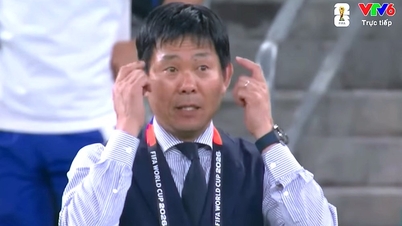
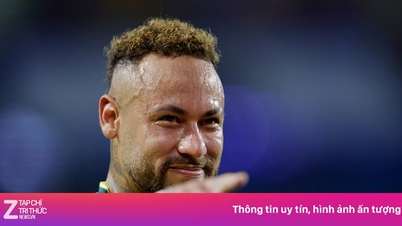
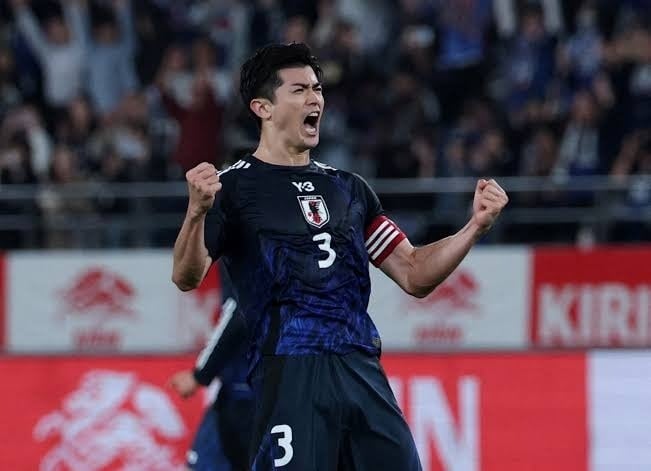
Japan is the leading Asian flagbearer at the 2026 World Cup . |
After a promising start with an unbeaten streak, Asian representatives are returning to familiar reality, largely playing the role of "underdogs" on the biggest stage in the world. However, behind this overall picture lies a very noteworthy divergence: while East Asian teams continue to assert their dominance, West and Central Asian representatives have been a major disappointment.
When West Asian football is nothing new
Before the 2026 World Cup begins, Asian teams are expected to make significant progress. The success of many teams in recent World Cups, especially Japan and South Korea's consistent progress beyond the group stage, has led fans to believe that the gap between Asia and the leading continents is gradually narrowing.
However, after two rounds of group stage matches, the reality is not very promising. Of the 9 Asian representatives participating in this year's tournament, as many as 5 teams are at the bottom of their groups: Qatar, Saudi Arabia, Jordan, Iraq, and Uzbekistan. This is a fairly high percentage compared to Africa, where 10 teams are participating but only South Africa and Tunisia are at the bottom of their groups.
Even though Tunisia is the only African team yet to earn a point, three Asian teams remain without any points after two rounds of matches: Jordan, Iraq, and Uzbekistan.
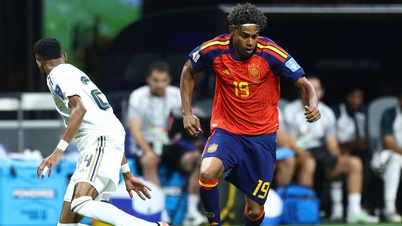
It's noteworthy that the most disappointing teams all come from West Asia and Central Asia. Among the Asian representatives at this World Cup, six are from this region: Iran, Saudi Arabia, Qatar, Jordan, Iraq, and Uzbekistan. After a total of 12 matches played, none of them have managed a single victory.


Iran is the most promising case, with two draws and currently sitting second in the group. Conversely, the remaining teams are all facing the risk of early elimination. This performance shows that West Asian football has yet to translate its advantages in physique, fitness, or financial resources into real competitiveness at the World Cup.
Over the years, football leagues in the Middle East have invested heavily in infrastructure, training, and naturalizing players. However, when competing on the world's biggest stage, these factors still seem insufficient to make a difference against opponents with better tactical foundations and organization.
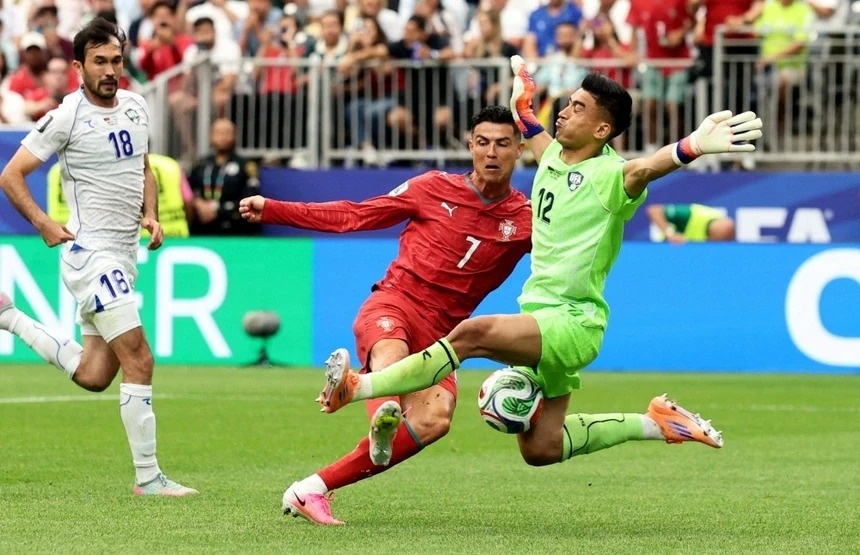 |
Uzbekistan just suffered a heavy defeat against Portugal. |
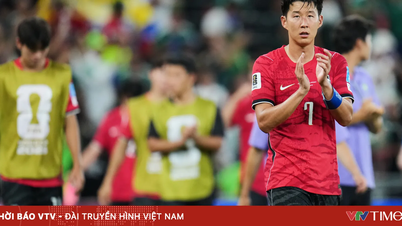
East Asia continues to prove it's the right path.
In contrast to the bleak picture of West Asia, the three Eastern representatives – Japan, South Korea, and Australia – are showing many positive signs. The journey of following the Eastern teams is made even more authentic thanks to VPBank being one of the partners accompanying Vietnam Television (VTV) in bringing the FIFA World Cup 2026 to Vietnam. Through this, the brand fulfills its mission of serving the audience, bringing the biggest football event on the planet to millions of Vietnamese fans.
After two matches, all three teams are second in their respective groups and have all secured at least one victory. More importantly, they hold their fate in their own hands in the race for a place in the knockout round. In the final round of matches, Japan will face Sweden, South Korea will play South Africa, and Australia will clash with Paraguay. A draw would be enough for all three teams to advance.
The success of East Asian teams is not surprising. This is the result of decades of football development with a very clear direction.
Both Japan and South Korea build their playing style on organization, tactical discipline, and teamwork. Their players receive rigorous training from a young age, possess strong tactical thinking, and maintain a high level of intensity. While they may not have the physical advantages of West Asian teams, they compensate with their ability to control the game, move intelligently, and adapt quickly to various opponents.



Australia, despite having a European-style physical foundation, is also a team that prioritizes system and tactical discipline. This helps them maintain consistent competitiveness in major tournaments. The contrast between the two regions highlights a thought-provoking reality: in modern football, tactical organization, game thinking, and quality training are increasingly more important than mere physical or athletic advantages.
From a Vietnamese perspective, this can be seen as a positive sign. Vietnamese people share more similarities in physical characteristics and football development with Japan or South Korea than with Middle Eastern countries. This means that the path Japan and South Korea are taking could be the most suitable model to emulate.
The 2026 World Cup may not be a successful tournament for Asian football in general. But what East Asian teams are showing demonstrates that the continent still has the right path to close the gap with the world. And if Vietnam perseveres in pursuing a development philosophy based on training, tactics, and organization, the opportunity to reach a higher level in the future is not at all far-fetched.
Source: https://znews.vn/hai-bo-mat-cua-bong-da-chau-a-post1662578.html