As the capital of Aichi Prefecture and the largest industrial center in the Chubu region (central Honshu, the largest island in central Japan), Nagoya has long held a special place in the economic landscape of the Land of the Rising Sun. While Kyoto is the former capital, a melting pot of Japan's historical and cultural traditions, Nagoya is considered the "industrial capital" of modern Japan – where the automotive industry generates billions of dollars annually and contributes to Japan's status as a global industrial powerhouse. However, behind this tough exterior, Nagoya still harbors a rich history and admirable cultural heritage, creating a unique and unmistakable identity.
From Samurai symbols to the sacred Atsuta Jingu shrine
We arrived in Nagoya during the last week of March, when spring was at its most beautiful. Cherry blossoms bloomed along the city's streets, their pink and white hues interspersed among parks, residential areas, and rows of townhouses. In the cool, temperate climate, the fatigue from our flight quickly dissipated. Before us was a Nagoya that harmoniously blended ancient traditions with modern industrial life – a gentle yet powerful fusion.

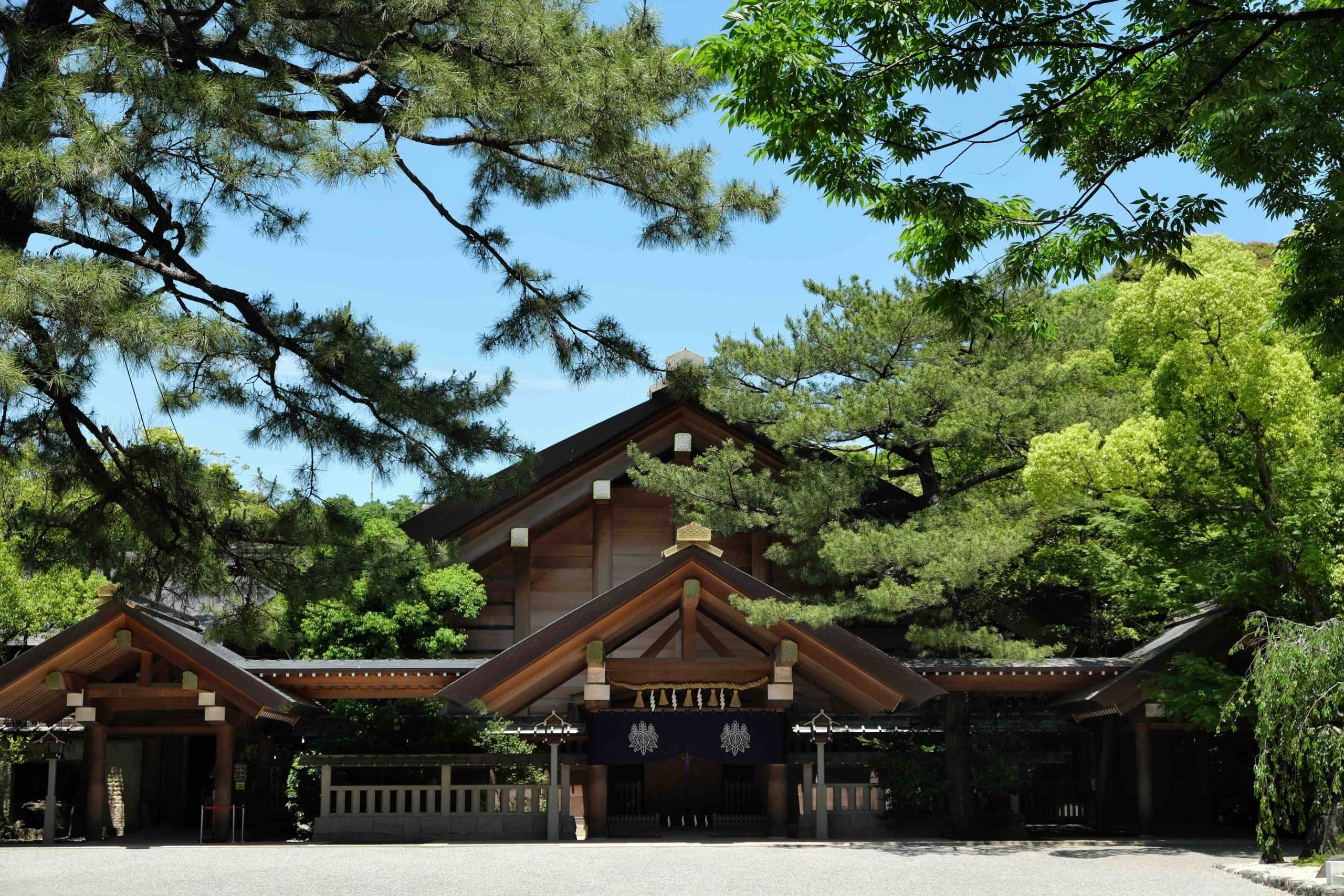
Atsuta Jingu is the most sacred temple in the Chubu region.
It's no exaggeration to say that Nagoya possesses two "precious swords": one is the sharp katana of the Samurai of the past, a symbol of the Bushido spirit; the other is the "precious sword" of automotive technology, which once helped Japan compete and rise to become a global export powerhouse.
The first stop on our journey is Atsuta Jingu Shrine – one of the most sacred shrines in the Chubu region. It houses the Kusanagi sword, one of the Three Sacred Treasures – the three supreme sacred artifacts of Japan, symbols of imperial power passed down through generations of emperors during coronation ceremonies. According to legend, this sword has divine origins from the sun goddess Amaterasu.
Atsuta Shrine is nestled amidst a lush, evergreen forest. Upon entering through the Torii gate, a profound silence envelops the space, creating a sacred and solemn atmosphere. It is not merely a place of worship, but also revered by the Japanese people as the "source of their soul." Shintoism – a blend of kami worship and reverence for nature – is clearly evident, reflecting a characteristic that has shaped the Japanese national spirit for thousands of years.
Nagoya Castle and the blooming season
You may also like

Hanoi and Japan are stepping up cooperation in the fields of green finance, infrastructure, and high technology.On the morning of July 2nd, Vu Dai Thang, Member of the Central Committee of the Communist Party of Vietnam, Deputy Secretary of the Hanoi City Party Committee, and Chairman of the Hanoi People's Committee, met and worked with Maeda Tadashi, Chairman of the Board of Directors of the Japan International Cooperation Bank (JBIC), and Ito Naoki, the Japanese Ambassador to Vietnam. In the heart of the city, Nagoya Castle – also known as Kinshachi Castle (Goldfish Castle) – stands majestically and imposingly. Built in the 17th century, it is one of the iconic structures of the Edo period, closely associated with the power of the Tokugawa Shogunate. A distinctive feature of the castle is the pair of gilded goldfish on the roof, symbolizing strength and prosperity.
Our visit to Nagoya coincided with the peak cherry blossom season (mankai) – the most important moment in Japanese hanami (flower viewing) culture. Under the spring sunshine, clusters of pure white blossoms with pink centers burst into vibrant bloom. Surrounded by over 1,000 cherry trees, Nagoya Castle has become one of the most beautiful cherry blossom viewing spots in the Chubu region. The combination of ancient architecture and the blooming forest creates a scene straight out of a postcard, both majestic and poetic.
Japan's automotive industry capital
Looking back at history, Japan was one of the earliest industrialized nations in Asia, based on a foundation of science and technology and a spirit of continuous innovation. Despite major upheavals, particularly the devastating effects of war, the country rose rapidly within a few decades, becoming one of the world's strongest economies. In this process, the automotive industry played a crucial role, bringing Japan's name to global prominence.
Toyota Museum of Industry and Technology
At the Toyota Commemorative Museum of Industry and Technology, we witnessed firsthand this transformation. From a region specializing in handicrafts and textiles, it has developed into a leading modern automobile manufacturing center in the world . The car models from various eras, along with automated production lines and precise robotic arms, demonstrate the seamless integration of traditional hard work and cutting-edge technology.
From Samurai swords to robotic arms in a mechanical workshop, it's been a long journey of effort, discipline, and aspiration. For visitors from Asia, especially Vietnam, this is not just a sightseeing trip but also an inspiration on the path to sustainable development.
Nagoya Cuisine and Flavors
Strengthening the friendship between Vietnam and the United States.On July 3rd, as part of the Pacific Partnership - Friends of the Pacific 2026 program, the U.S. Army Pacific delegation, led by Lieutenant General Joel Vowell, Deputy Commander of the U.S. Army Pacific, paid a courtesy visit to the Quang Tri Provincial Military Command. Our trip to Nagoya concluded with a culinary experience: Hitsumabushi – the region's famous grilled eel rice dish. For the Japanese, eel rice is a high-class dish, usually reserved for important occasions. Hitsumabushi can be enjoyed in three ways: plain, seasoned, and topped with dashi – a traditional broth. Each method offered a different layer of flavor, exceeding our expectations. Paired with a glass of spicy sake, the meal ended a long day with many beautiful memories.

famous eel rice dish
Nagoya stands out as a prime example of the harmonious blend of past and present. Beneath its dynamic industrial exterior lies a profound historical depth, a tranquil culture, and an enduring spirit of discipline. The glitz and glamour are merely superficial; the core values lie in preserving identity and adapting to the times. This balance creates a unique Nagoya: not as noisy as Tokyo, nor as ancient as Kyoto, but quiet and steadfast – where the samurai sword of the past and the industrial gears of the present operate in harmonious rhythm.
Source: https://heritagevietnamairlines.com/hai-thanh-guom-bau-cua-nagoya/