

 |
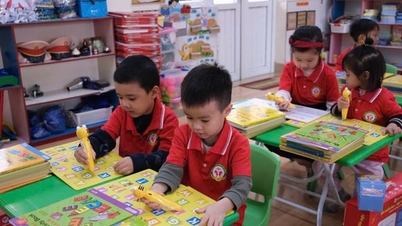
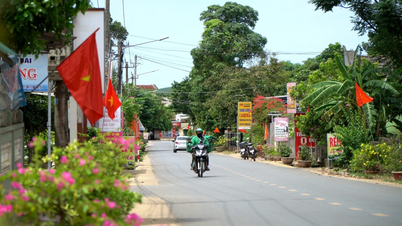
| The world has made significant progress in reducing child labor, but is also witnessing a reversal of global trends. (Illustrative image) |
This year's World Day Against Child Labour (June 12) marks the 25th anniversary of the adoption of the International Labour Organization (ILO) Convention No. 182 on the Worst Forms of Child Labour (1999). It is an opportunity to remind all stakeholders to improve the implementation of the two fundamental ILO Conventions on child labour: Convention No. 182 and Convention No. 138 on the Minimum Age for Employment (1973).
In recent years, the world has made significant progress in reducing child labor, but is also witnessing a reversal of global trends. With the adoption of the United Nations Sustainable Development Goal 8.7, the international community has committed to eliminating child labor in all its forms by 2025.
In Vietnam, according to statistics from the Department of Children, Ministry of Labour, Invalids and Social Affairs, approximately 1 million children under 17 years old are currently engaged in illegal labor, accounting for 5.3% of the total number of children nationwide. Of these, more than 500,000 children work in arduous, hazardous, and dangerous conditions. Among child laborers, only 45.2% continue their education, 52% have dropped out, and 2.8% have never attended school. These figures are concerning for policymakers and pose a significant challenge in ensuring children's rights in general and the rights of child laborers in particular.
Over the years, Vietnam has developed and refined legal regulations and implemented many comprehensive policies to protect children and reduce child labor. Children are a particularly important group in social welfare policies aimed at providing them with the best possible opportunities, especially educational opportunities, thereby contributing to preventing and reducing the rate of child labor in various sectors.
Based on this, many humane and long-term social programs and policies have been and are being applied to children nationwide. Notably, the National Program on Preventing and Reducing Illegal Child Labor for the period 2021-2025, with a vision to 2030, has been approved by the Prime Minister with three core objectives: preventing and detecting cases of illegal child labor; supporting and intervening for children involved in illegal labor and children at risk; and raising awareness about preventing and reducing child labor. The program aims to reduce the rate of child labor among children aged 5-17 to below 4.9% by 2025 and 4.5% by 2030.
To eliminate child labor, in addition to practical policies from the State, it requires community solidarity, decisive implementation of measures, and a strong emphasis on the role of families and society in preventing child labor.
Child labor is not just a problem in Vietnam; it's a global issue requiring all countries worldwide to work together to combat it. Countries need to implement coordinated policies to support national laws on child labor; international organizations, governments , trade unions, and employers need to work together to address the root causes, ensuring children enjoy their full rights and legitimate development.
With the deadline for Sustainable Development Goal 8.7 fast approaching, now more than ever, the world must work together to accelerate action toward ending child labor in all its forms for the future of the children themselves, as well as for the sustainable development of their countries.
Source: https://baoquocte.vn/hanh-dong-de-khong-con-lao-dong-tre-em-274828.html


![[Photo] General Secretary and President To Lam meets with National Assembly delegates from ethnic minorities.](https://vphoto.vietnam.vn/thumb/1200x675/vietnam/resource/IMAGE/2026/04/20/1776696701056_a1-bnd-8331-3342-jpg.webp)


![[Image] National Assembly discusses the implementation of the socio-economic development plan.](https://vphoto.vietnam.vn/thumb/1200x675/vietnam/resource/IMAGE/2026/04/20/1776696707422_ndo_br_img-20260420-185419-jpg.webp)




























































































Comment (0)